PA6 Material Types: Unfilled, Reinforced and Modified
PA6 material, also called nylon 6 or polyamide 6, is available as unfilled resin and as modified compounds. The right type depends on stiffness, impact, heat, moisture, electrical performance, surface finish, part geometry, and processing requirements. This guide compares the main PA6 material types and explains how to select a practical starting grade.
Main Types of PA6 Material
Unfilled PA6
Unfilled nylon 6 provides a useful balance of toughness, abrasion resistance, flow, and surface quality. It is often considered for clips, covers, guides, bearings, cable-management parts, and general mechanical components.
Glass-Fiber-Reinforced PA6
Glass fiber raises stiffness, strength, heat resistance, and dimensional stability. Common reinforcement levels serve different part designs, but fiber orientation, surface appearance, weld lines, and anisotropic shrinkage must be evaluated.
Mineral-Filled PA6
Mineral fillers can improve dimensional control, surface behavior, and selected thermal or mechanical characteristics. The formulation should be checked for density, impact performance, warpage, finish, and mold wear.
Flame-Retardant PA6
Flame-retardant compounds are used when a specified flame rating and electrical performance are required. Confirm the exact grade, tested thickness, color, tracking resistance, mechanical retention, and applicable compliance documents.
Impact-Modified PA6
Impact modification can improve toughness for snap fits, cold environments, vibration, or accidental loading. The trade-offs may include reduced stiffness, heat resistance, flow, or surface appearance, depending on the formulation.
Heat-Stabilized and Specialty PA6
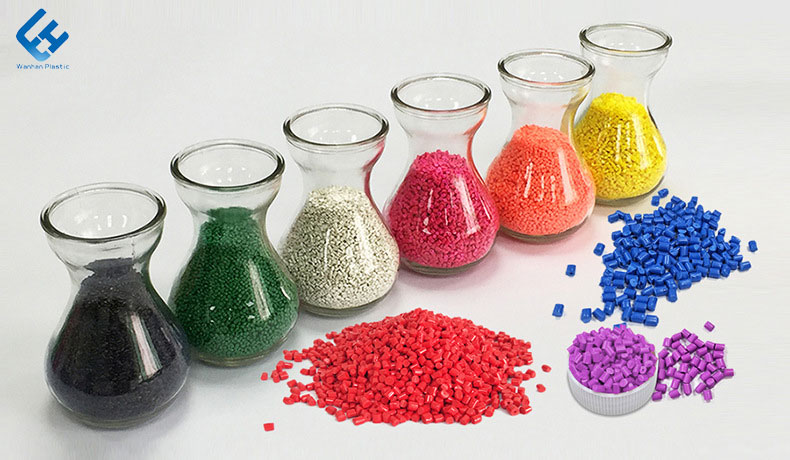
Heat stabilization, hydrolysis resistance, lubrication, UV stabilization, color matching, and other functions can be combined with unfilled or reinforced PA6. Selection should follow the actual exposure and approval conditions.
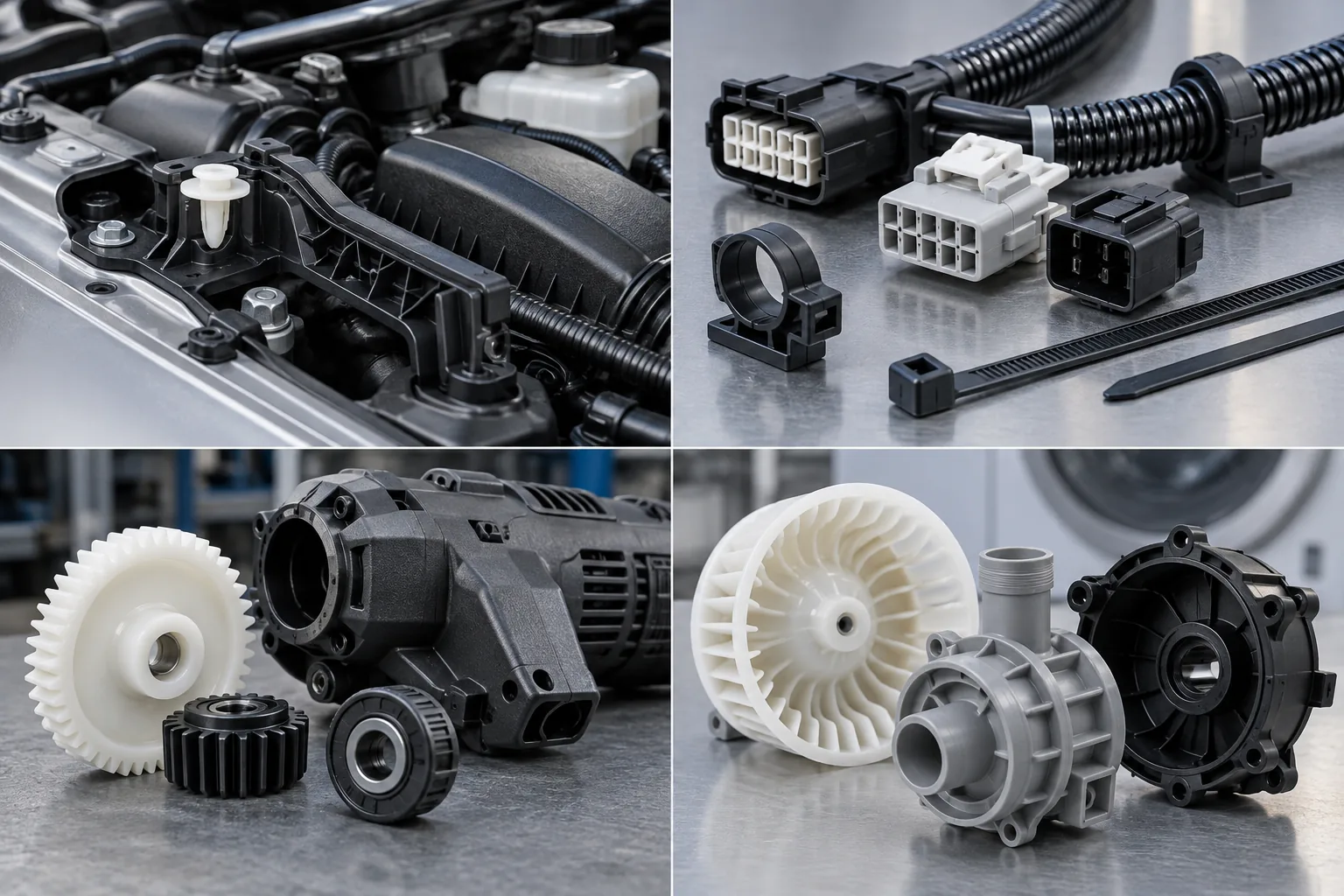
Typical PA6 applications include automotive brackets, electrical housings, gears, power-tool parts, fans, pumps, and appliance components.
PA6 Material Type Comparison
| PA6 type | Main purpose | Typical strengths | Points to verify |
|---|---|---|---|
| Unfilled PA6 | General mechanical parts | Toughness, wear resistance, flow, surface finish | Moisture conditioning, dimensions, temperature, impact |
| Glass-filled PA6 | Structural and heat-loaded parts | Higher stiffness, strength, heat resistance, dimensional control | Fiber orientation, warpage, weld lines, surface, tool wear |
| Mineral-filled PA6 | Stable dimensions and controlled surface behavior | Lower warpage potential and formulation-specific thermal benefits | Impact, density, finish, shrinkage, processing |
| Flame-retardant PA6 | Electrical and safety-related housings | Specified flame performance with nylon mechanical properties | Rating, thickness, color, electrical data, exact certification |
| Impact-modified PA6 | Clips, housings, vibration or low-temperature service | Improved toughness and damage resistance | Stiffness, heat, flow, chemical exposure, surface quality |
| Specialty PA6 compound | Application-specific operating conditions | Heat, hydrolysis, UV, lubrication, color, or other targeted functions | Exact formulation, test method, service condition, production validation |
How to Select a PA6 Grade
Start with the finished component rather than a reinforcement percentage alone. Define the load, temperature, moisture, chemicals, wall thickness, tolerance, impact target, surface requirement, color, compliance need, and annual demand. A material data sheet is useful for screening, but production approval should use the exact grade and molded-part testing.
- Mechanical: load direction, stiffness, impact, fatigue, creep, wear, and snap-fit cycles.
- Thermal: continuous temperature, short peaks, heat aging, and dimensional retention.
- Environment: humidity, water, oil, coolant, cleaners, outdoor exposure, and other chemicals.
- Electrical and flame: voltage, insulation, tracking, wall thickness, and the required flame rating.
- Manufacturing: drying, flow length, gate position, weld lines, shrinkage, warpage, surface, and cycle time.
For a broader overview, review the PA6 material guide. For available resin and compound routes, see the WanHan PA6 material range.
Processing and Validation Considerations
PA6 absorbs moisture, so drying and moisture control are essential before injection molding. Melt temperature, mold temperature, injection speed, holding pressure, cooling, and venting must follow the exact grade and part design. Reinforced grades also require attention to gate location and fiber orientation because flow direction can affect shrinkage, warpage, and mechanical properties.
Validate dimensions and performance after the conditioning state expected in service. When a part carries load or works near heat, review creep, fatigue, heat aging, and environmental exposure rather than relying on one dry laboratory value. Record resin lot, moisture, machine settings, tool cavity, conditioning, and test method so results remain traceable.
Why Choose WanHan
Since 2005
Focused on functional engineering-plastic compounds and application support.
Four Certified Systems
ISO 9001, ISO 14001, ISO 45001, and IATF 16949.
Material Verification
Grade screening, samples, test data, quality control, and processing guidance.
Custom Compounding
Reinforcement, flame resistance, stabilization, impact, color, and formulation support.
Request a PA6 Material Recommendation
Send the part drawing, operating temperature, load, moisture or chemical exposure, wall thickness, tolerance, flame requirement, current material, expected volume, and approval tests. WanHan can compare practical PA6 material routes and prepare samples for evaluation.
Request Material SupportFrequently Asked Questions
What is PA6 material?
PA6 is polyamide 6, commonly called nylon 6. It is a semicrystalline engineering plastic used in mechanical, automotive, electrical, appliance, and industrial components.
What are the main types of PA6?
The main routes are unfilled PA6 and modified compounds such as glass-filled, mineral-filled, flame-retardant, impact-modified, heat-stabilized, hydrolysis-resistant, lubricated, and color-matched grades.
How is glass-filled PA6 different from unfilled PA6?
Glass-filled PA6 generally provides higher stiffness, strength, heat resistance, and dimensional stability. Unfilled PA6 usually offers better flow, toughness, surface finish, and more isotropic behavior.
Does PA6 absorb moisture?
Yes. Moisture conditioning can change stiffness, toughness, and dimensions. Drying before molding and testing at the expected service condition are important.
Which PA6 type is suitable for electrical parts?
The answer depends on voltage, insulation, tracking, heat, wall thickness, mechanical load, and the required flame rating. Use the exact grade data and certification for the intended part.
What information is needed to select a PA6 compound?
Provide the application, drawing, load, temperature, moisture and chemicals, wall thickness, tolerance, impact target, surface and color needs, compliance requirements, current material, and expected volume.
Main types and characteristics of nylon 6
Where to buy PA6 material?
Related Article