
Carbon Fiber Nylon Pellets: Properties, Grades, and Applications
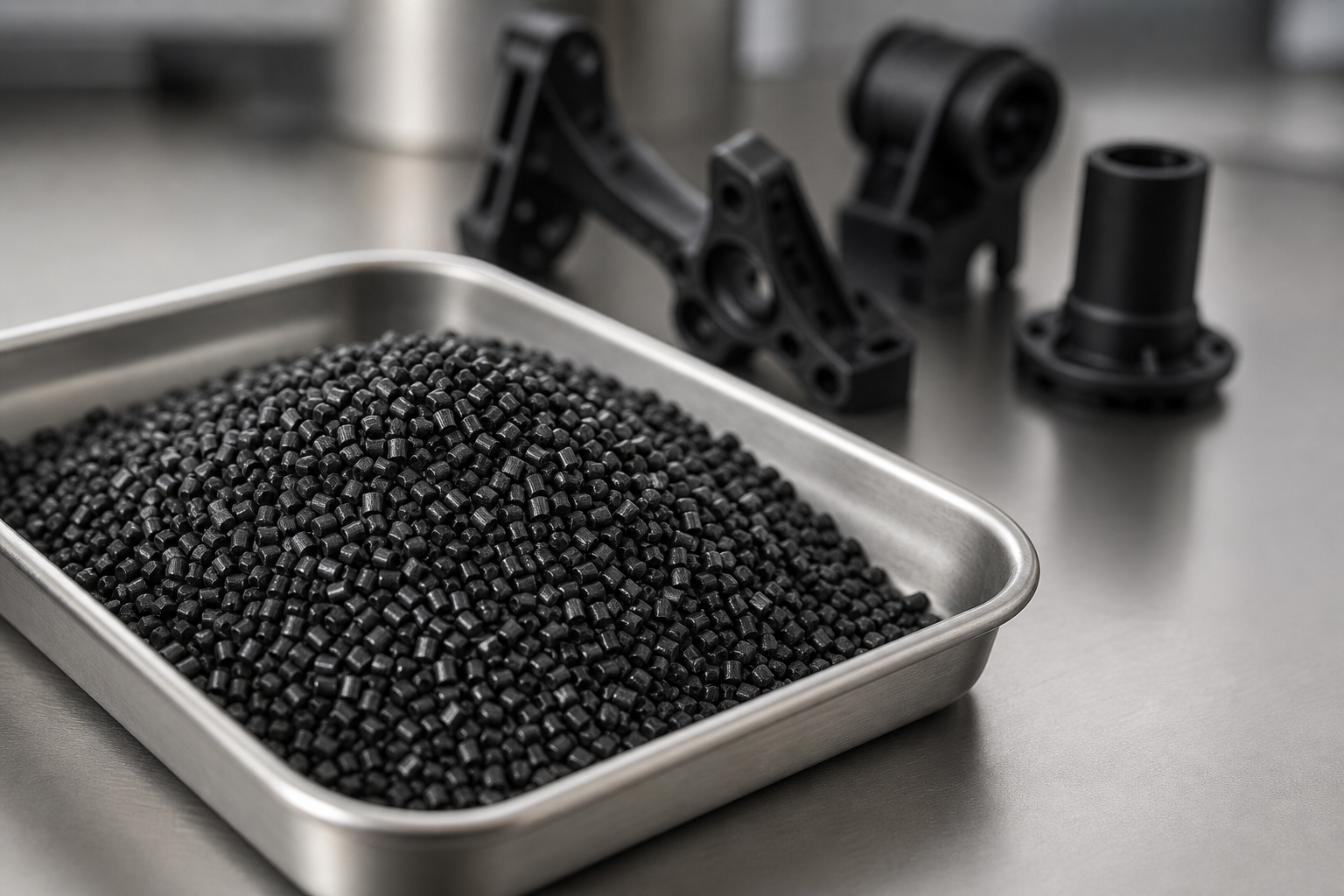
Carbon fiber nylon is a reinforced engineering thermoplastic that combines a nylon matrix with chopped carbon fibers. The reinforcement can increase stiffness, reduce deformation under load, and support lightweight part designs. Its actual performance depends on the nylon base, carbon-fiber percentage, fiber orientation, moisture condition, part geometry, and molding process.
Carbon fiber nylon is commonly selected when an application needs more rigidity and dimensional control than unfilled nylon while retaining the processing advantages of thermoplastic pellets. PA11 and PA12 grades can be useful where low weight, chemical resistance, toughness, and relatively low moisture sensitivity are important.
WanHan supplies PA12 CF30 carbon fiber nylon pellets for lightweight engineering parts and buyers can compare related PA12 carbon fiber grades before shortlisting a formulation.
What Is Carbon Fiber Nylon?
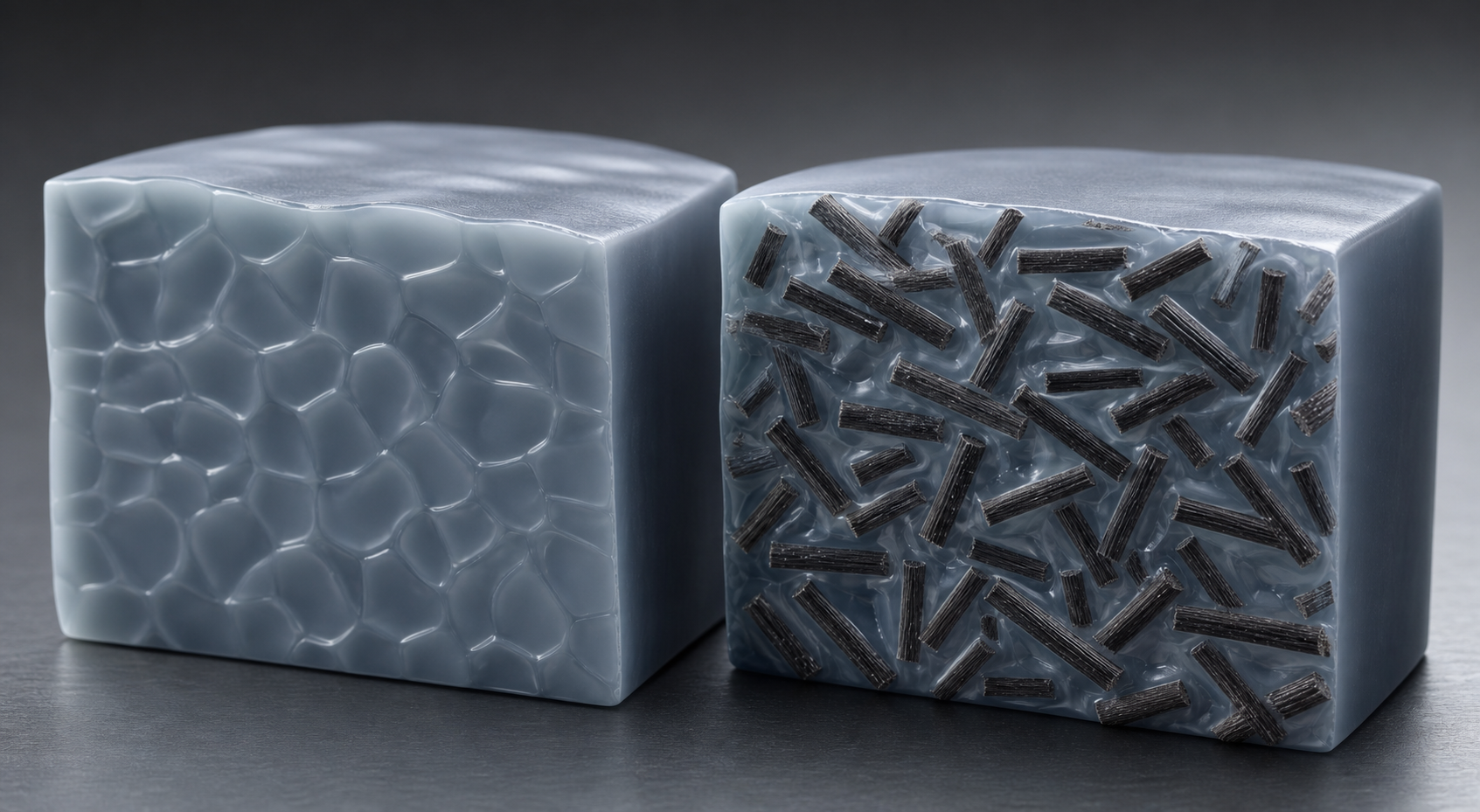
Carbon fiber nylon is produced by compounding short carbon fibers into a polyamide resin. During injection molding or extrusion, the molten polymer carries the fibers through the machine and into the tool. As the material flows, the fibers tend to align with the flow direction. This orientation is one reason a molded part may show different mechanical behavior in different directions.
The nylon matrix provides the continuous thermoplastic phase, while the carbon fibers act as reinforcement. The result is not simply "stronger nylon." It is a different material system that must be evaluated for stiffness, impact behavior, surface appearance, shrinkage, electrical properties, wear, moisture, and processing.
Why Add Carbon Fiber to Nylon?
Carbon fiber reinforcement is usually considered for one or more of the following design goals:
- Higher stiffness for structural brackets, housings, frames, and supports
- Lower deformation under load compared with an unfilled nylon grade
- Improved dimensional stability for precision engineering parts
- Lower part weight when replacing selected metal components
- Reduced molding shrinkage in the fiber-flow direction
- A dark technical appearance suited to industrial components
- Potential changes in electrical or thermal behavior, depending on formulation
These benefits come with trade-offs. Carbon-fiber-filled grades can be more abrasive to processing equipment, less suitable for cosmetic surfaces, and more sensitive to fiber orientation. Increasing fiber content may raise stiffness but does not guarantee better impact performance in every part.
CF15, CF20, CF25, and CF30 Grades
The CF number normally describes the nominal carbon-fiber content by weight. A CF15 grade contains less reinforcement than a CF30 grade, but percentage alone is not enough to predict finished-part performance. Fiber length, fiber treatment, base resin, additives, conditioning, and molding conditions all matter.
| Grade family | Typical design direction | Points to verify |
|---|---|---|
| CF15 | Moderate reinforcement with a balance of flow and stiffness | Impact target, surface quality, thin-wall filling |
| CF20 | Higher rigidity for general structural components | Weld-line strength, warpage, tool wear |
| CF25 | Stronger dimensional-control and stiffness focus | Fiber orientation, anisotropy, gate position |
| CF30 | High reinforcement for demanding rigid parts | Flow length, brittleness risk, equipment abrasion |
Use the current technical data sheet for screening, then confirm the selected grade through sample molding and finished-part testing. Do not approve a material using carbon-fiber percentage alone.
PA11 vs PA12 Carbon Fiber Nylon
PA11 and PA12 are both long-chain polyamides, but they are not interchangeable. Both can offer lower moisture sensitivity than PA6 or PA66, which helps support dimensional consistency in changing environments. The final choice depends on the supplier formulation and the part requirement.
| Selection factor | PA11 carbon fiber nylon | PA12 carbon fiber nylon |
|---|---|---|
| Design emphasis | Often evaluated for toughness, flexibility, and lightweight engineering parts | Often evaluated for dimensional stability, chemical resistance, and precision components |
| Moisture behavior | Relatively low compared with shorter-chain nylons | Relatively low compared with shorter-chain nylons |
| Processing decision | Follow the exact compound data and drying guidance | Follow the exact compound data and drying guidance |
| Final approval | Part testing under the real service environment | Part testing under the real service environment |
Common Applications
Carbon fiber reinforced nylon pellets are used for molded or extruded components where low weight and rigidity are valuable. Typical application groups include:
- Industrial brackets, mounts, supports, and machine components
- Automotive and mobility parts outside unsuitable high-temperature zones
- Sports-equipment structures and lightweight accessories
- Robotics, drones, fixtures, and automation components
- Electrical or electronic housings when the complete formulation is approved
- Wear-resistant guides, covers, and technical components
- Functional prototypes and low-volume engineering parts
Suitability must be checked against continuous temperature, peak temperature, chemical exposure, impact, fatigue, flammability, electrical behavior, dimensional tolerance, and regulatory requirements.
Injection Molding Considerations
Reinforced nylon can be processed efficiently, but it needs tighter control than a general-purpose unfilled resin. The grade-specific technical data sheet should remain the primary processing reference.
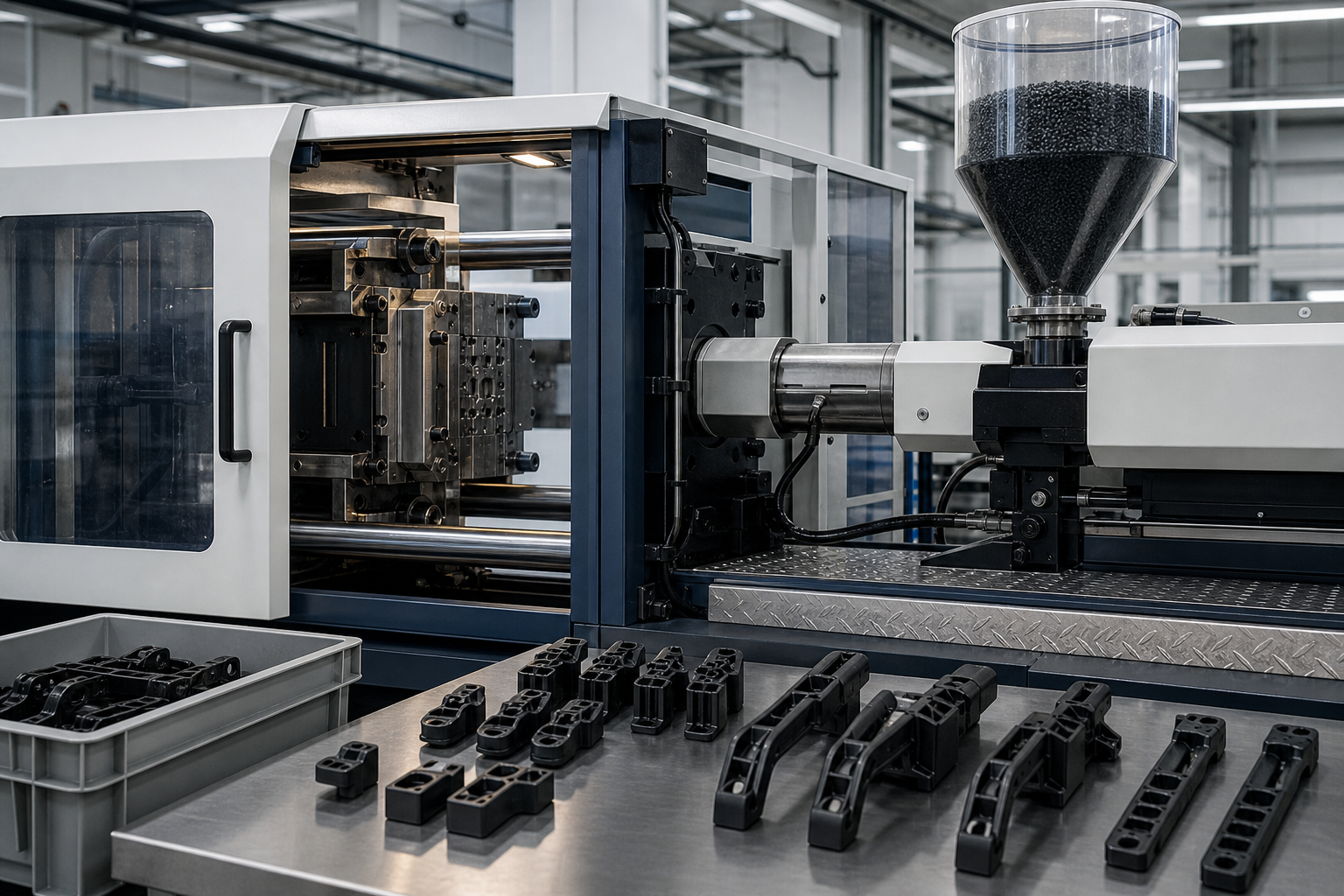
- Drying: keep pellets sealed and follow the supplier's drying recommendation. Moisture can affect appearance, stability, and mechanical results.
- Wear protection: carbon fibers are abrasive. Review screw, barrel, nozzle, gate, and mold-steel suitability.
- Gate location: gate design controls flow and fiber orientation, which can influence warpage and directional strength.
- Venting: adequate venting helps reduce trapped gas, incomplete filling, and burn marks.
- Melt residence time: avoid unnecessary overheating or long residence that could degrade the polymer.
- Mold temperature: stable mold conditions support surface quality, crystallization, dimensions, and repeatability.
- Regrind control: repeated processing can change fiber length and properties. Validate any regrind policy for the finished part.
How to Select a Carbon Fiber Nylon Supplier
A useful supplier discussion starts with the finished part rather than only a resin name. Share the following details with WanHan:
- Part drawing, wall thickness, gate concept, and expected annual volume
- Required stiffness, strength, impact, fatigue, and dimensional tolerance
- Operating temperature and chemical environment
- Required carbon-fiber percentage or target performance
- PA11, PA12, or open material-family preference
- Flammability, electrical, regulatory, and documentation requirements
- Color, surface, packaging, sample, and delivery needs
WanHan can use this information to recommend a more relevant grade and sample plan. Final material approval should be based on current technical data, molded samples, and application-level validation.
Frequently Asked Questions
Is carbon fiber nylon stronger than regular nylon?
Carbon fiber reinforcement usually increases stiffness and can improve structural performance, but "stronger" depends on the test direction, fiber orientation, impact requirement, moisture condition, and formulation.
What does CF30 nylon mean?
CF30 normally means a nylon compound with a nominal 30 percent carbon-fiber content by weight. Confirm the supplier's technical data and test method for the exact grade.
Is PA12 carbon fiber nylon moisture resistant?
PA12 generally absorbs less moisture than PA6 or PA66, but the complete compound and real service environment must still be evaluated.
Can carbon fiber nylon replace metal?
It can replace selected metal parts when stiffness, load, temperature, creep, tolerances, joining, and safety requirements are validated. It is not an automatic drop-in replacement.
Can carbon fiber nylon be injection molded?
Yes. Many carbon fiber nylon pellets are designed for injection molding. Use suitable wear-resistant equipment and follow the grade-specific drying and processing guidance.
Conclusion
Carbon fiber nylon can help engineers create rigid, lightweight thermoplastic parts, but successful selection depends on matching the nylon matrix, fiber content, part geometry, process, and service environment. For PA11 or PA12 CF15-CF30 recommendations, contact WanHan with your drawing, performance targets, processing method, and validation requirements.
Automotive Plastic Materials for Lightweight and Durable Parts
Electrical Housing Plastic: How to Choose the Right Material
Related Article



