
Engineering Plastics vs Metal: Material Selection Guide
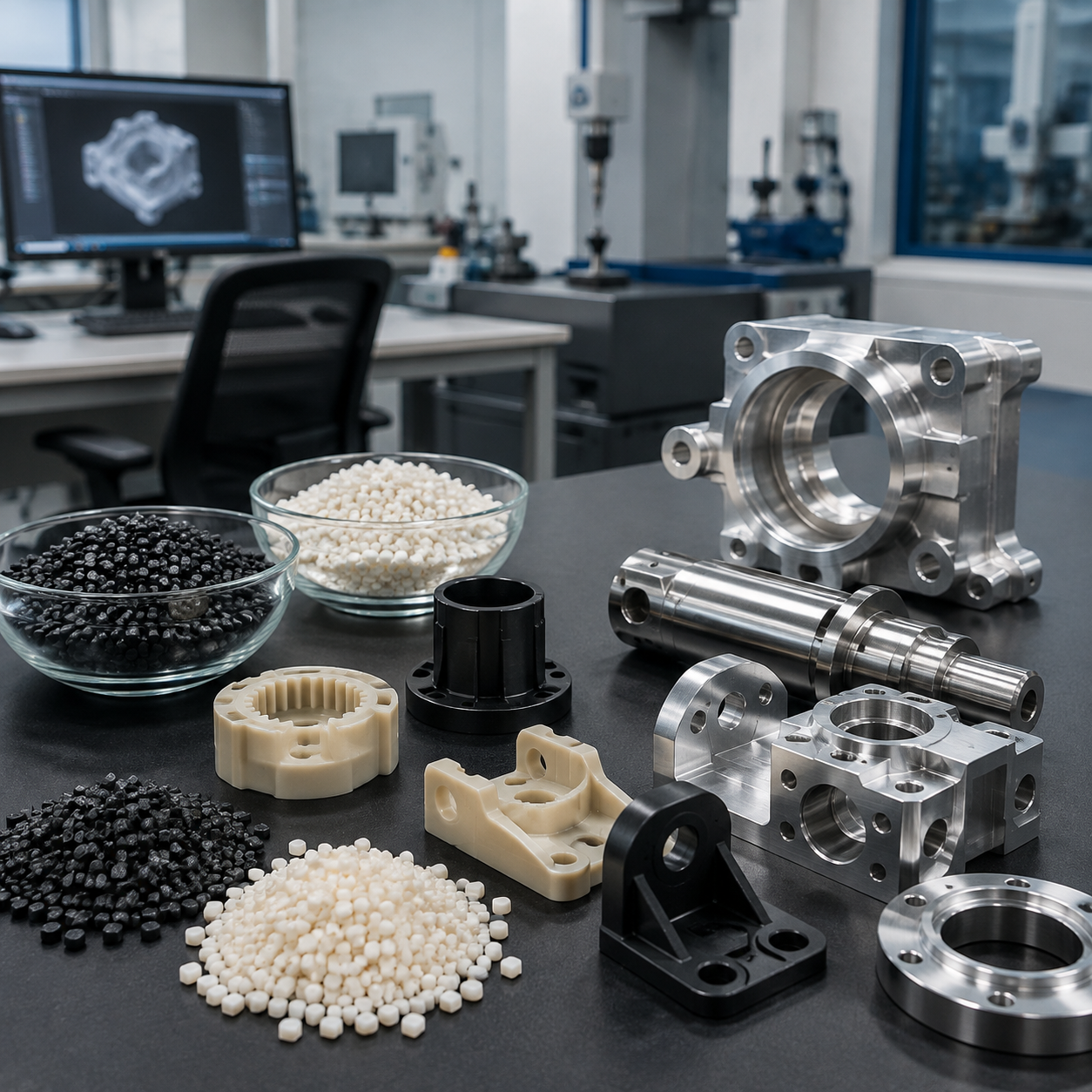
Engineering Plastics vs Metal: Material Selection Guide
Engineering plastics vs metal is not a simple material-versus-material decision. A reinforced polymer can reduce weight, combine multiple features, resist corrosion, and simplify high-volume molding, while metal may remain the better choice for extreme heat, high modulus, concentrated loads, shielding, or long-term dimensional stability.
The right question is whether a specific plastic compound can meet the complete part requirement after molding. Review load paths, creep, temperature, chemical exposure, fire behavior, electrical requirements, joining, tolerances, tooling, and total cost before treating a polymer as a metal replacement.
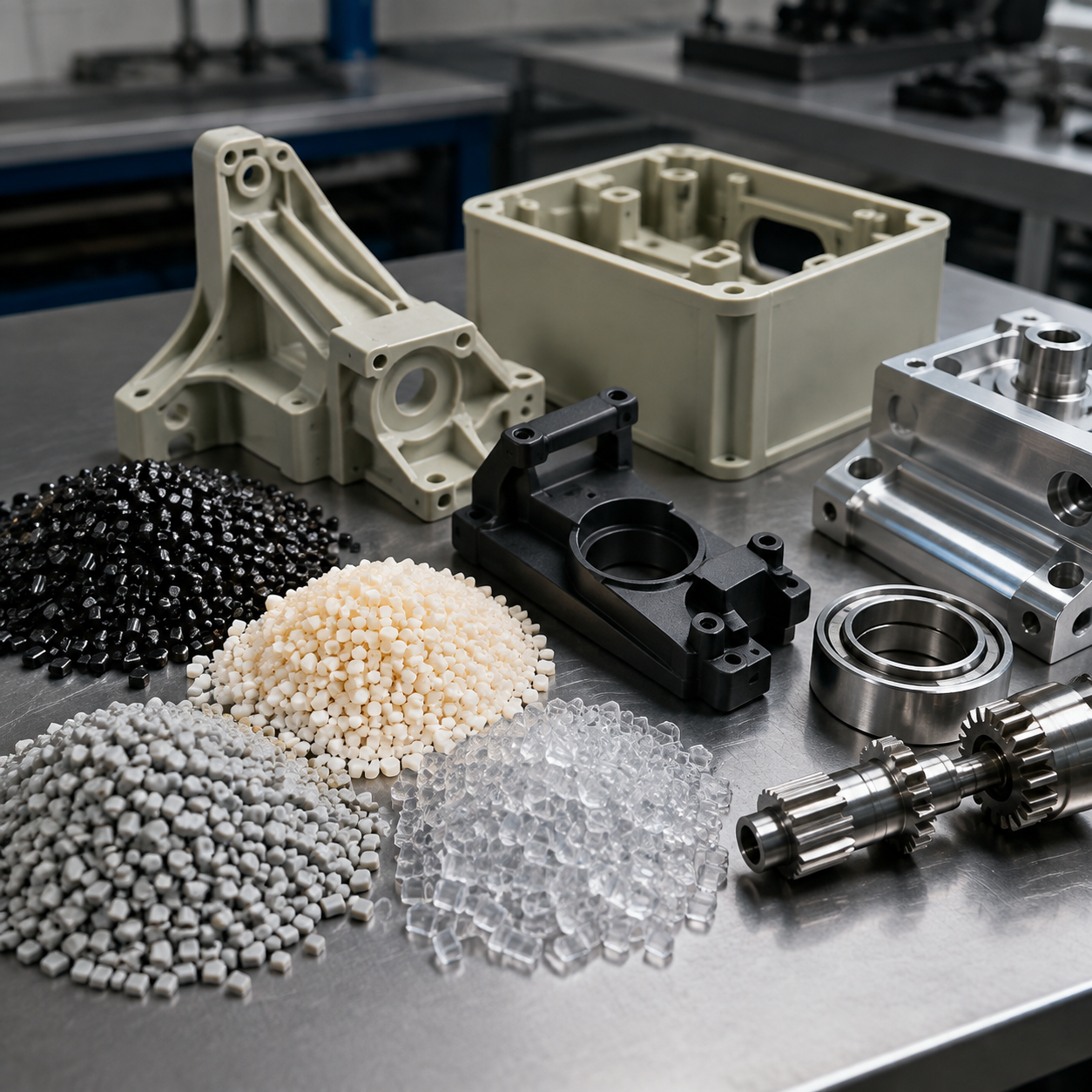
Engineering Plastics vs Metal: Key Trade-Offs
| Decision factor | Potential polymer advantage | Metal advantage or caution |
|---|---|---|
| Weight | Lower density can reduce part and assembly weight | Metal may provide more stiffness per section when weight is not the main constraint |
| Stiffness and load | Glass- or carbon-fiber reinforcement can support structural applications | Metal usually retains higher modulus and better resistance to concentrated loads |
| Corrosion | Many polymers do not rust and can simplify protection in humid environments | Metal may need coating, plating, or alloy selection depending on exposure |
| Part integration | Ribs, clips, bosses, seals, and guides can be molded into one component | Metal may require machining, fasteners, welding, or secondary assembly |
| Heat and fire | Heat-stabilized and flame-retardant grades cover defined temperature and safety needs | Metal remains preferable for very high heat or requirements outside the polymer grade window |
| Electrical behavior | Insulating plastics can integrate electrical housings and connector functions | Metal provides conductivity and shielding when those functions are required |
Common Polymer Routes for Metal Replacement
Glass-filled PA6 and PA66 are common candidates for brackets, supports, housings, gears, and under-hood components where stiffness, toughness, and processability must be balanced. PBT can fit precision electrical parts. PPS is considered for higher heat and chemical resistance. PC-ABS can replace selected metal covers or housings when impact, appearance, and integrated features matter more than maximum modulus.
Product references include WanHan's PA6 GF50 compound, PA66 GF35 grade, PPS material family, and PC-ABS catalog. These links help compare actual resin families rather than relying on generic metal-replacement claims.
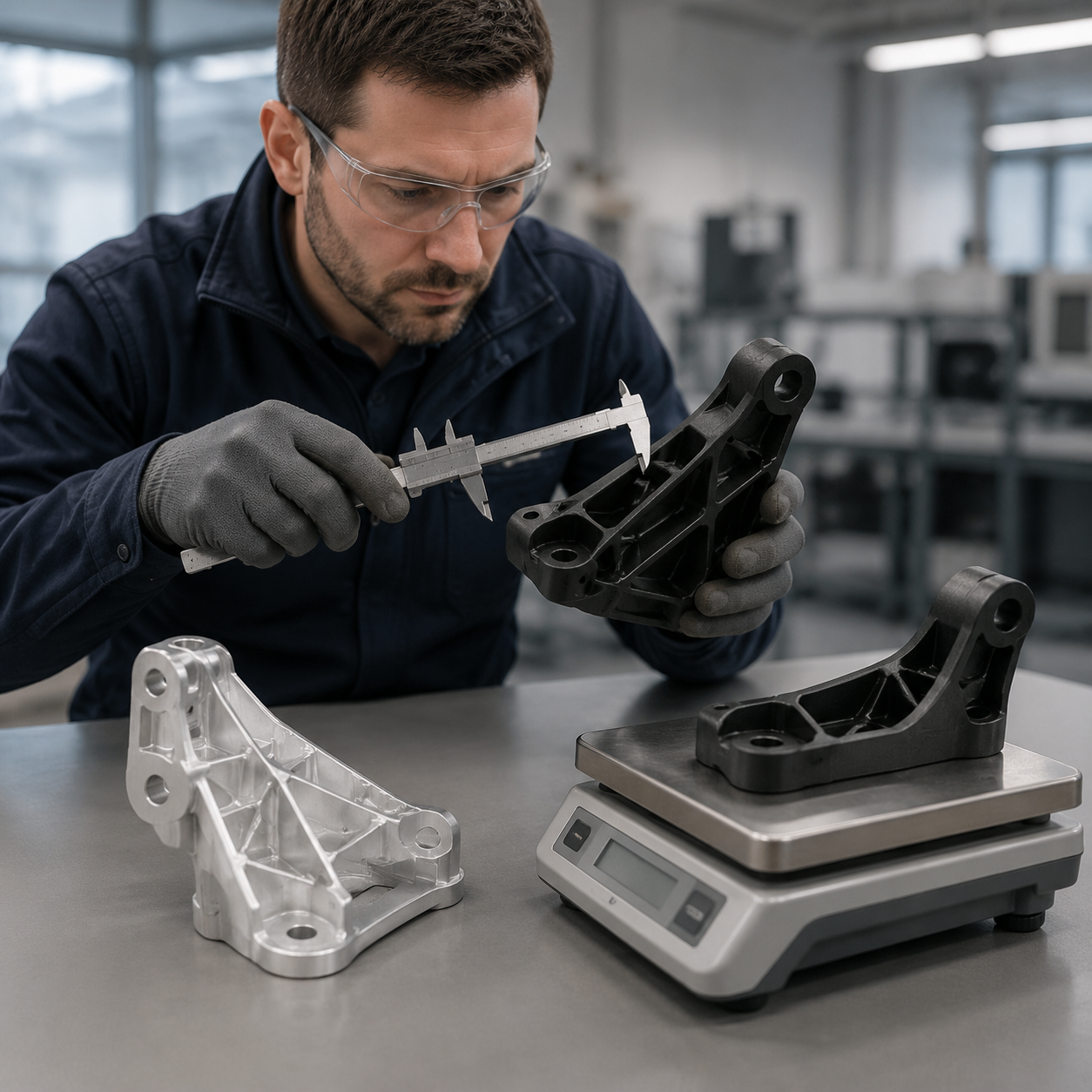
When a Metal Replacement Study Needs Extra Care
- Check creep and fatigue at the real service temperature, not only room-temperature tensile strength.
- Review inserts, fasteners, thread design, weld lines, and local stress concentrations.
- Confirm chemical exposure, moisture conditioning, UV aging, flame requirements, and electrical insulation.
- Compare tooling, cycle time, scrap, assembly, logistics, and expected volume in the total-cost model.
- Measure the molded part after conditioning because polymer dimensions can change with temperature and moisture.
WanHan helps project teams compare reinforced PA, PBT, PPS, PC-ABS, and other engineering compounds against a metal reference. Share the current metal part, load case, service environment, annual volume, target weight, and cost objective through the inquiry page for a focused material review.
Frequently Asked Questions
Q: Can engineering plastics replace metal in structural parts?
A: They can replace metal in selected structural parts when the reinforced grade, geometry, temperature, creep, fatigue, joining, and dimensional requirements are validated together.
Q: Which engineering plastics are commonly used for metal replacement?
A: Glass-filled PA6 and PA66, PBT, PPS, PC-ABS, and carbon-fiber-reinforced compounds are commonly evaluated, depending on the load, heat, electrical, and chemical requirements.
Q: Are engineering plastics lighter than metal?
A: Most engineering plastics have lower density than steel or aluminum, but the final weight benefit depends on the part geometry, reinforcement level, inserts, ribs, and required stiffness.
Q: What is the main risk when replacing metal with plastic?
A: The main risks include creep, thermal expansion, moisture effects, fiber-direction anisotropy, concentrated stress, joining, and performance loss at the actual service temperature.
Q: Can WanHan help evaluate a metal replacement project?
A: Yes. WanHan can compare reinforced engineering plastic compounds with the metal part requirements and support sample evaluation, processing guidance, and documentation.
ABS Material: Properties, Uses, and Injection Molding Guide
Injection Molding Shrinkage and Warpage: Engineering Plastic Guide
Related Article



