
Glass Fiber vs Carbon Fiber Reinforced Plastic: Selection Guide
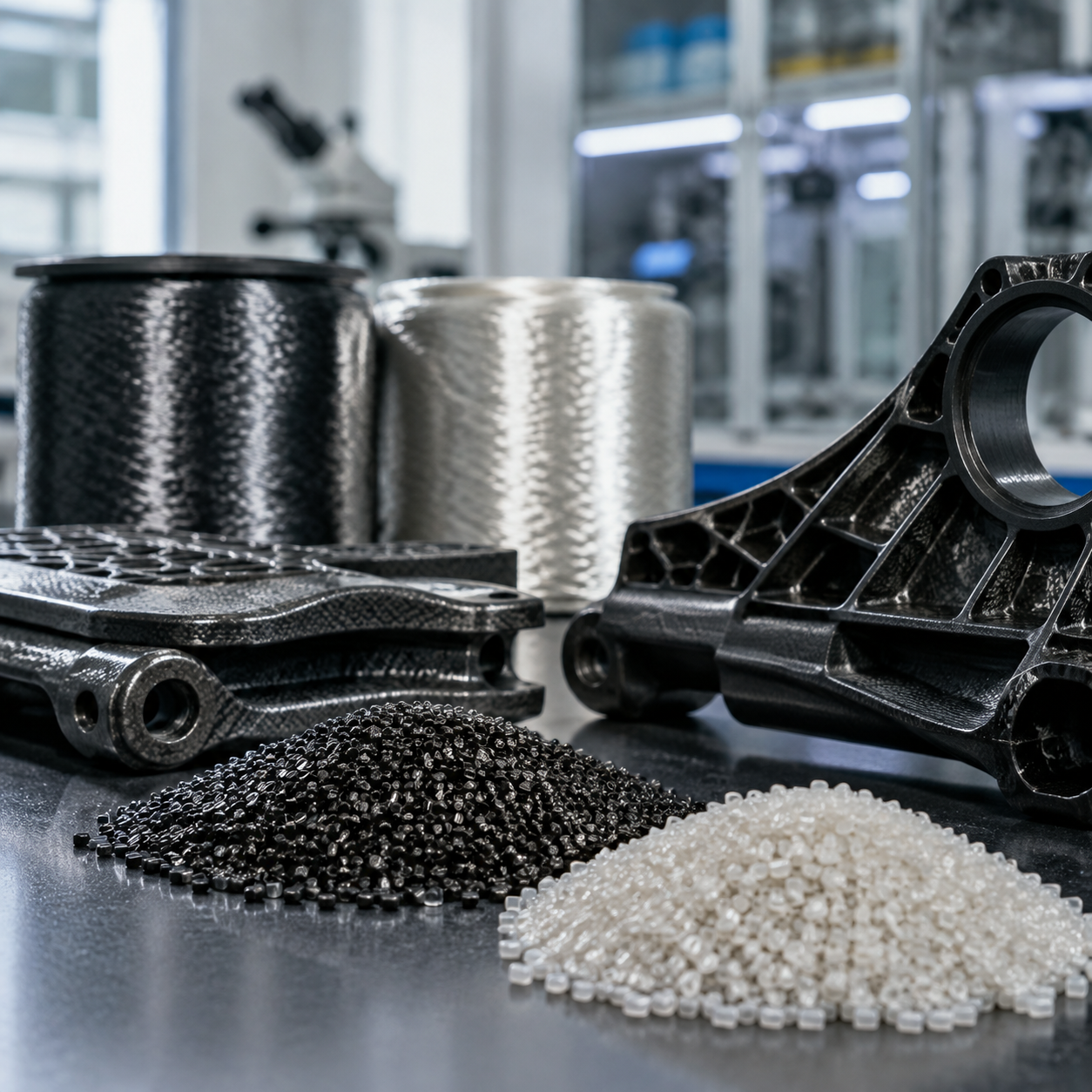
Glass Fiber vs Carbon Fiber Reinforced Plastic: Selection Guide
Glass fiber vs carbon fiber reinforced plastic is a practical comparison when a part needs more stiffness, lower weight, or better dimensional control than an unfilled resin can provide. Both reinforcements can improve structural performance, but they do not create the same cost, appearance, electrical, or processing profile.
For a production decision, compare the load direction, required stiffness-to-weight ratio, surface target, tolerance, chemical environment, tooling, and expected annual volume. Fiber content alone does not predict final part performance because orientation and molding conditions also matter.
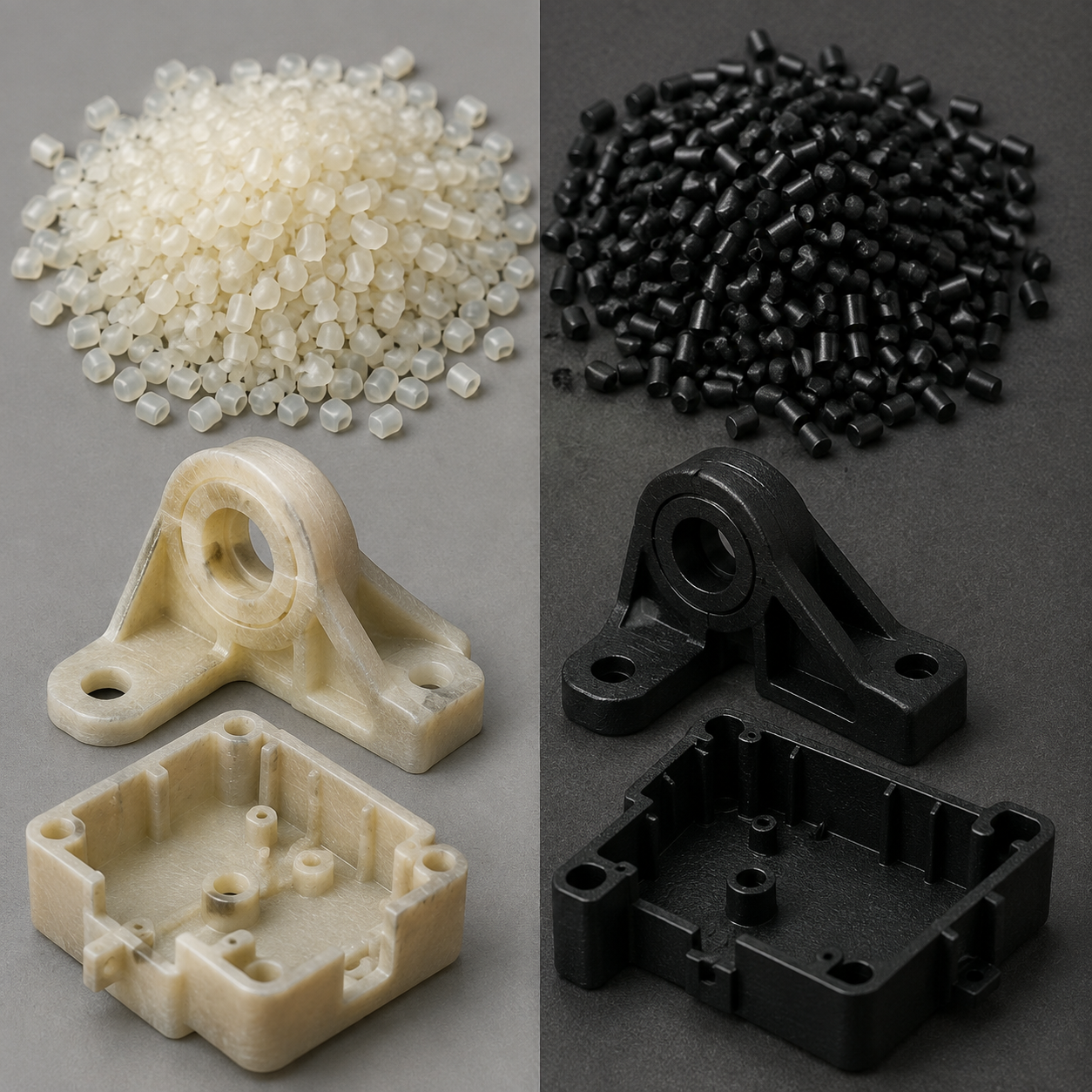
Glass Fiber vs Carbon Fiber: Main Differences
| Factor | Glass fiber reinforcement | Carbon fiber reinforcement |
|---|---|---|
| Stiffness and strength | Strong improvement for many structural and electrical parts | Higher stiffness potential with a more specialized performance balance |
| Weight | Usually heavier than an equivalent carbon-fiber formulation | Often selected when stiffness-to-weight performance is important |
| Cost | More economical for mainstream reinforced compounds | Usually a higher-cost route that needs a clear performance justification |
| Dimensional stability | Can reduce molded shrinkage but may create fiber-direction anisotropy | Can provide strong rigidity and lower expansion, with orientation effects to manage |
| Electrical behavior | Generally remains electrically insulating unless the formulation is modified | May increase conductivity, so insulation and grounding requirements need review |
| Surface appearance | May show fiber texture or flow marks at higher content | Often has a dark technical appearance and can show flow-related surface effects |
When Glass Fiber Is the Better Starting Point
Glass-filled PA6, PA66, PBT, PP, and other compounds are often the practical first option for brackets, housings, supports, gears, and electrical parts. They provide a strong stiffness and cost balance and are available across a wide range of flame-retardant, heat-stabilized, anti-UV, and color-customized grades.
When Carbon Fiber Is Worth Evaluating
Carbon fiber compounds become more attractive when the design is limited by weight, rigidity, thermal expansion, or a specialized structural target. They should be evaluated with the electrical design because carbon fiber can change conductivity. Molding trials should also check weld lines, fiber orientation, gate location, surface finish, and the tolerance of the finished part.
For a concrete comparison, review WanHan's PA66 GF35 product, PA11 and PA12 carbon fiber nylon pellets, and the carbon fiber reinforced PA66 guide. The glass-filled nylon comparison adds context for mainstream structural parts.
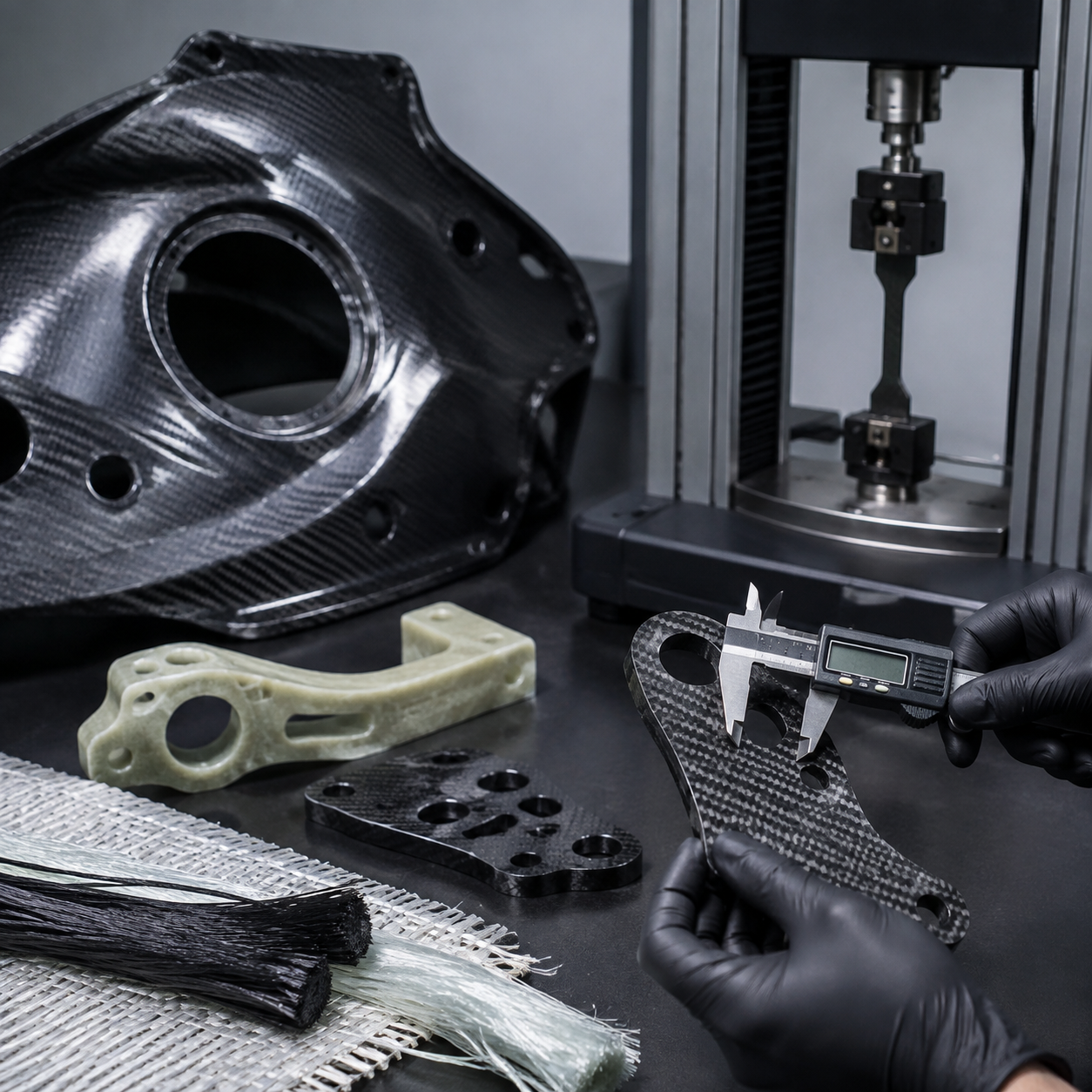
How to Validate a Fiber-Reinforced Grade
- Set the required stiffness, strength, weight, impact, and dimensional targets for the finished part.
- Compare glass fiber and carbon fiber at the same base resin and a realistic fiber content where possible.
- Run molding trials using the intended tool, gate, wall thickness, drying process, and cooling cycle.
- Test the finished part in the actual load direction and service environment, including electrical checks when relevant.
WanHan supports glass fiber and carbon fiber compound evaluation with grade matching, samples, processing guidance, and quality documentation. Send the part drawing, load case, appearance target, volume, and any existing resin reference through the inquiry page.
Frequently Asked Questions
Q: What is the main difference between glass fiber and carbon fiber plastic?
A: Glass fiber plastic is usually the more economical reinforced option, while carbon fiber plastic is often selected for higher stiffness-to-weight performance and more specialized structural requirements.
Q: Is carbon fiber plastic always stronger than glass fiber plastic?
A: Not always. Performance depends on the base resin, fiber content, orientation, molding process, test direction, and the property being measured.
Q: Does carbon fiber make engineering plastic conductive?
A: Carbon fiber can increase electrical conductivity, but the final behavior depends on fiber content, formulation, orientation, and part design. Insulation requirements should be validated on the molded part.
Q: Which reinforcement is more cost-effective for molded parts?
A: Glass fiber is commonly more cost-effective for mainstream structural and electrical parts. Carbon fiber is justified when its stiffness, weight, or thermal-expansion benefits solve a defined design constraint.
Q: Can WanHan recommend glass fiber or carbon fiber pellets?
A: Yes. WanHan can compare reinforced PA, PBT, PP, and other compounds against the part load, weight, surface, electrical, dimensional, and production requirements.
How to Dry Plastic Pellets Before Injection Molding
UL94 V0 vs V1 vs V2: Flame-Retardant Plastic Guide
Related Article



