
Mold opening process in injection molding process
author: WanHan Technology
2023-12-25
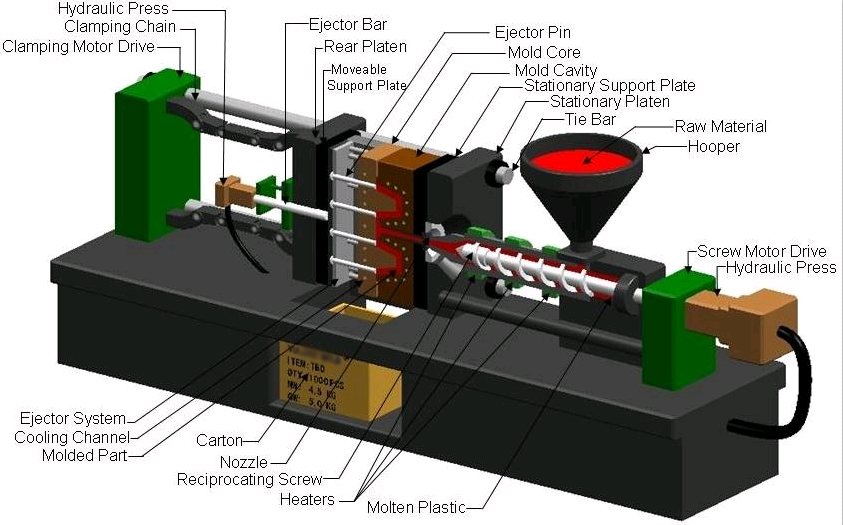
The mold opening process is one of the key steps in the injection molding process. It refers to separating the two halves of the mold to release the molded plastic product after the plastic solidification in the mold is completed. The following are the general steps of the mold opening process:
Curing Check: Before you consider opening the mold, you need to ensure that the plastic injected into the mold cavity has fully cured. This usually takes into account factors such as the type of plastic used, the wall thickness of the product, and the cooling time.
Mold Opening: Once the plastic is cured, the injection molding machine's motion system begins to open the mold, separating the two halves of the mold. This process is usually controlled by the hydraulic or mechanical system of the injection molding machine.
Release force: During the mold opening process, a certain release force may be required to ensure that the molded plastic product can be completely and smoothly separated from the mold cavity. This can be achieved by ejection pins on the mold, gas injection, etc.
Product Ejection: Once the mold is fully open and appropriate ejection force is applied, the molded plastic product will eject from the mold cavity. This may require assistance such as airflow, robotic arms, or other devices.
Inspection and trimming: After the molded plastic product is demoulded, it usually needs to be inspected and trimmed. This may include removing auxiliary structures that may remain on the product, checking the size and surface quality of the product, etc.
Cleaning the mold: After the mold is opened, it usually needs to be cleaned. Cleaning the mold helps ensure the quality of the next cycle of injection molding and extends the life of the mold.
During the mold opening process, it is necessary to ensure that the molded plastic products are not damaged, especially during demolding, to avoid defects. Mold opening speed, demoulding force control, ejector pin design, etc. are all important factors that affect the mold opening process. These usually need to be adjusted according to specific product requirements and mold design. The design and manufacturing of the mold also affect the mold opening effect to a great extent.
Handling and finishing processes in the injection molding process
Cooling process in injection molding process
Related Article

PBT material guide covering polybutylene terephthalate properties, electrical uses, heat, moisture, reinforcement, processing, and grade selection.
PBT Material: Properties, Uses, and Injection Molding Guide

PA12 material guide covering nylon 12 properties, low moisture absorption, chemical resistance, flexibility, reinforcement, processing, and applications.
PA12 Material: Nylon 12 Properties, Uses, and Processing


SEND MESSAGE