
Nylon Density and Melting Point Guide: PA6 vs PA66 Properties and Temperature Ranges
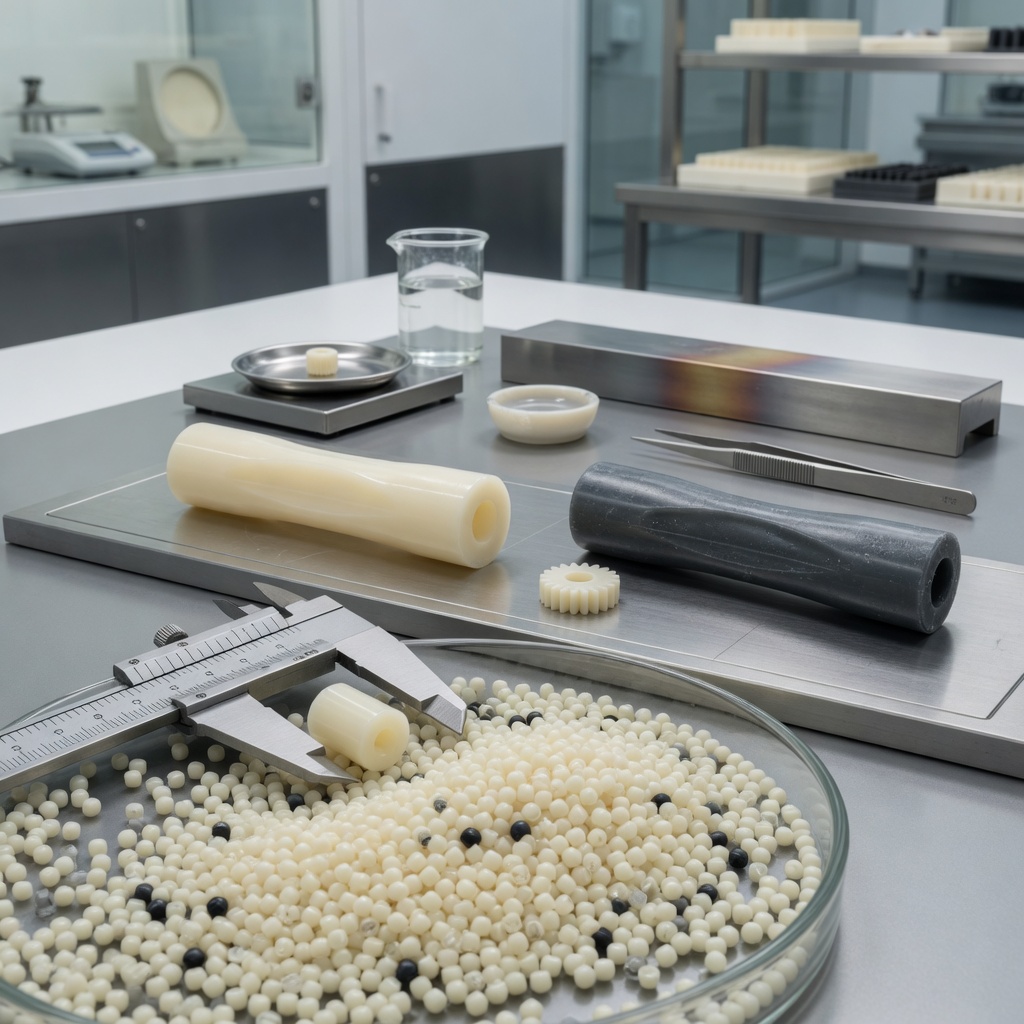
Nylon Density and Melting Point Guide: PA6 vs PA66 Properties and Temperature Ranges
Nylon density and nylon melting point are two of the most common questions engineers ask when comparing engineering plastics for molding, extrusion, and structural components. In practice, the answer depends on which nylon grade you mean, because nylon 6 and nylon 66 do not have exactly the same density or melting temperature.
The short answer is that unfilled nylon 6 typically has a density around 1.13 to 1.14 g/cm3 and a melting point around 220 C, while unfilled nylon 66 typically has a density around 1.13 to 1.15 g/cm3 and a melting point around 255 to 265 C. Actual values can change with reinforcement, flame retardants, lubricants, and brand-specific formulation.
What Is the Density of Nylon?
When people search for what is the density of nylon or density of nylon, they are often looking for a general rule. The practical answer is that nylon usually falls a little above 1.10 g/cm3 in standard unfilled grades, but the exact number depends on the nylon family and modification package.
Typical reference values are:
- Nylon 6 density: about 1.13 to 1.14 g/cm3
- Nylon 66 density: about 1.13 to 1.15 g/cm3
- Glass-filled nylon: often significantly higher, depending on filler level
This matters in product design because density affects part weight, material usage, mold filling behavior, and cost calculations for volume-based production.
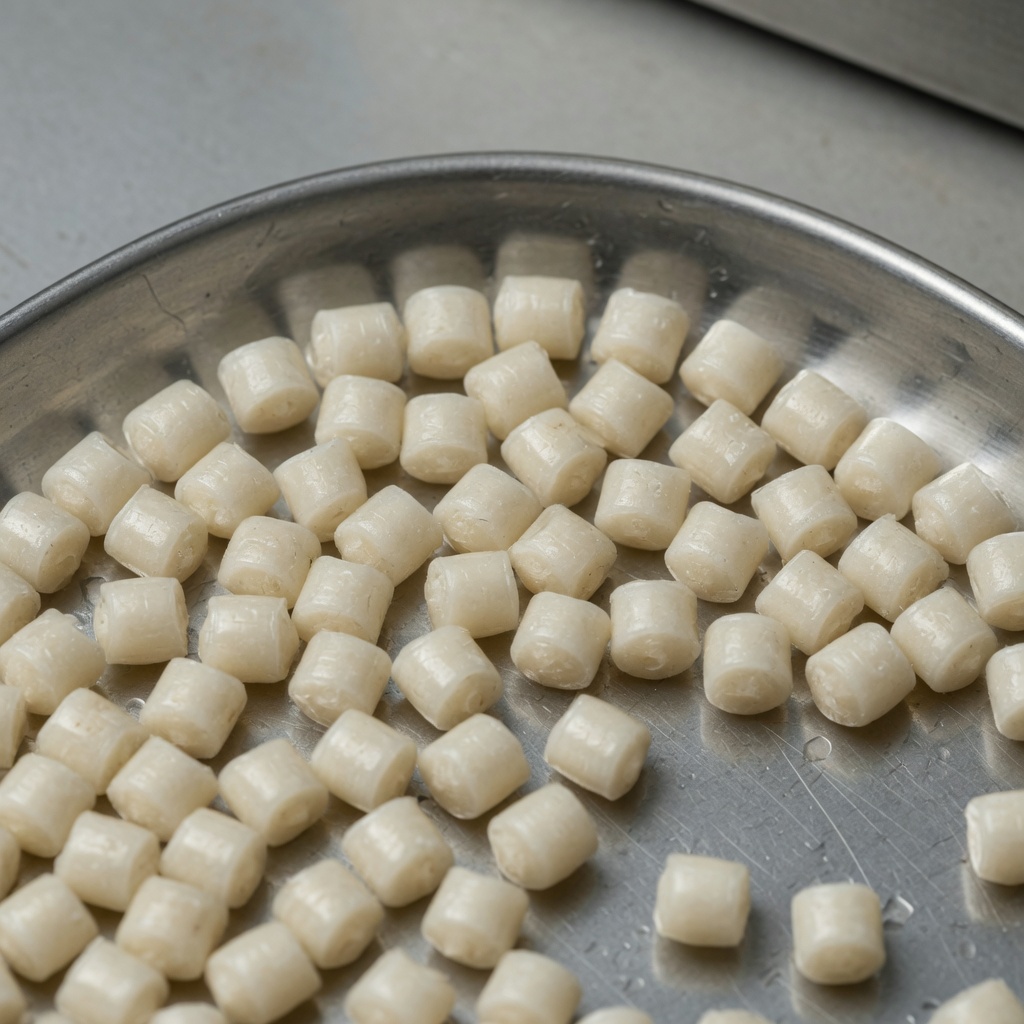
What Is the Melting Point of Nylon?
Nylon melting point also depends on the specific type. In the market, the two most common materials are PA6 and PA66, and they behave differently in thermal processing.
Typical melting point references are:
- Nylon 6 melting point: about 220 C
- Nylon 66 melting point: about 255 to 265 C
That is why people asking what temperature does nylon melt may receive different answers depending on whether the discussion is about PA6, PA66, or a modified nylon grade. Processing temperature is also not the same as melting point. Injection molding melt temperature is usually higher than the polymer's basic melting temperature.
Quick Comparison: Nylon 6 vs Nylon 66
For a quick comparison of the two most common engineering nylons, this simplified view is useful:
| Property | Nylon 6 (PA6) | Nylon 66 (PA66) |
|---|---|---|
| Typical density | About 1.13 to 1.14 g/cm3 | About 1.13 to 1.15 g/cm3 |
| Typical melting point | About 220 C | About 255 to 265 C |
| General impression | Balanced toughness and processability | Higher heat resistance and stiffness |
This comparison is useful for material screening, but final grade selection should still be based on the exact application, not only a single property value.
To connect these reference values with real grade selection, it helps to compare the PA6 material range and the PA66 material range to see how nylon family choice and reinforcement level affect density, thermal behavior, and application fit.
Why Nylon Density Matters
Nylon density is not just a technical number in a datasheet. It affects several real production decisions:
- Part weight estimation
- Material cost per molded component
- Mechanical design assumptions
- Shipping weight and product feel
- Comparison against other engineering plastics
When reinforcement is added, such as glass fiber, density usually increases. That is why glass-filled nylon parts often feel heavier than unfilled grades and may require updated design calculations.
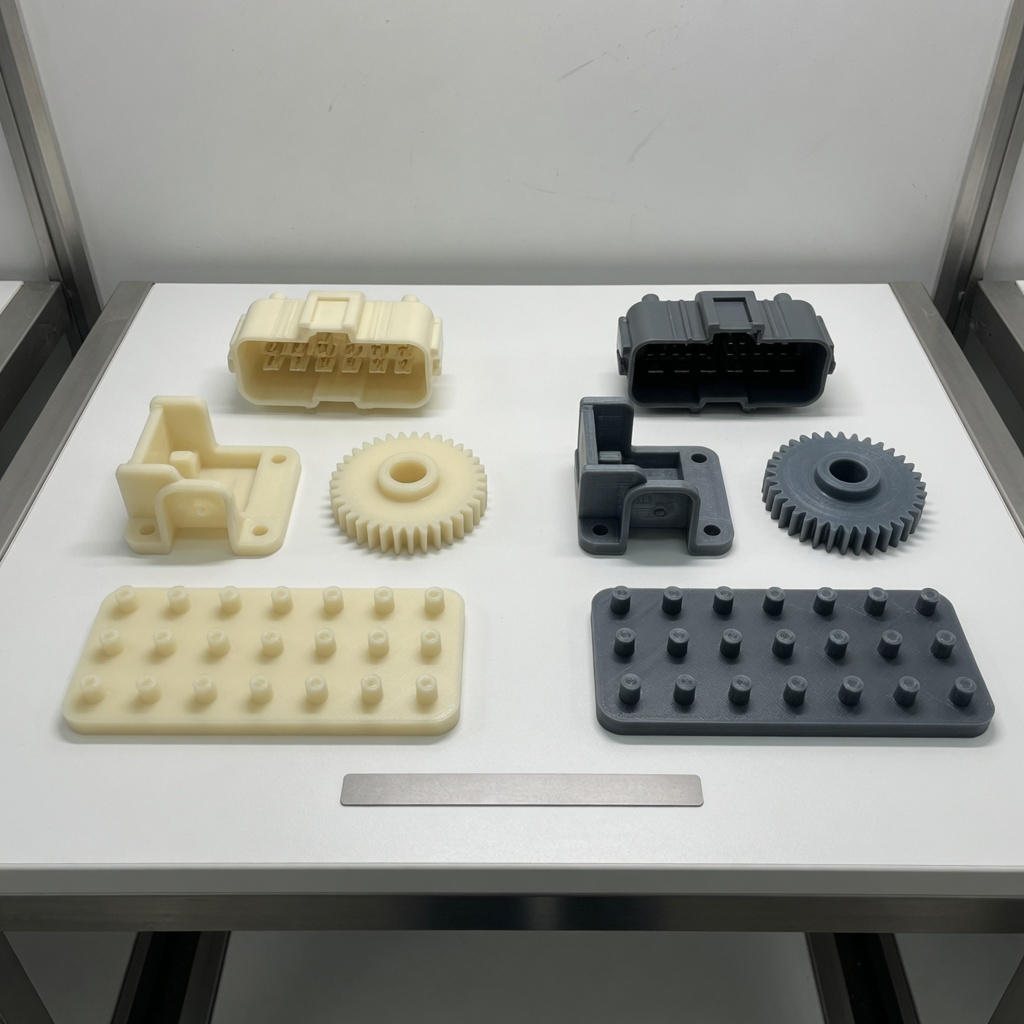
Why Nylon Melting Point Matters
Nylon melting point affects resin selection, mold design, and processing settings. Teams often ask does nylon melt or what temp does nylon melt because they need to know whether the material fits a specific production environment.
The melting point matters because it influences:
- Injection molding temperature setup
- Heat resistance expectations
- Material choice between PA6, PA66, and other engineering plastics
- Part stability in higher-temperature environments
In simple terms, PA66 is often chosen when higher thermal performance is needed, while PA6 may be preferred when processing balance and cost structure are more important.
Why Published Nylon Values Can Look Different
If you compare datasheets, you will notice that not every source gives the exact same nylon density or melting point number. That does not necessarily mean one source is wrong. Differences can come from:
- Unfilled versus reinforced grades
- Flame-retardant or impact-modified formulations
- Different test standards or reporting methods
- Moisture condition and conditioning status
- Supplier-specific resin design
For this reason, a practical engineering approach is to use general values for early screening and then confirm the final number on the actual grade datasheet before locking the project.
Typical Processing Perspective
Another common mistake is confusing melting point with molding temperature. Even if nylon 6 melts around 220 C and nylon 66 melts around 260 C, the actual injection molding melt temperature is usually higher in production in order to achieve proper flow and filling.
That is why processors monitor drying, melt temperature, mold temperature, residence time, and moisture content rather than relying on a single thermal number.
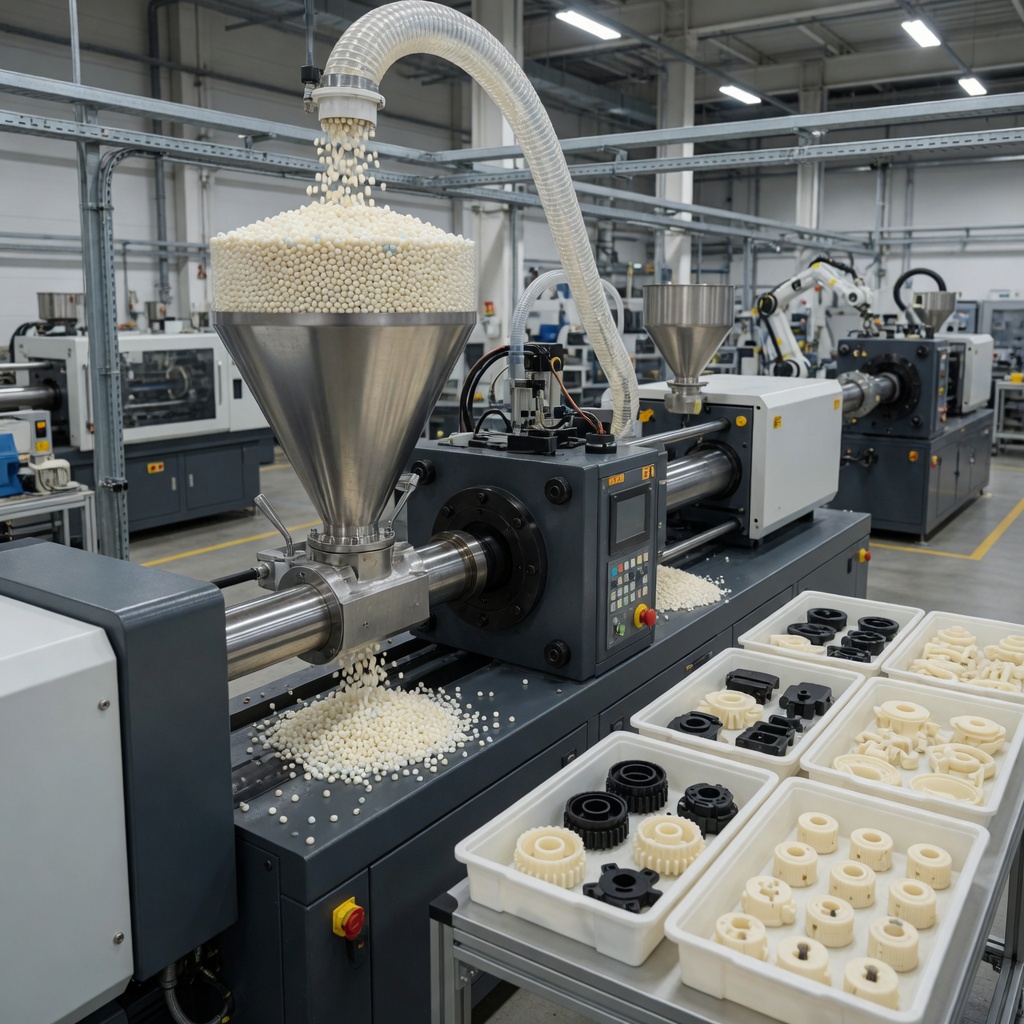
Final Answer: What Is Nylon Density and What Temperature Does Nylon Melt?
If you need a practical reference, standard unfilled nylon density is usually around 1.13 to 1.15 g/cm3, depending mainly on whether you are discussing PA6 or PA66. Standard nylon melting point is usually around 220 C for PA6 and around 255 to 265 C for PA66.
Those numbers are good starting references, but the correct engineering decision should always be based on the exact nylon grade, reinforcement level, and end-use requirement.
Why Choose WanHan for Engineering Plastic Projects?
Since 2005, WanHan has focused on independent R&D, production, and global sales of functional engineering plastics for more sustainable industrial applications. Certified to ISO 9001, ISO 14001, ISO 45001, and IATF 16949, we operate with complete in-house testing equipment and strict quality control throughout development and production. Our materials are exported to more than 30 countries and are widely used in automotive, electronics, home appliances, and industrial applications that require higher-performance polymer solutions.
- Application-based material selection support for OEM, injection molding, and product development teams.
- Custom compounding capability for glass fiber, flame-retardant, carbon fiber, mineral-filled, impact-modified, anti-UV, and color-customized grades.
- Full quality control with in-house testing equipment and certified systems for more stable repeat orders and production consistency.
- Free sample support, technical data sheets, and processing guidance to shorten validation time before mass production.
- Fast quotation response, export-ready packaging, and practical support for long-term production supply programs.
If you are selecting a resin for a new project or replacing an existing grade, WanHan can help with grade matching, sample preparation, and custom compound evaluation. You can send your target application, part drawing, annual quantity, or required properties through WanHan's inquiry page to get a faster quotation and material recommendation. You can also review top-sale engineering plastic grades for faster project matching.
For nylon temperature and density evaluation, you can pair WanHan's PA6 material range, PA66 material range, and nylon properties guide to narrow down the right family before sample testing.
Frequently Asked Questions
Q: What is the density of nylon?
A: The density of standard unfilled nylon is typically around 1.13 to 1.15 g/cm3, with PA6 and PA66 both falling near that range depending on grade and formulation.
Q: What is the melting point of nylon?
A: The melting point of nylon depends on the type. Nylon 6 is typically around 220 C, while nylon 66 is typically around 255 to 265 C.
Q: What temperature does nylon melt?
A: Nylon 6 usually melts around 220 C and nylon 66 usually melts around 255 to 265 C, but actual processing temperatures are often higher than the base melting point.
Q: Is nylon 66 denser than nylon 6?
A: Nylon 66 can be slightly denser than nylon 6 in some grades, but both are usually close to each other in standard unfilled form, often around 1.13 to 1.15 g/cm3.
Q: Why do nylon density and melting point values change between datasheets?
A: Values can change because of fillers, flame retardants, impact modifiers, moisture condition, test methods, and supplier-specific resin formulations.
Nylon Properties Explained: Strength, Melting Point, Density, and Applications
Core vs Cavity of Mold: Key Differences in Injection Molding
Related Article



