
PA6 GF50 Properties, Applications, Processing, and Grade Selection
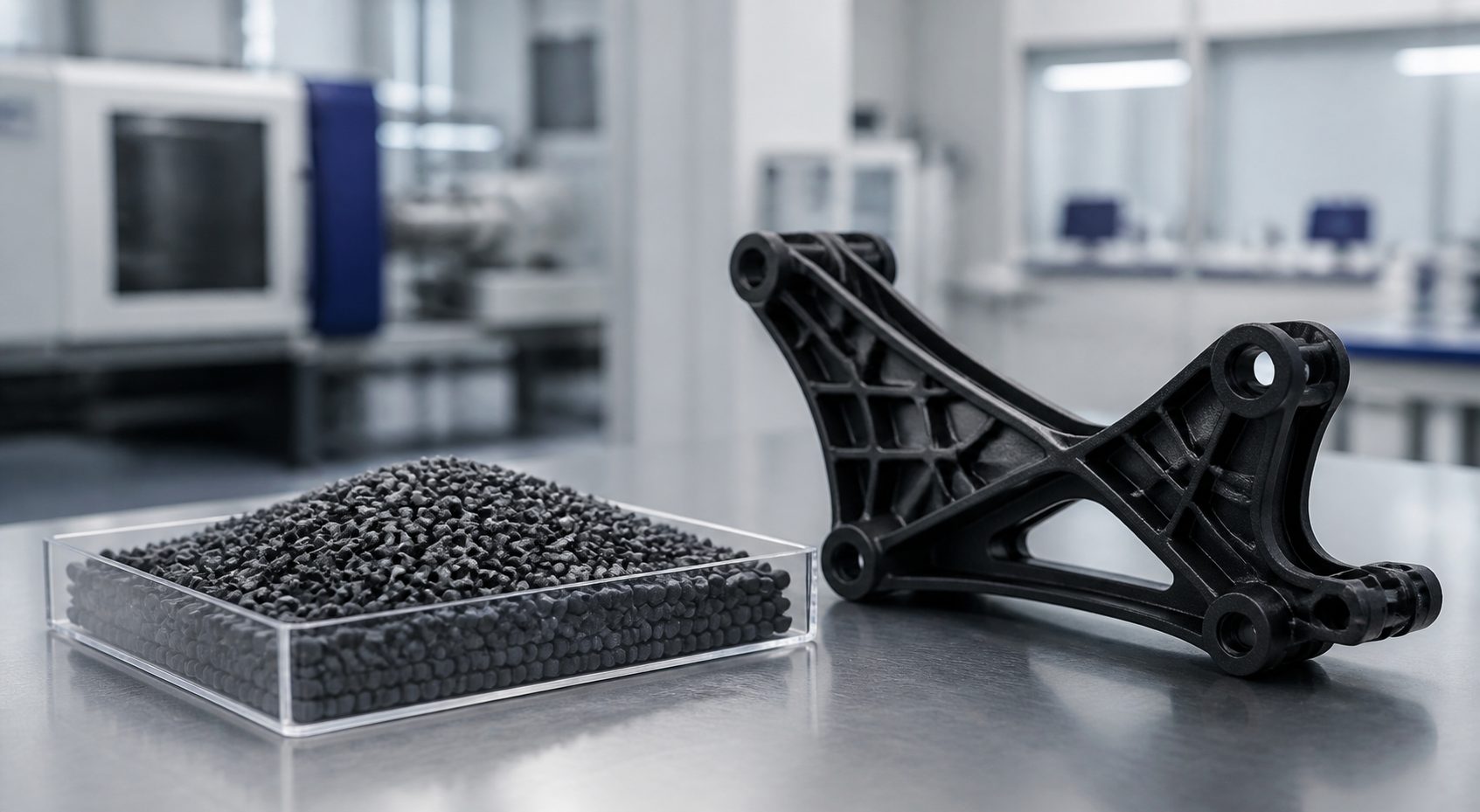
PA6 GF50 is polyamide 6 (nylon 6) reinforced with approximately 50% glass fiber by weight. It is designed for injection-molded parts that need very high stiffness, reduced deflection, creep resistance, and improved dimensional control compared with unfilled PA6 or lower glass-fiber grades.
The material code describes only the base polymer and reinforcement level. PA6 GF50 is not one universal specification. Heat stabilization, impact modification, hydrolysis resistance, lubrication, color, flame performance, and low-warpage packages can change molding behavior and long-term results. Buyers should approve a specific grade against the actual part, environment, and validation plan.
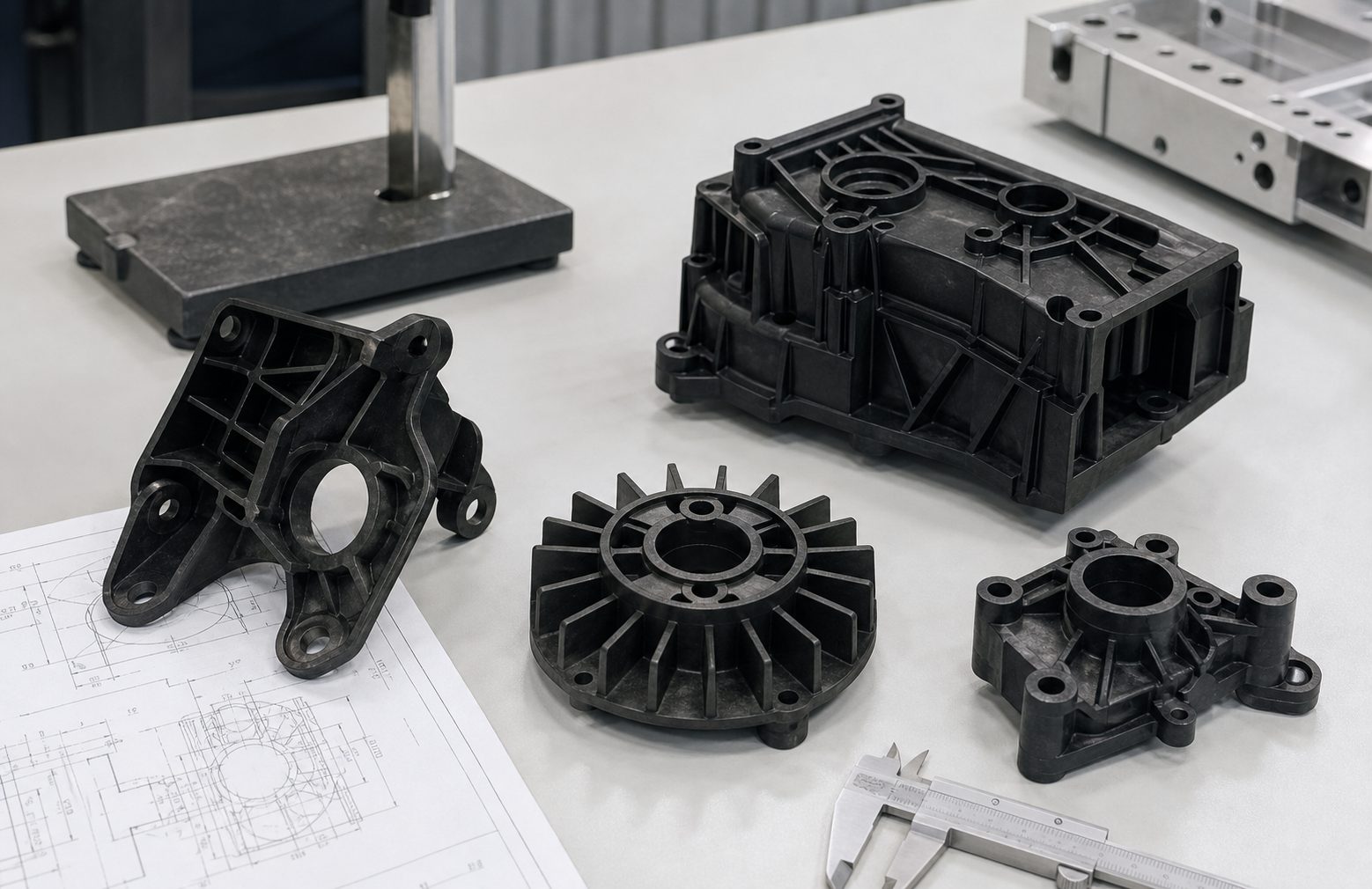
How 50% Glass Fiber Changes Nylon 6
| Selection factor | Unfilled PA6 | Typical effect of GF50 reinforcement |
|---|---|---|
| Stiffness | Moderate modulus with useful toughness | Much higher modulus and lower deflection under structural load |
| Strength and creep | Lower load capacity and more long-term movement | Higher strength and improved resistance to sustained deformation |
| Dimensional behavior | More moisture- and temperature-driven movement | Lower overall movement, but stronger flow/transverse anisotropy |
| Impact and elongation | Higher ductility | Lower elongation; weld lines, ribs, bosses, and sharp corners need careful design |
| Processing | Less abrasive and easier flowing | More screw, barrel, gate, and mold wear; fiber orientation strongly affects warpage |
A high glass level does not automatically make PA6 GF50 the best grade. If the part needs snap-fit flexibility, impact at low temperature, thin-wall flow, a class-A surface, or sliding contact, a lower reinforcement level or a modified compound may produce a safer design.
Typical PA6 GF50 Property Ranges
The following ranges are for preliminary screening only. They are not a guaranteed specification. Conditioning, fiber orientation, specimen thickness, color, stabilizers, and test method can materially change the result.
| Property | Representative screening range | Buyer check |
|---|---|---|
| Density | About 1.50-1.60 g/cm3 | Confirm the exact grade value for part weight and shot-size calculations |
| Tensile strength, dry | Often about 180-240 MPa | Compare flow direction, transverse behavior, weld-line strength, and conditioned values |
| Flexural modulus, dry | Often about 13-17 GPa | Validate deflection using production geometry and fiber orientation |
| Heat deflection performance | Commonly above 180 C at the supplier's stated load | Check the test load, specimen condition, and heat-stabilization package |
| Molding shrinkage | Frequently about 0.1-0.6% | Measure both flow and transverse directions before tool correction |
| Moisture response | Grade- and test-dependent | Approve both as-molded-dry and service-conditioned dimensions when relevant |
Common PA6 GF50 Applications
- Automotive: high-stiffness brackets, fan supports, air-management structures, pump supports, carriers, and under-hood housings
- Industrial equipment: machine brackets, structural covers, guides, supports, pump and valve components, and load-bearing carriers
- Electrical and appliance parts: motor supports, frames, coil structures, rigid housings, and repeated-assembly features where the selected grade meets electrical requirements
- Metal-replacement projects: selected parts where lower weight, corrosion resistance, integrated ribs, and molding productivity justify the polymer design
PA6 GF50 is not automatically suitable for fuel, coolant, hot water, strong acids, flame-critical electrical parts, or prolonged high-temperature exposure. The formulation and validation method must match the service environment.
Injection Molding and Part-Design Risks
PA6 GF50 must be dried to the moisture limit stated on the selected grade's technical data sheet. Excess moisture can cause hydrolytic degradation, surface defects, unstable viscosity, and loss of mechanical performance. The supplier's drying temperature, drying time, melt window, mold temperature, and residence-time limits should control processing.
- Use wear-resistant screws, barrels, nozzles, gates, and mold components when production volume justifies them.
- Place gates so fiber orientation supports the main load path without creating unacceptable warpage.
- Avoid abrupt wall changes and sharp internal corners; use appropriate radii at ribs, bosses, and mounting points.
- Keep critical weld lines away from pressure loads, insert torque, and safety-critical features.
- Validate dimensions after the part reaches realistic service moisture, not only immediately after molding.
- Test production-tool parts for thermal cycling, chemicals, vibration, fastener torque, fatigue, and sustained load.
PA6 GF50 Compared with Alternatives
| Alternative | Why buyers consider it | Main trade-off to review |
|---|---|---|
| PA6 GF30 | Better flow, toughness, lower tool wear, and easier processing | Lower stiffness and structural load capacity |
| PA66 GF30 or GF50 | Higher-temperature capability for selected formulations | Moisture behavior, processing temperature, brittleness, and cost |
| PBT GF30 | Lower moisture uptake and dimensional stability in electrical applications | Hydrolysis, impact, heat aging, and application-specific flame performance |
| Carbon-fiber nylon | Higher specific stiffness and lower thermal expansion | Cost, electrical behavior, brittleness, and processing wear |
| Aluminum or steel | Predictable isotropic behavior and high load capability | Weight, corrosion, machining, assembly, and total part cost |
For product availability and starting-grade discussion, review WanHan's PA6 GF50 material page. Buyers comparing reinforcement levels can also review the broader PA6 nylon product range.
What to Send a PA6 GF50 Supplier
- Part drawing, wall thickness, gate restrictions, and critical dimensions
- Continuous and peak temperature, load, vibration, and service-life target
- Moisture, oil, fuel, coolant, detergent, or other chemical exposure
- Impact, fatigue, flame, electrical, automotive, or customer-specific approvals
- Color, surface, weld-line, warpage, and dimensional requirements
- Annual demand, sample quantity, current grade, and the problem to be solved
Why Choose WanHan?
Since 2005, WanHan has focused on the development and production of functional engineering-plastic compounds. Support can include grade comparison, heat or hydrolysis stabilization, impact modification, flame-retardant requirements, color matching, samples, technical data, molding guidance, and production follow-up.
Send the application conditions and validation targets through WanHan's engineering-plastic inquiry form to discuss a practical PA6 GF50 starting grade.
Frequently Asked Questions
What does PA6 GF50 mean?
PA6 GF50 is nylon 6 compounded with approximately 50% glass fiber by weight. The reinforcement delivers very high stiffness and reduced deflection, with greater anisotropy and processing wear.
What is PA6 GF50 used for?
It is used for automotive brackets, fan and pump supports, structural housings, appliance frames, industrial carriers, and other high-stiffness molded parts.
What is the density of PA6 GF50?
Many injection-molding compounds are around 1.50-1.60 g/cm3, but buyers should use the exact grade value from the supplier's technical data sheet.
Does PA6 GF50 absorb moisture?
Yes. The PA6 matrix still absorbs moisture. Glass fiber reduces overall dimensional movement, but conditioned properties and service dimensions must be validated.
What are alternatives to PA6 GF50?
Alternatives include PA6 GF30, PA66 GF30 or GF50, PBT GF30, mineral-filled nylon, carbon-fiber nylon, or metal, depending on the load, environment, processing, and cost targets.
Nylon 6,6 Structure and Properties: Engineering Polymer Guide
Nylon 6 Raw Material: Polycaprolactam Properties, Supply, and Processing Guide
Related Article



