Category


PA9T GF35 Glass Fiber Reinforced Polyamide 9T Pellets
PA9T GF35 is a glass fiber reinforced high-temperature polyamide for precision molded electrical components where stiffness, heat exposure and assembly fit must be considered together. WanHan supplies this nominal 35% glass fiber compound as pellets for evaluating connector housings, sensor bodies, coil bobbins and related engineering parts. Share the operating temperature profile, critical dimensions and assembly method so our team can match the material review and sample trial to your component.
Product Information
| Item | Details |
|---|---|
| Material | Polyamide 9T (PA9T), glass fiber reinforced |
| Grade designation | PA9T GF35 |
| Reinforcement | Nominal 35% glass fiber |
| Form and processing | Pellets for injection molding |
| Project options | Discuss color, reinforcement, impact modification, flame retardancy, heat and wear requirements |
| Grade documentation | Request the current formulation TDS, processing guidance and project documentation |
Product Advantages of PA9T GF35
1. 35% glass fiber reinforcement
The glass fibers reinforce the PA9T matrix to support rigid ribs, walls and mounting features. For a connector or sensor body, relate the stiffness data to insertion forces, screw loads and the displacement allowed at the mating surfaces.
2. Heat-focused material selection
PA9T is a high-temperature polyamide family used in demanding electrical and automotive components. Match the specific compound to your continuous exposure, short heat peaks and assembly process. For a soldered component, include the actual temperature cycle and post-assembly inspection in the trial.
3. Dimensional control at mating features
Glass reinforcement can help limit deformation, while flow direction and part geometry govern the result. Measure pin pitch, flatness, latch engagement and locating dimensions both after molding and after the conditioning expected in service.
4. Lower moisture uptake as a design consideration
The PA9T resin family offers low water absorption among polyamides. That makes it a useful candidate when humidity affects fit or assembly. Obtain conditioned data for the proposed formulation and verify the tolerance on your molded samples.
5. Detailed injection molded geometry
Pellet supply supports molding of connector cavities, locating shoulders, ribs and integrated mounting points. Review fill length, venting, gate location and weld-line position with the moldmaker before approving a small or thin-walled component.
6. A basis for loaded-part trials
Reinforcement helps a molded component resist deflection. For a terminal block or mounting ear held under load, test at the intended temperature and over a relevant duration. Inspect fastening torque retention and permanent movement at the joint.
7. Electrical component formulation review
Connector and insulating-part projects require the electrical and flame requirements to be defined early. Specify the required wall thickness, tracking resistance, dielectric requirements and flame classification so WanHan can review the appropriate compound and documentation with you.
8. OEM development around the part requirement
WanHan can discuss reinforcement level, color, impact modification, flame retardancy, heat and wear requirements for a project-specific formulation. Define the property targets and acceptance criteria together so sample development addresses the limitation in your current component.
PA9T GF35 Application Concepts
Use these component concepts to start a grade review. Provide the drawing and service conditions to evaluate the proposed compound for your application.
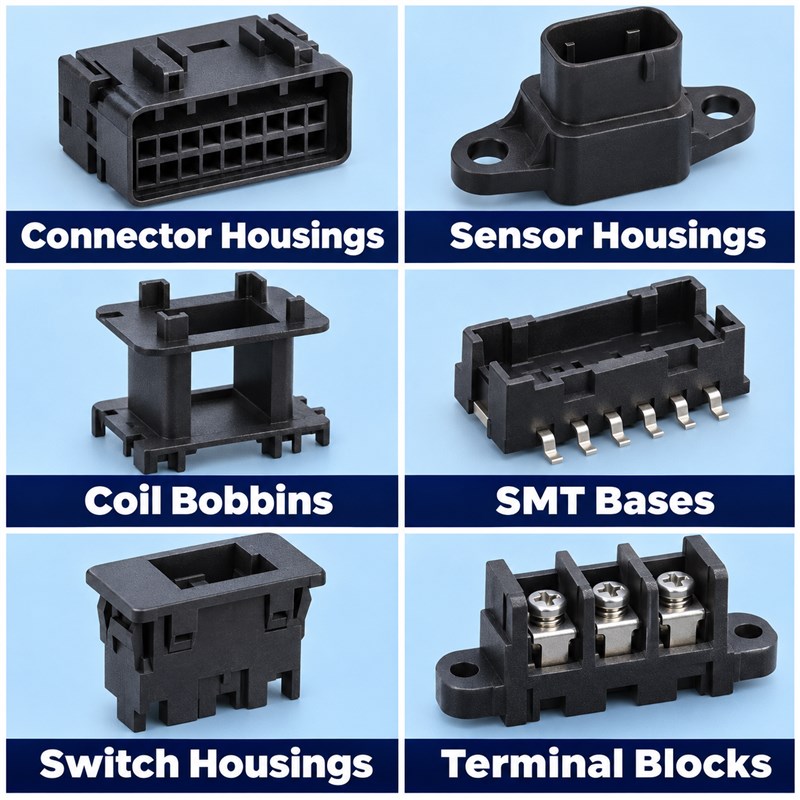
Precision connector housings
Start with cavity pitch, latch geometry and terminal retention. Check mating and unmating forces after conditioning, and inspect the walls and latches for damage after repeated assembly. This connects the material choice to the connector's actual fit and handling requirements.
Sensor housings
For a housing with molded mounting ears or metal inserts, evaluate screw torque, insert retention and seal-face flatness. Include thermal cycling and the actual fluids contacting the housing. Record dimensional movement where it affects the sensor's installation.
Coil bobbins
Review winding loads, flange rigidity and the temperature reached during assembly and operation. Use molded samples to check flange movement and insulation geometry. Share the electrical requirements and wall thickness before selecting a flame-retardant formulation.
SMT connector bases
Provide the proposed soldering profile and storage conditions. Inspect flatness, blistering and terminal alignment after the complete assembly cycle. Choose a compound using grade-specific evidence for that cycle and verify it in the intended geometry.
Switch housings
Compare the fit of locating surfaces, moving components and snap features. Include assembly loads, repeated actuation and the local temperature around contacts in the validation plan. Review flow direction near thin ribs and fastening points.
Terminal blocks
For screw-clamped terminals, check torque, clamp-load retention and movement near inserts after thermal exposure. Specify creepage and clearance geometry together with the required electrical and flame documentation for the finished design.
Material Selection and Processing
Request current grade-specific drying and molding guidance before the first trial. Record pellet preparation, melt and mold conditions, gate layout and the actual molded-part measurements. Compare dimensions along and across flow, inspect weld lines, and repeat critical measurements after the required conditioning and assembly cycle. Supply your present material and the feature that limits performance so the comparison has a clear acceptance target.
Why Choose WanHan Plastic
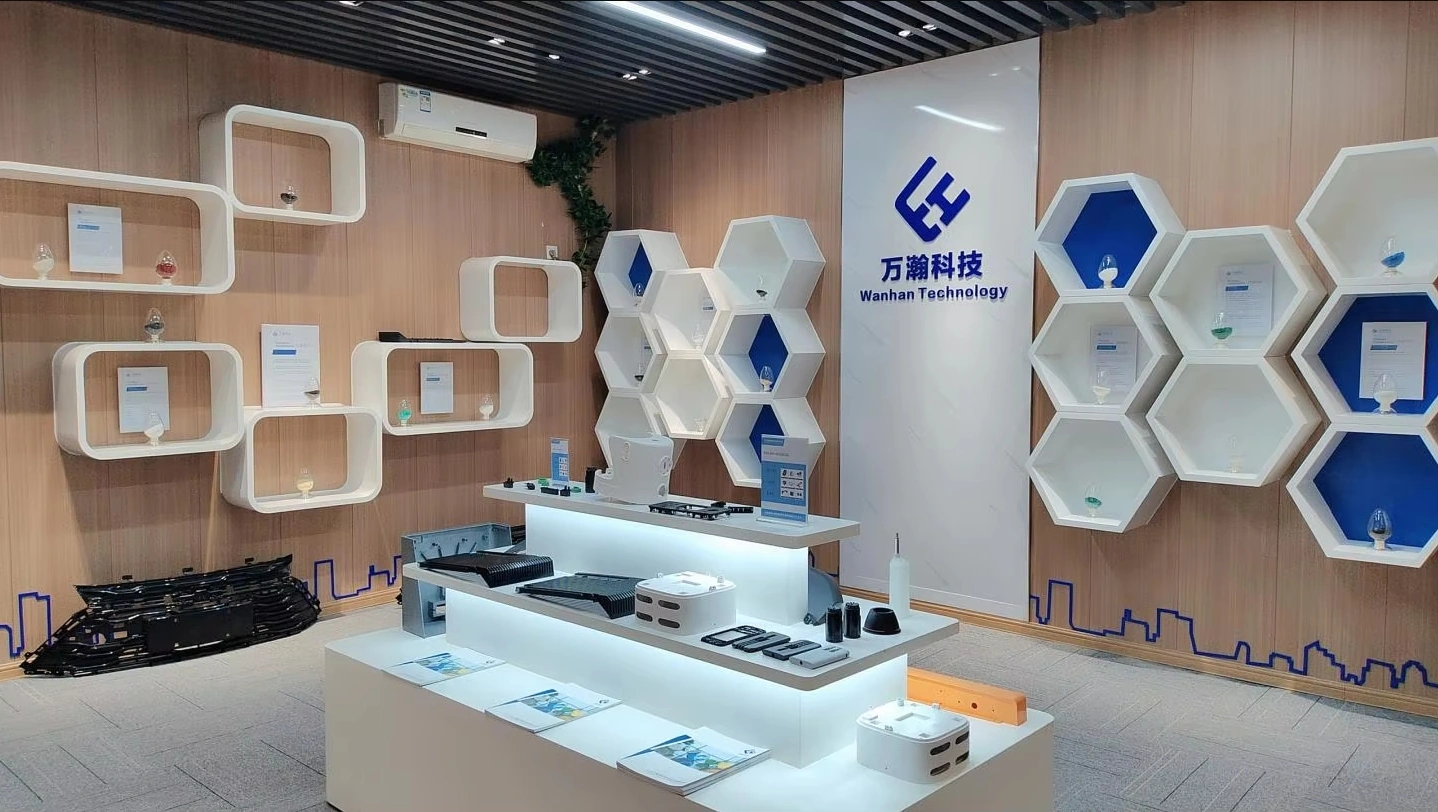
Guangdong Wanhan New Material Technology Co., Ltd. has specialized in modified engineering plastics since 2005. We manufacture PA6, PA66, PA11, PA12, ABS, PC, PC/ABS, PBT, PET, PPS, PPA and PP compounds. Our team supports material selection, formulation development, sample evaluation and production supply for customers with specific part and processing requirements.
For a PA9T GF35 project, we can discuss reinforcement, color, impact, flame, heat and wear requirements, along with the grade documents and sample plan needed for your approval process. Customized specifications, packaging and delivery arrangements are available for global customers.
- Engineering discussion before the trial. Share your drawing, present material and failure mode. Our team can focus the compound review on the fit, heat, fastening or processing constraint in your part.
- Formulation and color options. Coordinate the proposed specification with your engineering and purchasing teams, including the documents and sample quantities required for evaluation.
- Support from samples to production. Align resin preparation and molding guidance with the sample plan, then discuss production quantity, packaging and delivery using the agreed material specification.
Frequently Asked Questions
1. What is PA9T GF35?
It is a polyamide 9T compound reinforced with nominal 35% glass fiber and supplied as pellets. It is a candidate for precision molded electrical and engineering components where stiffness, temperature exposure and dimensional fit are important.
2. How should I compare PA9T GF35 with PA66 or other PPA grades?
Compare the exact grades using conditioned mechanical data, dimensional change, temperature exposure and the required electrical documentation. Include part weight, moldability and molded-part results so the evaluation reflects both performance and production cost.
3. Can the material be used for SMT connectors?
PA9T is a material family used in SMT connector applications. For your component, provide the soldering profile, wall thickness and conditioning requirements. Confirm grade-specific assembly suitability and inspect representative molded parts after the complete process.
4. Is a particular UL94 rating included?
Provide the classification, color and test thickness you need. WanHan can review the proposed formulation and available documentation with you before quotation and sample approval.
5. Can WanHan customize the compound?
Yes. Discuss glass fiber content, color, impact modification, flame retardancy, heat and wear requirements. A customized specification should include the property targets, documents and sample acceptance criteria needed for your application.
6. What information is needed for samples and a quotation?
Send the drawing, current material, temperature profile, critical dimensions, assembly loads, fluid exposure and compliance requirements. Include your color reference, trial quantity, expected production volume and delivery destination so we can discuss development and supply together.
Request a Sample and Current TDS
Send your component requirements for a PA9T GF35 grade review, sample discussion and quotation.
Send Message
ABOUT US -- WanHan Technology
--Boasting 18 years of extensive experience in both the Chinese and international markets.
--Highly specialized in catering to the specific needs of the industry.Boasting a highly qualified development team.
--Owns its own production plant.
--Customer-centric approach, providing customized final outcome plans.
--Material quality meets international standards, ensuring excellence.ISO9001, IATF16949, ISO14001, ISO45001, SGS, REACH, ROSH