
PBT GF30 for Automotive Sensor Housings and ECU Connectors
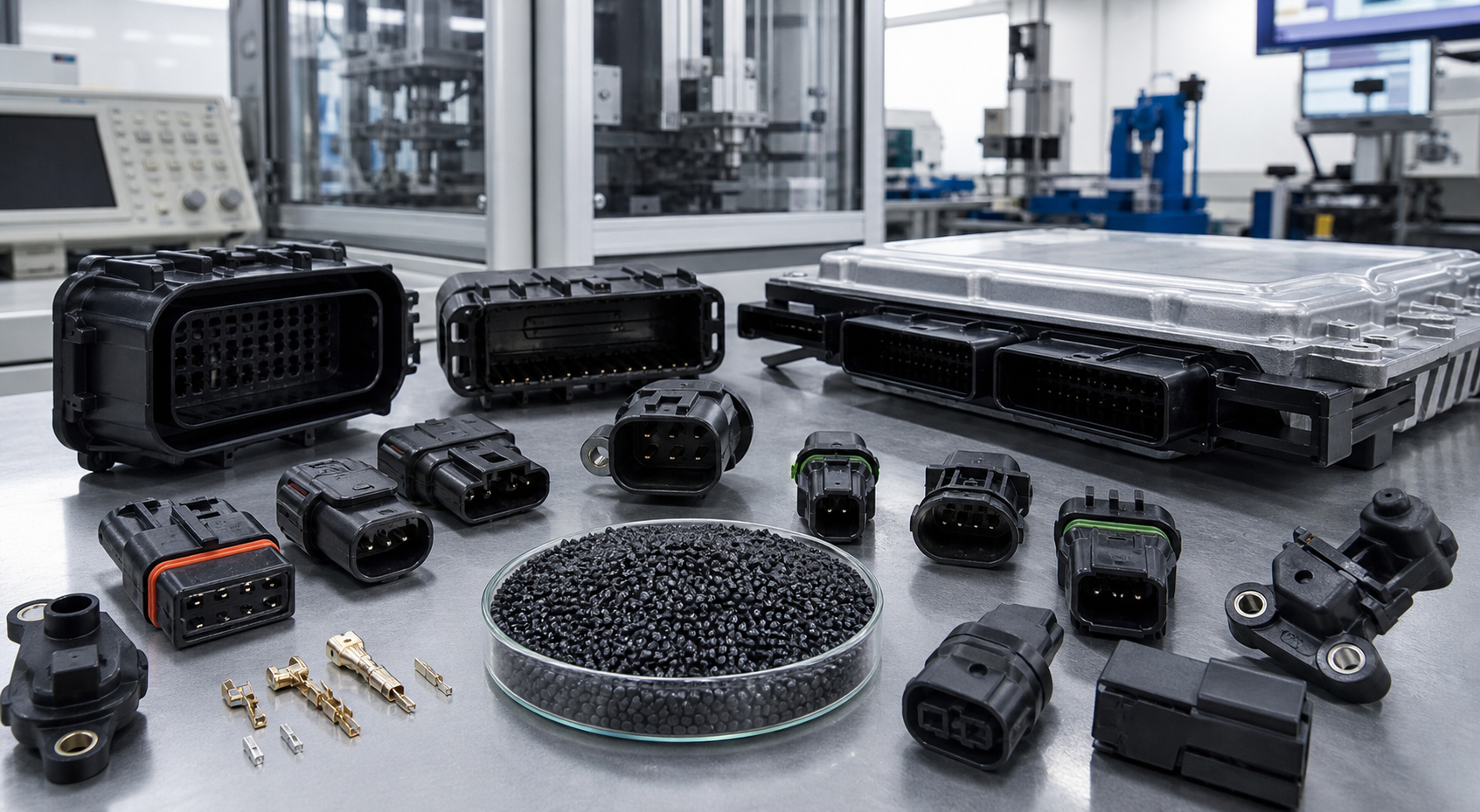
PBT GF30 automotive sensor housing material is used for precision housings that must protect electrical interfaces while maintaining stable dimensions across heat, vibration, moisture, and chemical exposure. Applications include pressure and position sensors, ECU and module connectors, radar-related housings, coil bodies, and sealed electrical components.
Glass-filled PBT combines stiffness and relatively low moisture sensitivity with useful electrical insulation and molding performance. WanHan can supply reinforced PBT grades and compare flame-retardant PBT when the sensor or connector also has a specific fire-safety target.
Sensor housings often contain thin walls, pin fields, seals, overmolded terminals, and tight datum structures. Grade choice must consider hydrolysis, thermal cycling, warpage, connector fit, sealing, laser marking or welding, and the exact under-hood or cabin location.
Sensor Housing Performance Requirements
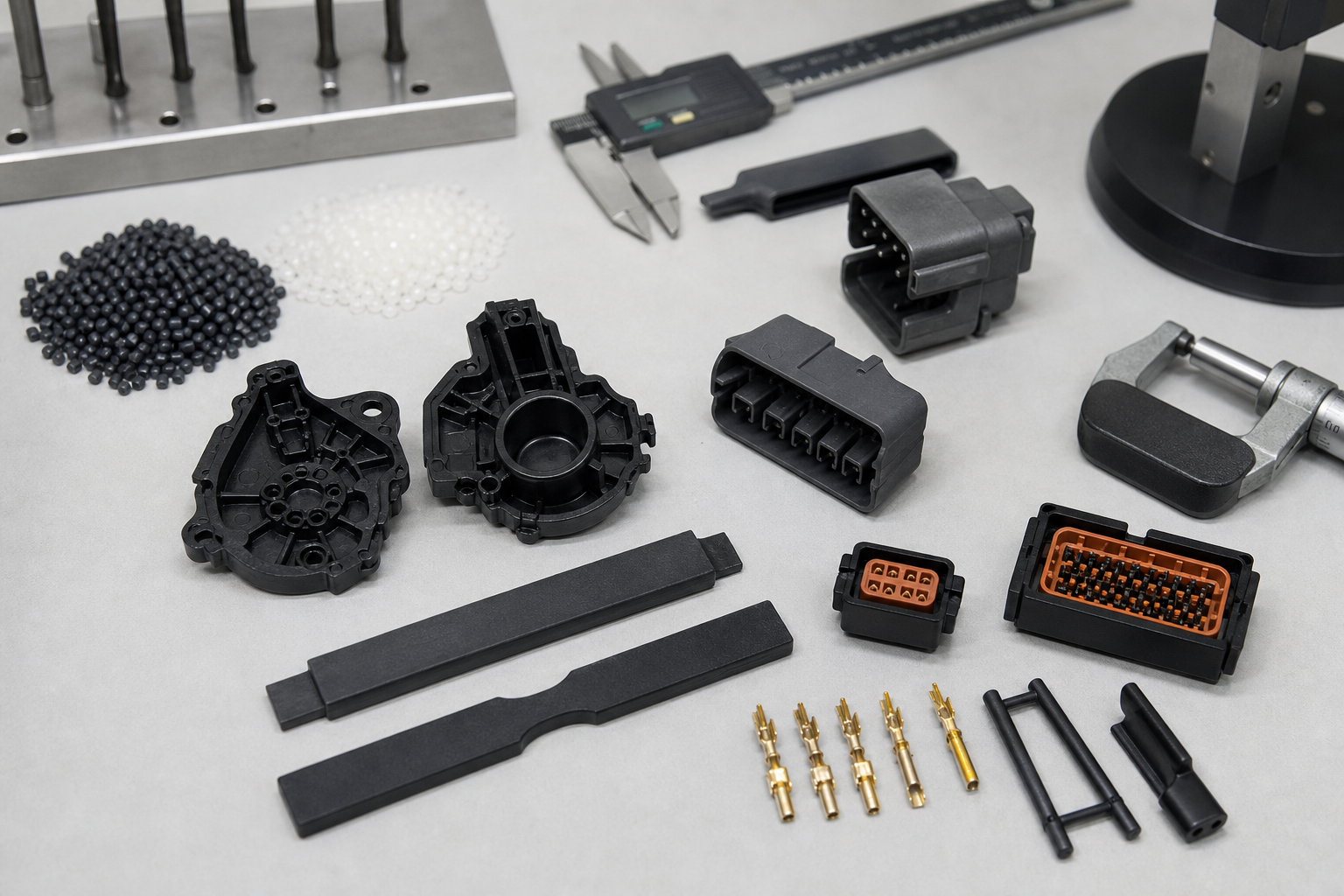
The housing must hold terminals and seals in position while resisting vibration and temperature change. Dimensional drift can alter pin alignment, connector engagement, leak tightness, or the sensor's relationship to a measured medium.
PBT GF30 is a common starting route for precision automotive electrical parts, but exterior or wet locations may require hydrolysis stabilization, UV control, or an alternative resin after the exposure profile is reviewed.
- Warpage that shifts pin position, sealing surfaces, or mounting datums
- Hydrolysis in hot, humid, or fluid-contact locations
- Cracks around overmolded terminals, snap fits, or weld lines
- Loss of seal performance after thermal cycling and vibration
- Poor laser welding, marking, adhesion, or potting compatibility
Material and Grade Selection
| Housing condition | PBT grade direction | Required verification |
|---|---|---|
| Dry cabin electronics | Standard PBT GF30 | Dimensions, connector fit, vibration, and heat cycling |
| Under-hood humidity or fluid exposure | Hydrolysis-stabilized PBT GF30 | Aged strength, sealing, and chemical resistance |
| Flame-controlled electrical module | PBT GF30 FR | UL 94, CTI, heat aging, and molding deposits |
| Laser-welded or marked housing | Laser-compatible color/formulation | Weld strength, transmission, mark contrast, and sealing |
Part Design and Injection Molding Notes
PBT must be dried carefully because hydrolytic degradation can occur during processing if the resin contains too much moisture. Drying, material transfer, melt temperature, and residence time should be recorded during sample and production molding.
Fiber orientation drives shrinkage and warpage. Balanced gates, uniform walls, symmetrical ribs, and controlled packing can improve pin-field position and flange flatness. Weld lines at terminal bases, latches, and pressure ports should be reviewed in mold-flow and physical trials.
- Verify resin moisture before molding and prevent reabsorption
- Measure pin position, flange flatness, and seal grooves after thermal cycling
- Review terminal preheat, insert cleanliness, and overmolding pressure
- Confirm compatibility with seals, potting, adhesives, laser welding, or marking
Prototype and Production Validation
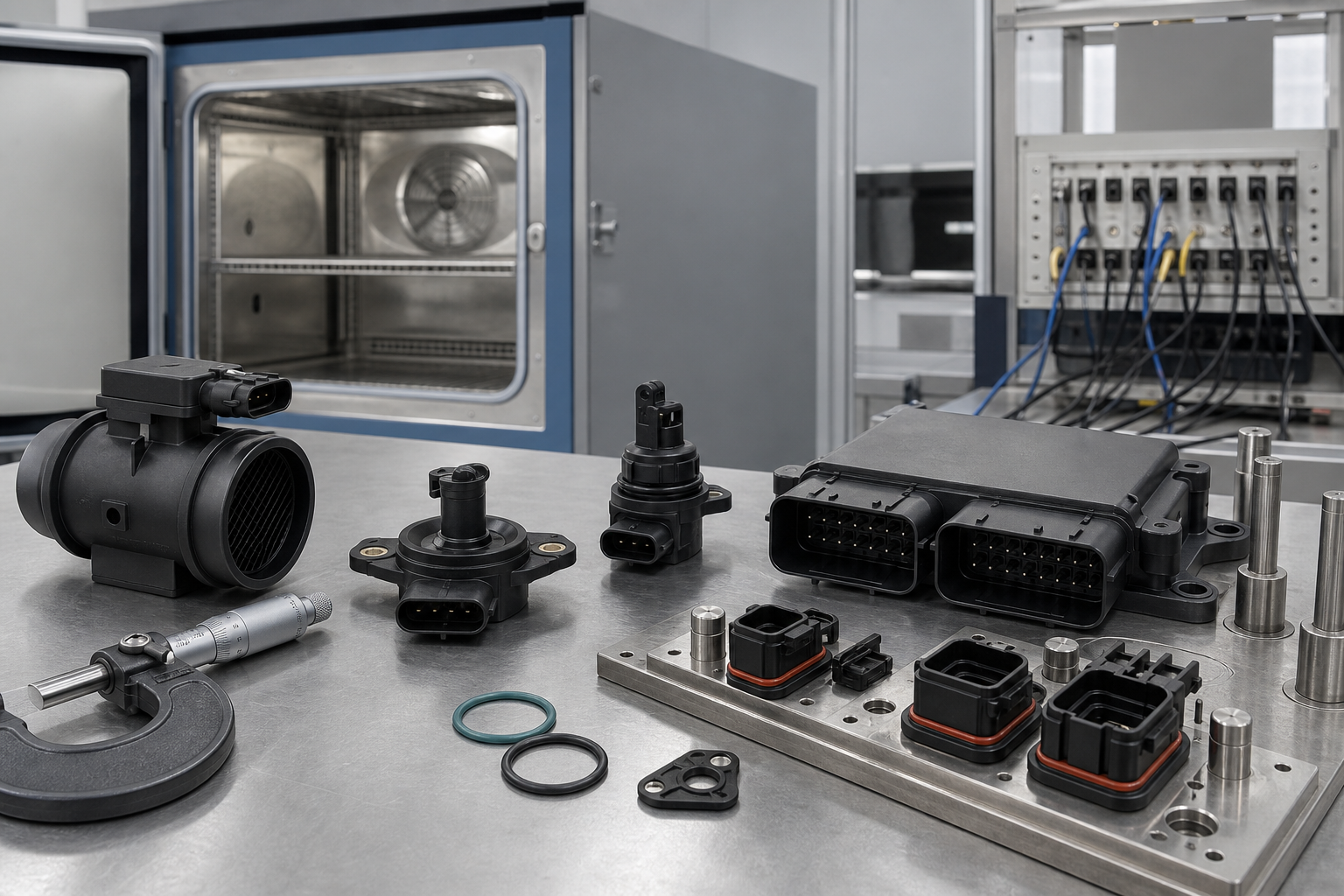
A sensor housing program normally needs dimensional capability studies plus thermal shock, humidity, vibration, chemical exposure, connector engagement, and leak or pressure tests. Exterior-facing sensors may also require UV, salt spray, or water-ingress validation.
Compare molded parts from representative cavities and include aged measurements. A stable initial dimension is not sufficient if the seal groove, terminal field, or mounting datum moves after heat and humidity exposure.
- Sensor type, installation location, and continuous/peak temperature
- Fluid, humidity, UV, salt, vibration, and thermal-cycle exposure
- Critical tolerances, terminal layout, seal design, and joining process
- Flame, CTI, color, marking, traceability, and annual demand
Why Choose WanHan
Since 2005, WanHan has developed engineering plastics for demanding industrial applications, with independent R&D, production, and sales of functional polymer materials.
WanHan is certified with ISO 9001, ISO 14001, ISO 45001, and IATF 16949. Full sets of testing equipment support incoming material control, formulation development, process inspection, and finished-batch verification.
- Modified PA6, PA66, PBT, PC/ABS, glass-filled, flame-retardant, heat-stabilized, color, and custom compound options
- Application review, grade comparison, sample support, data sheets, test coordination, and production follow-up
- Materials exported to 30+ countries for automotive, electronics, home appliance, and industrial components
Discuss Your Material Requirement
Send the sensor-housing drawing, location, exposure profile, critical tolerances, terminal and seal design, joining process, and validation standard. WanHan can recommend standard, hydrolysis-stabilized, flame-retardant, or laser-compatible PBT GF30 samples.
Send your application details to WanHan or review our engineering plastic product range.
Frequently Asked Questions
Q: Why is PBT GF30 used for automotive sensor housings?
A: It provides stiffness, dimensional stability, electrical insulation, chemical resistance, and practical precision-molding performance for many sensor and connector housings.
Q: Does an under-hood sensor require hydrolysis-stabilized PBT?
A: It may. The decision depends on temperature, humidity, water or fluid contact, service life, and the required retained properties after aging.
Q: How does fiber orientation affect a PBT GF30 sensor housing?
A: Fiber orientation creates directional shrinkage and stiffness, which can move pin fields, flanges, seal grooves, and mounting datums if gate and part design are not balanced.
Q: Can PBT GF30 be used for overmolded terminals?
A: Yes, provided terminal geometry, cleanliness, preheat, molding pressure, weld lines, insulation distance, and pull-out performance are validated.
Q: Can WanHan provide flame-retardant or laser-compatible PBT GF30?
A: Yes. WanHan can discuss reinforced, flame-retardant, hydrolysis-stabilized, color, laser-marking, and laser-welding material requirements.
PBT FR V0 for Electrical Connectors, Relays, and Bobbins
PA66 FR V0 for Terminal Blocks and Electrical Insulators
Related Article



