
PC/ABS FR for Control Panel Housings and Electronic Enclosures
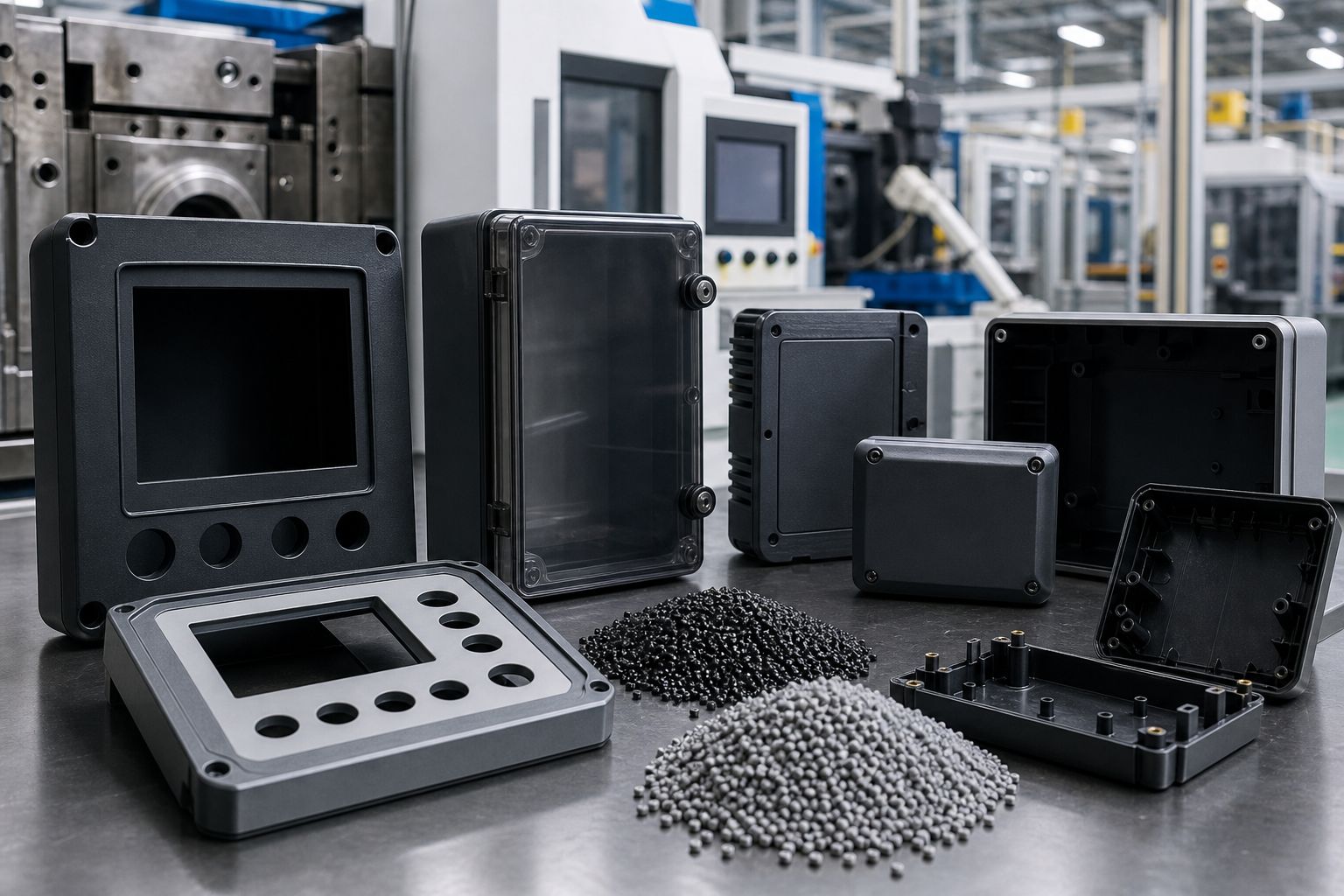
PC/ABS FR control panel housing material is used when an electronic enclosure needs a combination of impact resistance, heat performance, flame retardancy, dimensional stability, and a consistent visible surface. Typical parts include industrial control panels, power-supply housings, router and communication-device shells, appliance control covers, instrument cases, and internal electrical enclosures.
The PC component supports toughness and heat resistance, while ABS improves flow and surface quality. WanHan supplies PC/ABS V0 compounds and can compare standard PC/ABS materials or smaller-part PBT FR routes according to the enclosure size and safety target.
A successful housing grade must fill long flow paths, hold screw bosses and snap fits, pass the required flame test at the stated wall thickness, resist internal heat, and maintain the specified color, texture, gloss, and drop performance.
Control Panel and Enclosure Requirements
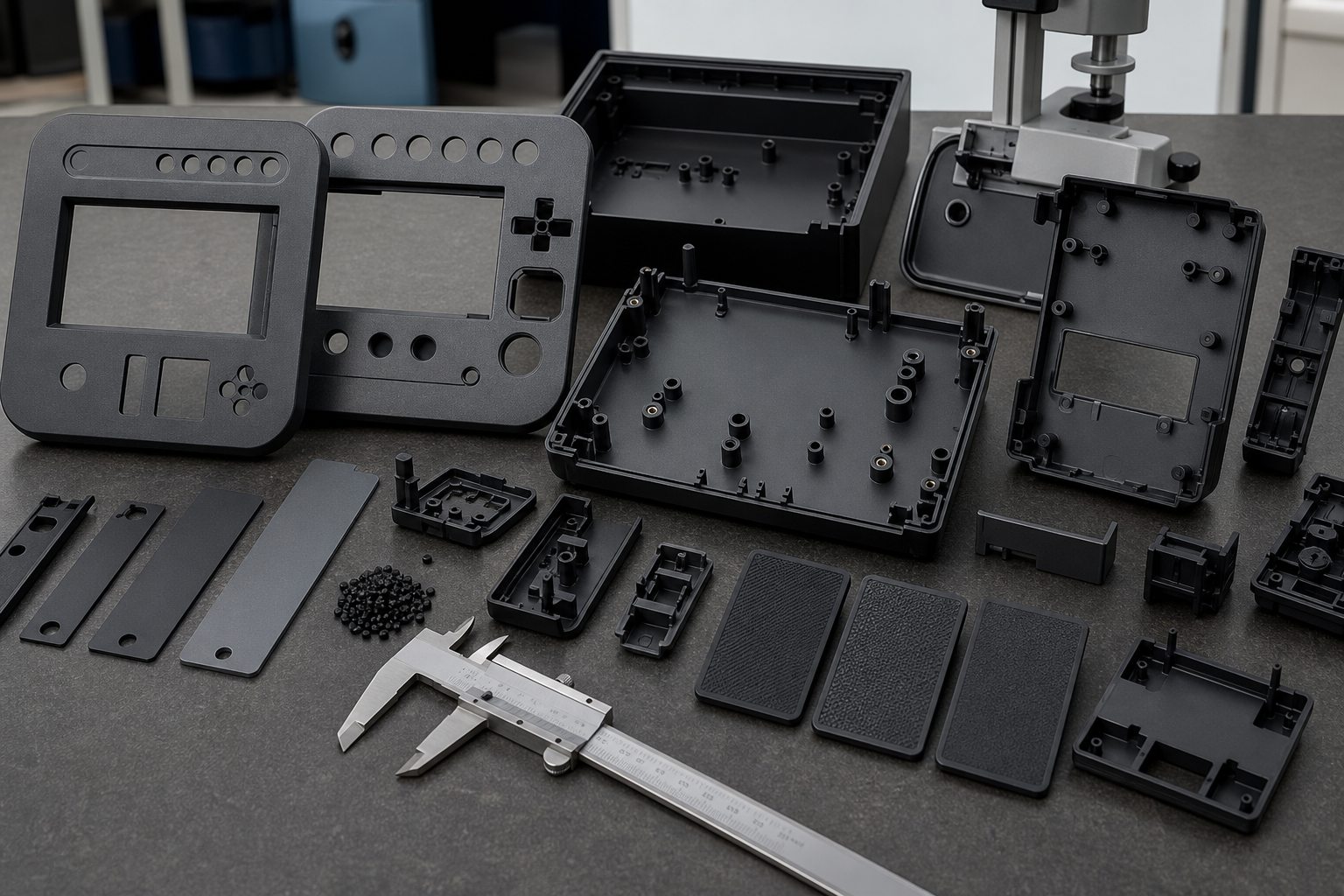
Large housings combine cosmetic surfaces with ribs, vents, bosses, clips, display windows, and cable interfaces. The resin must flow through the part without excessive stress, sink, weld-line weakness, or warpage.
Indoor and outdoor housings should not use the same approval assumptions. UV, weathering, cleaning chemicals, heat sources, battery proximity, and electrical safety requirements must be defined before selecting PC/ABS FR.
- Brittle screw bosses, snap fits, corners, or weld lines after aging
- Insufficient V0 performance at the actual minimum wall
- Flow marks, splay, gloss variation, sink, or color mismatch
- Environmental stress cracking from cleaners, oils, adhesives, or coatings
- Warping that affects displays, gaskets, PCB mounting, or enclosure sealing
Material and Grade Selection
| Housing condition | Material direction | Approval focus |
|---|---|---|
| Indoor control panel | PC/ABS FR with appearance balance | V0 thickness, color, texture, impact, and assembly |
| High-impact portable enclosure | High-impact PC/ABS FR | Drop test, low-temperature impact, bosses, and weld lines |
| Heat-generating power housing | Higher-heat PC/ABS FR or PC comparison | HDT, heat aging, vents, and hot-spot temperature |
| Outdoor or chemical-contact enclosure | UV/chemical-modified route or alternative resin | Weathering, cleaning agents, sealing, and stress cracking |
Part Design and Injection Molding Notes
PC/ABS FR must be dried according to the grade data because moisture can cause splay and property loss. Melt temperature and residence time should be controlled to protect the blend and flame-retardant system, particularly in large parts or hot-runner tools.
Uniform walls, radiused corners, balanced ribs, and correctly sized bosses reduce molded-in stress. Gate position should support complete filling while keeping weld lines away from drop-sensitive corners, latches, and screw bosses. Mold temperature and packing affect gloss, replication, shrinkage, and warpage.
- Confirm drying, hot-runner compatibility, melt window, and residence time
- Review flow length, gate position, weld lines, vents, bosses, and snap fits
- Approve texture, gloss, color, paint, plating, printing, or laser marking
- Check chemical compatibility with cleaners, adhesives, foam, and gaskets
Prototype and Production Validation
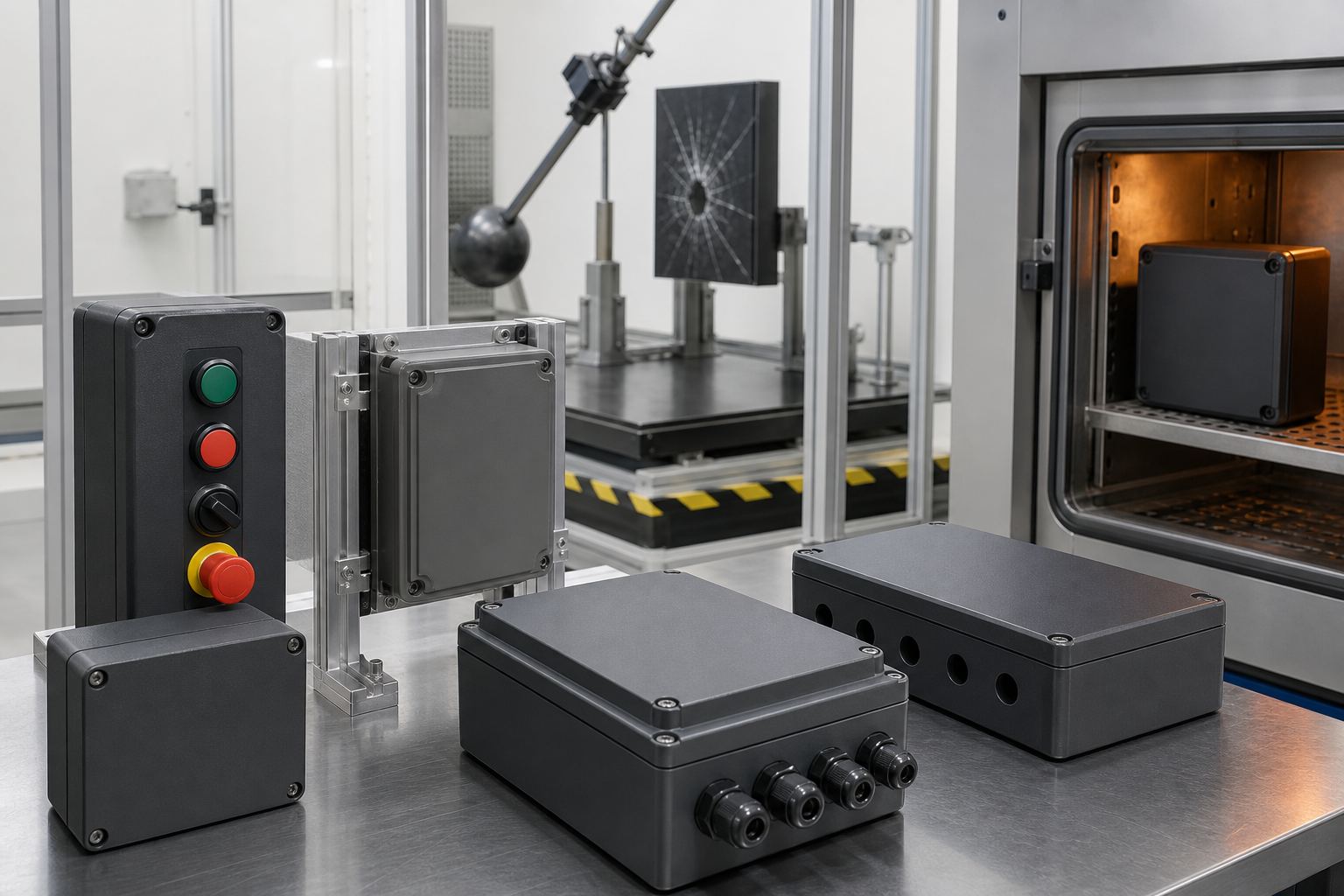
Housing approval should include flame testing at the required thickness, dimensional inspection, screw and snap assembly, drop or impact tests, heat aging, thermal cycling, and chemical exposure. Visible surfaces need agreed master plaques or molded appearance standards.
If the enclosure contains a strong local heat source, validate the real internal temperature rather than relying only on ambient conditions. For outdoor use, include UV and weathering or compare PC/ASA and other suitable routes.
- Housing drawing, size, wall thickness, vents, bosses, and assembly method
- UL 94 target, internal hot spots, drop height, and service temperature
- Indoor/outdoor use, chemicals, UV, color, texture, and finishing process
- Tool type, cavity count, sample quantity, annual demand, and documents
Why Choose WanHan
Since 2005, WanHan has developed engineering plastics for demanding industrial applications, with independent R&D, production, and sales of functional polymer materials.
WanHan is certified with ISO 9001, ISO 14001, ISO 45001, and IATF 16949. Full sets of testing equipment support incoming material control, formulation development, process inspection, and finished-batch verification.
- Modified PA6, PA66, PBT, PC/ABS, glass-filled, flame-retardant, heat-stabilized, color, and custom compound options
- Application review, grade comparison, sample support, data sheets, test coordination, and production follow-up
- Materials exported to 30+ countries for automotive, electronics, home appliance, and industrial components
Discuss Your Material Requirement
Send the enclosure drawing, minimum wall, flame target, drop and heat requirements, color and texture, chemical exposure, and finishing process. WanHan can recommend a PC/ABS FR grade and provide alternative material routes for prototype validation.
Send your application details to WanHan or review our engineering plastic product range.
Frequently Asked Questions
Q: Why is PC/ABS FR used for electronic enclosures?
A: It provides a balanced combination of impact resistance, heat performance, flame retardancy, moldability, dimensional stability, and visible-surface quality.
Q: Can PC/ABS FR meet UL 94 V0?
A: Suitable grades can meet V0 at specified test thicknesses. The exact grade, color, minimum wall, and certification must be confirmed for the project.
Q: Is PC/ABS FR suitable for outdoor control housings?
A: Standard PC/ABS may need UV and weathering modification for outdoor use. The exposure, color, service life, and sealing design should be reviewed before approval.
Q: How can screw-boss cracking be reduced in PC/ABS FR housings?
A: Use suitable boss geometry, radiused transitions, controlled molding stress, correct screw torque, chemical compatibility, and an impact grade validated after aging.
Q: Can WanHan match color and texture for visible housings?
A: WanHan can support color and formulation discussions, while the final appearance should be approved on molded plaques and production-tool samples with the specified texture.
What Is PA66 GF25? Properties, Uses, and Material Selection Guide
PBT FR V0 for Electrical Connectors, Relays, and Bobbins
Related Article



