
Plastic Extrusion: Process, Materials, and Industrial Product Guide
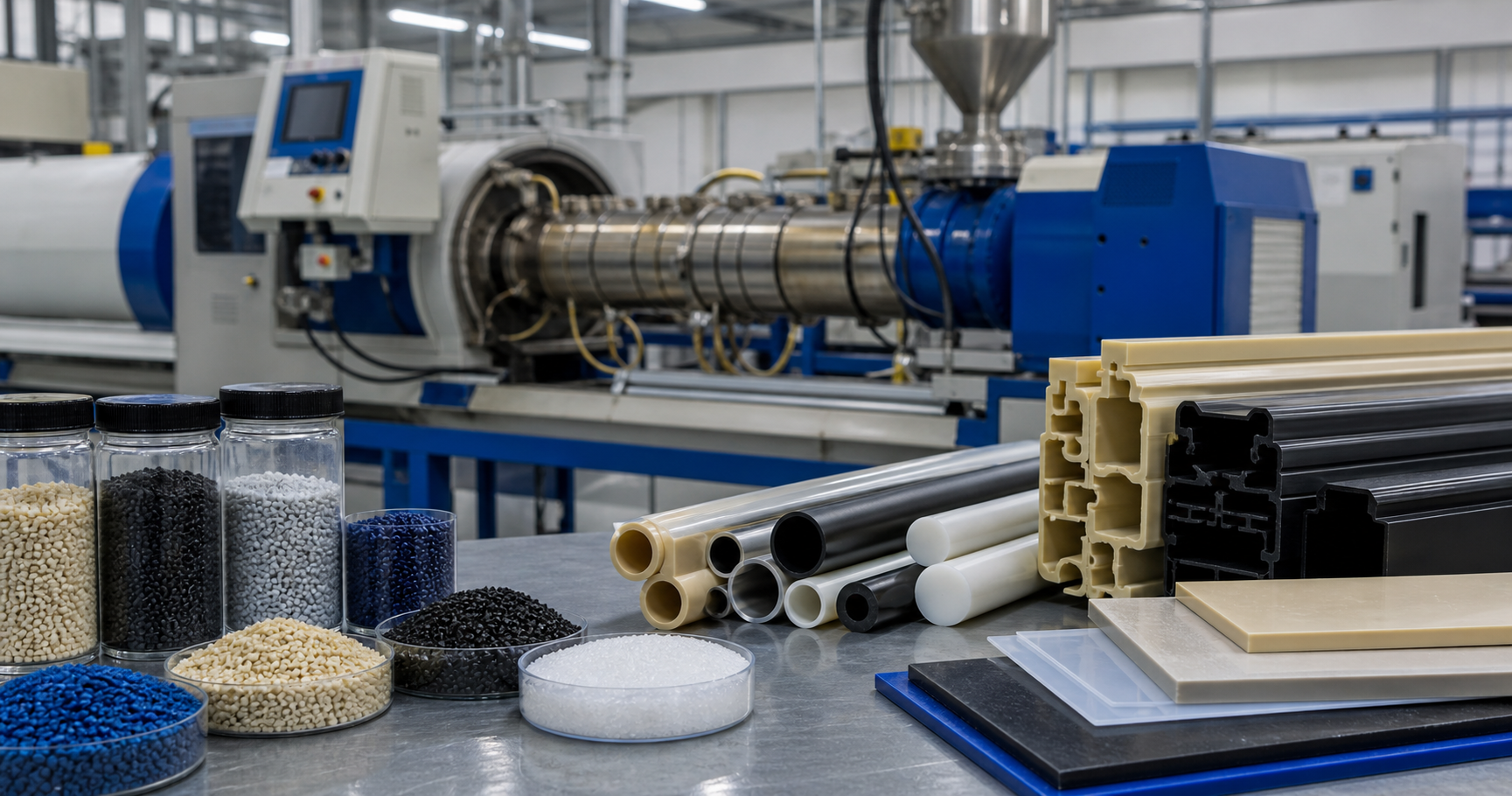
Plastic extrusion is a continuous manufacturing process used to form plastic material into profiles, tubing, sheet, film, rod, and other constant-cross-section products. For B2B buyers, the real decision is not only how extrusion works, but which material family and formulation can run stably through the line and still meet end-use performance.
In engineering plastics, extrusion is often tied to tubing, electrical insulation layers, wear strips, rods, profiles, and semi-finished products that will later be machined or assembled. Material choice directly affects melt stability, surface quality, dimensional consistency, cooling behavior, and long-term service performance.
WanHan supports engineering plastic grade review for extrusion-related applications, including nylon compounds, flame-retardant materials, reinforced plastics, and industrial-use modified resins. Related routes include the published PA6 guide, nylon pellets supplier guide, and PBT material guide.
What Happens in Plastic Extrusion
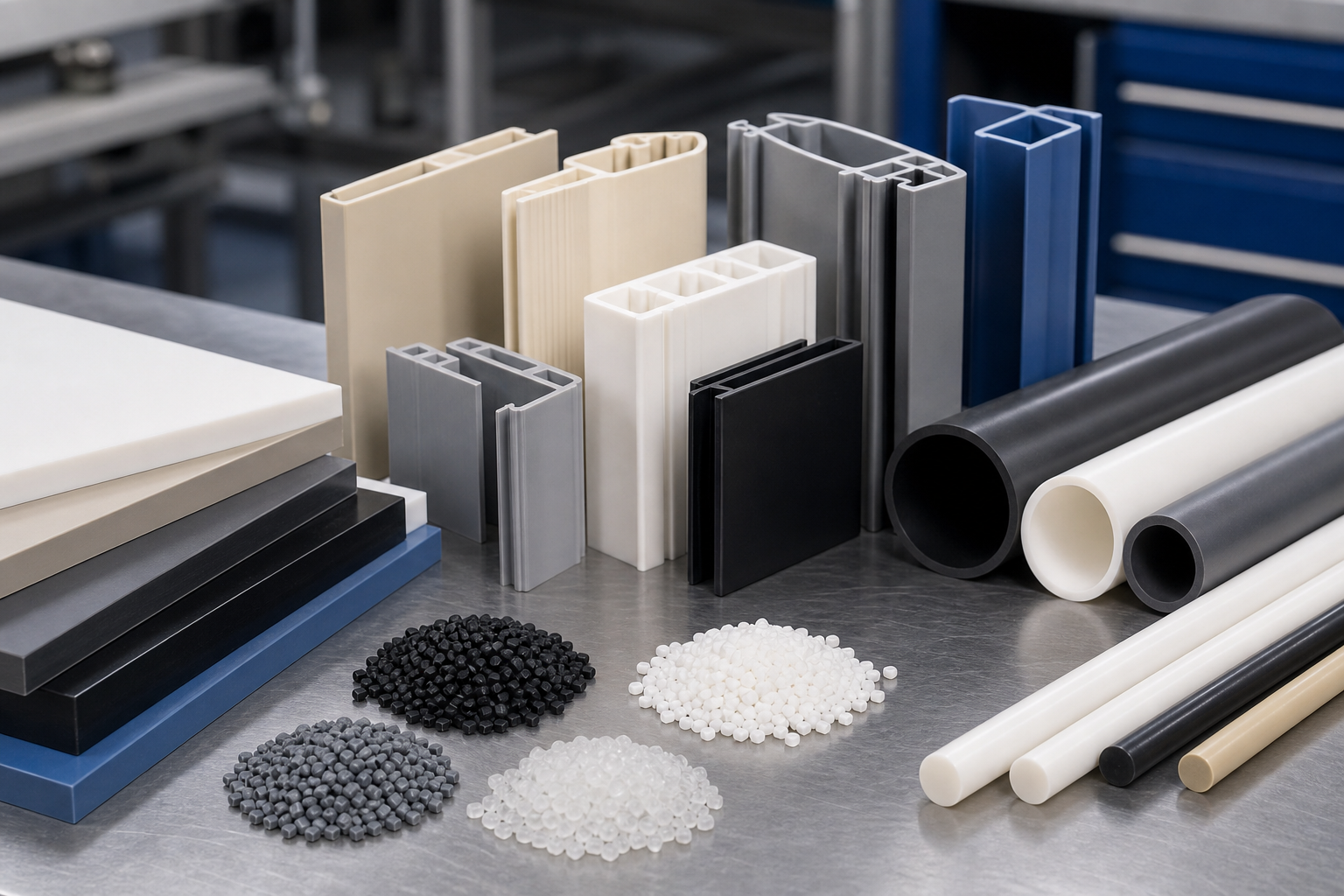
In extrusion, plastic resin is melted, pushed through a die, and shaped into a continuous product form. The final profile depends on the die design, material rheology, screw design, temperature control, cooling, haul-off stability, and downstream handling.
That is why the same polymer family can behave very differently in production depending on whether the line is making sheet, tube, filament, rod, or profile. The grade must match both the processing route and the application target.
- Resin melt stability affects surface uniformity and line consistency
- Die design and cooling control final dimensions and profile retention
- Material viscosity and reinforcement level influence throughput and finish
- Downstream cutting, coiling, or machining requirements can change grade selection
Material Selection Guide for Extrusion Projects
| Selection point | Why it matters | What the buyer should confirm |
|---|---|---|
| Process route | Sheet, tube, rod, and profile extrusion do not stress the material the same way | Product form, die type, and line speed target |
| Heat and melt behavior | Stable melt flow is critical for extrusion consistency | Processing window, melt strength, and throughput expectation |
| End-use environment | Industrial, electrical, chemical, or wear conditions can shift the resin family choice | Temperature, chemical exposure, friction, and outdoor use |
| Dimensional stability | Continuous products must hold shape over cooling and cutting | Tolerance, shrinkage, straightness, and downstream machining need |
Where Engineering Plastic Extrusion Is Commonly Used
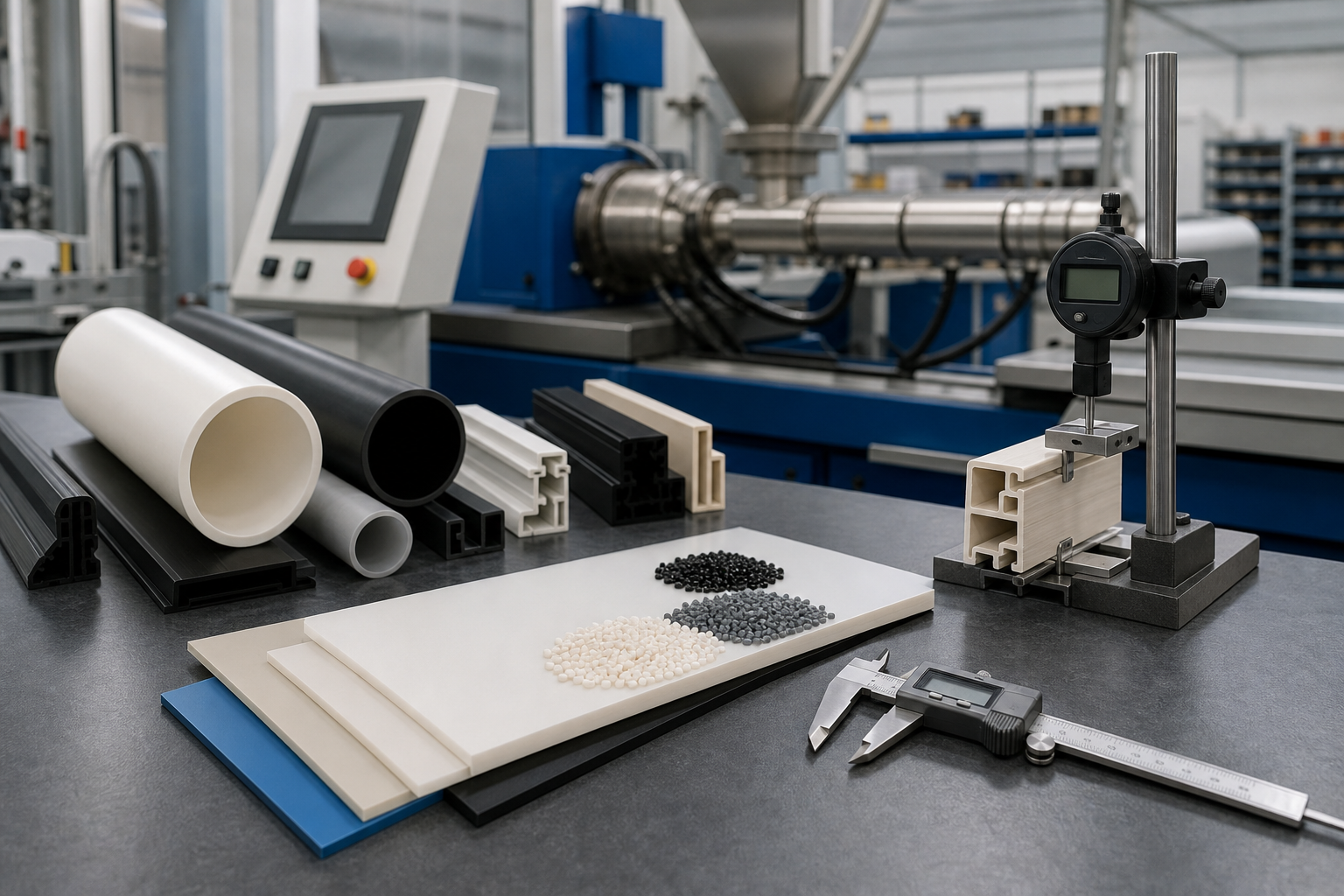
Engineering plastic extrusion is often used for industrial strips, tubes, insulating components, rods, profiles, and semi-finished materials that need more than commodity plastic performance.
Material selection becomes more critical when the extruded part must resist wear, heat, electrical demand, chemicals, or long-term mechanical loading in service.
- Industrial wear strips, guide rails, and technical profiles
- Electrical insulation layers, protective tubing, and technical sleeves
- Semi-finished rods and profiles for machining
- Modified nylon and engineering plastic extrusion compounds for technical applications
Why Extrusion Projects Need Supplier Support Early
Extrusion problems are often blamed on equipment alone, but the resin route can be just as important. Surface instability, die build-up, dimension drift, inconsistent cooling response, or downstream cracking can all trace back to grade mismatch.
That is why buyers should align material selection, line conditions, and end-use targets before the extrusion trial becomes a cost issue.
- Confirm whether the project needs general-purpose or modified engineering plastic resin
- Review additive, reinforcement, and FR requirements before line trials
- Check batch consistency and long-run processing stability
- Validate the finished profile under the real service environment, not only on-line appearance
Why Choose WanHan
Since 2005, WanHan has created engineering plastics for sustainable industrial applications, with independent R&D, production, and sales of functional polymer materials.
WanHan is certified with ISO 9001, ISO 14001, ISO 45001, and IATF 16949. Full sets of testing equipment support quality control for engineering plastic compounds used in industrial, electrical, home appliance, and automotive applications.
- Nylon, PBT, PC/ABS, FR, GF, and custom modified engineering plastic support
- Material review based on process route, end-use condition, and production stability
- Technical support for buyers comparing molding-grade and extrusion-suitable material routes
Request Material Support
Send the product form, die type, service temperature, chemical or wear exposure, dimensional tolerance, and whether the part is extruded for direct use or later machining. WanHan can help shortlist a suitable engineering plastic route for extrusion trials and production review.
Contact WanHan for extrusion material support
Frequently Asked Questions
Q: What is plastic extrusion?
A: Plastic extrusion is a continuous process in which plastic resin is melted, pushed through a die, and formed into products such as profiles, tubes, rods, sheet, or other constant-section shapes.
Q: Why does material selection matter in extrusion?
A: The material directly affects melt stability, surface quality, dimensional consistency, cooling behavior, and whether the final product can meet service requirements.
Q: Which plastic materials are commonly used in extrusion?
A: Common routes include PE, PP, PVC, nylon, PBT, and other engineering or modified plastics depending on the application and performance target.
Q: Can reinforced or flame-retardant materials be used in extrusion?
A: Yes, but the grade must be reviewed carefully because reinforcement and flame-retardant systems can change melt behavior, surface finish, and processing stability.
Q: Can WanHan help evaluate extrusion-grade engineering plastics?
A: Yes. WanHan can review the process route, end-use requirements, and material options to help buyers shortlist suitable engineering plastic compounds.
Nylon 6 Material Properties and Applications: Engineering Buyer Guide
What is plastic injection molding?
Related Article



