
Glass Filled Nylon: Properties, GF Grades, and Applications
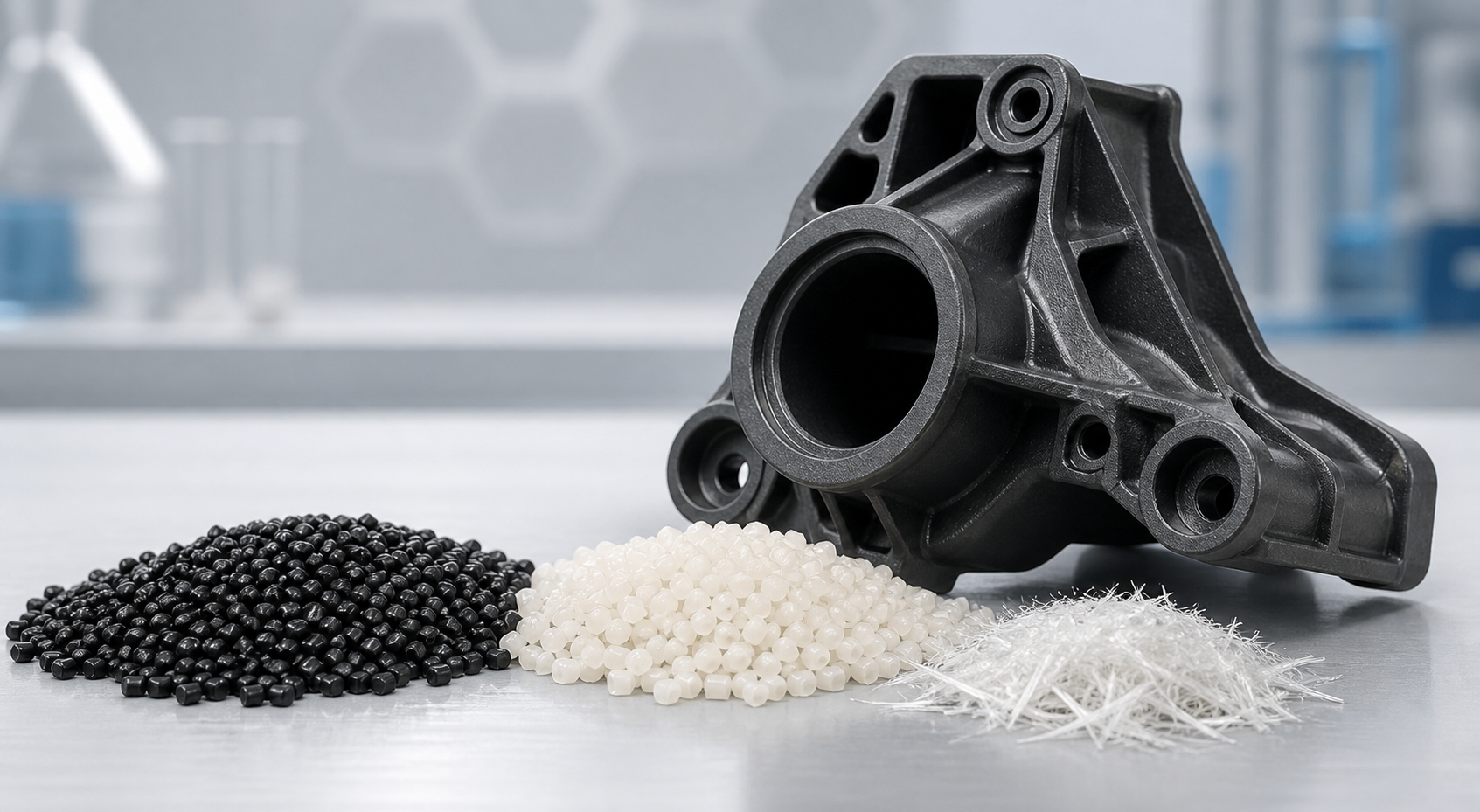
Glass filled nylon is one of the most common reinforced engineering plastics used for structural molded parts. By adding short glass fibers to a nylon matrix, compounders can improve stiffness, dimensional stability, creep resistance, and heat performance compared with an unfilled nylon grade.
Glass filled nylon is usually selected when a design needs more rigidity and better shape retention than standard nylon, while still keeping the processing efficiency of thermoplastic pellets. The exact result depends on the nylon base resin, glass loading, moisture condition, fiber orientation, and molding setup.
WanHan supplies both PA6 glass fiber compounds and PA66 glass filled nylon compounds. Buyers who need a specific product example can review the PA6 GF30 reinforced nylon product page for a typical industrial grade direction.
What Is Glass Filled Nylon?
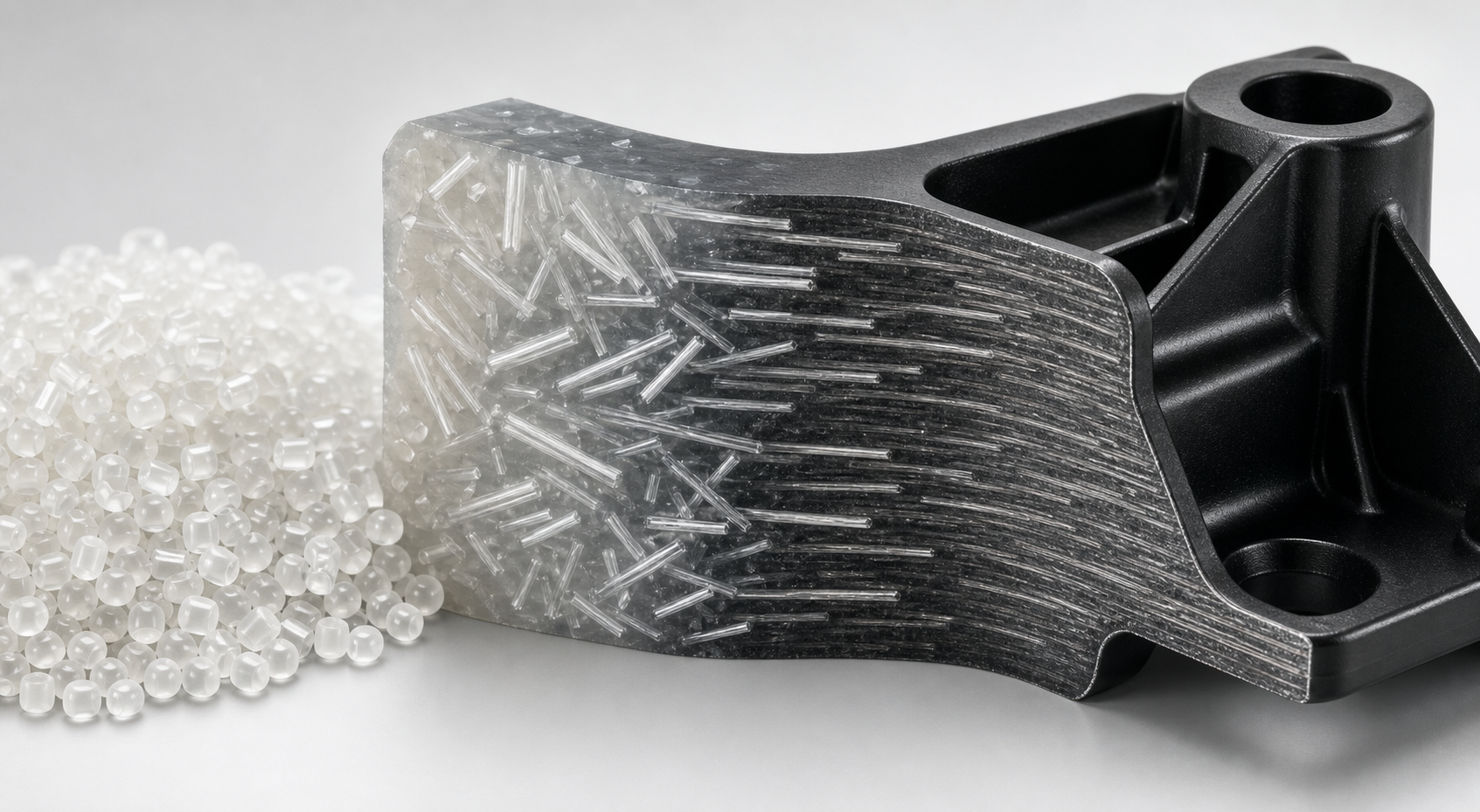
Glass filled nylon is made by compounding chopped glass fibers into a polyamide resin such as PA6 or PA66. The nylon acts as the continuous matrix, while the glass fibers provide reinforcement. When the melt flows through an injection mold, many fibers align in the flow direction. This is one reason reinforced nylon parts can behave differently in different directions.
Designers often use glass fiber reinforcement to solve practical problems: parts that flex too much, housings that lose tolerance as they absorb moisture, brackets that creep under long-term load, or components that need better heat resistance than unfilled nylon can provide.
Why Add Glass Fiber to Nylon?
The main reason is not simply to make nylon "stronger." Reinforcement changes the material system and shifts its performance profile. Common benefits include:
- Higher stiffness for brackets, housings, frames, and functional supports
- Better dimensional stability in molded engineering parts
- Lower creep under continuous load
- Improved heat deflection performance compared with unfilled nylon
- Lower shrinkage in the flow direction
- Better suitability for structural applications in automotive, electrical, and industrial products
These gains come with trade-offs. Glass filled nylon can be more abrasive to screws and molds, more anisotropic, rougher in appearance, and more sensitive to gate location and warpage control. That is why grade selection should always be tied to the part requirement rather than a single keyword such as gf30 material.
GF15, GF30, and GF50: What the Numbers Mean
The GF number usually describes the nominal glass-fiber percentage by weight. A GF15 grade contains less reinforcement than a GF30 or GF50 grade, but glass content alone does not fully define performance. Fiber length, coupling system, stabilizers, base nylon, conditioning, and test method all influence the final result.
| Grade family | Typical design purpose | Points to verify |
|---|---|---|
| GF15 | Moderate reinforcement with easier flow and more balanced toughness | Surface finish, thin-wall filling, impact requirement |
| GF30 | General structural grade for stiffness, stability, and broad industrial use | Warpage, weld-line strength, tool wear, moisture conditioning |
| GF50 | High-rigidity design direction for demanding load-bearing parts | Flow length, brittleness risk, mold filling, anisotropy |
GF30 is often the most searched grade because it is widely used and offers a practical balance between structural performance and processability. Still, the right answer may be GF15, GF25, GF30, or GF50 depending on geometry, impact demand, and cost target.
PA6 vs PA66 Glass Filled Nylon
The two most common families are PA6 and PA66. Both can be used in glass fiber reinforced compounds, but they are not interchangeable. If you need a refresher on the base resins themselves, WanHan's PA6 material guide and PA66 material guide provide broader background.
| Selection factor | PA6 glass filled nylon | PA66 glass filled nylon |
|---|---|---|
| Typical evaluation focus | Balanced stiffness, processability, and toughness for broad industrial use | Higher heat and rigidity targets in more demanding engineering parts |
| Flow and molding | Often chosen when fill behavior and balanced molding performance matter | Often chosen when thermal margin is more important than easiest flow |
| Application direction | Power tools, housings, brackets, consumer-industrial components | Automotive under-hood-adjacent parts, connectors, structural supports |
| Final approval rule | Validate with the real mold, moisture condition, and service load | Validate with the real mold, moisture condition, and service load |
In practical sourcing, many buyers shortlist both families and compare molded samples. The compound that performs best in the real part is often the right answer, even if the base resin choice looked obvious on paper.
Where Glass Filled Nylon Is Used
Glass fiber reinforced nylon is common in parts that need a better stiffness-to-weight ratio than general-purpose plastics can offer. Typical applications include:
- Automotive brackets, housings, clips, and functional supports
- Electrical connectors, bobbins, switch components, and enclosures
- Power-tool housings and structural internal parts
- Pump, valve, and fluid-system components
- Industrial machine covers, guides, frames, and support parts
- Outdoor products when the compound also includes UV stabilization
Suitability still depends on temperature, humidity, chemical exposure, impact, flammability, and dimensional tolerance. Reinforced nylon should be screened with technical data, then confirmed with molded-part testing.
Injection Molding Considerations
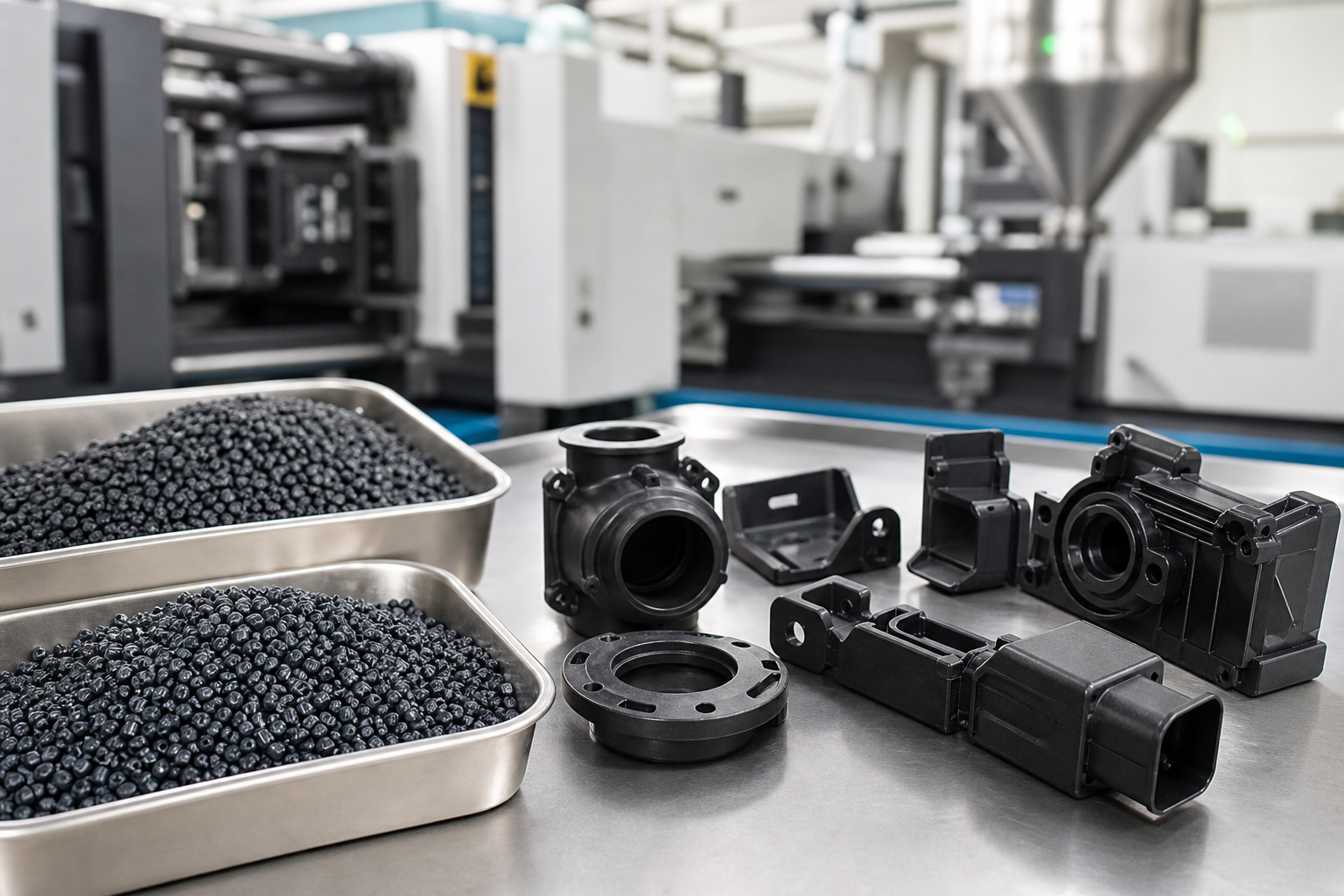
Glass filled nylon is usually processed by injection molding, but it needs tighter process control than unfilled resin. The following checkpoints are especially important:
- Drying: nylon is moisture sensitive, so pellets should be dried and sealed according to the supplier recommendation.
- Gate design: fiber orientation follows flow, so gate location directly affects warpage and directional strength.
- Wear control: glass fiber is abrasive, so screw, barrel, nozzle, and hot-runner choices matter.
- Mold temperature: stable mold conditions improve repeatability, crystallization, and surface quality.
- Regrind policy: repeated processing can shorten fiber length and change performance, so it should be validated.
- Part design: rib layout, wall transitions, and sharp corners strongly influence molded-part behavior in reinforced compounds.
How to Choose a Supplier
A useful supplier conversation starts with the part, not just the resin name. When asking for recommendations from WanHan, provide:
- Part drawing, wall thickness, gate idea, and annual volume
- Target stiffness, strength, impact, creep, and temperature performance
- PA6 or PA66 preference if one already exists
- Requested glass-fiber range such as GF15, GF30, or GF50
- Color, UV, flame-retardant, or electrical requirements
- Sample needs, validation plan, and processing method
This helps narrow the shortlist faster and avoids choosing a grade based only on a broad keyword such as glass filled nylon or nylon gf30.
Frequently Asked Questions
Q: What is glass filled nylon?
A: Glass filled nylon is a polyamide compound reinforced with short glass fibers to improve stiffness, dimensional stability, and heat performance over unfilled nylon.
Q: What does GF30 mean in nylon?
A: GF30 usually means a nominal 30 percent glass-fiber loading by weight. The final result still depends on the polymer base, additives, fiber length, and molding conditions.
Q: Is PA66 or PA6 better for glass filled nylon parts?
A: Neither is automatically better. PA6 is often considered for balanced molding and broad industrial use, while PA66 is often evaluated when higher heat and rigidity are required.
Q: Can glass filled nylon be injection molded?
A: Yes. Many grades are developed for injection molding, but they require controlled drying, wear-resistant hardware, and mold design that accounts for fiber orientation.
Q: What should buyers send when asking for a GF nylon recommendation?
A: Buyers should share part drawing, wall thickness, target stiffness, service temperature, requested glass range, and any electrical, UV, or flame-retardant requirement.
Q: Can a supplier help compare PA6 GF and PA66 GF routes?
A: Yes. A capable technical supplier should compare molding behavior, thermal target, and part geometry before recommending a reinforced nylon base family.
Q: Can I request reinforced nylon samples before release?
A: Yes. Sample trials are important because fiber orientation, warpage, and real mold behavior often decide the final grade more than a headline GF number alone.
Conclusion
Glass filled nylon is a practical solution for structural thermoplastic parts that need better rigidity and dimensional control than standard nylon can provide. The right grade depends on the nylon base, glass loading, molding conditions, and the real service environment. For PA6 or PA66 reinforced grade selection, share your part details with WanHan and validate the final choice through molded-part testing.
Low Moisture Nylon: Materials, Uses, and Selection
Flame Retardant Nylon: UL94 Grades and Applications
Related Article



