
Injection Molding Shrinkage and Warpage: Engineering Plastic Guide
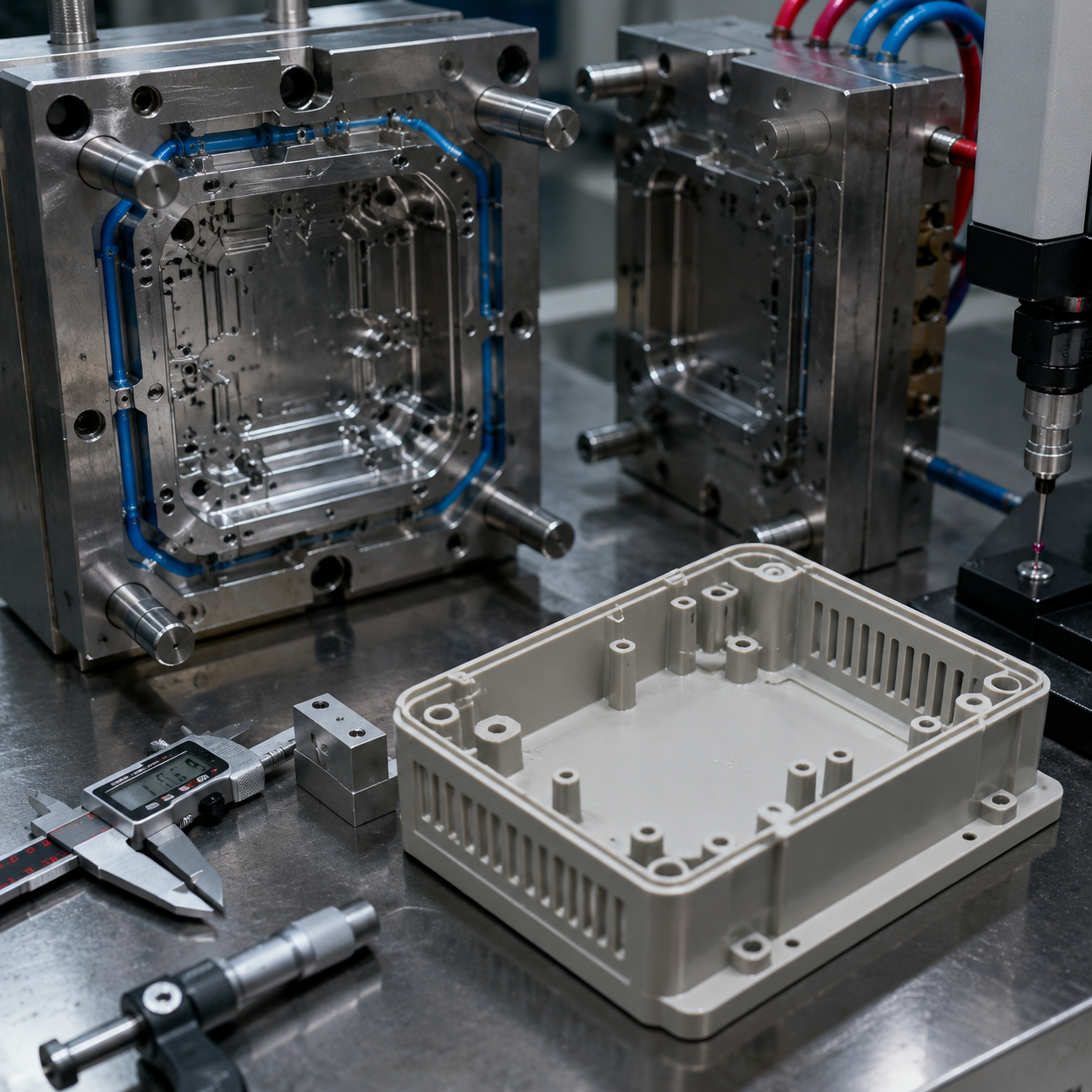
Injection Molding Shrinkage and Warpage: Engineering Plastic Guide
Injection molding shrinkage and warpage are connected but different dimensional risks. Shrinkage is the material's change in size as the molded part cools and solidifies. Warpage is the unwanted distortion that occurs when shrinkage is uneven across the part.
For engineering plastics, the final result depends on resin family, filler content, fiber orientation, moisture, melt and mold temperature, packing, gate location, cooling balance, wall thickness, and tool design. A generic shrinkage number is useful for early design, but it cannot replace a grade-specific molding trial.
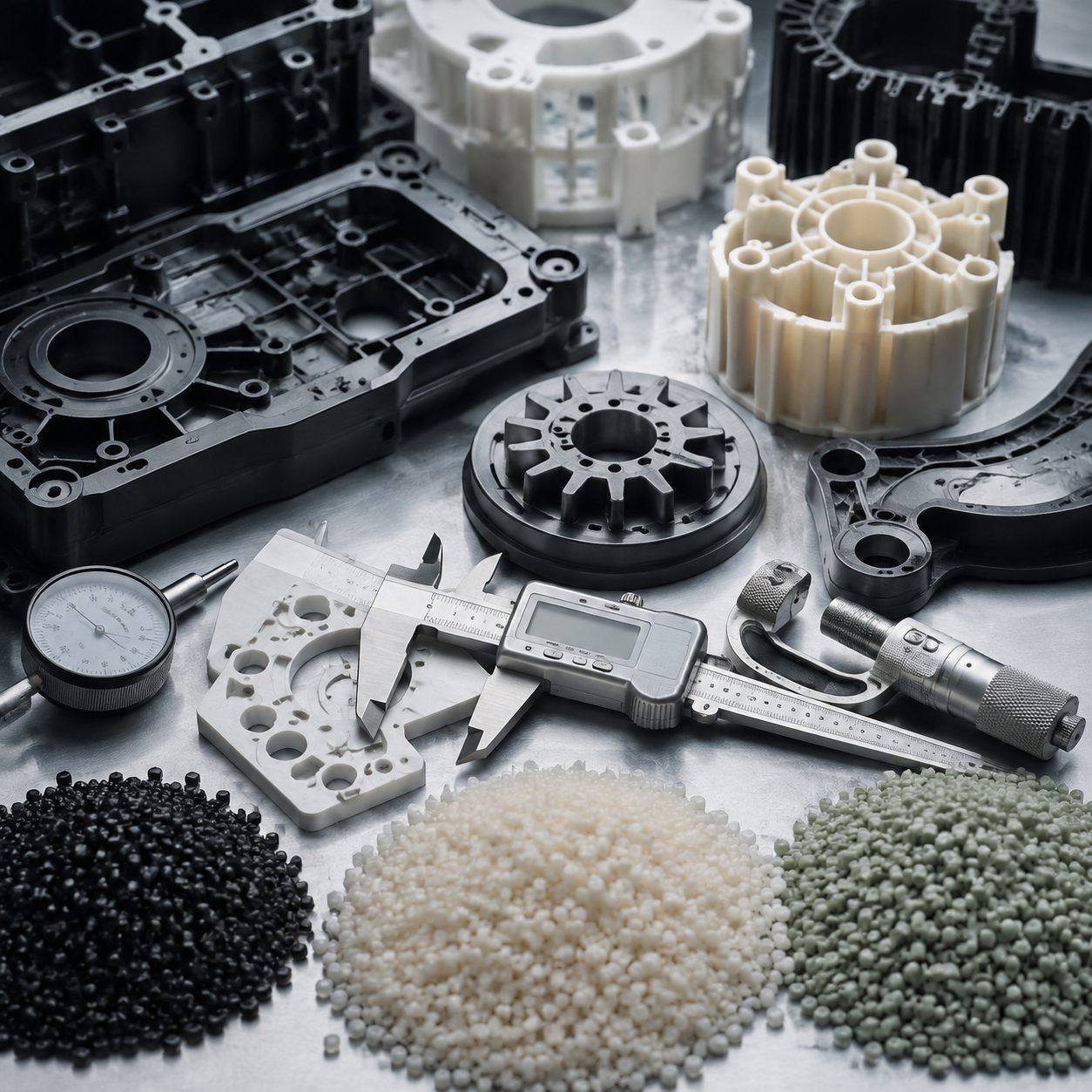
What Causes Shrinkage and Warpage?
| Cause | Typical effect | What to review |
|---|---|---|
| Material crystallization | Different regions can contract as the polymer structure develops | Resin family, cooling rate, mold temperature, and section thickness |
| Glass or carbon fiber orientation | Shrinkage can vary by flow direction and create anisotropy | Fiber content, gate position, flow length, and part measurement direction |
| Uneven wall thickness | Thick and thin areas cool at different rates and may sink or bend | Part design, ribs, bosses, transitions, and uniformity of cooling |
| Unbalanced packing | Some regions remain under-packed while others retain higher stress | Gate freeze, holding pressure, holding time, and cavity balance |
| Cooling imbalance | One side of the part contracts more than the other | Cooling-channel layout, mold temperature, cycle time, and tool condition |
How to Reduce Dimensional Variation
- Use the selected compound's shrinkage data as an initial design input, with separate flow and transverse values when available.
- Keep wall thickness transitions gradual and review ribs and bosses for local sink and stress.
- Place gates to support balanced filling and a useful fiber orientation for the load and tolerance direction.
- Set packing and cooling from cavity pressure and part measurements rather than relying only on machine defaults.
- Measure parts after a defined conditioning period because moisture and temperature can change dimensions in some nylon grades.
Material Selection and Warpage Risk
Glass-filled nylon can provide stiffness and lower molded shrinkage in some directions, but it can also increase anisotropy. PBT may offer stable precision molding but needs appropriate drying and cooling control. Higher filler levels, long-glass-fiber compounds, and flame-retardant packages all need their own process window.
For product references, compare WanHan's PA6 GF30 compound, PA66 GF35 grade, and PBT GF20 resin. The mold core and cavity guide adds tool-design context for dimensional control.
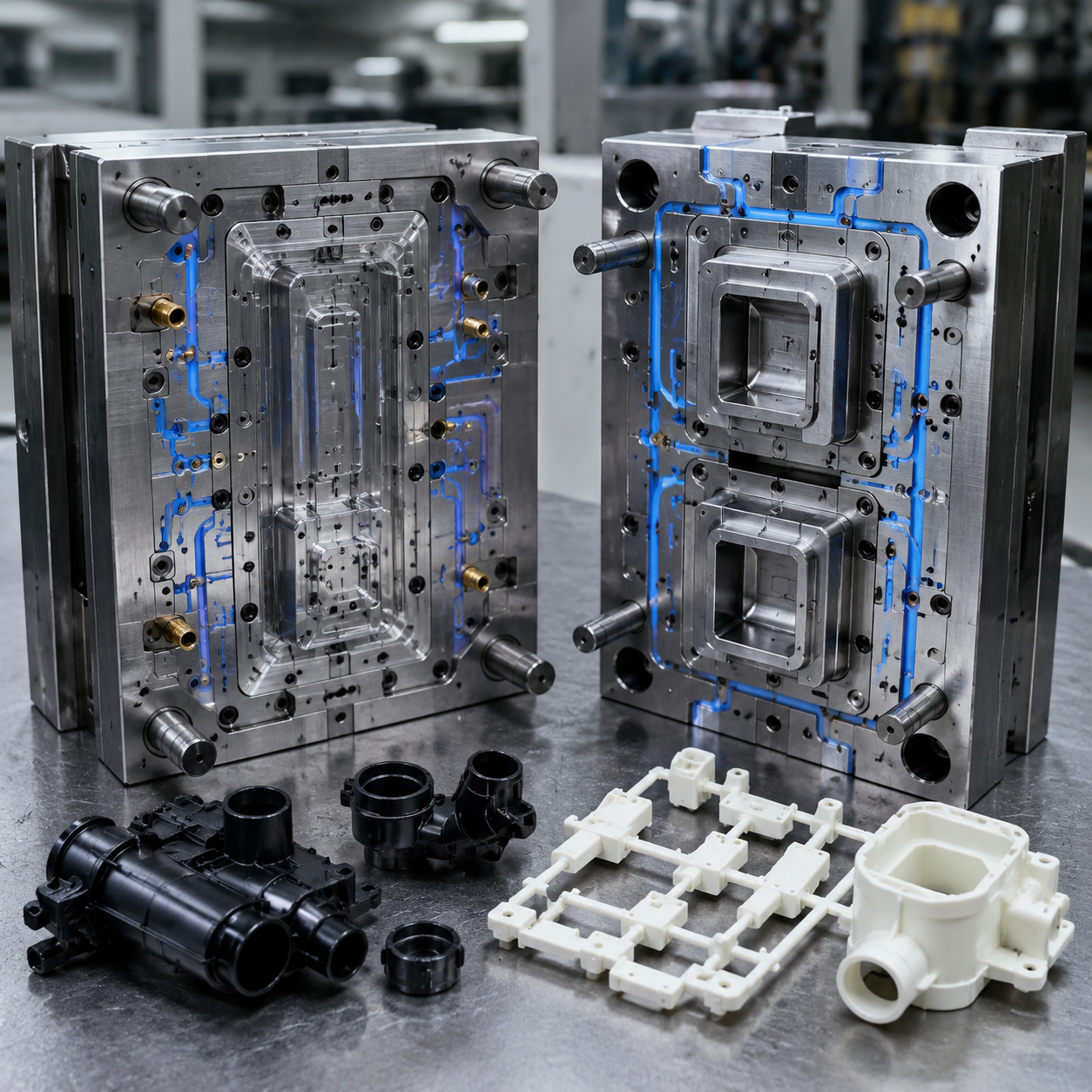
A Simple Troubleshooting Sequence
First separate material variation from tool and process variation by molding a stable reference lot under controlled drying. Then record cavity pressure, melt and mold temperature, packing, cooling, part weight, and measurements at several locations. If the distortion follows the flow direction, review fiber orientation and gate position. If it follows the tool side or appears uneven across cavities, review cooling and cavity balance.
WanHan can help compare grade data with the actual part design and molding conditions. Send the drawing, tolerance map, gate layout, material reference, defect photos, and measurement results through the inquiry page.
Frequently Asked Questions
Q: What is the difference between shrinkage and warpage?
A: Shrinkage is the dimensional change that occurs as a molded part cools and solidifies. Warpage is distortion caused by uneven shrinkage across the part.
Q: Do glass fibers reduce plastic shrinkage?
A: Glass fibers can reduce shrinkage in some directions, but their orientation can also create anisotropy and warpage. The final effect depends on grade, flow, gate, and cooling.
Q: How does wall thickness affect injection molding warpage?
A: Uneven wall thickness creates different cooling and packing conditions, which can cause sink, residual stress, and uneven shrinkage that bends the molded part.
Q: Can drying reduce molded-part warpage?
A: Correct drying can reduce moisture-related viscosity and hydrolysis variation, especially in nylon and polyester compounds, but it cannot solve tool, gate, cooling, or design imbalance by itself.
Q: Can WanHan help reduce shrinkage and warpage risk?
A: Yes. WanHan can compare material data, filler orientation, processing guidance, and sample results against the part geometry and dimensional requirements.
Engineering Plastics vs Metal: Material Selection Guide
How to Dry Plastic Pellets Before Injection Molding
Related Article



