
Low-Moisture Nylon Materials: Why PA12 and PA11 Are Chosen
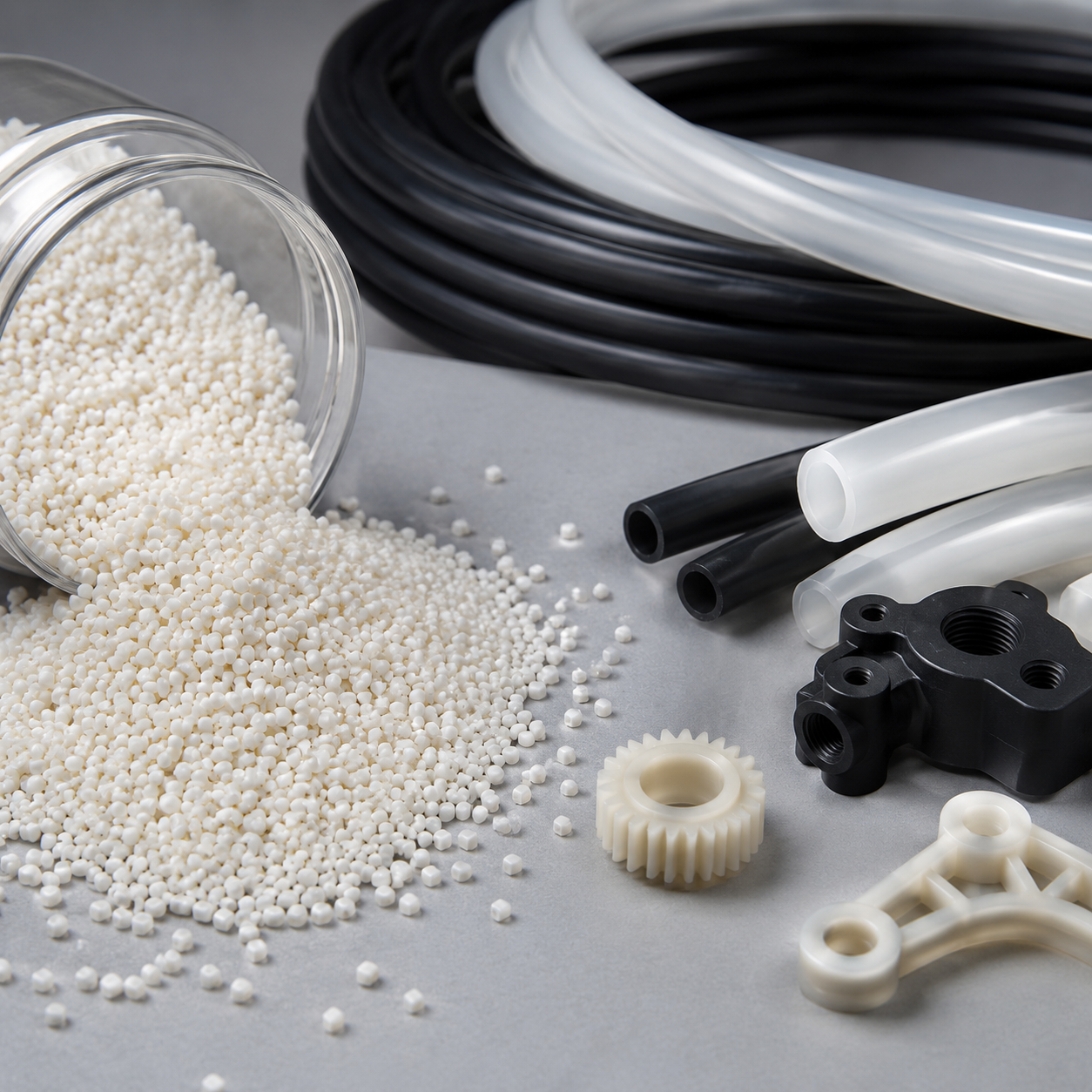
Low-Moisture Nylon Materials: Why PA12 and PA11 Are Chosen
Low-moisture nylon is a useful search term because moisture behavior affects dimensions, mechanical consistency, and long-term part performance. When the application needs better dimensional stability than standard nylons usually provide, PA12 material and PA11 material often move higher on the shortlist.
This does not mean PA6 or PA66 are poor materials. It simply means that part geometry, fluid exposure, and dimensional requirements may point to a lower-moisture nylon family instead.
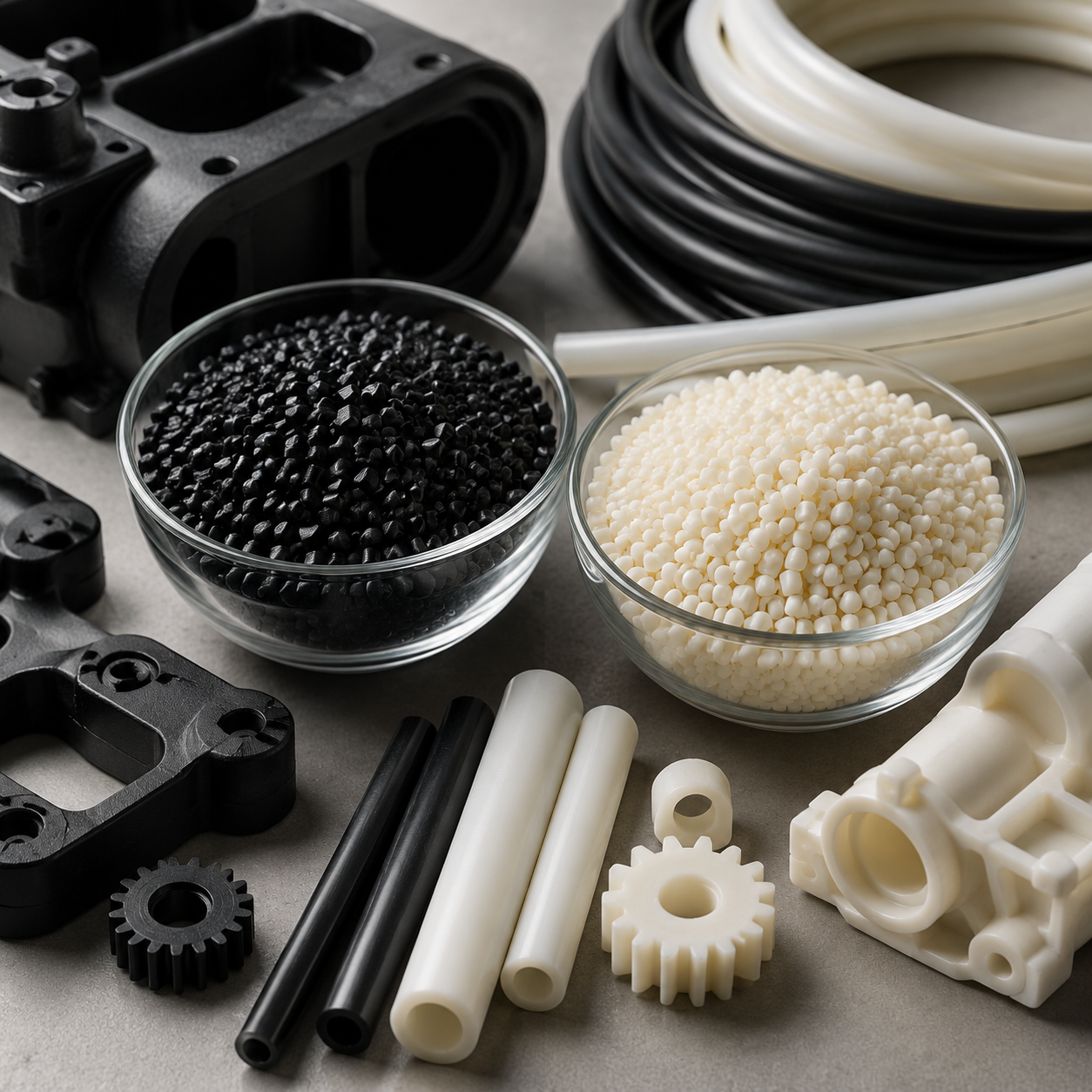
Why Moisture Behavior Matters
| Application Concern | Why Low-Moisture Nylon Helps |
|---|---|
| Dimensional stability | Lower moisture pickup helps parts stay more consistent in service |
| Tubing and fluid parts | Useful for applications that face exposure to varying environments |
| Precision molded parts | Supports better control when tolerance matters |
| Long-term property balance | Can reduce performance drift related to moisture absorption |
Why PA12 and PA11 Are Often Compared
PA12 and PA11 are both reviewed when projects need lower moisture absorption, useful toughness, and better dimensional stability for technical components. Typical use cases include tubing, cable protection parts, lightweight housings, connectors, and molded industrial components.
The PA12 material guide, PA12 overview, and nylon properties guide are good starting points before comparing specific reinforced or carbon-fiber variants.
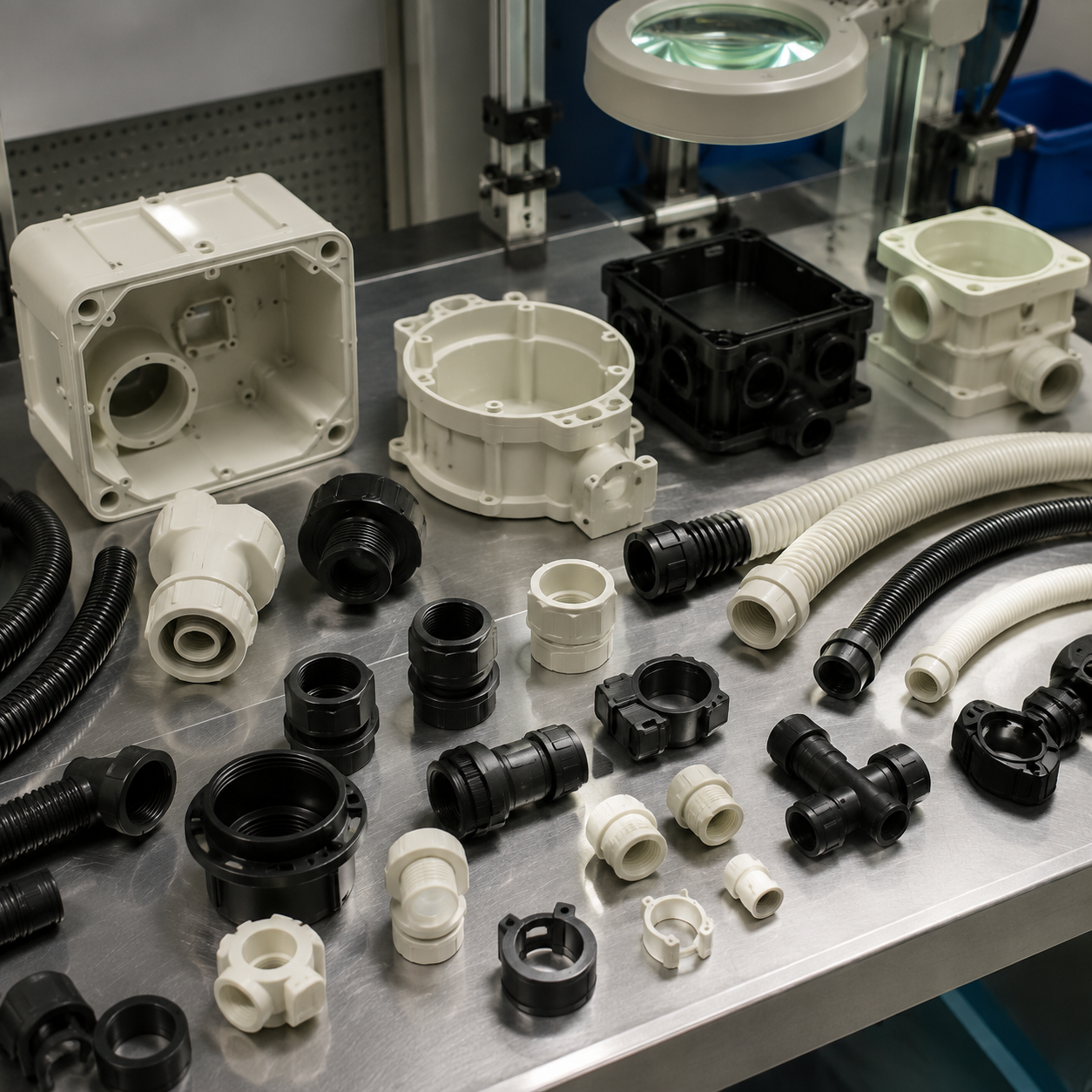
Where Low-Moisture Nylon Is Commonly Used
- Automotive tubing and technical fluid-contact parts
- Cable management and protective components
- Lightweight housings and connectors
- Industrial parts where dimensional consistency matters
For product-family exploration, WanHan teams often compare PA12 reinforced grades and carbon fiber nylon pellet options when projects need both lower moisture response and higher stiffness.
Why Choose WanHan for Engineering Plastic Projects?
Since 2005, WanHan has focused on independent R&D, production, and global sales of functional engineering plastics for more sustainable industrial applications. Certified to ISO 9001, ISO 14001, ISO 45001, and IATF 16949, we operate with complete in-house testing equipment and strict quality control throughout development and production. Our materials are exported to more than 30 countries and are widely used in automotive, electronics, home appliances, and industrial applications that require higher-performance polymer solutions.
- Application-based material selection support for OEM, injection molding, and product development teams.
- Custom compounding capability for glass fiber, flame-retardant, carbon fiber, mineral-filled, impact-modified, anti-UV, and color-customized grades.
- Full quality control with in-house testing equipment and certified systems for more stable repeat orders and production consistency.
- Free sample support, technical data sheets, and processing guidance to shorten validation time before mass production.
- Fast quotation response, export-ready packaging, and practical support for long-term B2B supply projects.
If you are selecting a resin for a new project or replacing an existing grade, WanHan can help with grade matching, sample preparation, and custom compound evaluation. You can send your target application, part drawing, annual quantity, or required properties through WanHan's inquiry page to get a faster quotation and material recommendation. You can also review top-sale engineering plastic grades for faster project matching.
If the design team is balancing dimensional stability, flexibility, toughness, and reinforcement options, WanHan can help determine whether a lower-moisture nylon family is worth the cost step-up compared with mainstream PA6 or PA66.
Frequently Asked Questions
Q: What is low-moisture nylon?
A: Low-moisture nylon refers to nylon materials chosen for lower moisture absorption and better dimensional consistency in service.
Q: Why is PA12 considered a low-moisture nylon?
A: PA12 is widely selected because it offers lower moisture absorption than many standard nylons, which helps dimensional stability.
Q: What applications use low-moisture nylon?
A: Tubing, connectors, technical housings, cable-protection parts, and precision molded components often use lower-moisture nylon grades.
Q: Are PA11 and PA12 both used for low-absorption applications?
A: Yes. PA11 and PA12 are both considered when the project needs lower moisture response than mainstream nylon families usually provide.
Q: Can WanHan help compare low-moisture nylon grades?
A: Yes. WanHan can help compare PA12, PA11, and reinforced nylon options for dimensional-stability-focused projects.
Carbon Fiber Reinforced PA66: Properties, Uses, and Selection
PCR Engineering Plastics: Recycled Resin Options for Industrial Parts
Related Article



