
Nylon Injection Molding Guide: Drying, Temperature, and Shrinkage
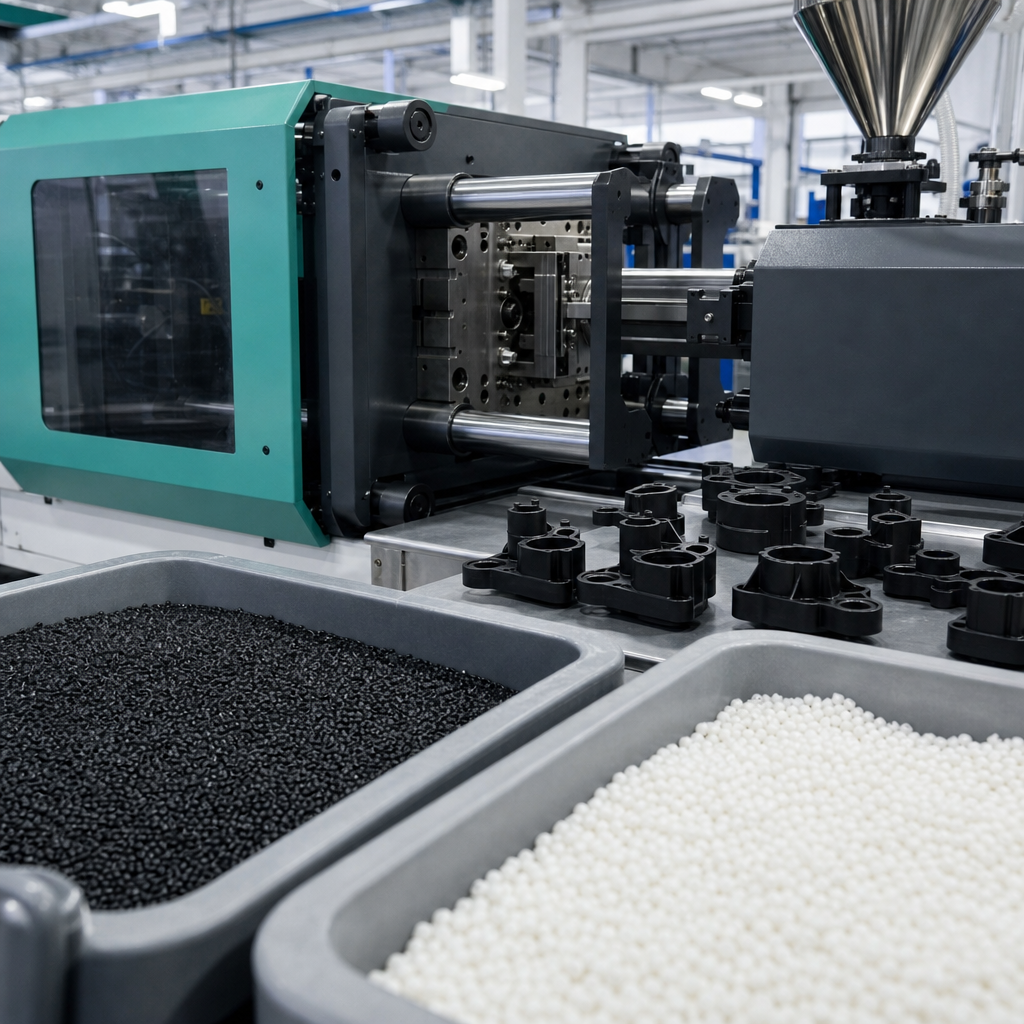
Nylon Injection Molding Guide: Drying, Temperature, and Shrinkage
Nylon injection molding is widely used for automotive parts, electrical housings, connectors, gears, clips, industrial components, and reinforced engineering parts. PA6 and PA66 are the most common nylon families, but they are moisture-sensitive materials. Drying, melt temperature, mold temperature, and shrinkage control all affect final quality.
The key to stable nylon molding is simple: dry the resin correctly, use the right temperature window, control mold temperature, and choose the correct grade for stiffness, impact, heat, and dimensional requirements.
Why Drying Matters
Nylon absorbs moisture from air. If the pellets are not dried properly before processing, molded parts may show splay, bubbles, poor surface quality, reduced mechanical strength, or inconsistent dimensions. Drying conditions should follow the material supplier's technical data sheet because reinforced and flame-retardant grades may have different requirements.
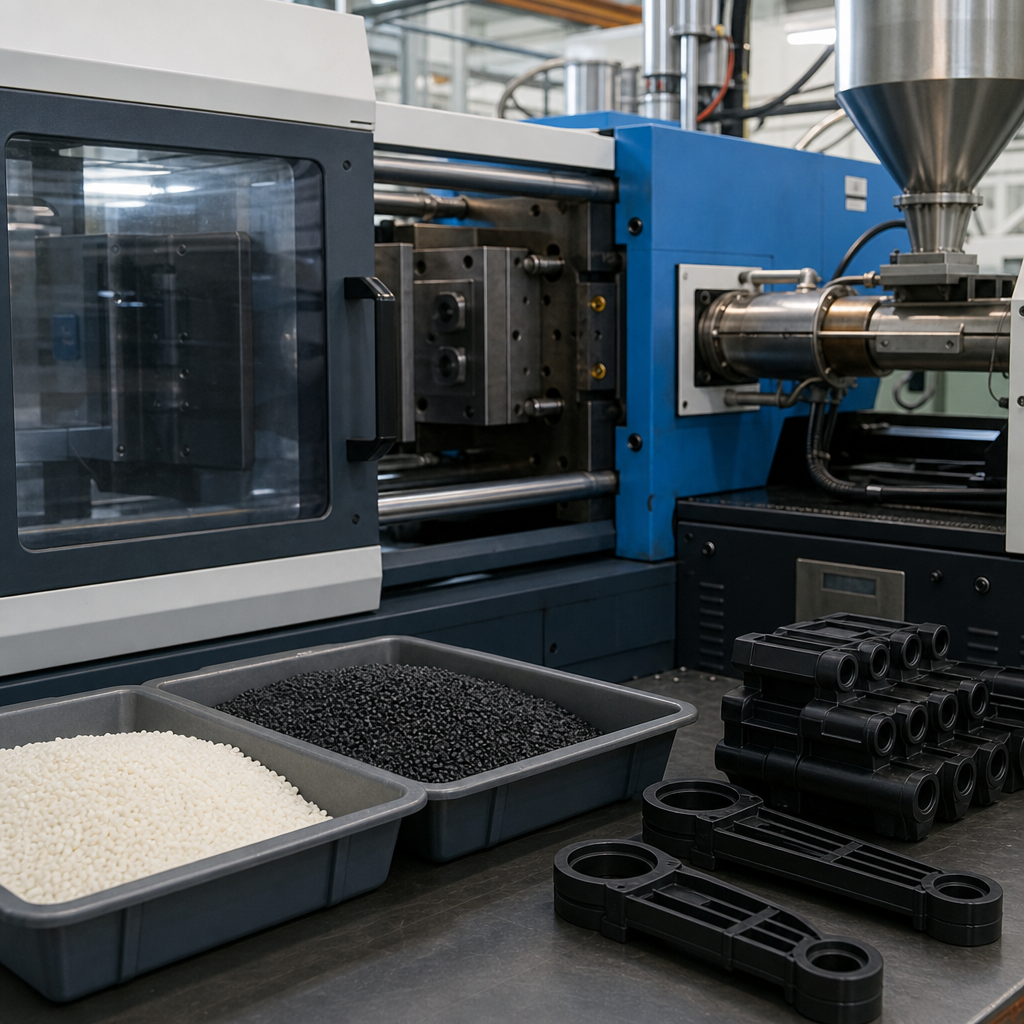
Typical Molding Control Points
| Control Point | Why It Matters | Process Note |
|---|---|---|
| Drying | Prevents moisture-related defects | Confirm drying time and moisture target |
| Melt temperature | Affects flow, strength, and degradation risk | Use the grade-specific range |
| Mold temperature | Influences crystallinity and dimensional stability | Higher control improves consistency |
| Injection speed | Controls filling and surface quality | Adjust for part thickness and gate design |
| Shrinkage | Critical for tolerance and fit | Glass fiber content changes shrink behavior |
PA6 vs PA66 in Injection Molding
PA6 injection molding often provides good processability and balanced toughness. PA66 injection molding is often selected for higher heat resistance and stiffness. Glass fiber reinforced nylon grades improve strength and dimensional stability, but they also affect flow direction, warpage, and surface appearance.
For material selection, it is useful to review the PA6 material guide and PA66 material guide before selecting reinforced grades for production.
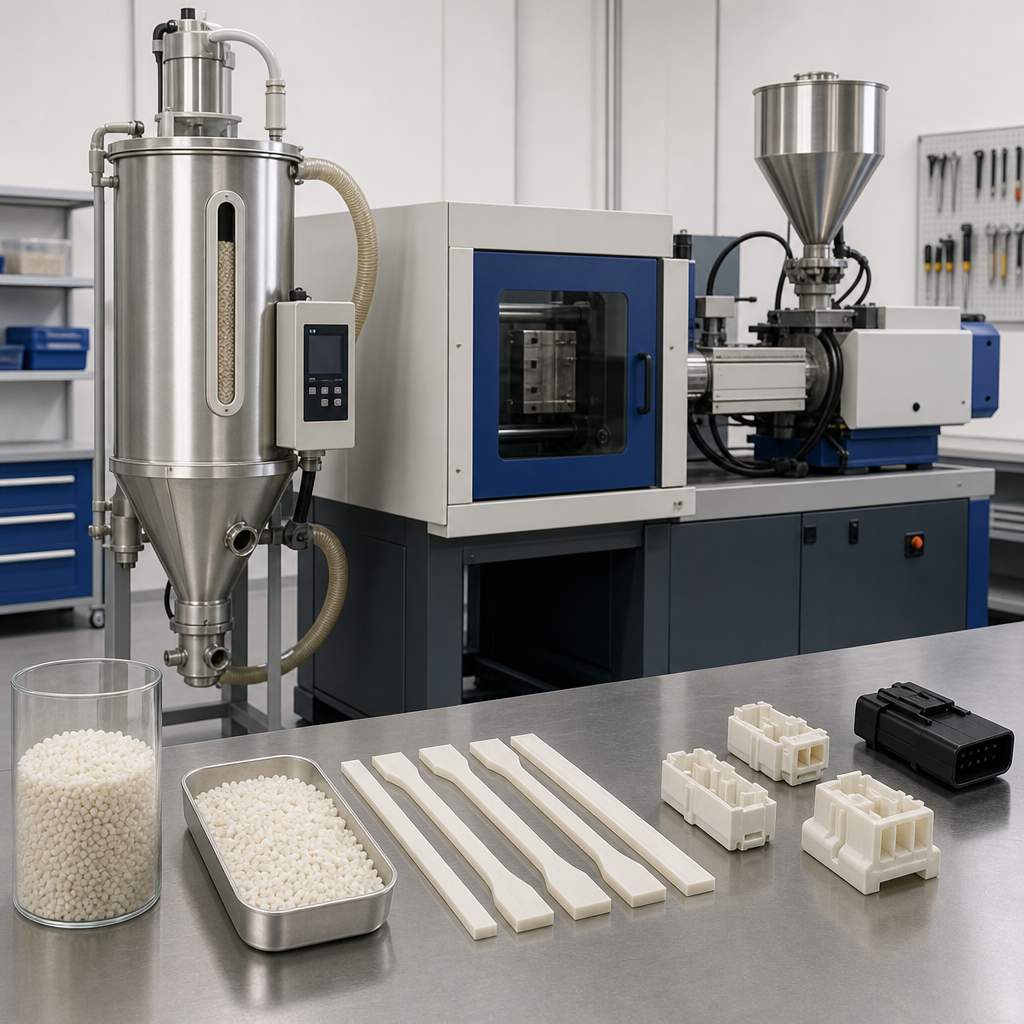
Common Defects and Fixes
- Splay or silver streaks: check resin drying and moisture exposure.
- Warping: review gate design, glass fiber orientation, mold temperature, and packing.
- Short shots: check melt temperature, flow length, injection pressure, and grade viscosity.
- Burn marks: improve venting and reduce excessive shear or trapped air.
- Dimensional drift: stabilize mold temperature, drying, packing, and conditioning.
Why Choose WanHan for Engineering Plastic Projects?
Since 2005, WanHan has focused on independent R&D, production, and global sales of functional engineering plastics for more sustainable industrial applications. Certified to ISO 9001, ISO 14001, ISO 45001, and IATF 16949, we operate with complete in-house testing equipment and strict quality control throughout development and production. Our materials are exported to more than 30 countries and are widely used in automotive, electronics, home appliances, and industrial applications that require higher-performance polymer solutions.
- Application-based material selection support for OEM, injection molding, and product development teams.
- Custom compounding capability for glass fiber, flame-retardant, carbon fiber, mineral-filled, impact-modified, anti-UV, and color-customized grades.
- Full quality control with in-house testing equipment and certified systems for more stable repeat orders and production consistency.
- Free sample support, technical data sheets, and processing guidance to shorten validation time before mass production.
- Fast quotation response, export-ready packaging, and practical support for long-term production supply programs.
If you are selecting a resin for a new project or replacing an existing grade, WanHan can help with grade matching, sample preparation, and custom compound evaluation. You can send your target application, part drawing, annual quantity, or required properties through WanHan's inquiry page to get a faster quotation and material recommendation. You can also review top-sale engineering plastic grades for faster project matching.
For nylon molding projects, you can also review WanHan's PA6 material guide, PA66 material guide, and reinforced nylon options when processing stability and dimensional control are critical.
Frequently Asked Questions
Q: Does nylon need drying before injection molding?
A: Yes, nylon should be dried before injection molding because moisture can cause splay, bubbles, weak parts, and unstable dimensions.
Q: Which is easier to mold, PA6 or PA66?
A: PA6 is often easier to process, while PA66 is commonly selected when higher heat resistance and stiffness are required.
Q: Does glass fiber affect nylon shrinkage?
A: Yes, glass fiber reduces shrinkage in the flow direction but can increase anisotropy, which may affect warpage and dimensional control.
Q: What causes splay in nylon molded parts?
A: Moisture, excessive melt temperature, contamination, or poor venting can cause splay in nylon injection molded parts.
Q: Can WanHan help with nylon molding grade selection?
A: Yes, WanHan can help select PA6, PA66, reinforced nylon, and flame-retardant nylon grades based on molding and application requirements.
What Is PPS Material? Properties, GF Grades, and Applications
Engineering Plastic Pellets: Materials, Grades, and Selection Guide
Related Article



