
PA12 vs PA6: Material Differences and Use Cases
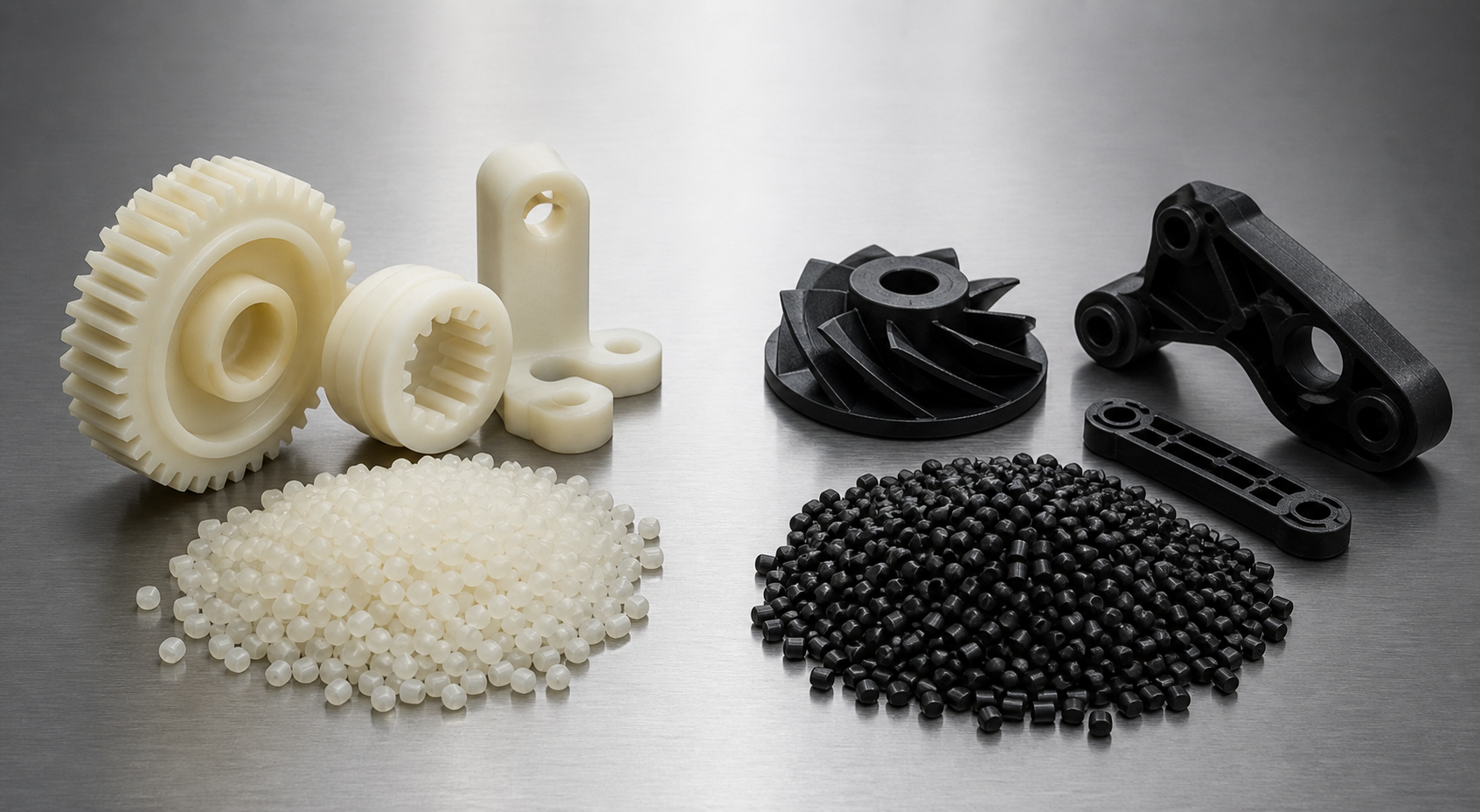
pa12 vs pa6 is a common decision when a project must balance easier availability and broad use of PA6 against the low-moisture benefits of PA12.
PA6 is often chosen for broad industrial applications and value, while PA12 is often reviewed where lower moisture uptake, flexibility, and dimensional control are more important.
WanHan's PA6 material guide, PA12 material guide, and PA12 carbon-fiber category are the best current internal references for this comparison.
Why PA12 and PA6 Serve Different Roles
PA6 is a mainstream engineering nylon with many glass-filled, flame-retardant, and impact-modified grades. PA12 sits in a more specialized position and is often chosen for lower-moisture or lightweight design needs.
The result is that many sourcing teams compare the two only after they define the real environmental and tolerance requirement.
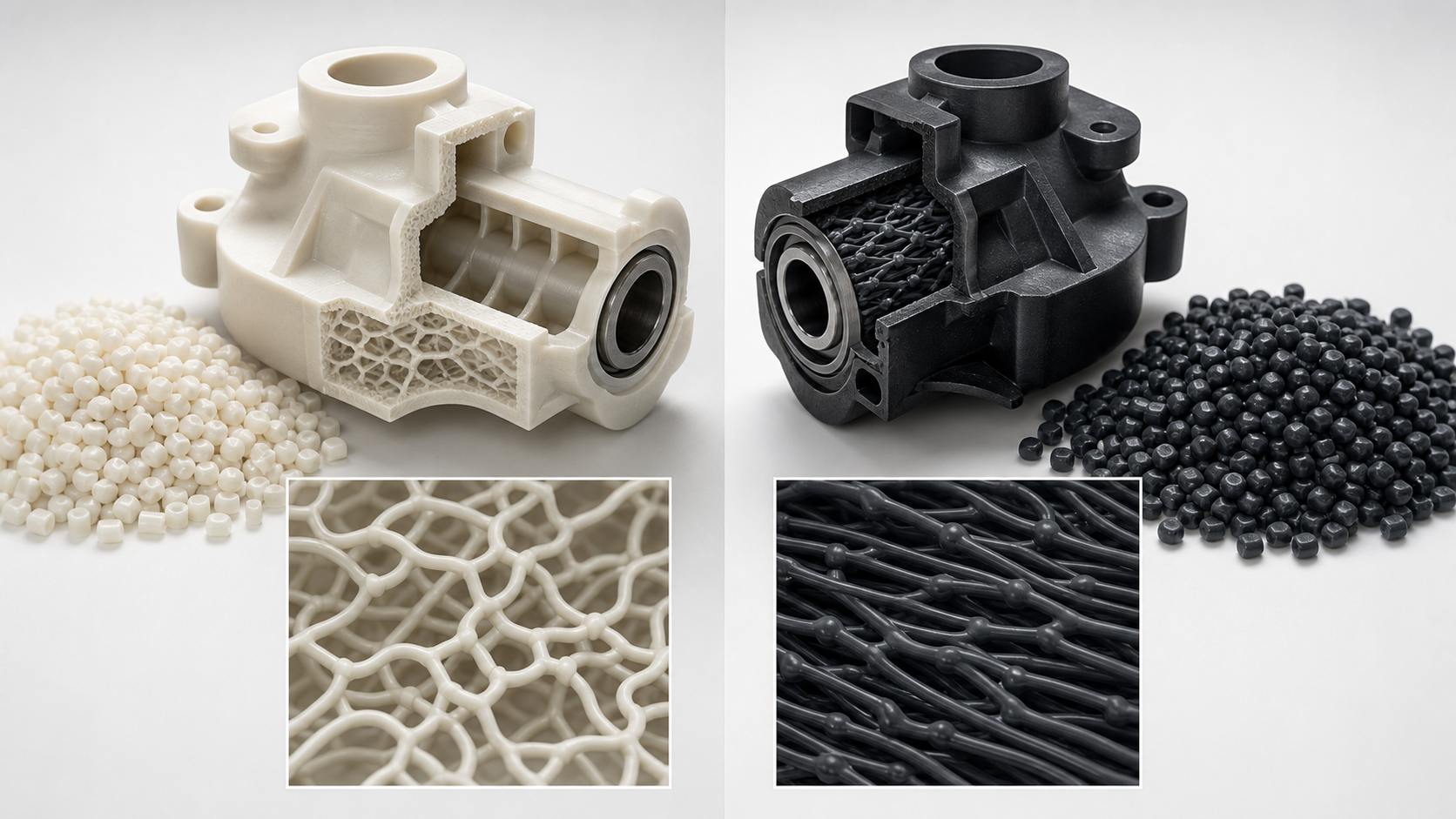
| Factor | PA6 | PA12 |
|---|---|---|
| Typical evaluation focus | Broad industrial use and value | Low-moisture and precision performance |
| Moisture behavior | Needs more validation in humidity | Usually screened when moisture control matters more |
| Reinforced options | Very broad GF and FR ecosystem | Used in specialty CF and precision compounds |
Where PA12 Can Outperform PA6
If the part needs lower moisture sensitivity, stable fit, or more flexible low-temperature performance, PA12 can become the stronger candidate.
PA6 still remains a powerful choice for general molded parts, especially when the application needs more common reinforced grades and cost control.
- Precision components exposed to humidity often review PA12
- General industrial brackets and housings often start with PA6
- Reinforcement and additives can shift the final decision
How to Compare Them in Real Parts
The best comparison is not neat-resin-to-neat-resin only. The real formulation, molding process, and environmental requirement should be reviewed together.
- List the humidity, tolerance, and thermal requirements.
- Decide whether the part needs commodity reinforcement or specialty low-moisture performance.
- Shortlist one realistic PA6 grade and one realistic PA12 grade.
- Validate on molded parts, not only data sheets.
Frequently Asked Questions
Q: What is the difference in PA12 vs PA6?
A: PA12 is often reviewed for lower moisture uptake and dimensional stability, while PA6 is widely used for broad industrial applications and reinforced-grade availability.
Q: Is PA12 better than PA6?
A: Not always. The better material depends on humidity exposure, part geometry, reinforcement, and cost target.
Q: Can both PA12 and PA6 be reinforced?
A: Yes. PA6 has a very broad reinforced ecosystem, while PA12 is often used in more specialty reinforced systems.
Q: When is PA6 still the stronger commercial choice?
A: PA6 often remains the stronger commercial choice when the project needs broad grade availability, mainstream reinforcement options, and more cost-focused industrial sourcing.
Q: When should PA12 stay in the shortlist?
A: PA12 should stay in the shortlist when humidity, dimensional control, or specialty low-moisture performance can directly affect part fit or long-term stability.
Q: Can a supplier recommend one PA6 and one PA12 trial grade?
A: Yes. That is often the fastest evaluation path because it compares a realistic commodity route against a realistic low-moisture route.
Q: Can I sample both resin families before approval?
A: Yes. Sample validation on real molded parts is the safest way to compare processing, moisture behavior, and final performance before volume release.
Conclusion
PA12 vs PA6 is best treated as a moisture-and-application decision rather than a simple ranking. WanHan can help narrow the right family once the service environment and reinforcement needs are clear.
PA66 vs PA6: Material Differences and Selection
PA12 vs PA11: Choosing a Low-Moisture Nylon
Related Article



