
What Is PA6 GF50? Properties, Uses, and High-Stiffness Part Guide
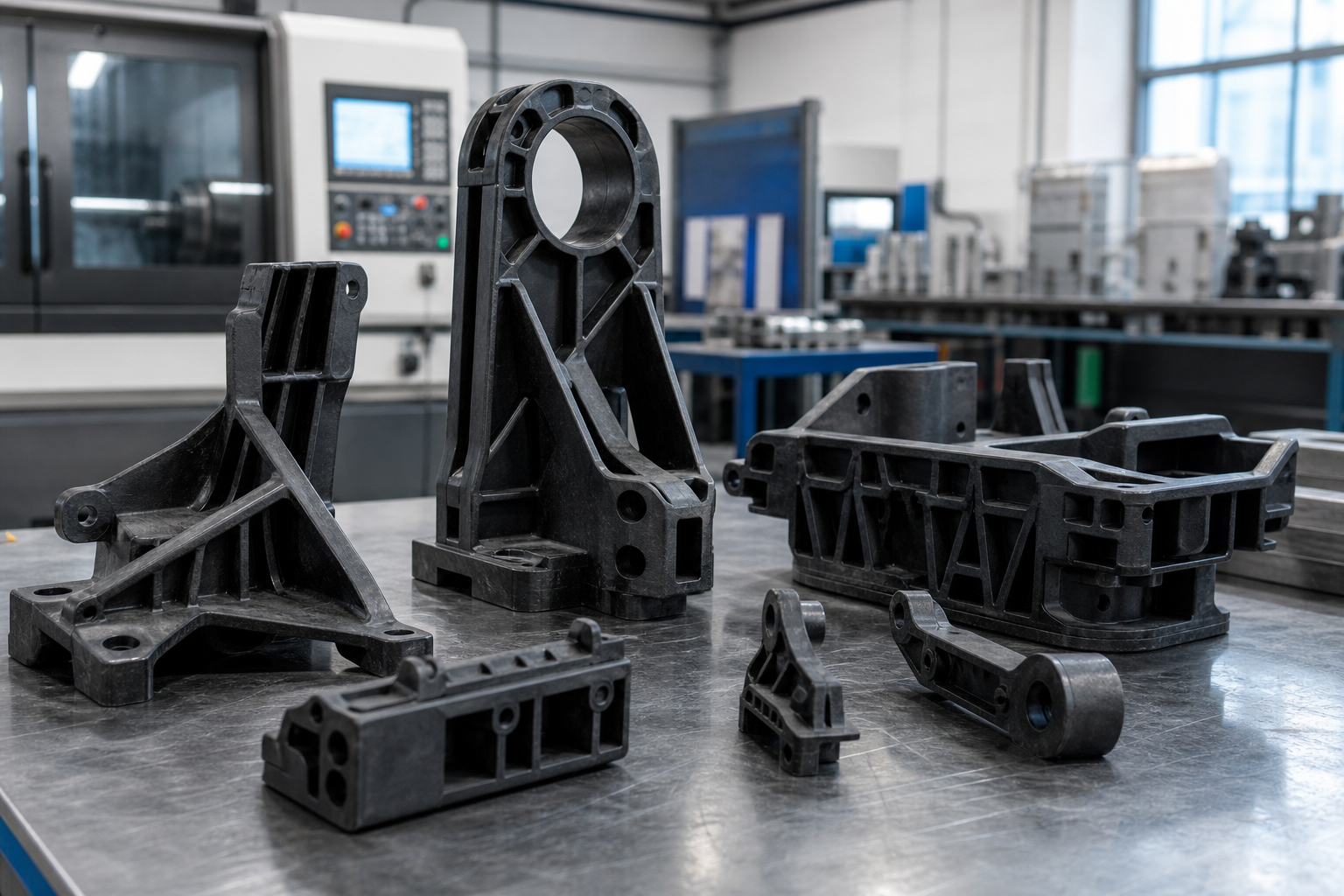
PA6 GF50 is a nylon 6 grade reinforced with 50% glass fiber. It is not a general-purpose grade. Buyers usually screen it only when a part needs very high stiffness and the structure cannot tolerate much deflection.
It is commonly compared with PA6 GF30, PA66 GF30, and broader glass filled nylon structural material options.
That usually means the project has already looked at lower reinforced grades and found them too flexible, or the part is acting more like a structural component than a simple housing.
When PA6 GF50 Starts to Make Sense
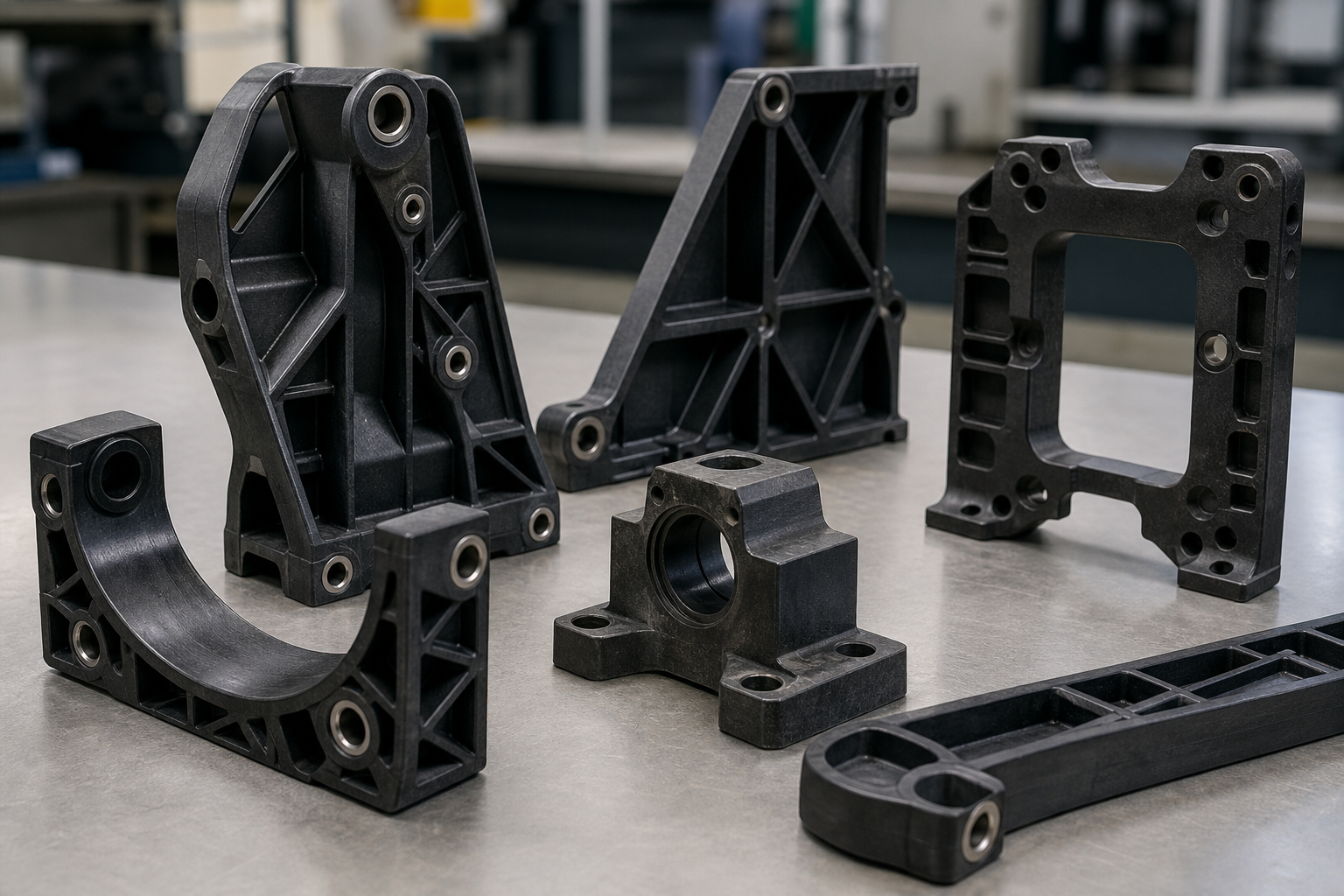
PA6 GF50 is often considered for industrial machine structures, heavy-duty brackets, carriers, and motor-adjacent supports where stiffness matters more than appearance.
The upside is obvious: much stronger reinforcement. The downside is also obvious: warpage, fiber orientation, and molding consistency become harder to manage, especially on larger parts.
- Confirm stiffness, deflection, and long-term load requirement
- Check warpage risk and final dimensional target
- Review moisture-conditioning impact on structural fit
- Compare PA6 GF50 with PA66 structural grades if heat margin is critical
Material Selection Guide
| Selection point | Why it matters | What to confirm |
|---|---|---|
| High glass content | 50% glass fiber greatly raises stiffness and structural retention | Actual modulus, strength, and glass level |
| Moisture behavior | PA6 still absorbs moisture and dimensions can shift | Conditioning, tolerance, and end-use environment |
| Processing discipline | Higher reinforcement makes molding control more critical | Drying, venting, gate location, and mold trial feedback |
| Structural application fit | Useful when low deflection matters more than cosmetic finish | Load path, creep, and finished-part validation |
Application Notes
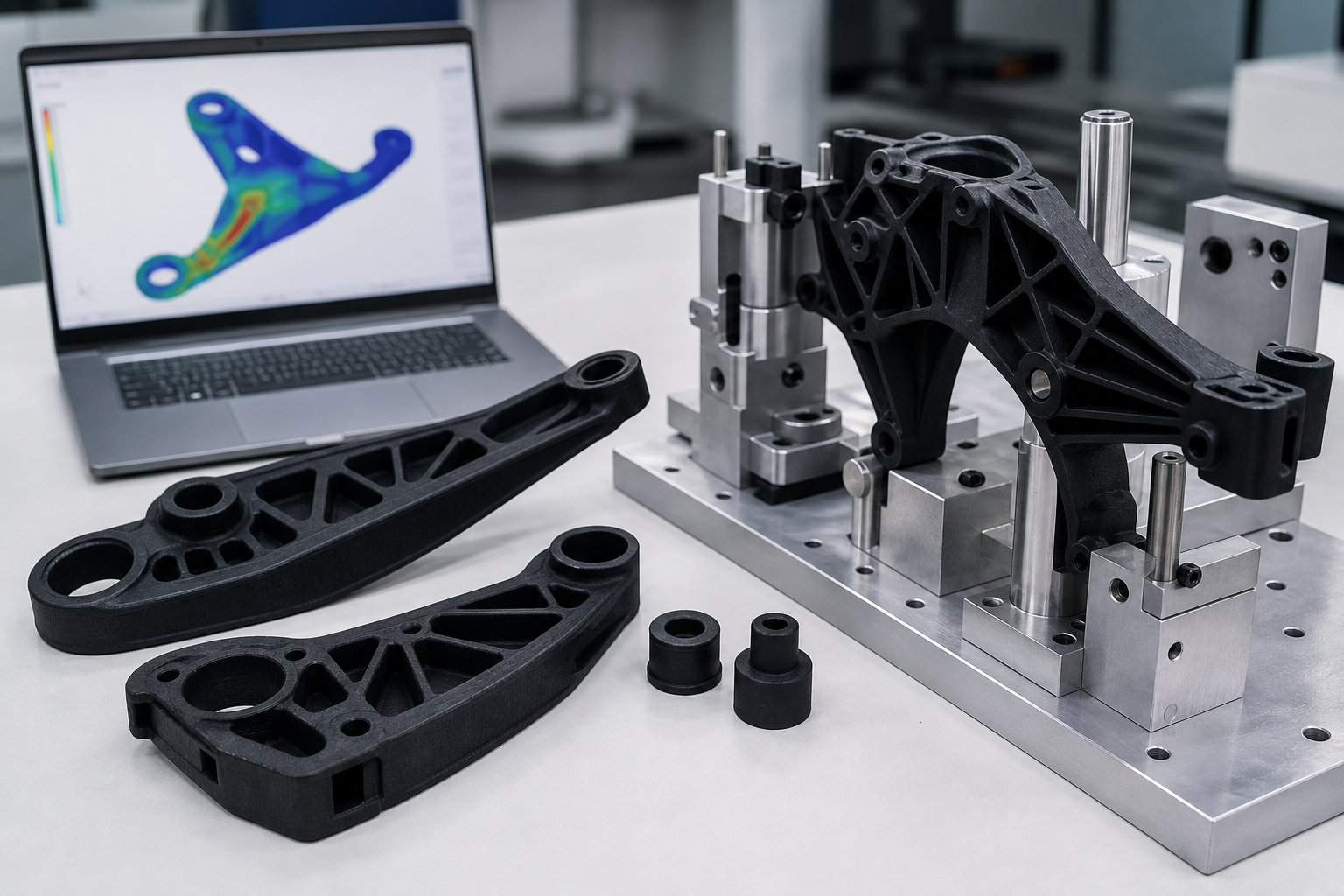
PA6 GF50 is better treated as a structural engineering material than a general enclosure material. It fits technical parts first, cosmetic parts second.
If the part also runs hotter for long periods, reinforced PA66 should still be part of the comparison, because stiffness alone is not the whole selection story.
- Industrial frames, supports, carriers, and equipment structures
- Motor-adjacent molded parts and heavy-duty brackets
- Structural technical components requiring low deflection
- Custom reinforced nylon compounds for demanding engineering parts
Why Choose WanHan
Since 2005, WanHan has created engineering plastics for sustainable industrial applications, with independent R&D, production, and sales of functional polymer materials.
WanHan is certified with ISO 9001, ISO 14001, ISO 45001, and IATF 16949, and uses full sets of testing equipment to support strict quality control throughout production.
- Modified PA, PBT, PC/ABS, GF, FR, heat-stabilized, color, and custom compound support
- Material discussion based on part application, molding process, validation target, and production quantity
- Exported to 30+ countries for automotive, electronics, home appliance, and industrial applications
Request Material Support
Send the molded part application, wall thickness, structural load, service temperature, tolerance target, and validation requirement. WanHan can compare PA6 GF50 with PA6 GF30 or reinforced PA66 structural routes.
Contact WanHan for material recommendation
Frequently Asked Questions
Q: What is PA6 GF50?
A: PA6 GF50 is nylon 6 reinforced with about 50% glass fiber for very high stiffness and structural molded-part support.
Q: Is PA6 GF50 stiffer than PA6 GF30?
A: Yes. PA6 GF50 usually provides higher stiffness and lower deflection, but the part must also be checked for warpage and processing practicality.
Q: Where is PA6 GF50 used?
A: It is often considered for industrial structures, heavy-duty brackets, carriers, and technical molded parts needing strong reinforcement.
Q: Does PA6 GF50 still absorb moisture?
A: Yes. PA6-based reinforced materials still absorb moisture, so tolerance and end-use stability should be validated under actual conditions.
Q: Can WanHan help compare PA6 GF50 with PA66 structural grades?
A: Yes. WanHan can compare them according to stiffness, heat margin, dimensional control, and molding requirements.
What Is PA66 GF15? Properties, Uses, and Material Selection Guide
What Is PBT GF20? Properties, Uses, and Electrical Part Guide
Related Article



