
PA66 GF30 for Automotive Radiator Tanks and Coolant Parts
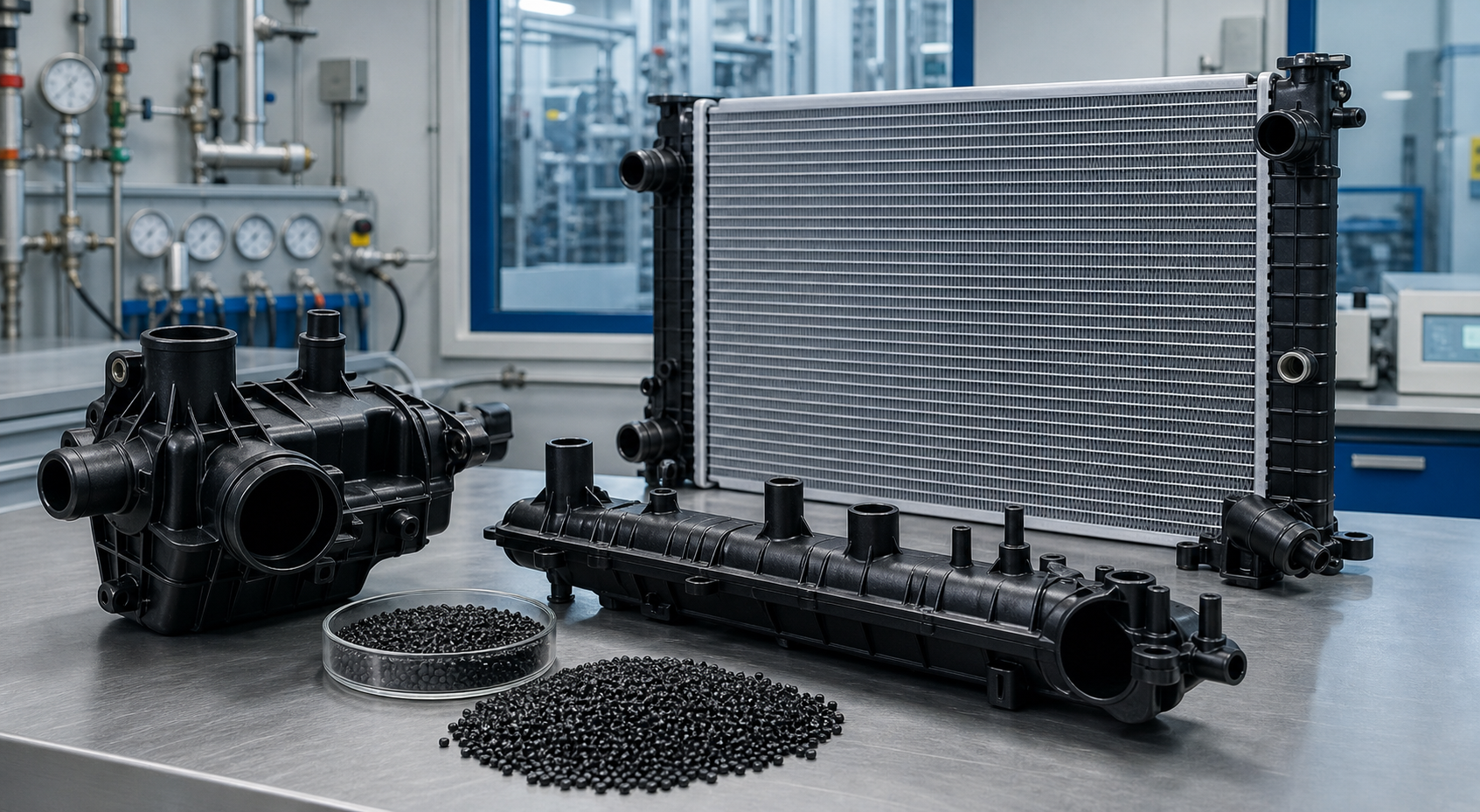
PA66 GF30 radiator tank material is used for molded end tanks, coolant chambers, hose connectors, thermostat-adjacent housings, fan components, and other under-hood parts that require stiffness at elevated temperature. Glass fiber supports pressure resistance and dimensional control, while the PA66 matrix provides a useful thermal and chemical performance base.
A radiator tank cannot be approved from the marking PA66 GF30 alone. Coolant chemistry, pressure cycling, hydrolysis resistance, heat aging, weld-line strength, and sealing geometry must be matched to a suitable PA66 glass-filled grade. Review the broader automotive plastic material route when adjacent parts have different requirements.
Standard structural PA66 GF30 and hydrolysis- or heat-stabilized coolant grades are not automatically interchangeable. The formulation must be selected for the specified coolant, temperature, pressure, service life, and OEM validation plan.
Radiator Tank Service Conditions
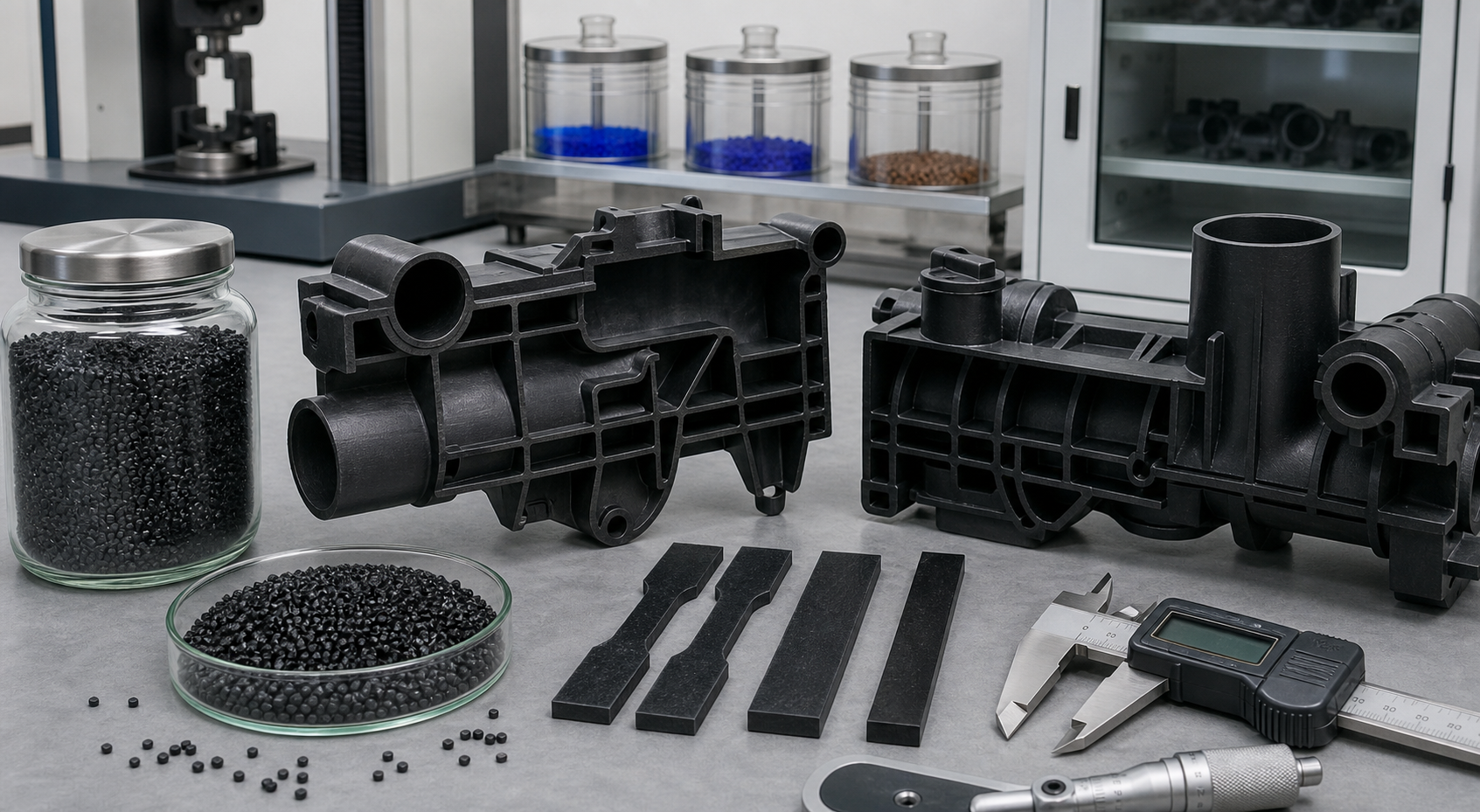
Radiator end tanks are exposed to hot coolant, internal pressure, thermal cycling, vibration, clamping load, and long-term contact with water-glycol mixtures. Stress is often concentrated around hose necks, crimp flanges, ribs, mounting features, and weld lines.
A material with strong dry data can still fail after hydrothermal aging. Grade selection therefore needs retained strength and elongation data after coolant exposure, plus molded-part pressure and burst tests.
- Hydrolysis and embrittlement after prolonged hot-coolant exposure
- Cracking at hose connections, weld lines, crimp flanges, or molded-in features
- Leakage caused by warpage or sealing-surface distortion
- Creep under pressure and clamp load
- Property variation caused by moisture, drying, or recycled contamination
Material and Grade Selection
| Requirement | Grade consideration | Part-level verification |
|---|---|---|
| Hot coolant exposure | Hydrolysis-stabilized PA66 GF30 | Retention after water-glycol aging |
| Pressure and burst strength | High-strength, controlled glass-fiber compound | Pressure cycle and burst test on molded tanks |
| Sealing stability | Low warpage and controlled shrinkage | Flange flatness, crimp load, and leak testing |
| Under-hood aging | Heat-stabilized formulation | Thermal cycling, oxidation aging, and vibration |
Part Design and Injection Molding Notes
Moisture control before molding is essential. Inadequate drying can reduce polymer molecular weight and cause hidden strength loss even if the surface appears acceptable. Use a controlled dryer, verify dew point and residence time, and prevent reabsorption during material transfer.
Flow length and gate position should be evaluated around hose necks and sealing flanges. Weld lines in pressure-loaded zones require special attention. Balanced filling, adequate venting, uniform cooling, and controlled packing help reduce warpage and residual stress.
- Keep regrind use within the approved program and validate aged properties
- Locate weld lines away from the most highly stressed pressure zones
- Measure flange flatness and critical dimensions after conditioning
- Control mold temperature and cooling balance across the full tank
Prototype and Production Validation
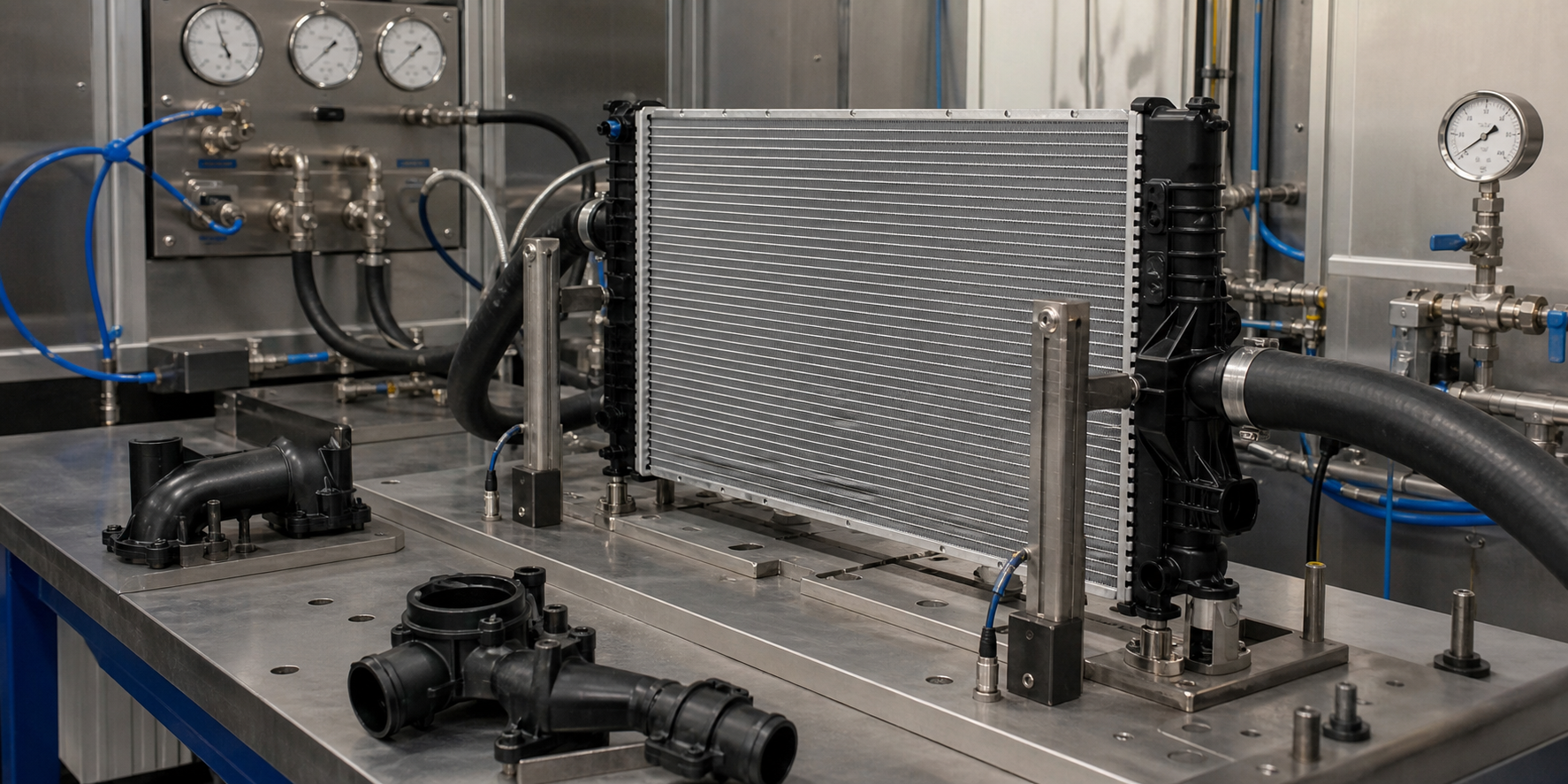
Material screening should include tensile and impact retention after coolant aging, but the final decision belongs to the molded assembly. Pressure cycling, burst pressure, thermal shock, vibration, leak testing, and clamp or crimp retention reveal interactions that a standard test bar cannot show.
WanHan can support a starting compound, alternative grade comparison, sample batches, technical data, and production consistency discussions. Final OEM approval remains tied to the customer's part design and test specification.
- Coolant type and concentration, service temperature, and design life
- Working pressure, burst target, thermal cycle, and vibration profile
- Tank geometry, hose necks, weld-line position, and sealing method
- OEM standard, color, annual demand, and traceability requirements
Why Choose WanHan
Since 2005, WanHan has developed engineering plastics for demanding industrial applications, with independent R&D, production, and sales of functional polymer materials.
WanHan is certified with ISO 9001, ISO 14001, ISO 45001, and IATF 16949. Full sets of testing equipment support incoming material control, formulation development, process inspection, and finished-batch verification.
- Modified PA6, PA66, PBT, PC/ABS, glass-filled, flame-retardant, heat-stabilized, color, and custom compound options
- Application review, grade comparison, sample support, data sheets, test coordination, and production follow-up
- Materials exported to 30+ countries for automotive, electronics, home appliance, and industrial components
Discuss Your Material Requirement
Send the radiator or coolant-part drawing, coolant specification, pressure cycle, temperature profile, sealing method, and required test standard. WanHan can recommend a hydrolysis- and heat-stabilized PA66 GF30 grade for prototype and production validation.
Send your application details to WanHan or review our engineering plastic product range.
Frequently Asked Questions
Q: Why is PA66 GF30 used for automotive radiator tanks?
A: Its glass-fiber reinforcement supports stiffness, pressure resistance, dimensional control, and heat performance for demanding coolant-system components.
Q: Is every PA66 GF30 grade suitable for hot coolant?
A: No. Radiator tanks normally require a grade validated for hydrolysis, heat aging, coolant chemistry, pressure cycling, and the specified service life.
Q: What causes PA66 GF30 radiator tanks to crack?
A: Common contributors include hydrothermal aging, weak weld lines, residual molding stress, poor drying, sharp geometry, excessive clamp load, and unsuitable material selection.
Q: Should radiator tank tests use molded parts or standard specimens?
A: Both are useful, but molded-part pressure, leak, vibration, and thermal-cycle tests are essential because geometry and fiber orientation strongly affect performance.
Q: Can WanHan support radiator tank material samples and documents?
A: Yes. WanHan can discuss sample batches, technical data, heat- and hydrolysis-stabilized options, traceability, and production quality requirements.
PA66 FR V0 for Terminal Blocks and Electrical Insulators
PA6 GF30 for Power Tool Housings and Motor Covers
Related Article



