
Automotive Plastic Materials for Lightweight and Durable Parts
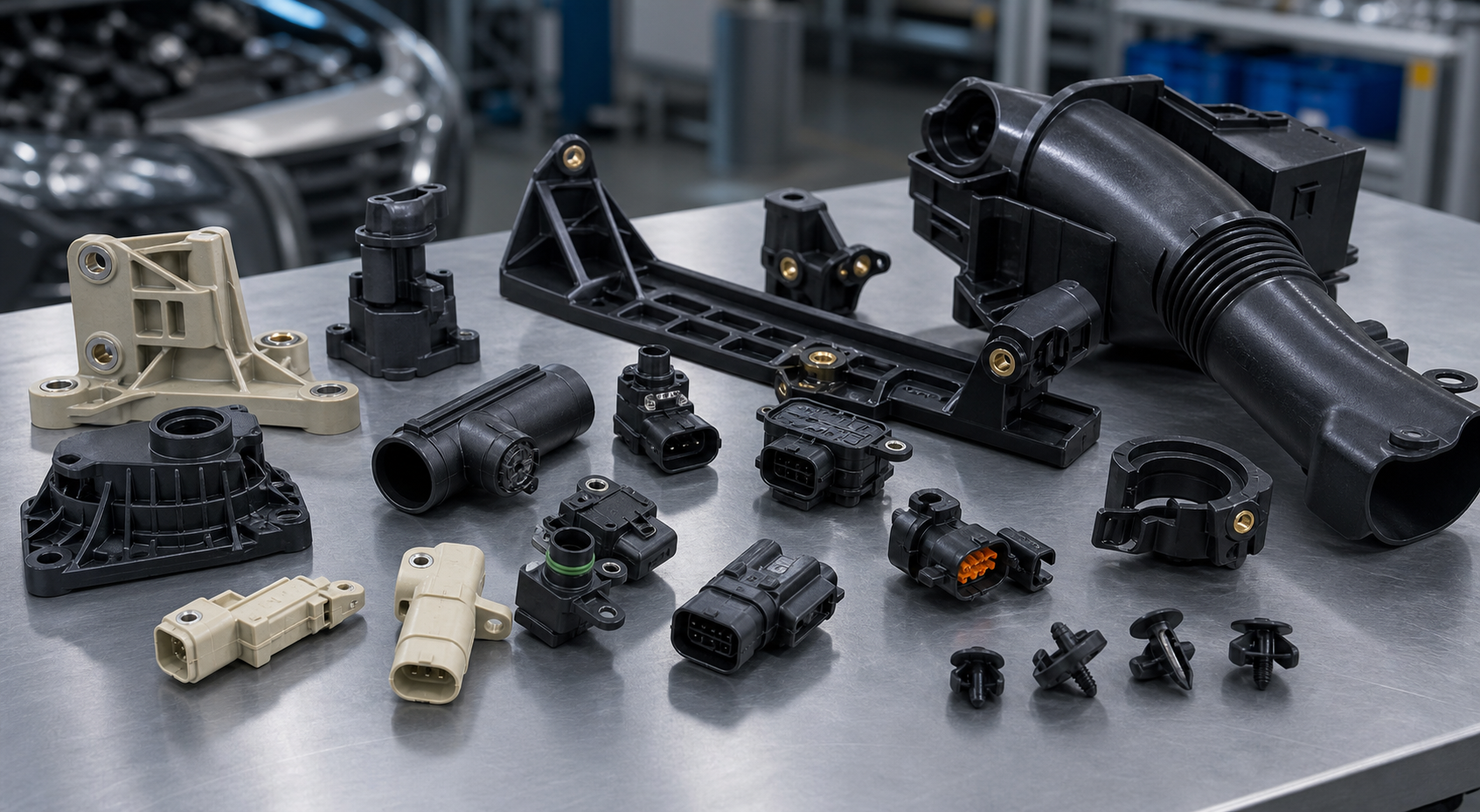
Automotive plastic materials help vehicle programs reduce weight, improve design freedom, and maintain reliable performance in demanding service conditions.
For molded automotive parts, the material decision should connect part function, temperature exposure, chemical contact, dimensional tolerance, and production stability rather than only resin price.
WanHan supports automotive material discussions through nylon, PP, ABS, PBT, PC/ABS, reinforced, and flame-retardant systems. Useful starting points include PA6, PA66, PBT, ABS, and top sale products.
Automotive Part Requirements
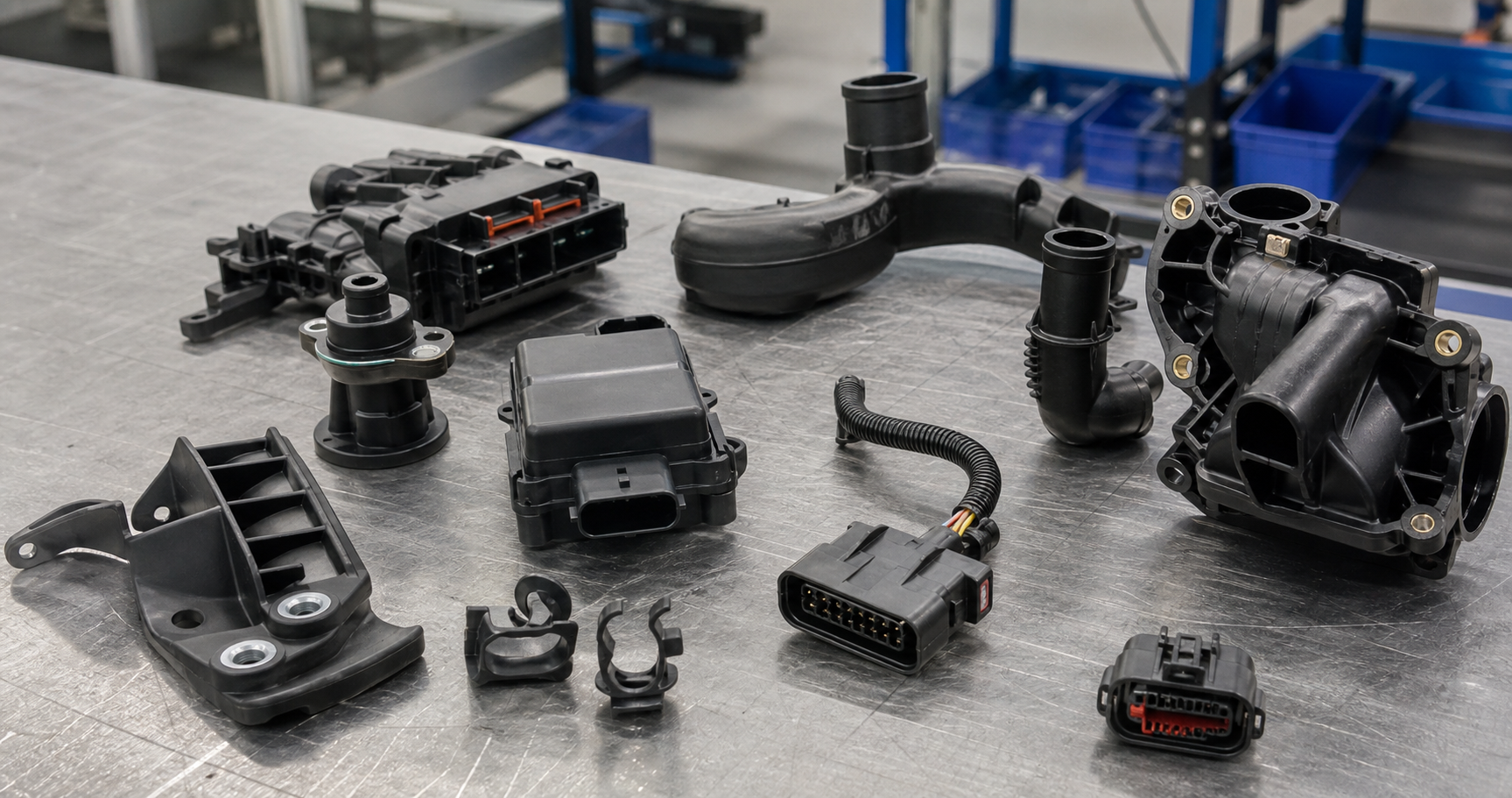
Automotive applications often require a balance of strength, toughness, heat resistance, chemical resistance, surface quality, and repeatable molding behavior.
Under-hood-adjacent parts may need higher thermal margin, while interior and exterior components often add appearance, impact, UV, and dimensional requirements.
- Lightweighting without losing mechanical reliability
- Heat and chemical resistance for under-hood or fluid-adjacent parts
- Dimensional control for clips, brackets, housings, and assembly features
- Surface quality and color control for visible trims or structural covers
Recommended Material Routes
| Part direction | Common material routes | Main validation point |
|---|---|---|
| Interior trims and covers | PP, ABS, PC/ABS, modified PA | Impact, appearance, odor, color, and assembly fit |
| Clips, brackets, and functional supports | PA6 GF, PA66 GF, reinforced PP | Stiffness, creep, fatigue, and dimensional retention |
| Under-hood-adjacent components | PA66 GF, heat-stabilized PA, PBT | Thermal aging, chemical exposure, and long-term stability |
| Electrical or connector parts | PA66 FR, PBT FR, reinforced flame-retardant systems | UL target, tracking behavior, wall thickness, and molding window |
Why Choose WanHan
Since 2005, WanHan has focused on independent R&D, production, and sales of functional polymer materials for demanding engineering applications.
WanHan is certified with ISO 9001, ISO 14001, ISO 45001, and IATF 16949, with full sets of testing equipment supporting strict quality control throughout production.
- Support for PA, PP, ABS, PBT, PC/ABS, GF, FR, and custom-compound projects
- Sample and alternative-grade support for automotive validation programs
- Export experience across 30+ countries
- Material discussion for automotive, electronics, home appliance, and industrial applications
Request Material Support
Share the automotive part type, operating temperature, target resin family, reinforcement or flame-retardant requirement, color, and the main performance issue to solve. WanHan can help recommend a practical starting grade and backup route.
Contact WanHan for material recommendation
Frequently Asked Questions
Q: What plastic materials are commonly used in automotive parts?
A: Common routes include PP, ABS, PC/ABS, PA6, PA66, PBT, and reinforced or flame-retardant compounds depending on the part function.
Q: When should glass-filled nylon be used in automotive parts?
A: Glass-filled nylon is useful when the part needs higher stiffness, better dimensional control, creep resistance, or improved heat performance.
Q: Is PA66 better than PA6 for automotive applications?
A: Not always. PA66 is often favored for higher heat margin, while PA6 can be attractive for balanced processing and broad industrial part use.
Q: Can WanHan support automotive material sampling?
A: Yes. WanHan can support sample discussion, grade comparison, and alternative recommendations for molded automotive parts.
Q: What should I send for an automotive material recommendation?
A: Send the part drawing or application, service temperature, chemical exposure, reinforcement need, color, and validation target.
Q: Why do certifications matter for automotive plastic suppliers?
A: Systems such as ISO 9001 and IATF 16949 help indicate stronger process control, traceability, and production discipline for automotive programs.
Industrial Equipment Plastic Materials for Durable Parts
Carbon Fiber Nylon Pellets: Properties, Grades, and Applications
Related Article



