
What Is PBT GF20? Properties, Uses, and Electrical Part Guide
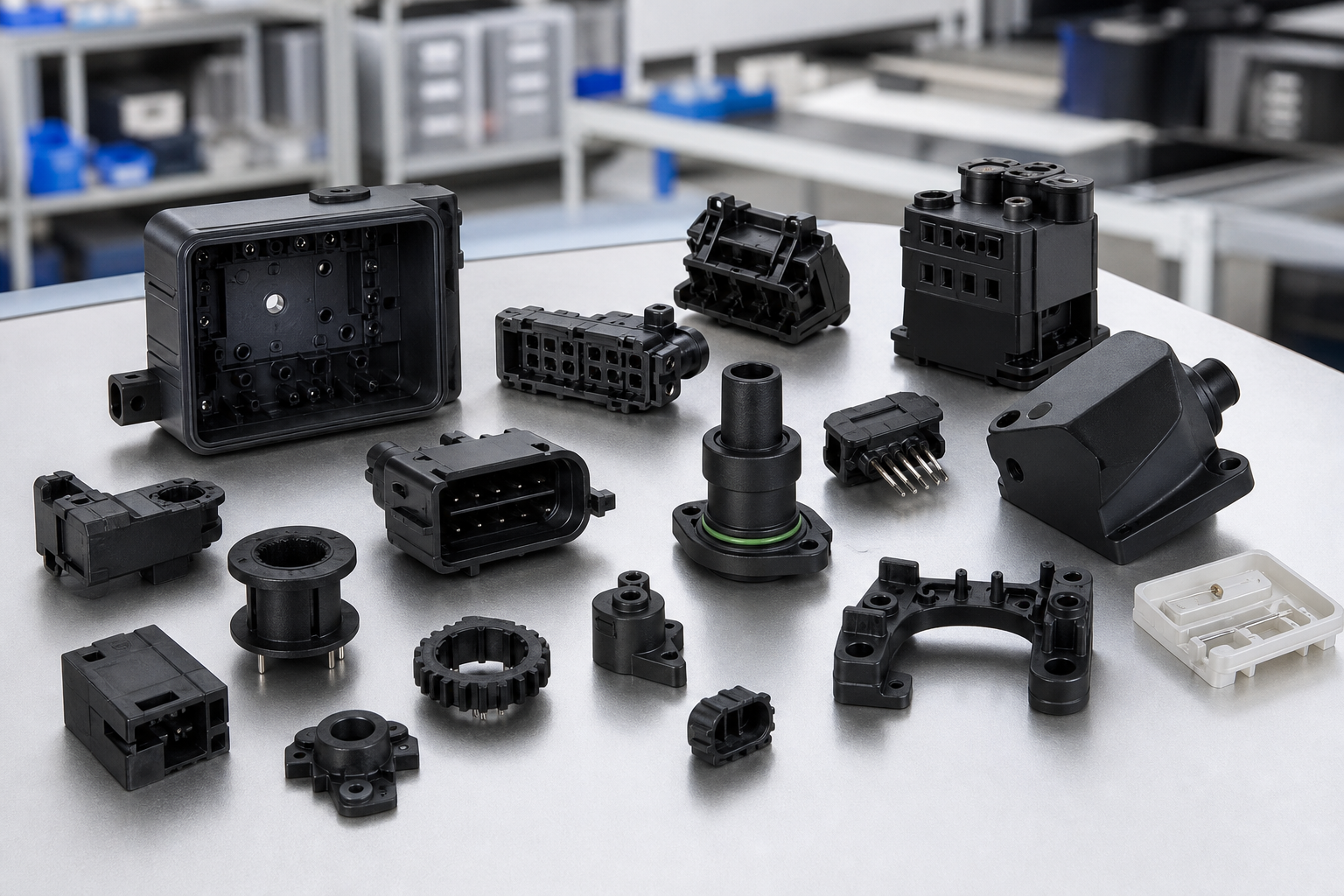
PBT GF20 is a 20% glass-fiber-reinforced PBT grade. Buyers usually look at it for electrical and precision molded parts that need good dimensional stability without becoming overbuilt.
It is often reviewed with PBT material, PBT GF30, and flame-retardant electrical-use options such as PBT FR.
In many projects, it sits in the middle ground: stiffer than unfilled PBT, easier to balance than a heavier reinforced grade, and still well suited to electrical housings and small precision structures.
Why Buyers Choose GF20 Instead of GF30
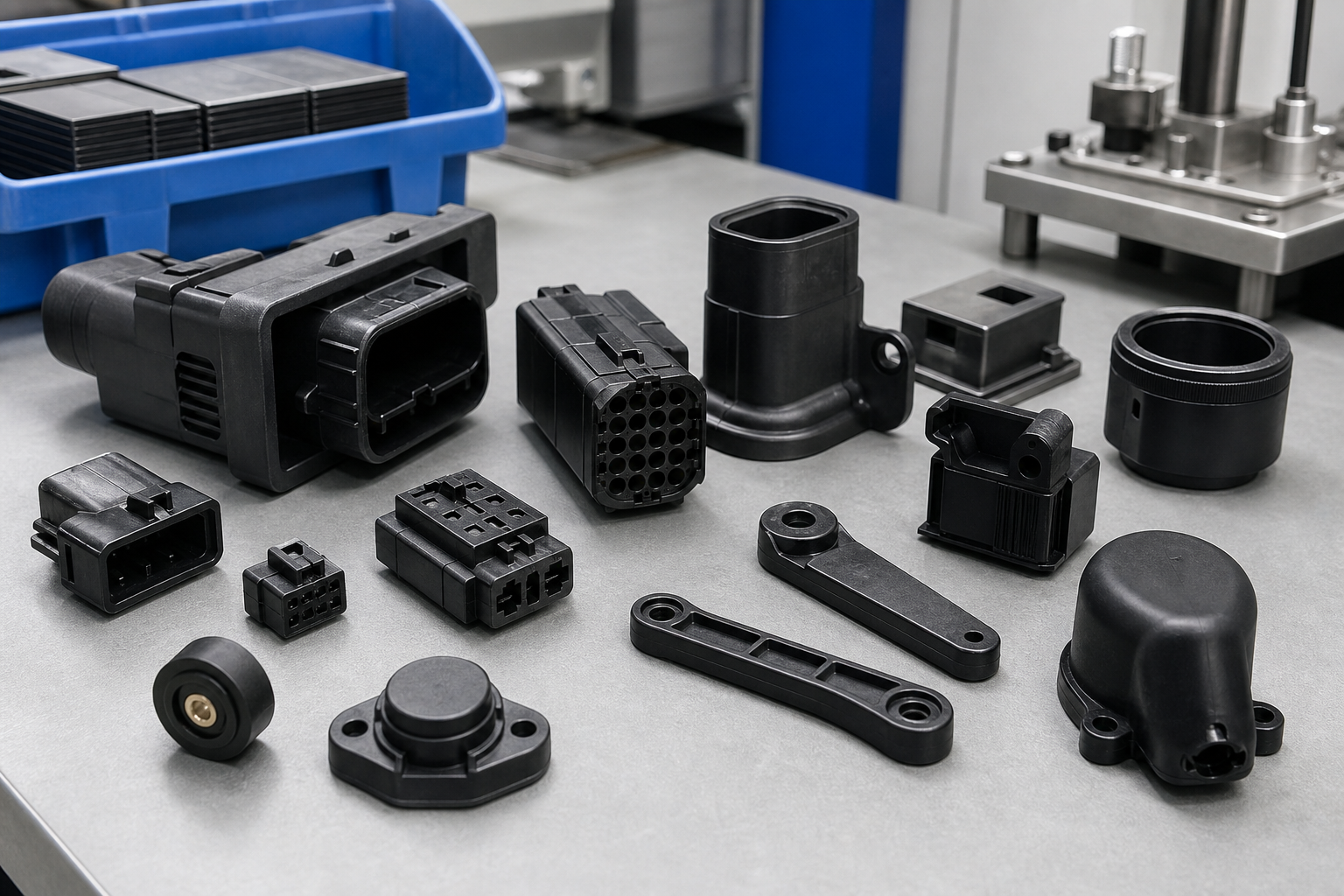
PBT GF20 is often considered for electrical housings, connector structures, sensor covers, switch parts, bobbins, and precision industrial components where fit and repeatability matter.
The reason some buyers stay with GF20 is simple: the part may not need the higher stiffness of GF30, and a lighter reinforced grade can be easier to mold cleanly on smaller or more detailed geometries.
- Confirm dimensional tolerance and warpage requirement
- Check insulation, CTI, and electrical-use standard
- Review whether flame retardancy is required
- Compare GF20 and GF30 routes for stiffness and processing balance
Material Selection Guide
| Part need | PBT GF20 fit | Validation point |
|---|---|---|
| Dimensional stability | Useful for precision molded assemblies | Shrinkage, warpage, and tolerance consistency |
| Electrical performance | Common for insulated electrical structures | Insulation target, CTI, and end-use standard |
| Moderate structural reinforcement | Balanced rigidity without jumping to a heavier GF route | Load level and deflection target |
| Processing practicality | Often easier to manage than higher reinforced grades | Mold flow, surface finish, and cycle stability |
Application Notes
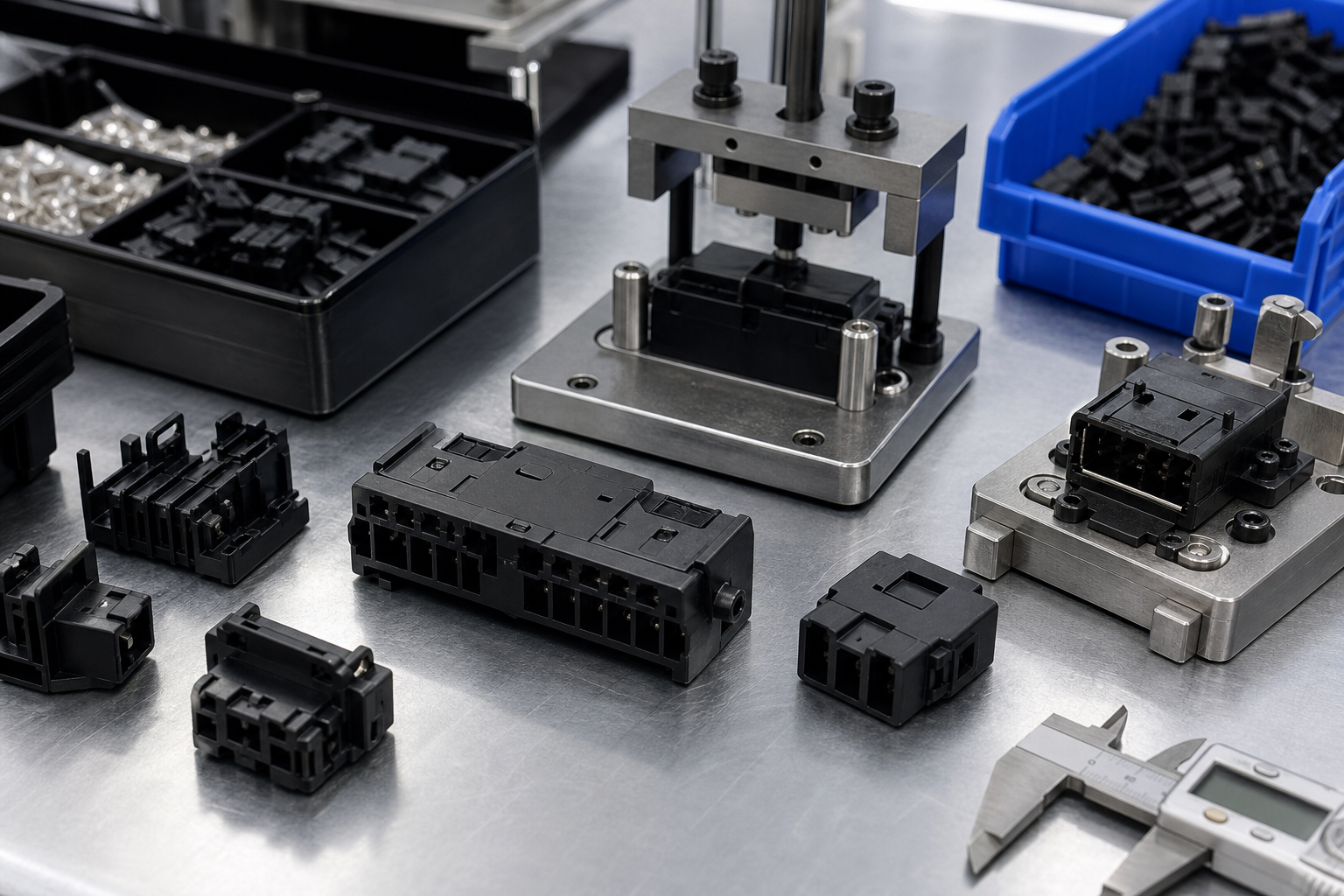
PBT GF20 fits best when the part priority is stable dimensions, decent rigidity, and reliable electrical performance rather than maximum structural reinforcement.
If the part starts to bend too much, carries more load, or needs a tougher flame package, then GF30 or an FR-reinforced route becomes the more realistic comparison.
- Electrical housings, sensor covers, switches, and connector structures
- Relay, bobbin, and appliance electrical support parts
- Precision industrial molded components needing stable assembly fit
- Custom reinforced, flame-retardant, or color-controlled PBT compounds
Why Choose WanHan
Since 2005, WanHan has created engineering plastics for sustainable industrial applications, with independent R&D, production, and sales of functional polymer materials.
WanHan is certified with ISO 9001, ISO 14001, ISO 45001, and IATF 16949, and uses full sets of testing equipment to support strict quality control throughout production.
- Modified PA, PBT, PC/ABS, GF, FR, heat-stabilized, color, and custom compound support
- Material discussion based on part application, molding process, validation target, and production quantity
- Exported to 30+ countries for automotive, electronics, home appliance, and industrial applications
Request Material Support
Send the part drawing, tolerance requirement, wall thickness, electrical standard, flame target, and molding method. WanHan can compare PBT GF20 with GF30 or flame-retardant reinforced PBT routes.
Contact WanHan for material recommendation
Frequently Asked Questions
Q: What is PBT GF20?
A: PBT GF20 is polybutylene terephthalate reinforced with about 20% glass fiber to improve stiffness and dimensional stability.
Q: Where is PBT GF20 used?
A: It is often used in electrical housings, connectors, sensors, bobbins, and precision molded industrial parts.
Q: Is PBT GF20 easier to process than PBT GF30?
A: In many cases, PBT GF20 can offer a more moderate balance of rigidity and processing, but the right choice depends on the part requirement.
Q: Can PBT GF20 be flame retardant?
A: Yes. Flame-retardant reinforced PBT grades can be discussed when electrical safety standards are part of the project.
Q: Can WanHan help compare PBT GF20 and PBT GF30?
A: Yes. WanHan can compare them based on stiffness, dimensional stability, electrical behavior, flame target, and processing needs.
What Is PA6 GF50? Properties, Uses, and High-Stiffness Part Guide
What Is PA66 GF35? Properties, Uses, and Structural Application Guide
Related Article



