
UL94 V0 vs V1 vs V2: Flame-Retardant Plastic Guide
UL94 V0 vs V1 vs V2: Flame-Retardant Plastic Guide
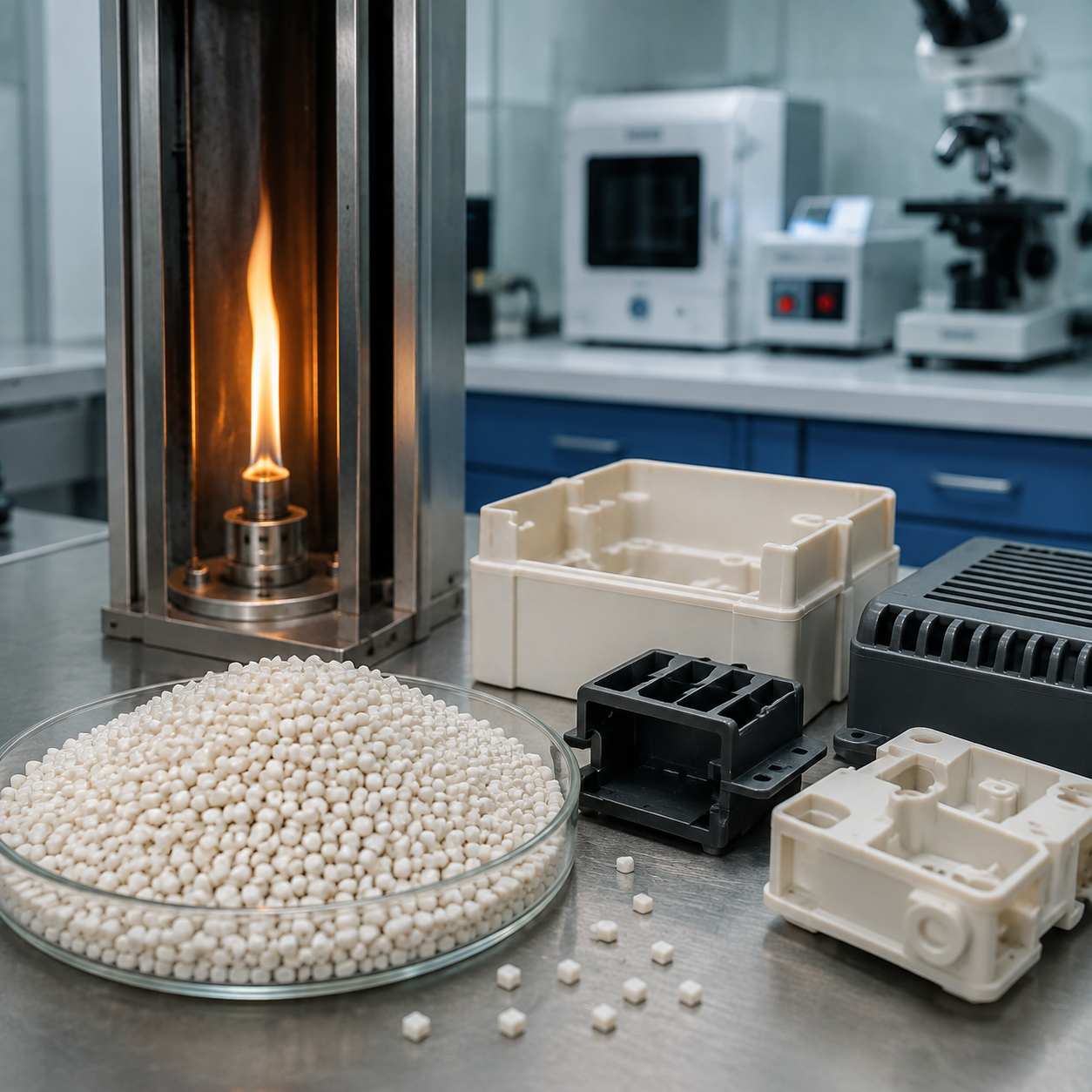
UL94 V0 vs V1 vs V2 is an important comparison when a molded electrical or industrial part must meet a defined flammability requirement. The rating describes how a material behaves in a specific vertical burning test; it does not describe every fire scenario or replace the end-product standard.
For material selection, the rating must be read together with specimen thickness, color, reinforcement, flame-retardant package, part geometry, and the actual compliance requirement. A grade that meets V0 at one thickness should not be assumed to meet the same rating in a thinner wall or a different formulation.
What UL94 V0, V1, and V2 Mean
| Rating | Typical vertical-burn interpretation | Selection implication |
|---|---|---|
| V0 | Shorter afterflame limits and no flaming drips under the specified test conditions | Often preferred for electrical housings and connectors with a higher fire-safety target |
| V1 | Longer permitted afterflame than V0 while still controlling the test response | May fit a defined application when the product standard accepts the rating |
| V2 | Similar vertical classification with flaming drips permitted under the test conditions | Requires careful review where material below the part could ignite |
The exact result depends on the test method and specimen thickness. Always request the grade-level UL94 report or certificate, confirm the tested thickness, and check whether the report applies to the color and reinforcement used in production.
How to Select a Flame-Retardant Plastic Grade
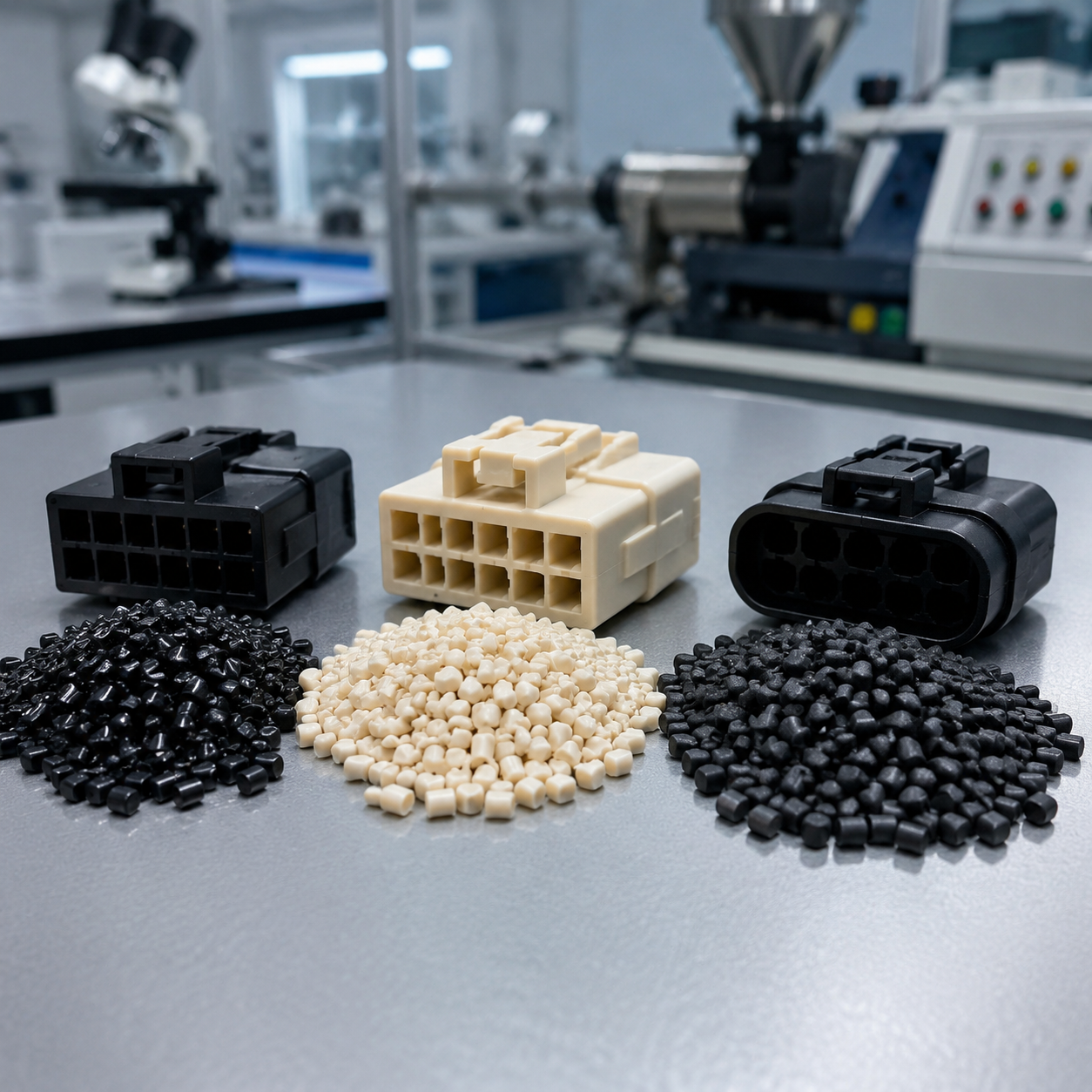
Start with the part standard and the wall thickness rather than choosing a resin from the rating alone. Connector housings, terminal blocks, fuse boxes, and power-module covers may also need electrical insulation, CTI, heat aging, impact strength, dimensional stability, and chemical resistance.
- Define the required UL94 class and the minimum wall thickness before requesting samples.
- Confirm whether the material must be halogen-free, glass-filled, heat-stabilized, or impact-modified.
- Review color effects, weld lines, knit lines, and thin sections because molded geometry can change performance.
- Validate the finished part, not only a resin plaque, when the design has complex flow or thin walls.
WanHan's PA66 UL94 V0 grade is a relevant starting point for high-temperature electrical parts. For broader comparisons, review the flame-retardant nylon guide, FR ABS material guide, and PC-ABS material catalog.
Why Choose WanHan for Flame-Retardant Compounds?
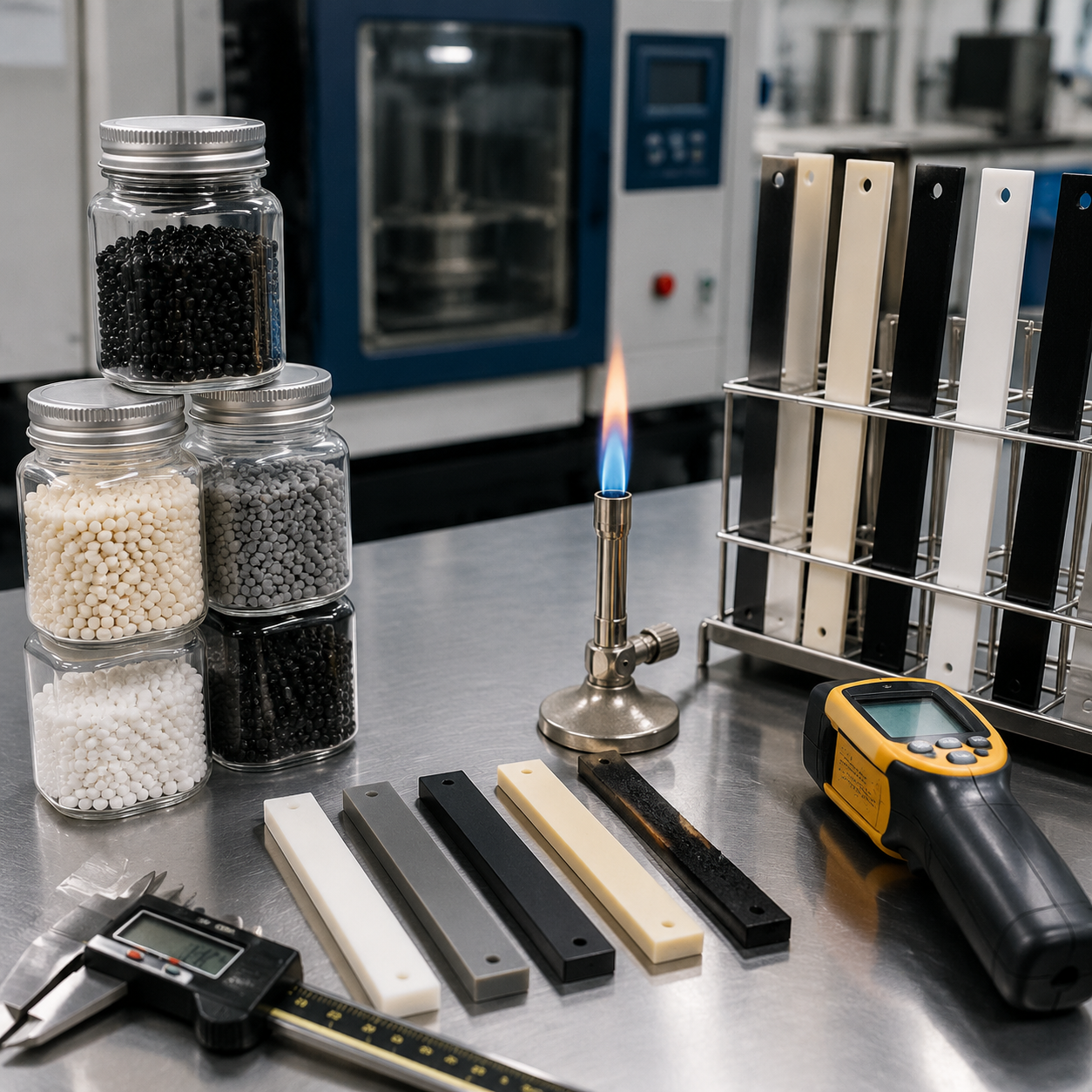
Since 2005, WanHan has developed and manufactured functional engineering plastic compounds for automotive, electronics, home appliance, and industrial applications. Independent R&D, production, and sales capabilities support practical material selection from the first sample through repeat production.
Our ISO 9001, ISO 14001, ISO 45001, and IATF 16949 management systems support controlled production and consistent testing. With in-house testing equipment, export experience across more than 30 countries, and application-focused technical support, WanHan can help connect the flame target with the rest of the part specification.
Share the application, drawing, wall thickness, color, annual volume, and required UL94 class through WanHan's inquiry page. The team can recommend a suitable compound and arrange sample evaluation.
Frequently Asked Questions
Q: What is the difference between UL94 V0, V1, and V2?
A: UL94 V0, V1, and V2 are vertical flammability classifications with different afterflame limits and dripping requirements. V0 is generally the more demanding of these three ratings.
Q: Is UL94 V0 always better than V1 or V2?
A: V0 may be the correct target when the product standard requires it, but the rating must be considered with wall thickness, electrical, heat, impact, cost, and end-use requirements.
Q: Does a UL94 rating apply to every thickness and color?
A: No. UL94 performance can depend on specimen thickness, color, reinforcement, and formulation, so the grade documentation must be checked for the intended production condition.
Q: Which engineering plastics can achieve UL94 V0?
A: PA66, PA6, PBT, PC-ABS, ABS, and other engineering plastics can have V0 grades, but the actual rating depends on the formulation and test thickness.
Q: Can WanHan help select a UL94 V0 material?
A: Yes. WanHan can compare flame-retardant PA, PBT, ABS, and PC-ABS compounds according to the part geometry, thickness, thermal environment, electrical requirement, and validation plan.
Glass Fiber vs Carbon Fiber Reinforced Plastic: Selection Guide
Plastic Compound Supplier Qualification: A Practical Technical Checklist
Related Article



