
Flame-Retardant Nylon Pellets: UL94 Grades, Uses, and Selection
Flame-Retardant Nylon Pellets: UL94 Grades, Uses, and Selection
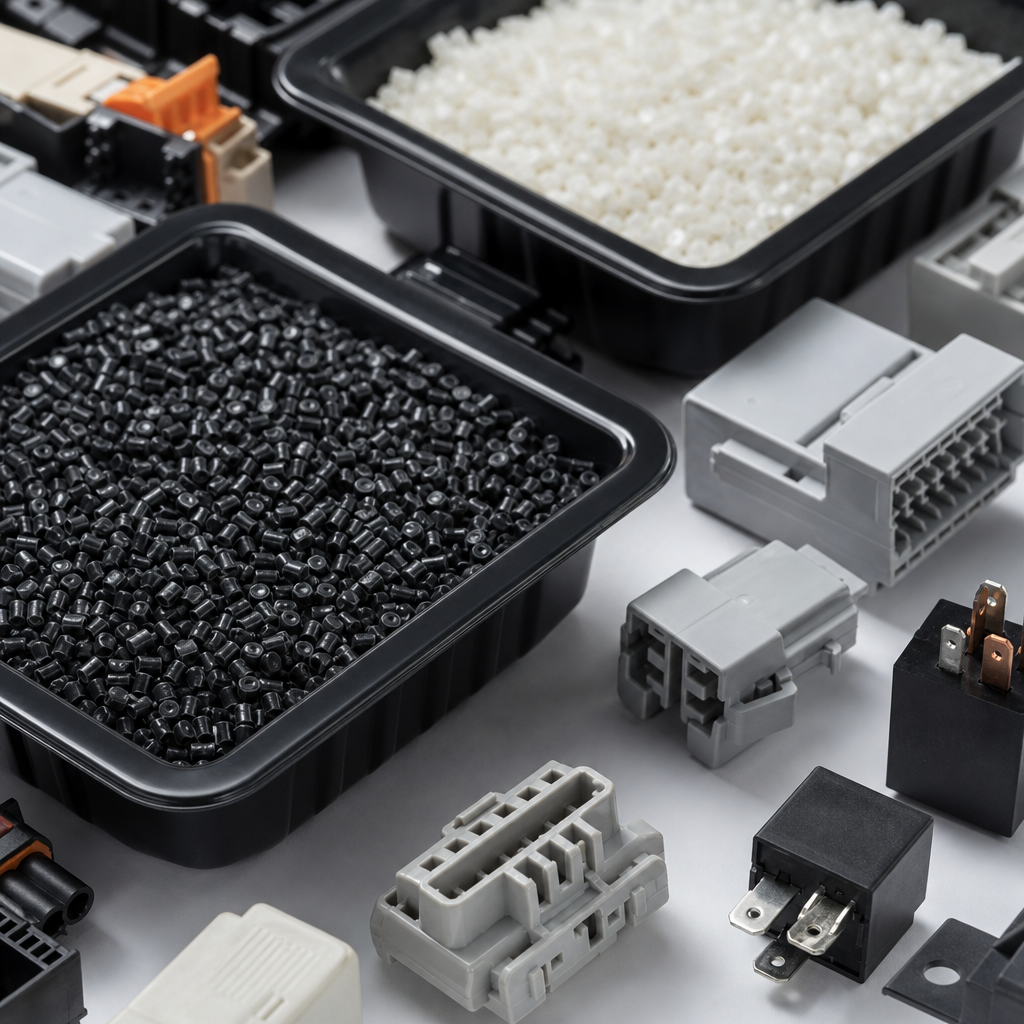
Flame-retardant nylon pellets are widely used for electrical connectors, relay housings, switch components, appliance parts, and automotive electrical systems. These materials are usually reviewed when standard nylon grades do not provide enough fire safety for the target application.
The most common demand is for PA66 FR pellets with reliable mechanical performance and a clear UL94 flame rating. In practice, material selection depends on thickness, heat resistance, electrical load, dimensional stability, and whether halogen-free or standard flame-retardant systems are required.
What Flame-Retardant Nylon Usually Refers To
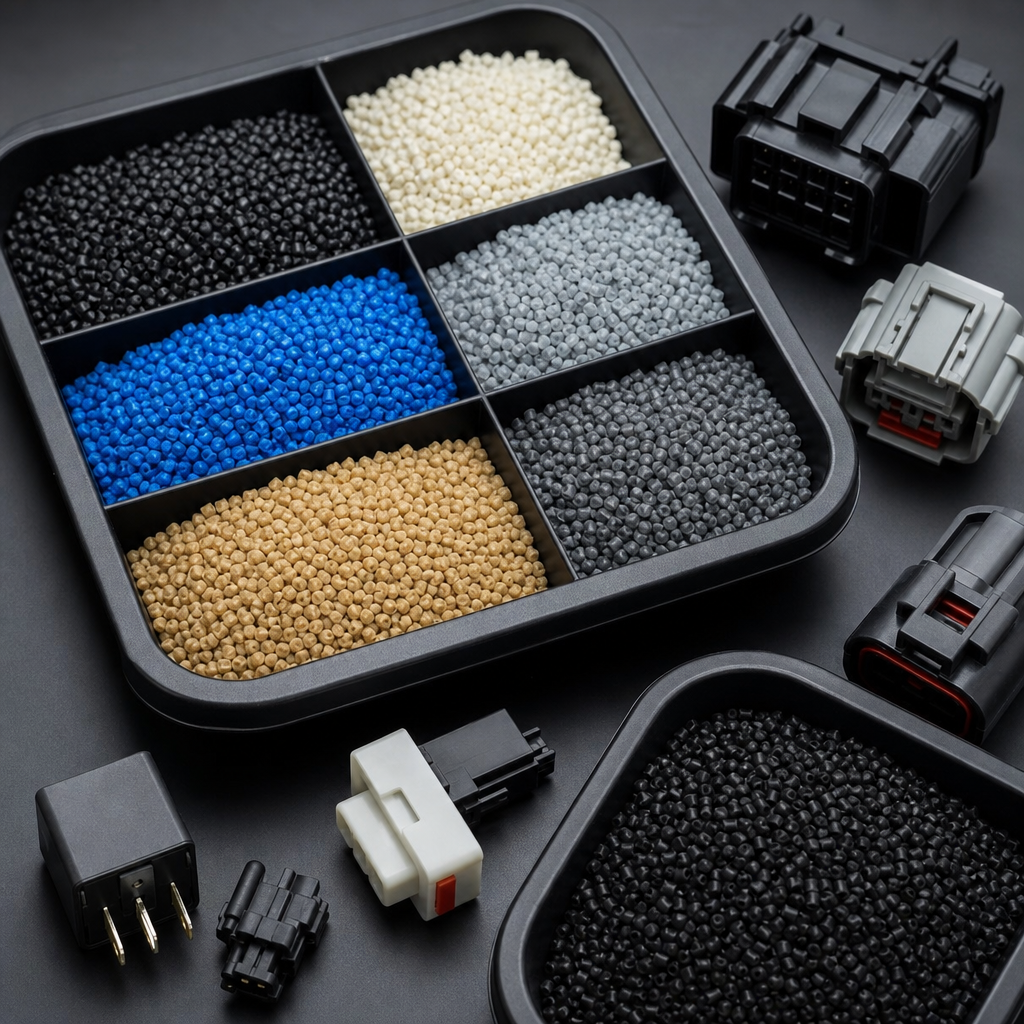
In engineering plastics, flame-retardant nylon usually refers to a PA66 or PA6 compound designed to improve fire performance while maintaining the core advantages of nylon, including strength, processability, and heat resistance. In technical communication, this type of material is often described as UL94 nylon, PA66 FR pellets, or nylon FR material, depending on the grade and application context.
UL94 Ratings and Why They Matter
| Rating | Practical Meaning |
|---|---|
| HB | Basic horizontal burn performance, not enough for many electrical parts |
| V2 | Moderate vertical flame performance with dripping allowed |
| V1 | Improved flame performance with stricter afterflame limits |
| V0 | High-priority target for many connector and housing applications |
For many electrical uses, V0-rated compounds are preferred because they support stricter flame safety requirements. Final compliance still depends on the exact thickness and certified grade.
Common Applications
- Automotive electrical connectors
- Relay housings and switch components
- Circuit protection housings
- Appliance electrical parts
- Industrial terminal and plug components
Related references include the automotive connector material guide, the PA66 material guide, and WanHan's flame-retardant ABS article for broader electrical-material comparisons.
Selection Considerations
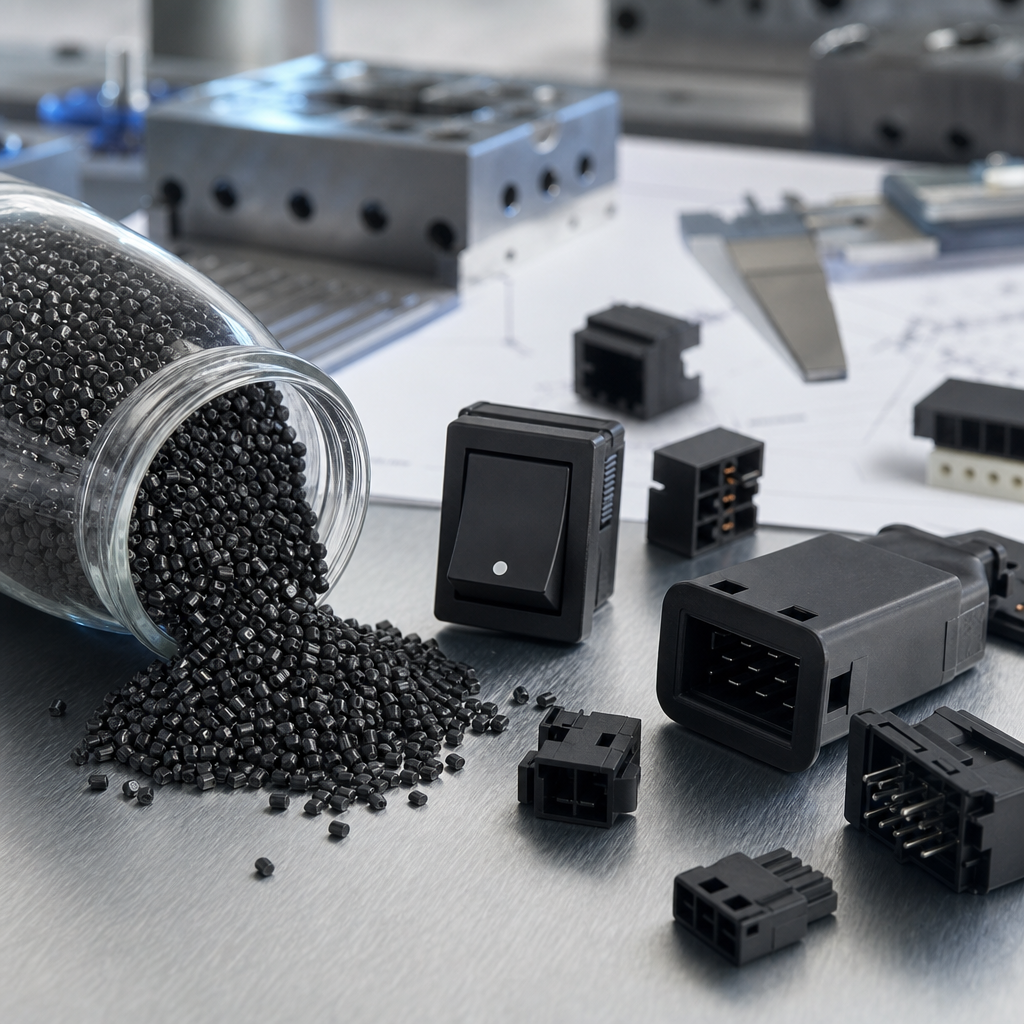
Material selection should be based on the required flame rating, wall thickness, heat resistance, color, moisture behavior, electrical performance, and whether halogen-free chemistry is needed. Sample validation is still important, because flame-retardant systems can influence flow, shrinkage, and the overall balance of mechanical properties.
Why Choose WanHan for Engineering Plastic Projects?
Since 2005, WanHan has focused on independent R&D, production, and global sales of functional engineering plastics for more sustainable industrial applications. Certified to ISO 9001, ISO 14001, ISO 45001, and IATF 16949, we operate with complete in-house testing equipment and strict quality control throughout development and production. Our materials are exported to more than 30 countries and are widely used in automotive, electronics, home appliances, and industrial applications that require higher-performance polymer solutions.
- Application-based material selection support for OEM, injection molding, and product development teams.
- Custom compounding capability for glass fiber, flame-retardant, carbon fiber, mineral-filled, impact-modified, anti-UV, and color-customized grades.
- Full quality control with in-house testing equipment and certified systems for more stable repeat orders and production consistency.
- Free sample support, technical data sheets, and processing guidance to shorten validation time before mass production.
- Fast quotation response, export-ready packaging, and practical support for long-term production supply programs.
If you are selecting a resin for a new project or replacing an existing grade, WanHan can help with grade matching, sample preparation, and custom compound evaluation. You can send your target application, part drawing, annual quantity, or required properties through WanHan's inquiry page to get a faster quotation and material recommendation. You can also review top-sale engineering plastic grades for faster project matching.
For FR projects, you can also review WanHan's PA66 flame-retardant compounds, PA6 flame-retardant compounds, and other flame-retardant material options for electrical parts.
Frequently Asked Questions
Q: What are flame-retardant nylon pellets?
A: They are nylon compounds, usually based on PA66 or PA6, modified to improve fire safety performance for electrical and industrial parts.
Q: What UL94 rating is common for nylon FR pellets?
A: UL94 V0 is a common target for connectors, relay housings, and electrical parts that need higher flame safety performance.
Q: Are PA66 FR pellets used for connectors?
A: Yes, PA66 FR pellets are widely used for electrical connectors because they combine strength, heat resistance, and flame-retardant performance.
Q: Do flame-retardant nylons process differently?
A: They can. Flame-retardant systems may affect flow, shrinkage, and molding behavior, so process validation is recommended.
Q: Can WanHan help select nylon FR pellets?
A: Yes, WanHan can help compare flame-retardant nylon pellet options for electrical, automotive, and industrial applications.
Engineering Resin Supplier Guide: Materials, Support, and Quality
Plastic Resin Pellets Supplier Guide: Materials, Quality, and Evaluation
Related Article



