Flame-Retardant ABS: Ratings, Applications, and Grade Selection
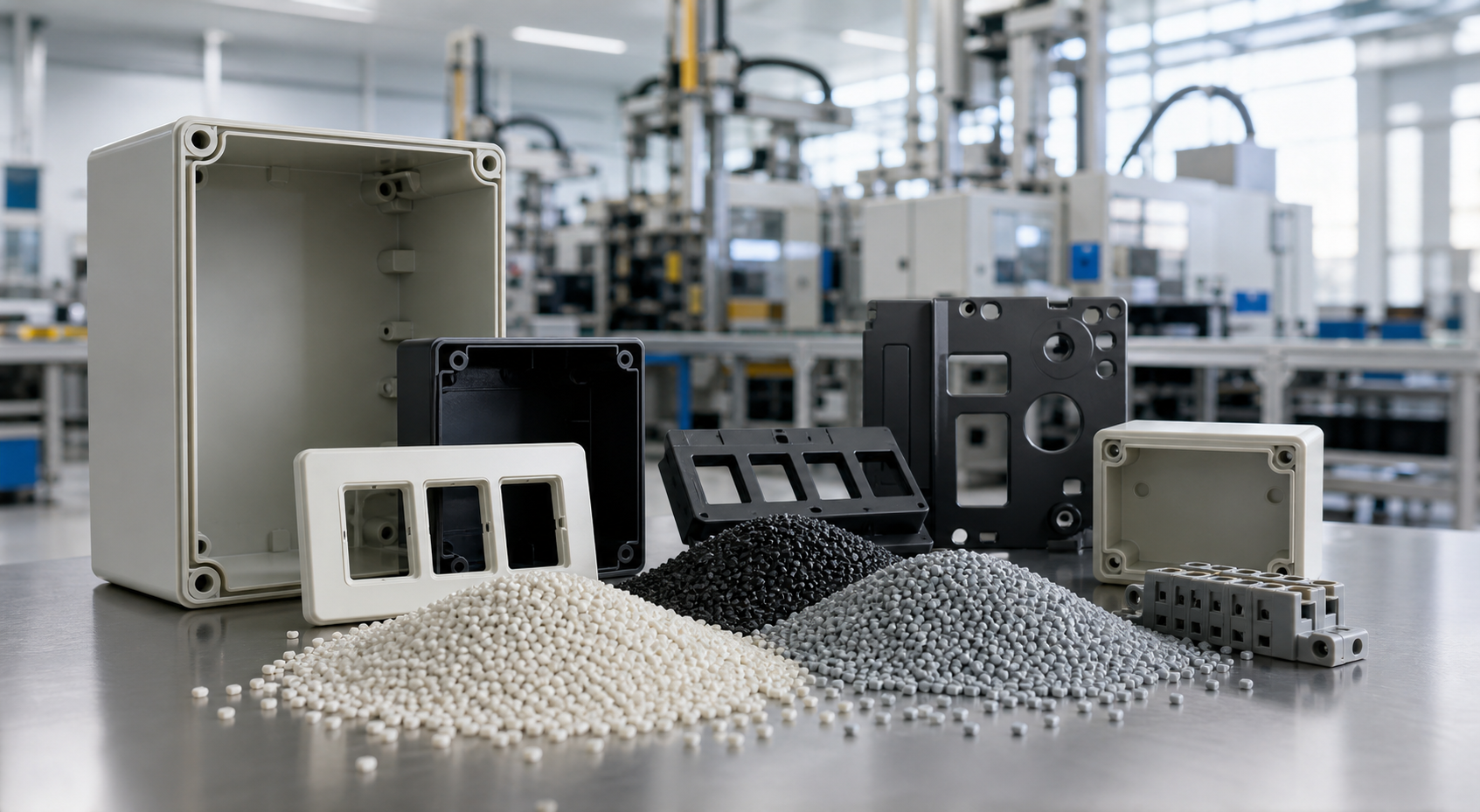
Flame-retardant ABS is an ABS compound modified to reduce ignition and flame spread under specified test conditions. It retains the practical molding, impact, surface, and color advantages that make ABS useful for housings, panels, covers, and electrical equipment, while adding a controlled flammability response.
The required material cannot be selected from the words “flame retardant” alone. Buyers should define the test standard, classification, minimum wall thickness, color, electrical environment, operating temperature, impact requirement, and documentation needed for the destination market.
Understanding ABS Flame-Retardant Ratings
| Item to specify | Why it matters | What to verify |
|---|---|---|
| Flammability classification | V-0, V-1, V-2, HB, or another requirement represents different test behavior | The exact standard and required class for the component |
| Rated thickness | A rating is tied to the thickness that was tested | Minimum molded wall and supporting documentation at that thickness |
| Color | Pigments can change flammability and recognition scope | Approved natural, black, or custom-color coverage |
| File or certificate scope | A resin trade name alone does not prove the requested status | Manufacturer, grade, color, thickness, and current document status |
| Finished-product standard | Material classification is only one part of equipment approval | Enclosure design, ignition source, spacing, assembly, and market-specific standard |
UL 94 V-0 does not mean a plastic is noncombustible. It describes specimen behavior in a defined vertical-burning test. The finished enclosure still requires design review and any testing demanded by its product standard.
Where Flame-Retardant ABS Is Used
- Electrical and electronic equipment housings, covers, bezels, and control panels
- Power adapters, chargers, communication devices, meters, and low-voltage equipment
- Home-appliance control housings, internal covers, and user-interface structures
- Office machines, printers, network devices, and industrial control equipment
- Battery-adjacent housings where the thermal and product-standard requirements fit ABS FR
For a detailed treatment of rated thickness and V-0 documentation, see the ABS UL94 V-0 guide. This page focuses on choosing and manufacturing flame-retardant ABS for real molded parts.
Material Tradeoffs in ABS FR Formulations
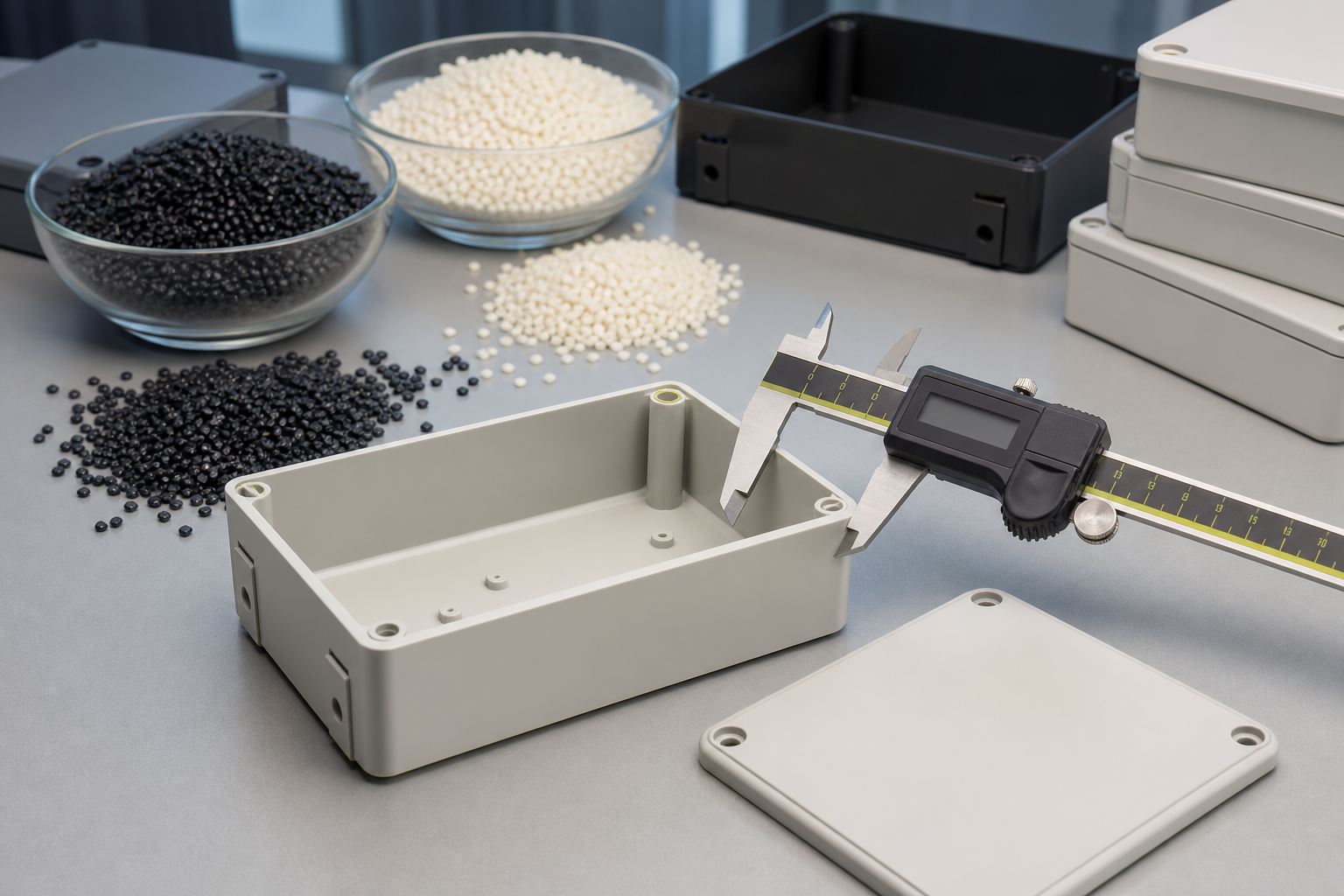
| Performance area | Possible effect of an FR system | Project check |
|---|---|---|
| Impact strength | Some formulations have lower impact than standard ABS | Drop, notch, screw-boss, snap-fit, and low-temperature impact |
| Heat resistance | Grade-dependent and sometimes lower than higher-heat blends | HDT, Vicat, continuous temperature, and local heat near power components |
| Flow and molding | Viscosity and process window may differ from standard ABS | Thin-wall fill, weld lines, vents, burn marks, residence time, and shear |
| Color and appearance | FR additives can affect shade, gloss, and long-term color | Approved color range, lot consistency, UV exposure, and surface standard |
| Electrical behavior | Tracking and insulation properties are formulation-specific | CTI, dielectric needs, creepage, clearance, and contamination environment |
| Environmental documents | Requirements vary by formulation and market | RoHS, REACH, halogen restrictions, declarations, and current test reports |
ABS FR Compared With PC/ABS FR, PC FR, PBT FR, and PA66 FR
| Material route | Useful starting point when | Main tradeoff |
|---|---|---|
| ABS FR | Appearance, processability, housing toughness, and cost balance are important | Heat and impact margin may be below PC-containing alternatives |
| PC/ABS FR | The housing needs higher heat or impact with good molding and surface | Higher cost and different chemical or stress-crack behavior |
| PC FR | High impact, heat, thin-wall capability, or transparency-related options are required | Processing temperature, drying, residual stress, and cost |
| PBT FR | Precision electrical parts need dimensional stability and chemical resistance | Different impact behavior and hydrolysis requirements |
| PA66 FR | High heat, strength, terminals, and reinforced structural performance are needed | Moisture effects, molding temperature, and surface finish |
Review PBT FR for electrical connectors and PA66 FR for terminal blocks when the component requires reinforced crystalline materials rather than a housing-grade ABS system.
Molding Controls for Flame-Retardant ABS
Flame-retardant packages can be sensitive to excessive melt temperature, shear, and residence time. The grade supplier's processing window should be followed, and machine size should suit the shot so material is not held at temperature unnecessarily.
- Dry the resin when required by the grade datasheet and protect it from contamination
- Use adequate gates and vents to reduce shear heating, gas traps, burn marks, and weak weld lines
- Avoid excessive residence time during delays, color changes, and small-shot production
- Control regrind only through documented testing because repeated heat history can affect properties
- Inspect minimum wall thickness at critical flame-rated areas and across normal process variation
- Revalidate flammability, impact, color, and appearance after formulation, supplier, color, or process changes
Documentation and Production Approval
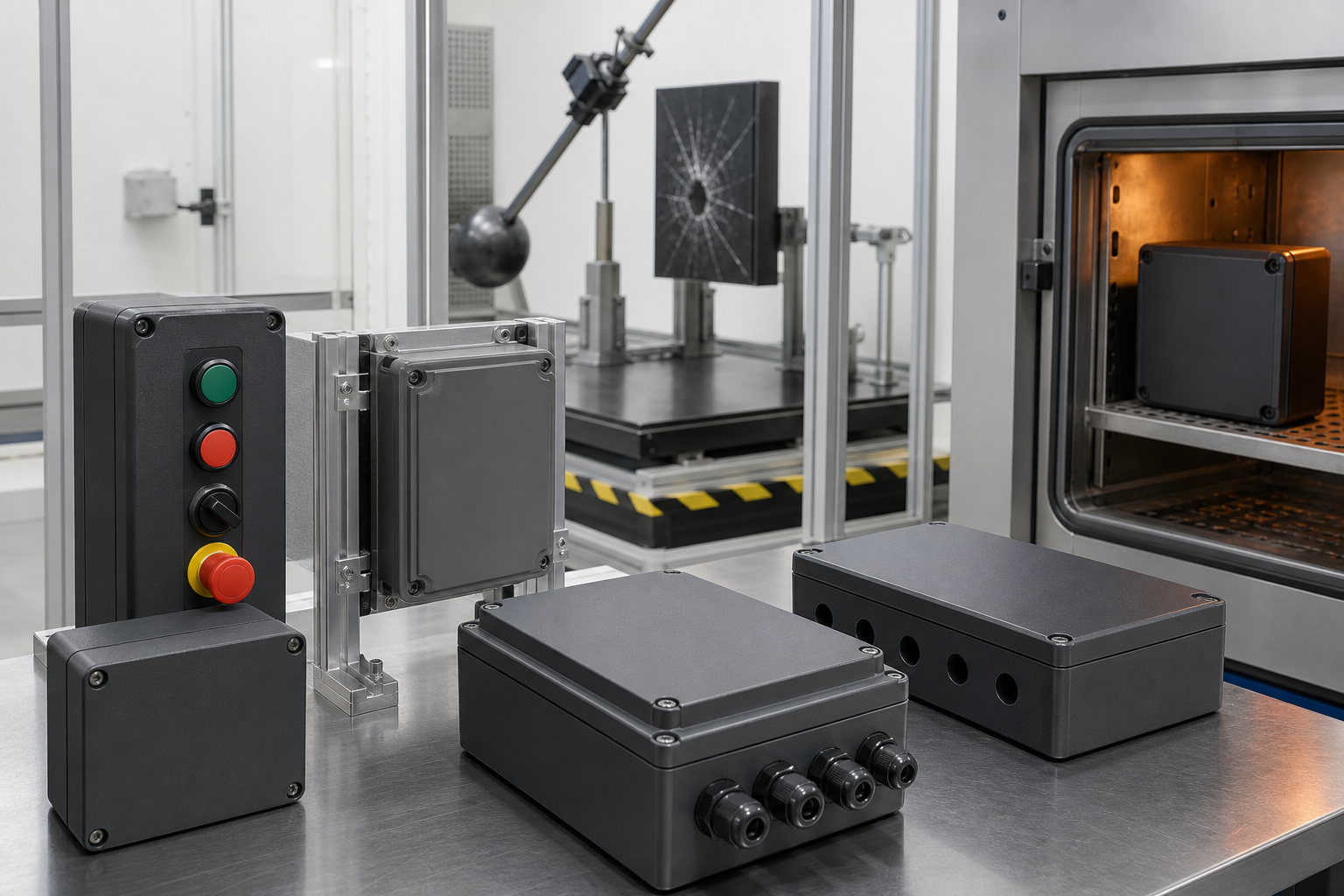
A complete B2B material review may include a technical datasheet, safety data, flammability evidence, color scope, RoHS or REACH declarations, and other documents required by the application. Document names and grade codes should match the ordered and molded material.
Finished-part approval can include flammability testing, drop and impact, heat aging, thermal cycling, electrical tests, screw and snap-fit durability, dimensional capability, appearance, odor, emissions, and chemical compatibility. The test plan should reflect the equipment standard rather than relying on resin data alone.
Why Work With WanHan?
WanHan has developed engineering plastic compounds for industrial applications since 2005. The company integrates independent R&D, production, testing, and technical support, allowing material recommendations to be followed through from initial sample to production supply.
- ISO 9001, ISO 14001, ISO 45001, and IATF 16949 certified management systems
- Testing equipment for incoming materials, compound properties, color, moisture, mechanical performance, and production quality control
- Experience with reinforced, flame-retardant, heat-stabilized, UV-resistant, hydrolysis-resistant, and color compounds
- Engineering plastics supplied to customers in more than 30 countries
- Application support for automotive, electrical, electronics, home-appliance, and industrial components
Request a Flame-Retardant ABS Recommendation
Send the drawing, minimum wall thickness, required test standard and classification, color, temperature, impact and appearance targets, electrical conditions, compliance documents, destination market, annual demand, and current material. Contact WanHan for grade screening, samples, documentation, and molding support.
Frequently Asked Questions
Q: What is flame-retardant ABS?
A: Flame-retardant ABS is ABS compounded with a flame-retardant system to meet a specified flammability classification under defined test conditions and specimen thickness.
Q: Does UL94 V-0 mean the finished product cannot burn?
A: No. UL 94 is a small-scale material flammability classification. Finished-product compliance depends on part design, wall thickness, ignition sources, assembly, and the applicable product standard.
Q: Why is the rated thickness important for ABS FR?
A: A flammability classification is linked to the tested thickness and color or formulation scope. A V-0 result at a thicker specimen cannot automatically be applied to a thinner wall.
Q: When should PC/ABS FR or PBT FR be considered instead?
A: PC/ABS FR can provide a higher heat and impact balance for housings, while PBT FR is often considered for precision electrical parts needing chemical resistance and dimensional stability.
Q: What information is needed for a flame-retardant ABS quotation?
A: Provide the part drawing, minimum wall thickness, required flammability class and standard, color, heat and impact needs, electrical or compliance documents, destination market, annual volume, and current grade.
Polycarbonate Resin: Properties, Grades, and Applications
PBT GF30 Sensor Housings: Selection, Molding, and Validation
Related Article