ABS UL94 V-0: Flame-Retardant Grade Selection and Applications
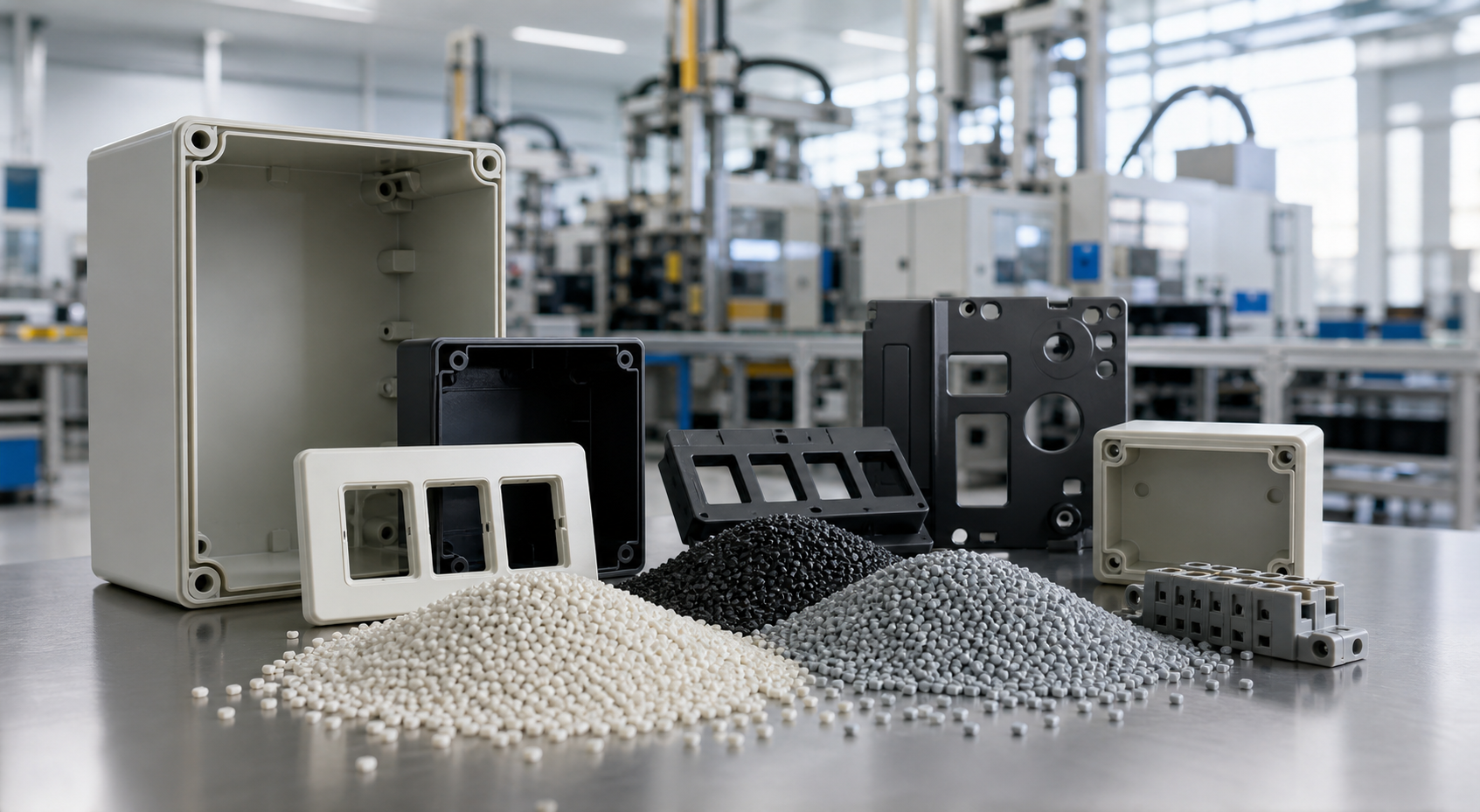
ABS UL94 V-0 is a flame-retardant ABS compound formulated to achieve the UL 94 V-0 vertical-burning classification at a specified test thickness and color. It is considered for electrical housings, control components, appliance parts, and protective structures that need ABS processability and appearance together with a defined flammability performance.
V-0 is not a universal property of every molded thickness or every variation of the formulation. A buyer should confirm the recognized grade, tested thickness, color limitation, specimen conditioning, and supporting documentation. A finished component may also be governed by product-level safety standards beyond the resin classification.
What UL94 V-0 Means for Material Selection
UL 94 vertical testing evaluates how a conditioned plastic specimen behaves after controlled flame applications. A V-0 classification includes limits on afterflame behavior and flaming drips under the defined test method. It does not describe smoke toxicity, glow-wire performance, electrical tracking, long-term heat aging, or the fire behavior of the complete assembly.
| Item to confirm | Why it matters |
|---|---|
| Rated thickness | A grade may have V-0 at one thickness but a different classification at a thinner section. |
| Color | Natural, black, and custom colors may not share identical recognition. |
| Compliance document | A data sheet, test report, or recognized listing must match the supplied grade. |
| Regrind and contamination | Uncontrolled additions can change flammability and mechanical performance. |
| Finished-part standard | The assembly may require glow-wire, CTI, heat-aging, or other product tests. |
Applications for Flame-Retardant ABS
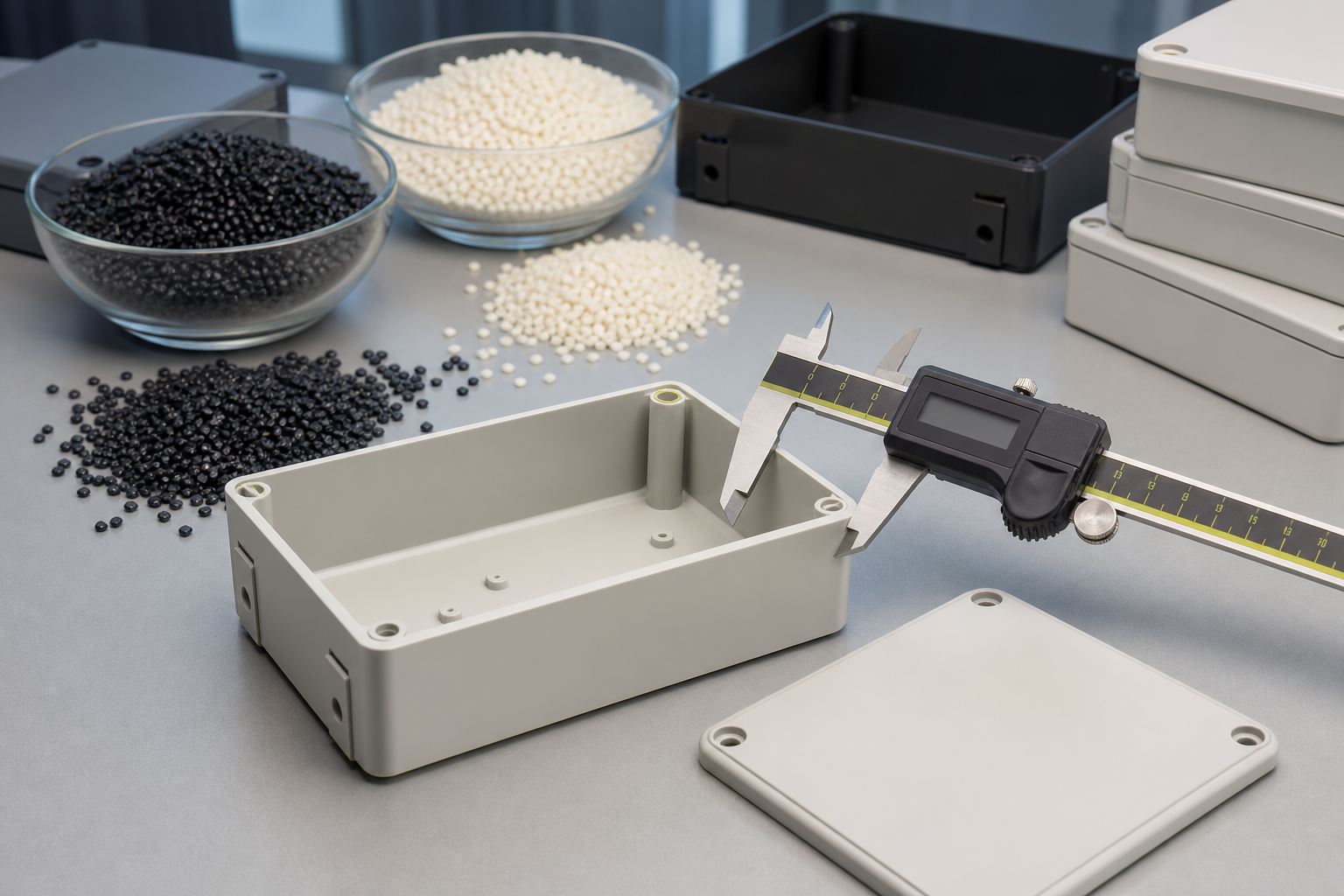
ABS V-0 grades are commonly reviewed for control-panel housings, power-supply covers, appliance electrical parts, instrument enclosures, switch components, office-equipment structures, and other indoor parts where impact resistance, moldability, color, and surface finish matter.
For higher-temperature service, demanding impact at low temperature, or thinner-wall flame-retardant housings, PC/ABS FR may be a stronger candidate. For precision connector bodies and coil components, flame-retardant PBT or PA66 may provide better heat and electrical performance. Material family selection should come before a narrow comparison of V-0 labels.
Mechanical and Processing Tradeoffs
Flame-retardant packages can affect impact strength, density, flow, heat resistance, color stability, and long-term aging. The actual balance depends on formulation. If the component contains snap fits, screw bosses, thin ribs, or drop-impact requirements, those features should be tested after molding and aging rather than assumed from a standard ABS reference value.
Moisture control, melt temperature, residence time, venting, and contamination control are important. Overheating or excessive residence time can degrade the polymer and flame-retardant system, causing discoloration, odor, deposits, or reduced properties. Processing settings should follow the grade data sheet and be confirmed in the production mold.
Documents and Samples Buyers Should Request
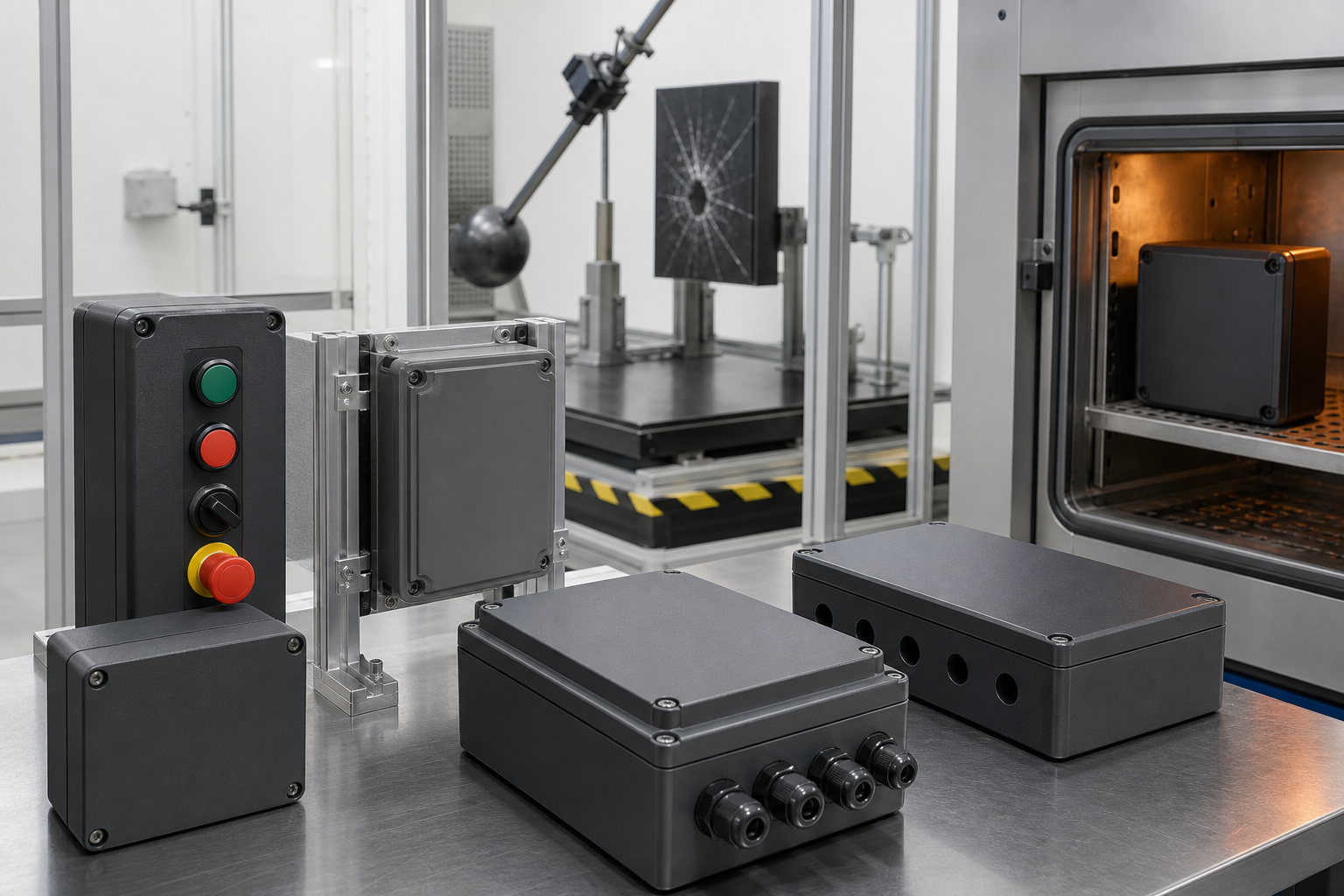
A purchasing specification should identify the full grade code, color, rated thickness, flammability requirement, mechanical targets, restricted-substance requirements, and whether recycled content is allowed. Ask for the relevant technical data sheet, safety data sheet, compliance declarations, and flammability evidence required by the project.
For a new enclosure, send the wall thickness, operating temperature, impact requirement, appearance standard, assembly method, electrical test requirement, color, annual demand, and destination market. WanHan can then compare ABS FR with PC/ABS FR, flame-retardant PBT, or PA66 FR V-0.
Why Choose WanHan
Since 2005, WanHan has focused on independent R&D, production, and sales of functional polymer materials. ISO 9001, ISO 14001, ISO 45001, and IATF 16949 certifications support controlled production and quality management. Testing equipment is used for formulation checks, production inspection, color and property control, and lot consistency.
WanHan supplies engineering plastic solutions to customers in more than 30 countries across automotive, electronics, home appliances, and industrial applications. Support can include material-family comparison, samples, data sheets, compliance discussion, color matching, and production supply planning.
Frequently Asked Questions
Q: Does UL94 V-0 mean ABS cannot burn?
A: No. V-0 is a classification from a defined small-scale vertical-burning test. It does not mean the material is noncombustible or that every finished product automatically complies.
Q: Is the rated thickness important for ABS V-0?
A: Yes. Flammability classification is linked to the tested thickness. The required wall thickness should be checked against the grade's supporting documentation.
Q: Can changing the color affect a V-0 grade?
A: It can. Colorants may affect recognition or test performance, so the approved color range and documentation should be confirmed before ordering.
Q: When is PC/ABS FR preferred over ABS V-0?
A: PC/ABS FR is often considered when the housing needs a higher heat margin, stronger impact retention, or demanding thin-wall performance, but the final choice depends on the component and standard.
Q: What information is needed for an ABS UL94 V-0 quotation?
A: Provide the part, wall thickness, rating and test standard, color, operating temperature, impact and appearance needs, compliance documents, annual volume, and destination market.
PA66 Nylon 6,6 Density, Modulus & Melting Point
PBT GF20 Resin: Properties, Applications, Processing, and Selection
Related Article