
Flame retardant PBT: high-performance fire-resistant plastic
author: WanHan Technology
2023-10-20
In modern industrial production and advanced manufacturing, there is an increasing demand for high-performance plastic materials. Especially in the electronics, automobile, construction and other industries, the continuous improvement of fire safety standards makes flame retardant materials particularly important. Flame-retardant polybutylene terephthalate (PBT) has gained a niche in the market due to its excellent flame-retardant properties, high melting point, durability and ease of processing. This article will delve into the key properties and application prospects of flame-retardant PBT, and point out the importance of choosing the right supplier.

What is flame retardant PBT?
Flame-retardant PBT is a special engineering plastic that has the ability to prevent or delay the spread of flames by adding flame retardants. This material not only maintains the basic physical and chemical properties of polybutyl terephthalate, such as high strength, good thermal stability and chemical resistance, but also adds safety features to meet strict fire protection regulations.
Key advantages of flame retardant PBT
1. High flame retardancy: It can effectively delay the spread of fire and provide valuable time for personnel evacuation or fire disposal.
2. High temperature resistance: maintain stable physical properties and will not cause serious deformation or loss of performance even in high temperature environments.
3. Strength and toughness: It can maintain structural integrity even under extreme conditions and is suitable for demanding application scenarios.
4. Easy to process: Compared with other engineering plastics, flame-retardant PBT is easier to injection mold, allowing for more complex designs and applications.
Application areas
Due to its excellent properties, flame retardant PBT is widely used in many demanding fields, including:
1. Electronic industry: used to manufacture connectors, switches, circuit boards, etc. to ensure the fire safety of electronic equipment in the event of overheating.
2. Automotive industry: used in automotive electrical systems and components to improve the safety and reliability of vehicles under various environmental conditions.
3. Construction field: Due to its flame retardant properties, it is suitable for electrical systems, accessories and other occasions requiring fire safety inside buildings.
Choose the right supplier
Choosing a reliable flame retardant PBT supplier is key to ensuring product performance and safety. Professional suppliers not only provide high-quality materials, but also provide technical support and customized solutions to meet specific business needs.
Flame-retardant PBT occupies an important position among modern industrial materials due to its excellent safety performance and wide application prospects. From electronic devices to automotive components to architectural applications, it provides a comprehensive solution that meets stringent fire protection standards and functional requirements. Choosing the right products and suppliers can ensure your success in a highly competitive market environment.
PBT GF30 – 30% Glass Fiber Reinforced PBT
Related Article
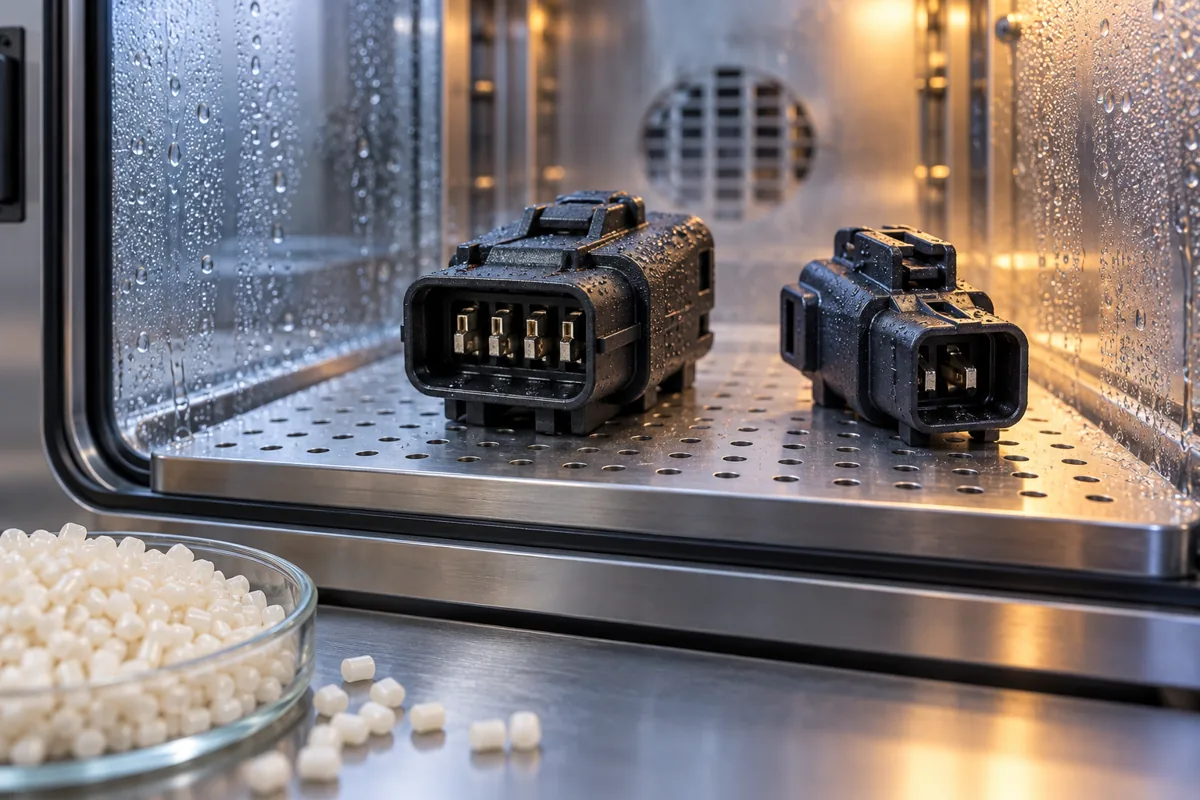
Compare standard and hydrolysis-resistant PBT for hot, humid applications, and define aging tests, property retention, and approval requirements.
Hydrolysis-Resistant PBT: Selection and Validation for Hot, Humid Service
In the world of thermoplastics, materials like ABS (Acrylonitrile Butadiene Styrene) and PBT (Polybutylene Terephthalate) are renowned for their diverse applications and unique properties.
ABS vs PBT: Navigating the Choice Between Two High-Performance Thermoplastics
Polybutylene Terephthalate, commonly known as PBT, is a versatile and high-performance thermoplastic polymer that has gained prominence in various industries due to its exceptional mechanical and electrical properties. This article explores the composition, properties, applications, and advantages of PBT, shedding light on its significance in the world of materials science and manufacturing.
What is pbt material?
PBT (polybutylene terephthalate) is a thermoplastic polymer that belongs to the polyester plastic category. It is synthesized from terephthalic acid and butylene glycol through a polyesterification reaction. The following are some basic properties and applications of PBT resin:
What is PBT?
SEND MESSAGE