PA6 GF35 Properties: Density, Modulus and Uses
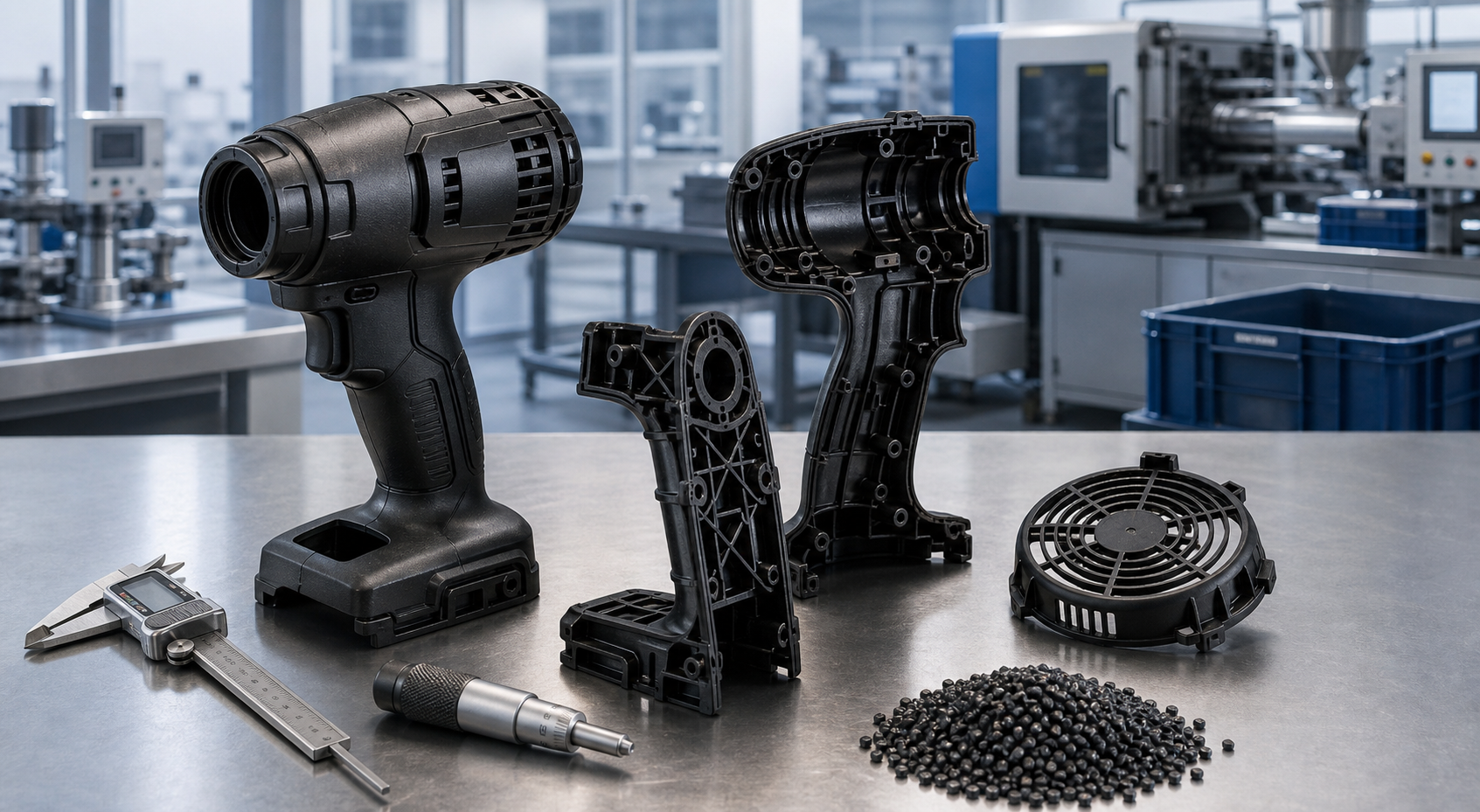
PA6 GF35 is polyamide 6 reinforced with approximately 35% glass fiber. Compared with unfilled PA6, it offers substantially higher stiffness, tensile strength, creep resistance, and dimensional stability. It is used for structural housings, brackets, fan and pump components, power-tool parts, appliance structures, automotive parts, and industrial components.
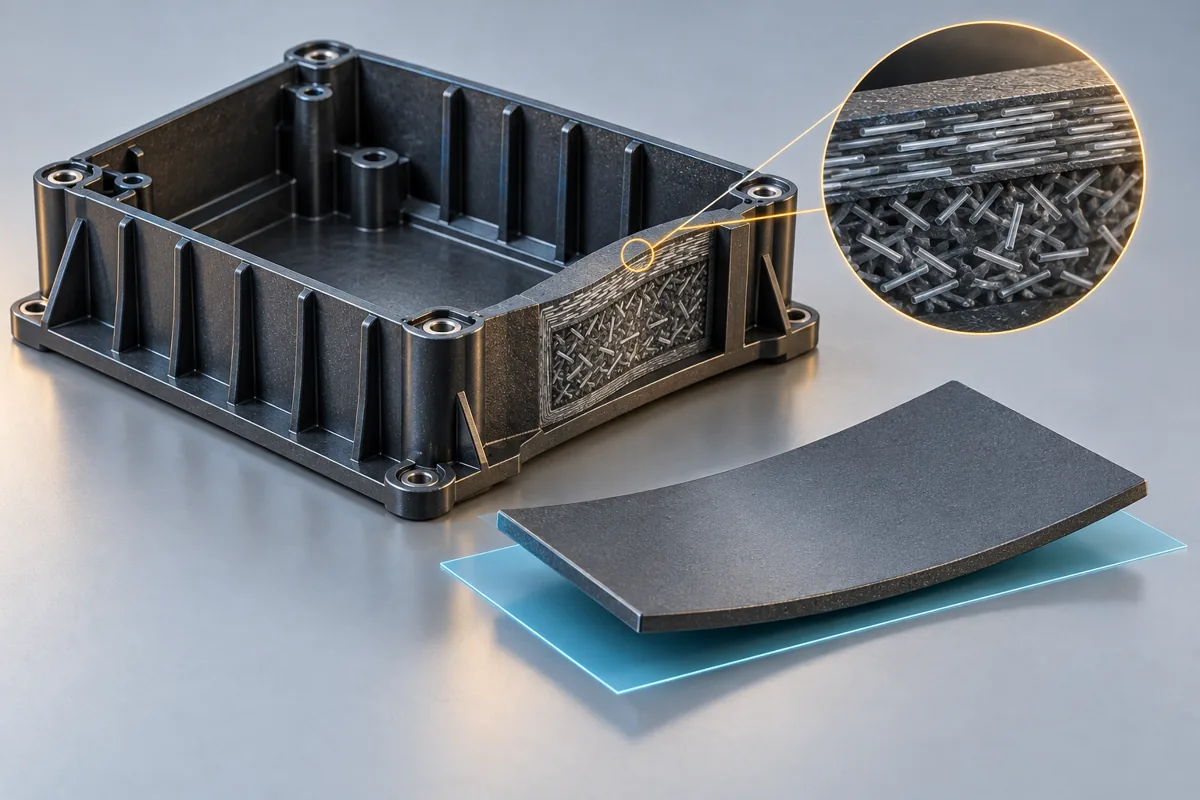
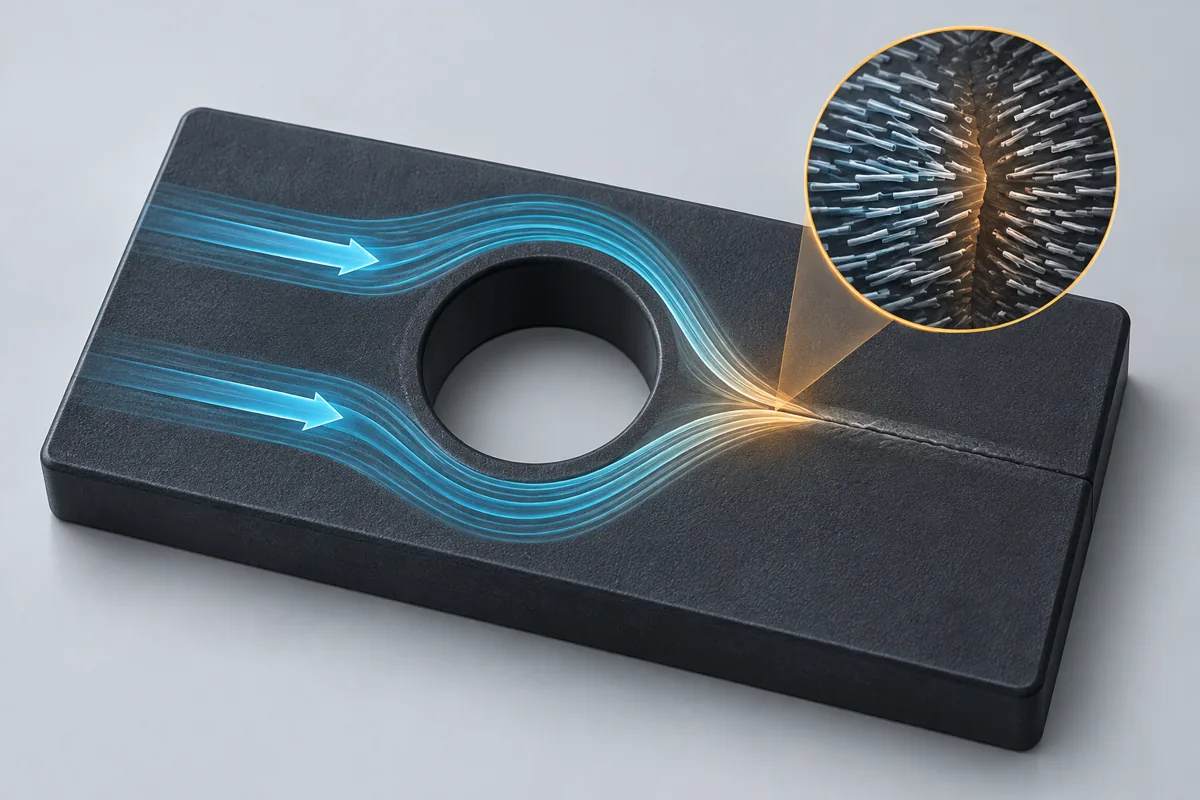
The useful performance of PA6 GF35 depends on moisture condition, temperature, fiber orientation, weld lines, wall thickness, and molding quality. A dry laboratory value can differ markedly from a conditioned production part, so design data must be matched to the actual service environment.
PA6 GF35 Properties
| Property | Typical screening range or behavior | Engineering note |
|---|---|---|
| Glass-fiber content | Approximately 35% by mass | Confirm tolerance and test method for the selected grade |
| Density | Often about 1.40-1.45 g/cm3 | Mineral fillers, impact modifiers, flame retardants, and stabilizers change density |
| Melting point | PA6 matrix commonly around 215-225 C | Use DSC data and the supplier processing window for the actual formulation |
| Tensile modulus | Frequently in the high single-digit to low double-digit GPa range when dry | Conditioning, temperature, fiber orientation, and test direction have a strong effect |
| Moisture absorption | Higher than PBT and PA12 | Dimensions and mechanical properties must be checked after realistic conditioning |
| Molding shrinkage | Lower than unfilled PA6 but direction-dependent | Flow direction, gate location, wall thickness, and cooling determine warpage |
| Heat performance | Higher stiffness retention than unfilled PA6 under load | Confirm HDT, continuous exposure, peak temperature, and retained strength after aging |
These ranges are for initial comparison only. A design calculation should use the selected grade's datasheet and, where available, conditioned, temperature-dependent, and flow-direction data.
Dry and Conditioned Properties Must Be Separated
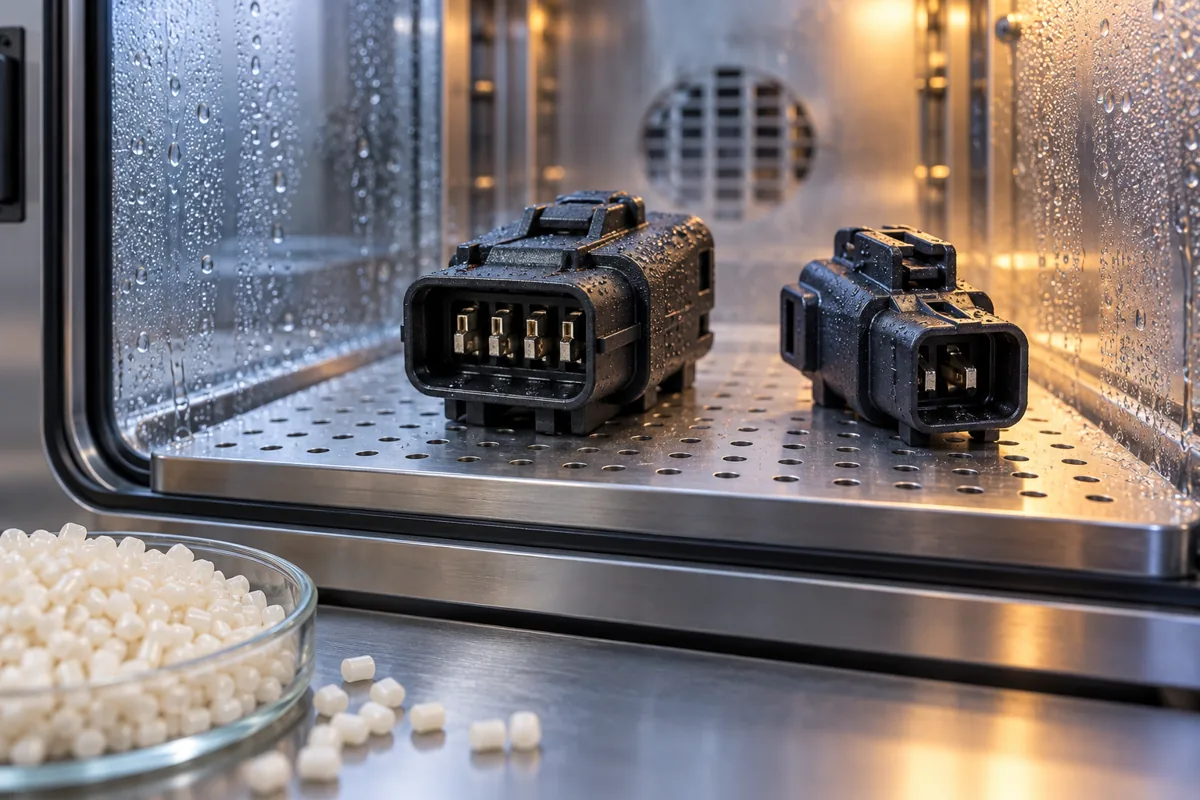
PA6 absorbs moisture until it approaches equilibrium with its environment. Moisture acts as a plasticizer in the nylon matrix. Stiffness and tensile strength generally decrease from the dry-as-molded state, while toughness and elongation can increase. Dimensions also shift as the part conditions.
- Specify whether drawings and material data refer to dry-as-molded or conditioned parts
- Measure critical holes, bearing seats, sealing surfaces, and snap fits after representative humidity exposure
- Test both hot-dry and humid conditions when the part sees changing seasons or under-hood service
- Do not approve a tight-tolerance part from dimensions measured only immediately after molding
- Use controlled conditioning for comparative testing instead of unknown warehouse exposure
PA6 GF35 Applications
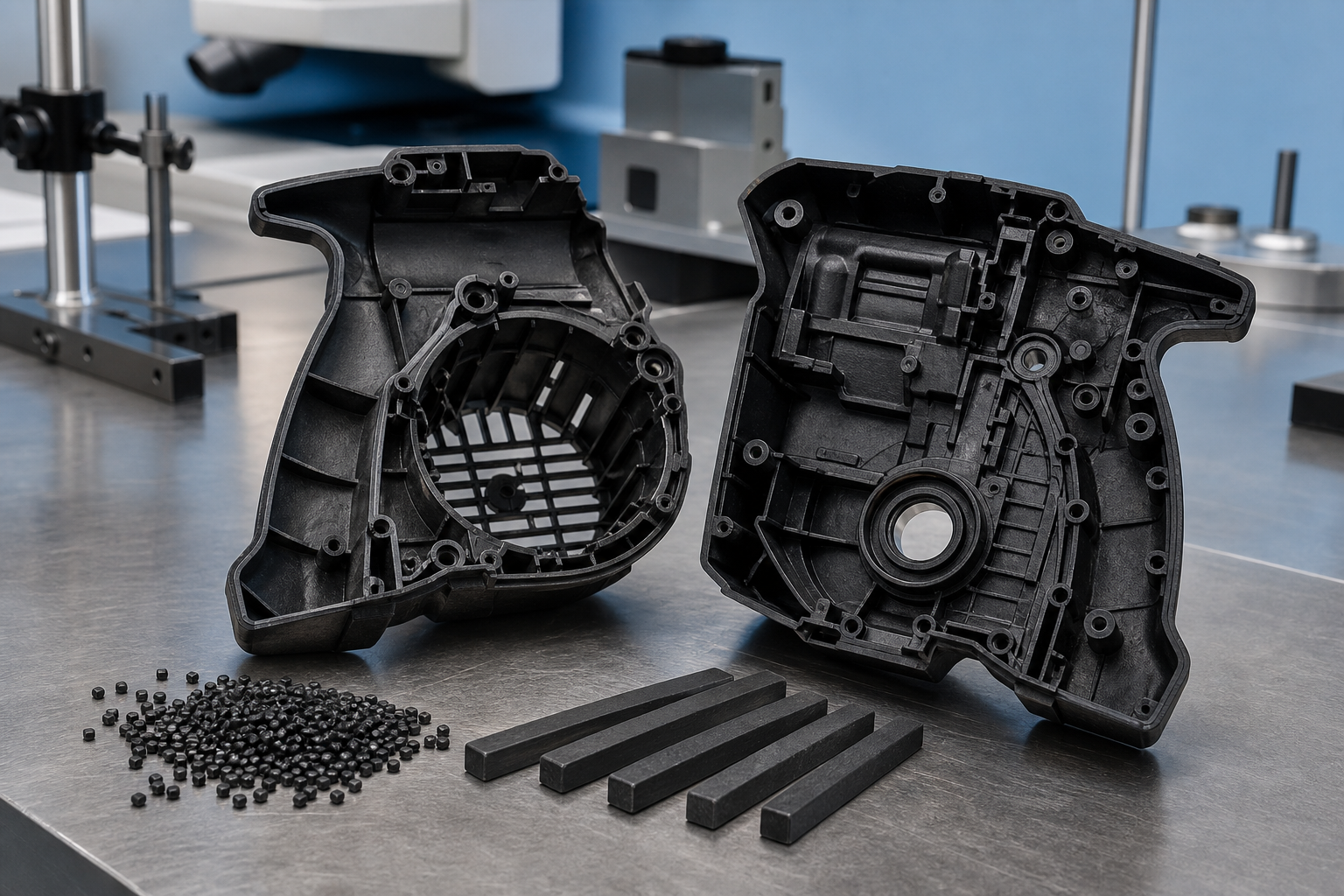
| Application | Why PA6 GF35 is considered | Critical validation |
|---|---|---|
| Power-tool and equipment housings | Rigidity, impact balance, heat resistance, and screw-boss strength | Drop, vibration, fasteners, motor heat, and weld lines |
| Fan blades and impellers | Stiffness, fatigue resistance, productive molding, and dimensional control | Balance, overspeed, fatigue, moisture, creep, and fiber orientation |
| Pump, valve, and fluid-handling parts | Strength, wear, chemical resistance, and metal-replacement potential | Fluid compatibility, pressure cycling, hydrolysis, seals, and weld lines |
| Automotive brackets and structural components | Heat resistance, stiffness-to-weight ratio, and creep resistance | Heat aging, vibration, fluids, fasteners, and dimensional change |
| Appliance structures and motor supports | Rigidity, heat performance, electrical isolation, and production efficiency | Humidity, heat cycling, noise, assembly, and long-term loading |
PA6 GF35 Compared With PA6 GF30, PA66 GF, and PBT GF
| Material route | Potential advantage | Tradeoff to review |
|---|---|---|
| PA6 GF30 | Slightly easier flow and lower fiber loading | Lower stiffness margin than PA6 GF35 in many grades |
| PA6 GF35 | Balanced high stiffness and practical moldability | Moisture sensitivity, directional properties, surface fiber, and tool wear |
| PA66 GF30/GF35 | Higher melting point and often a higher temperature margin | Higher processing temperature, moisture behavior, cost, and grade availability |
| PBT GF30 | Lower moisture uptake, dimensional stability, and useful electrical performance | Different impact, hydrolysis, heat, and weld-line behavior |
| PA12 GF or CF | Lower moisture absorption and good fatigue or dimensional behavior | Cost, heat capability, and stiffness depend on reinforcement and grade |
See the PA6 material guide for the base resin and the PA6 GF30 guide for a nearby reinforcement level. The final comparison should use molded samples because a five-point change in glass content does not describe differences in polymer viscosity, coupling, heat stabilization, impact modification, or color package.
Molding PA6 GF35
PA6 GF35 should be dried to the grade supplier's moisture limit and kept in closed handling before molding. Wet resin can produce splay and degradation. Excessive residence time or temperature can also reduce properties and increase discoloration.
- Use a melt-temperature window specified for the actual grade rather than a generic PA6 setting
- Maintain sufficient mold temperature for surface replication, crystallization, and weld-line quality
- Choose gate size and position to control fiber orientation, pressure loss, and warpage
- Vent flow ends and weld areas to prevent burns and incomplete filling
- Limit regrind through a documented trial because fiber length and heat history affect performance
- Plan for glass-fiber abrasion in screws, barrels, gates, runners, and cavity maintenance
Production Validation
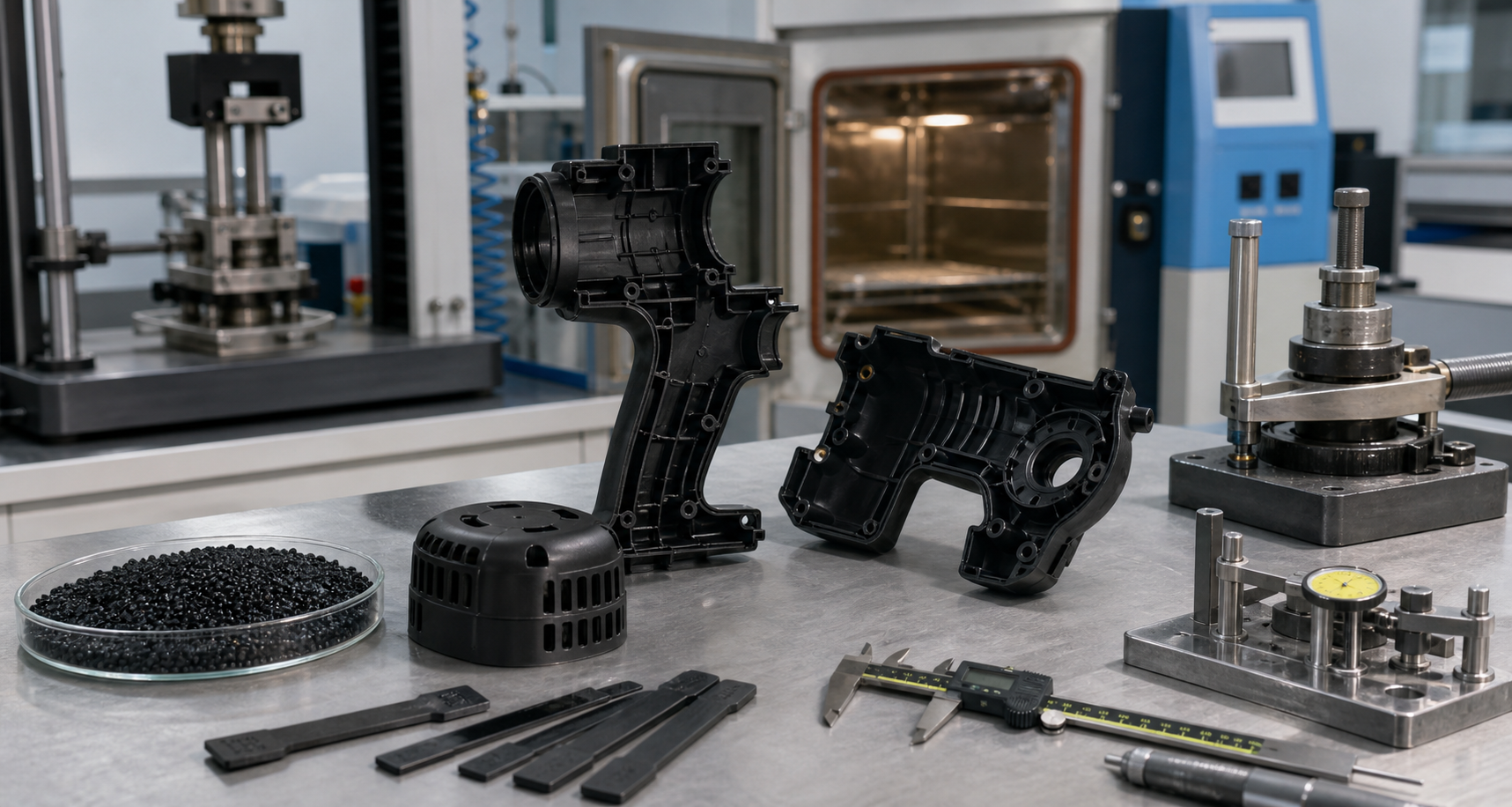
Validate tensile or flexural performance where needed, but also test the molded component. Useful checks include conditioned dimensions, creep under assembly load, screw torque, insert pull-out, weld-line strength, drop or impact, fatigue, thermal cycling, humidity aging, chemical exposure, and cavity-to-cavity capability.
Why Work With WanHan?
WanHan has developed engineering plastic compounds for industrial applications since 2005. The company integrates independent R&D, production, testing, and technical support, allowing material recommendations to be followed through from initial sample to production supply.
- ISO 9001, ISO 14001, ISO 45001, and IATF 16949 certified management systems
- Testing equipment for incoming materials, compound properties, color, moisture, mechanical performance, and production quality control
- Experience with reinforced, flame-retardant, heat-stabilized, UV-resistant, hydrolysis-resistant, and color compounds
- Engineering plastics supplied to customers in more than 30 countries
- Application support for automotive, electrical, electronics, home-appliance, and industrial components
Request PA6 GF35 Samples and Technical Support
Send the part drawing, load case, temperature, humidity, chemicals, tolerances, surface requirement, color, flame or UV target, molding machine information, annual demand, and current defect or failure. Contact WanHan for grade selection, samples, technical data, and processing support.
Frequently Asked Questions
Q: What is PA6 GF35?
A: PA6 GF35 is polyamide 6 compounded with approximately 35% glass fiber. It provides higher stiffness, strength, creep resistance, and dimensional control than unfilled PA6.
Q: What is the typical density of PA6 GF35?
A: Many PA6 GF35 grades are approximately 1.40-1.45 g/cm3, but the exact value depends on the glass-fiber system, additives, and test method.
Q: What is the melting point of PA6 GF35?
A: The PA6 matrix typically melts around 215-225 C. Glass fiber does not create a new polymer melting point, although it changes stiffness, shrinkage, and heat-deflection behavior.
Q: How does moisture affect PA6 GF35?
A: Moisture conditions the nylon matrix and can reduce stiffness while increasing toughness and changing dimensions. Dry-as-molded and conditioned test values should not be mixed during design.
Q: What details are needed for a PA6 GF35 grade recommendation?
A: Provide the drawing, load, temperature, humidity, chemicals, tolerances, surface target, flame or UV requirement, molding process, annual demand, and the main issue with the current grade.
ABS vs Polypropylene: Material Differences, Uses, and Selection
Polycarbonate Resin: Properties, Grades, and Applications
Related Article