Nylon 66 Density, Melting Point and Temperature Guide
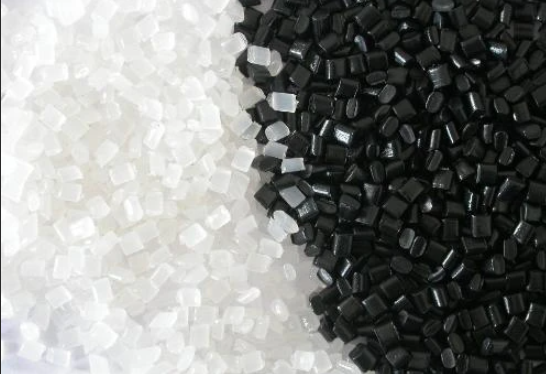
Nylon 66 density and melting point are useful starting values when engineers compare PA66 with other engineering plastics. Unfilled nylon 66 typically has a density near 1.14 g/cm³ and a crystalline melting range around 255–265°C. These reference values help with early weight estimates, material identification and thermal screening, but they do not replace the data sheet for the exact compound.
Glass fiber, flame retardants, impact modifiers, heat stabilizers and color packages can all change density and performance. Finished-part temperature capability also depends on load, exposure time, moisture, geometry and processing history. This guide explains how to interpret the numbers and what to verify before approving a nylon 66 grade.
Nylon 66 Density and Melting Point at a Glance
| Material characteristic | Typical reference | Design meaning |
|---|---|---|
| Unfilled nylon 66 density | About 1.14 g/cm³ | Useful for preliminary part-weight and volume calculations |
| Nylon 66 melting point | Typically about 255–265°C | A material transition, not a recommended molding or service temperature |
| Reinforced or modified PA66 density | Higher or otherwise different by formulation | Use the current grade-specific TDS for calculation and comparison |
| Continuous service temperature | Grade, load and time dependent | Validate with heat aging and finished-part testing |
| Moisture response | Condition dependent | Can change dimensions, stiffness, toughness and electrical behavior |
Important: the values above describe general unfilled nylon 66 behavior. A 30% glass-filled, flame-retardant or impact-modified PA66 compound will have its own density, mechanical values, thermal ratings and processing window.
What Nylon 66 Density Means for Part Design
Density is the mass of material per unit volume. For an early part-weight estimate, multiply the modeled part volume by the density from the selected grade's data sheet. Using the unfilled PA66 reference for a reinforced grade can underestimate component weight and affect cost, handling and assembly calculations.
Density can also support incoming-material checks, but it should not be used alone to identify a polymer. Moisture level, pigments, fillers and testing conditions can influence the result. A robust approval plan can combine density with the grade certificate, melt behavior, ash content, mechanical testing and other application-specific controls.
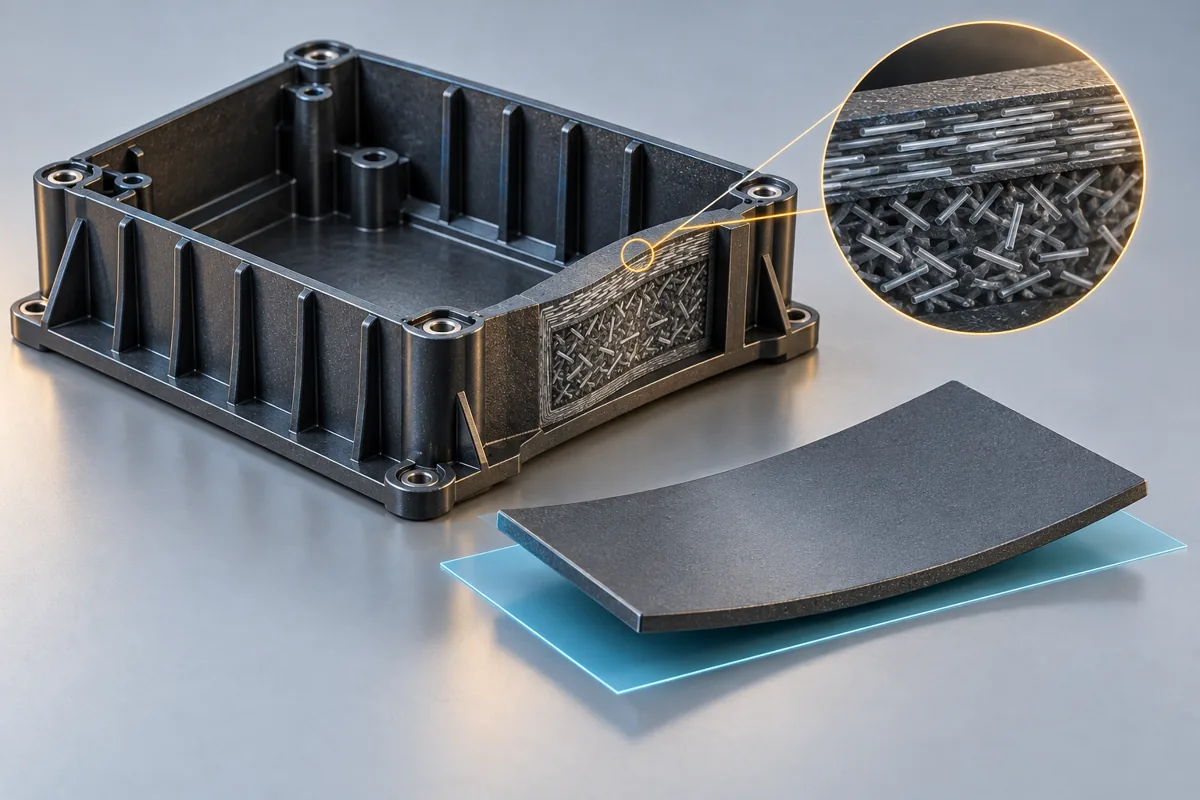
- Glass-fiber reinforcement: generally raises compound density while improving stiffness, strength and dimensional control.
- Flame-retardant systems: can change density, electrical performance, color and molding behavior.
- Impact modification: can improve toughness but may change stiffness, heat response and density.
- Moisture conditioning: affects mass and also changes the mechanical balance of nylon 66.
Typical Nylon 66 Application Environments

Under-hood brackets, sensor housings, clips and structural supports where heat, vibration and fluid exposure must be reviewed.
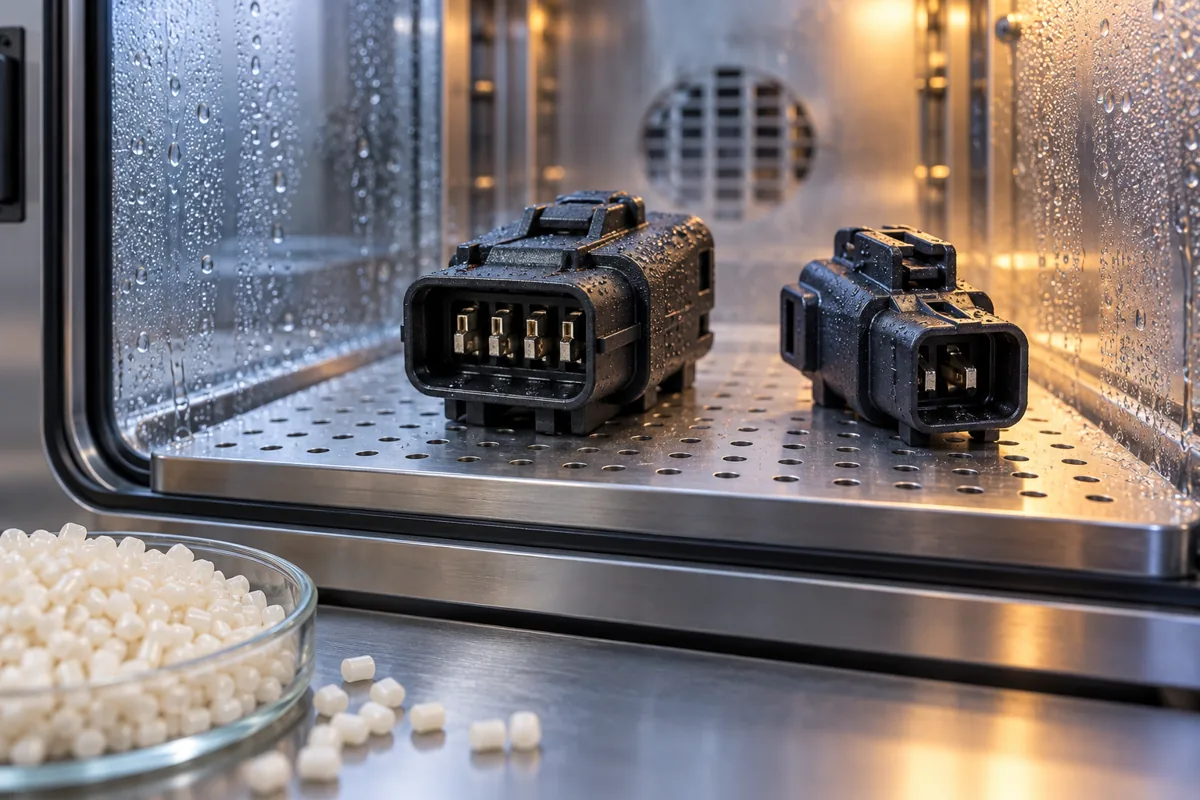
Connector bodies, terminal supports and insulating parts requiring dimensional control and verified electrical performance.
Motor supports, fan housings, internal frames and fastening features exposed to repeated assembly and heat.
Gears, bearing supports, pump components and precision housings that require wear and dimensional validation.
Melting Point Is Not the Same as Service Temperature
The nylon 66 melting point describes the transition of the crystalline regions into the molten state. It should not be treated as the maximum continuous operating temperature of a molded component. Long-term exposure well below the melting point can still cause stiffness loss, creep, oxidation, color change or dimensional movement.
Service temperature must be evaluated with the applied load, exposure duration, part thickness, fastener stress, moisture, airflow, chemicals and safety margin. Heat-deflection temperature, long-term thermal aging, relative thermal index and application-specific endurance tests answer different questions. Select the test evidence that matches the real duty cycle.
Melting Point and Injection-Molding Temperature
The PA66 melting range also does not provide a complete machine setting. Barrel temperature, melt temperature, mold temperature, residence time and injection speed should follow the current processing sheet for the exact grade and the molding machine. Reinforcement and additive packages can change flow, drying needs and the safe processing window.
- Dry the material according to the grade-specific recommendation and confirm dryer performance.
- Avoid excessive moisture, residence time and overheating, which can reduce molecular weight and part performance.
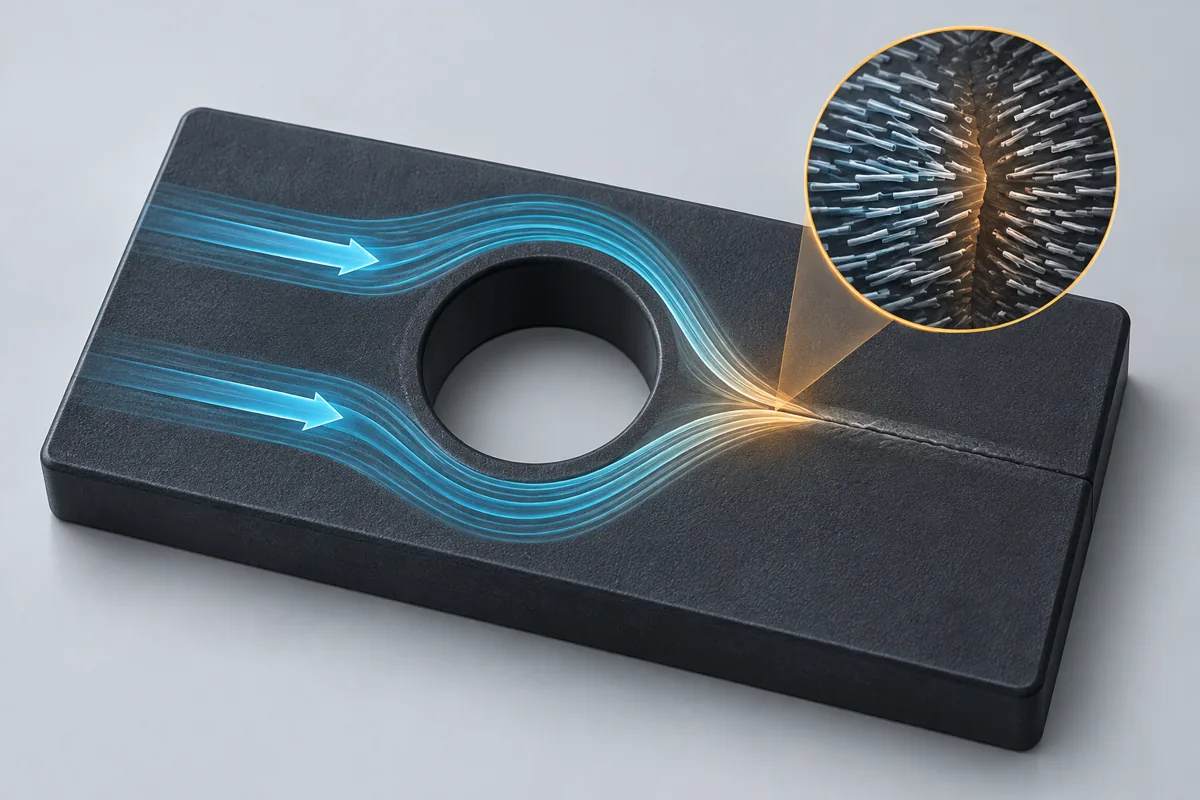
- Review gate location and flow direction because fiber orientation can influence shrinkage, weld lines and warpage.
- Record stable molding conditions and test production-equivalent parts before final approval.
How Nylon 66 Compares with Nylon 6
Nylon 66 generally has a higher melting point than nylon 6 and is often considered when greater short-term heat resistance, stiffness or wear performance is required. Nylon 6 can offer easier processing and a different balance of toughness and surface appearance. Neither material is automatically better for every component.
The right choice depends on the complete specification: operating temperature, mechanical load, impact, moisture, chemical exposure, electrical requirements, flammability, dimensions, appearance and cost. Compare actual candidate grades rather than relying only on base-polymer names.
What to Verify Before Selecting a PA66 Grade
- Part environment: continuous and peak temperature, load, chemicals, humidity, UV, vibration and expected life.
- Required performance: strength, modulus, impact, creep, wear, electrical properties, flammability and dimensional tolerance.
- Manufacturing conditions: wall thickness, gate location, flow length, inserts, weld lines, appearance and molding equipment.
- Grade documentation: current TDS, required declarations, color standard and any approval-specific evidence.
- Finished-part tests: dimensions, assembly, torque, thermal cycling, conditioning, endurance and application-specific safety checks.
For material comparison, review the WanHan PA66 material range, the PA66 GF30 radiator-tank grade and the PA66 GF25 V-0 terminal-block grade. Ask for the current grade-specific data before design approval.
Why Choose WanHan for Nylon 66?
Guangdong WanHan New Material Technology Co., Ltd. has developed and manufactured modified engineering plastics since 2005. Our team supports grade screening, data review, sample evaluation and application validation for automotive, electrical, appliance and industrial projects.
Send the drawing, service temperature, load, environment, approvals, color and annual demand.
Email WanHanWhatsApp / WeChat: +86 13537012277Frequently Asked Questions
Q: What is the density of unfilled nylon 66?
A: A common reference is about 1.14 g/cm³. Use the density listed on the exact grade's current TDS for weight, cost and design calculations.
Q: What is the melting point of nylon 66?
A: Nylon 66 typically melts in the approximate range of 255–265°C. The exact result depends on formulation and test conditions.
Q: Is nylon 66 melting point the same as molding temperature?
A: No. Melting point is a material transition. Molding conditions include barrel, melt and mold temperatures plus residence time, and must follow the grade-specific processing sheet.
Q: Why does PA66 GF30 have a different density?
A: Glass fiber raises the compound density and changes mechanical and molding behavior. Flame retardants, impact modifiers and other additives can also change density.
Q: Is PA66 always better than PA6 for high-temperature parts?
A: Not automatically. PA66 generally has a higher melting point, but the choice must consider the actual grade, load, time, moisture, chemicals, dimensions and required approvals.
Q: What information is needed for a nylon 66 grade recommendation?
A: Share the drawing, continuous and peak temperature, load, impact, moisture, chemical exposure, electrical or flammability needs, color, approvals and expected volume.
PC/ABS Density and Young's Modulus Guide for Housing and Structural Parts
PC/ABS Plastic Melting Point, Specific Gravity, and Processing Temperature Guide
Related Article