PA6 Nylon: The Underestimated King of High-Performance Engineering Plastics
Among numerous engineering plastics, PA6 (Polyamide 6/Nylon 6) has become an indispensable key material in multiple industries including automotive, electrical and electronic, and textile manufacturing, thanks to its exceptional comprehensive properties, mature processing technology, and continuously innovative application fields.
In recent years, with the rapid development of materials science, PA6 nylon as an important member of the engineering plastics field has continuously broken through technical bottlenecks and made significant progress in wear resistance, strength, and heat resistance.
Although PA66 has received considerable attention in some high-performance areas, PA6 is demonstrating irreplaceable advantages in multiple application scenarios due to its cost-effectiveness, processability, and continuous technological innovation.
This article will provide an in-depth exploration of PA6's material characteristics, latest technological breakthroughs, application fields, and future development trends, revealing why PA6 is a high-performance engineering plastic worthy of special attention.
01 PA6 and 3D Printing: A Perfect Match for Advanced Manufacturing
Nylon PA6 has emerged as a crucial material in the additive manufacturing landscape, offering unique advantages for industrial-grade 3D printing applications. The integration of PA6 with 3D printing technologies has opened new possibilities for rapid prototyping, custom parts production, and complex geometries that were previously challenging with traditional manufacturing methods.
Selective Laser Sintering (SLS) with PA6 powders has revolutionized rapid prototyping and functional part production. As evidenced by BASF's collaboration with Chinese automotive engineers, PA6 powder successfully produced intake manifold prototypes for engine development projects, significantly reducing development cycles from weeks to just days1. This technology allows for the creation of functional prototypes and end-use parts with excellent heat deflection temperature (HDT) characteristics1.
Fused Deposition Modeling (FDM) using PA6-based filaments has advanced significantly with various reinforced formulations:
-
PA6-CF (carbon fiber reinforced) containing 25-30% carbon fiber for enhanced mechanical properties2
-
PA6-GF (glass fiber reinforced) for large-format printing applications3
-
Specialized composites like Polymaker's Fiberon™ PA6-CF20 with 20% carbon fiber content offering exceptional stiffness, strength, and heat resistance up to 215°C9
Wanhan has developed proprietary PA6 formulations optimized for both SLS and FDM technologies, ensuring superior layer adhesion, minimal warping, and exceptional dimensional accuracy across various 3D printing platforms.
02 Material Advantages and Characteristics of PA6: The Optimal Balance Between Performance and Cost
PA6 is a core crystalline polymer in the nylon family, possessing multiple excellent characteristics: outstanding colorability, toughness, wear resistance, self-lubrication, thermoplasticity, chemical resistance, and good molding processability. Its appearance can range from translucent to opaque.
Compared with other engineering plastics, PA6 performs well in mechanical strength and crystallinity, and features corrosion resistance and wear resistance. These characteristics enable PA6 to meet the requirements of various demanding application environments while maintaining relatively low costs.
PA6 production technology is mature and diverse. Domestic facilities almost exclusively adopt atmospheric continuous polymerization methods, along with intermittent high-pressure processes, two-stage polymerization, melt multi-stage continuous polymerization, and solid-state post-condensation technologies to meet different performance requirements.
03 Technological Innovation Drives Performance Breakthroughs: PA6 Enters the High-Performance Era
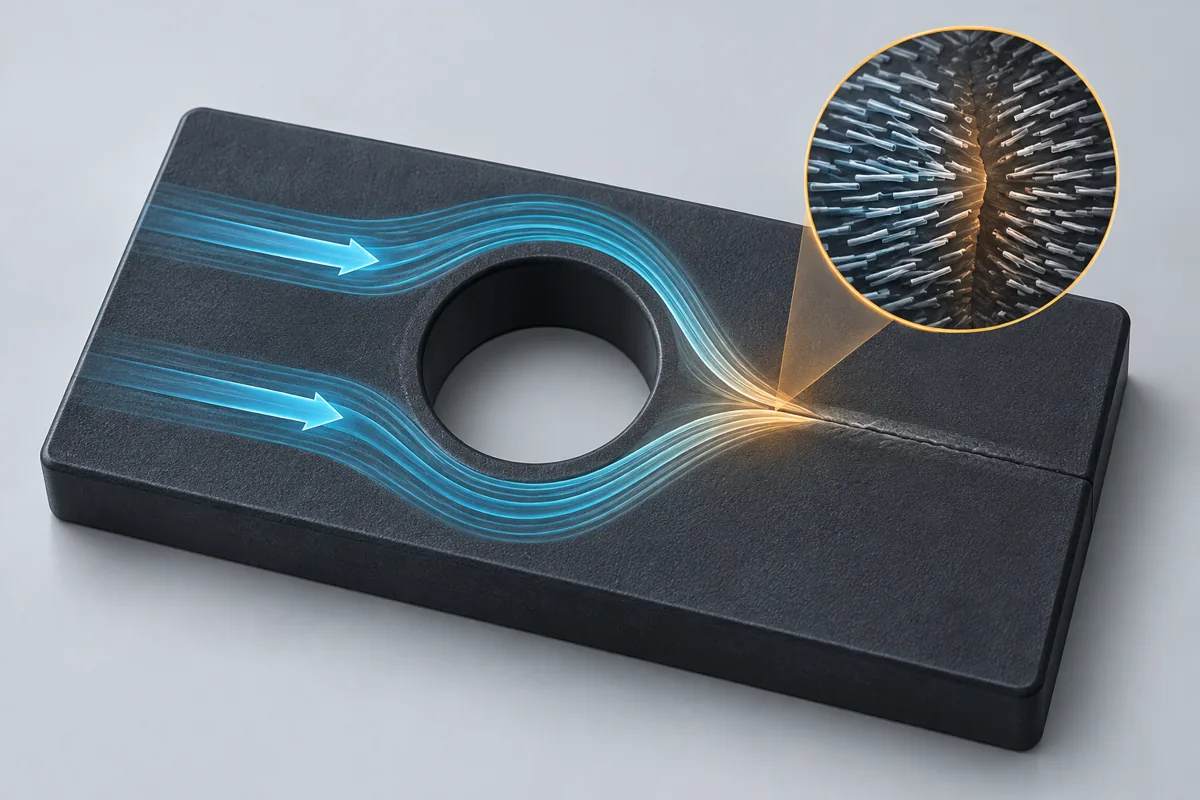
PA6 material technology has achieved a series of significant breakthroughs in recent years, particularly in wear resistance improvement. Research shows that PA6's wear resistance can be significantly improved through blend modification and filler enhancement innovations.
In blend modification, when PA6 is blended with 5% ABS, the material's wear rate can be reduced to 92μm; when blended with high-density polyethylene at a 6:4 ratio, the friction coefficient decreases by over 70% compared to pure PA6. Adding 10% PTFE can reduce the friction coefficient by 32% and wear rate by 28%.
Filler enhancement modification also shows great potential. Adding 10% basalt fiber can reduce PA6's wear rate by 95%; 20% carbon fiber filling reduces the friction coefficient by 57.7% and wear rate by 66%.
Particularly noteworthy is that continuous carbon fiber reinforced PA6 composites can achieve a minimum wear rate of 2.31×10⁻⁶mm³/(N・m) in specific directions, representing significant performance improvement.
In synergistic modification, researchers have made breakthrough progress. When 33% glass fiber and 5% molybdenum disulfide work synergistically, the material's wear rate is further reduced by 18.84% compared to single-filler systems, with surface roughness improved by 24.8%.
Wanhan's innovative PA6 formulations incorporate advanced synergistic modification technologies that enhance these performance characteristics even further, providing industry-leading solutions for demanding applications.
04 3D Printing Parameters and Technical Considerations for PA6
Successful 3D printing with PA6 requires careful attention to material preparation and printing parameters. Based on industry research and Wanhan's technical expertise, we recommend the following guidelines:
Material Preparation Requirements:
-
Drying: PA6 is highly hygroscopic and requires thorough drying before printing. Pre-dry filaments at 70°C for 12-24 hours2 or use specialized drying chambers for consistent results
-
Storage: Maintain PA6 materials in dry, sealed containers with desiccant to prevent moisture absorption
Optimal Printing Parameters for PA6-Based Materials:
| Material Type | Nozzle Temperature | Bed Temperature | Chamber Temperature | Print Speed | Special Requirements |
|---|---|---|---|---|---|
| Neat PA6 | 240-270°C6 | 40-60°C6 | 50-60°C (min) | 35-50 mm/s | Hardened nozzle recommended |
| PA6-CF | 275-285°C2 | 60°C or 285°C2 | 90°C (ideal) | 35-50 mm/s | Hardened steel or ruby nozzle required9 |
| PA6-GF | 285-300°C3 | Not specified | Not specified | Not specified | Abrasion-resistant nozzle essential |
| PA6/66 Blend | 240-270°C6 | 40-60°C6 | Not required | Not specified | Standard nozzles acceptable |
Post-Processing Considerations:
-
Annealing: For enhanced performance, anneal PA6-CF parts at 100°C for 16 hours9
-
Support Removal: PA6 prints may require specialized support materials or careful manual removal
-
Surface Finishing: PA6-GF parts can be mechanically sanded without melting or gumming issues3
Wanhan's technical team has developed optimized printing profiles for various 3D printers, ensuring best results with our PA6 materials across different platforms.
05 Extensive Application Fields: PA6 Becoming the Preferred Material for Multiple Industries
PA6 has a wide range of applications, primarily used as industrial and civil yarn, while also serving as an engineering plastic widely used in automotive, electrical and electronic, and industrial machinery industries. It can also be made into biaxially oriented nylon film (BOPA) for food, instant noodles, liquid seasoning, and other packaging industries.
2024 China PA6 Downstream Consumption Structure
| Application Field | Percentage | Main Applications | Annual Growth Rate |
|---|---|---|---|
| Civil Yarn (Filament) | 60% | Clothing, Textiles | 10.73% |
| Engineering Plastics | 12% | Automotive, Electronics, Machinery | 3% |
| Industrial Yarn | 8% | Tire Cord, Airbags | 4.7% |
| BOPA Film | 7% | Food, Pharmaceutical Packaging | 15% |
| Short Fiber | 7% | Non-woven Fabrics, Technical Textiles | 27.36% |
| Other | 6% | Fishing Nets, Monofilament, etc. | - |
Table: China's PA6 downstream consumption structure and growth situation
PA6 is particularly prominent in automotive industry applications. Due to increasingly stringent requirements for lightweighting, low fuel consumption, impact resistance, and safety in the automotive industry, nylon materials have gained widespread application in the automotive field due to their low density and high-performance characteristics.
Engineering plastics (represented by nylon) are gradually replacing non-ferrous metals and alloys, improving automotive styling aesthetics and design flexibility, reducing parts processing, assembly, and maintenance costs, and decreasing vehicle weight to reduce energy consumption.
Wanhan's specialized PA6 compounds have been adopted by several leading automotive manufacturers for components requiring exceptional durability and thermal stability.
06 Comparative Analysis of PA6 and PA66: Re-evaluating Performance-Cost Balance
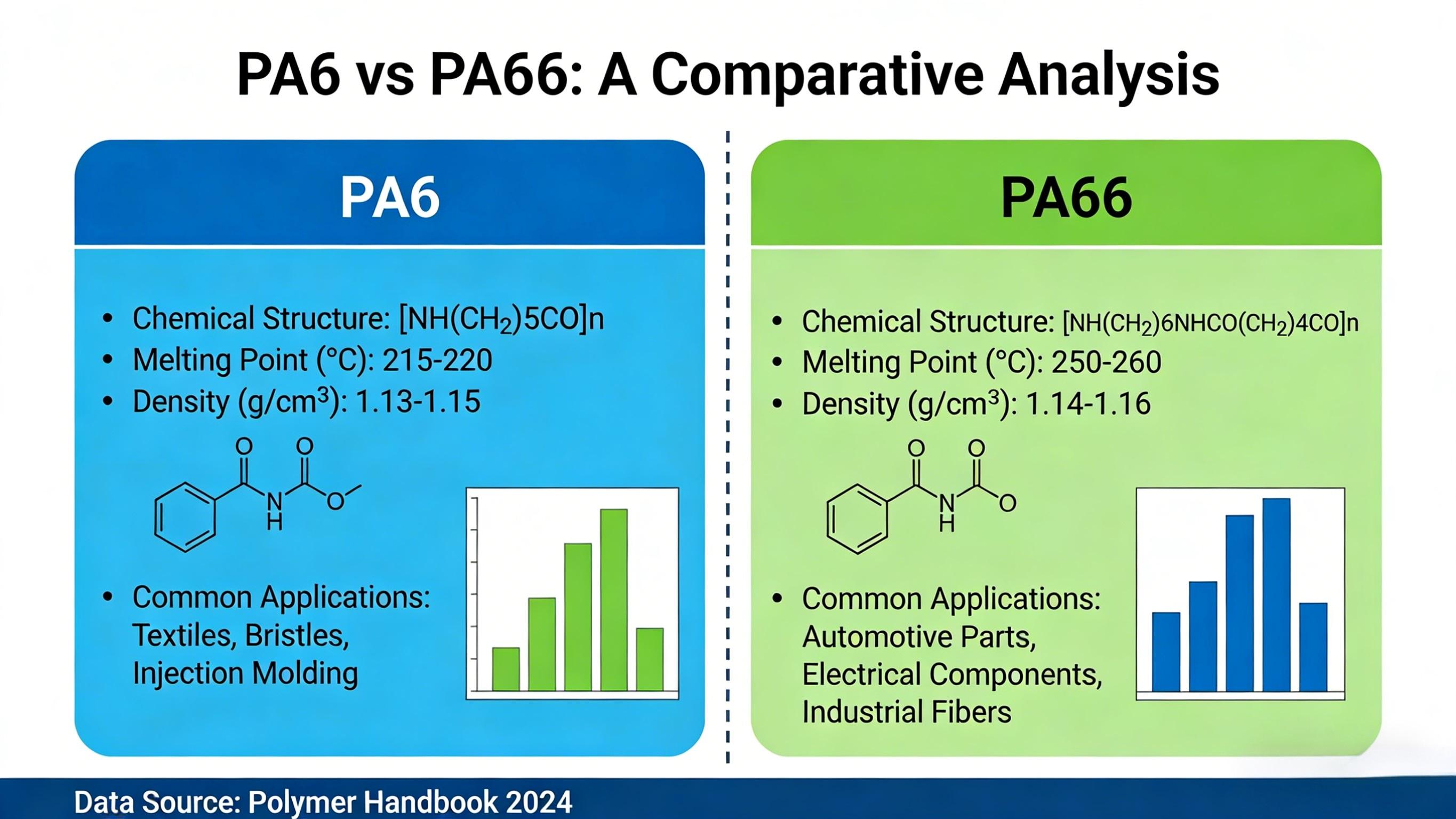
Although PA66 slightly outperforms in high-temperature performance, PA6 is narrowing this gap through modification technologies while maintaining clear advantages in cost-effectiveness and processing performance.
PA6 and PA66 are the most important polyamide resin types, together accounting for about 90% of total polyamide resin consumption. However, compared to PA66, PA6 has lower production costs, making it more competitive in price-sensitive applications.
As PA66 supply levels gradually increase and prices decline, some PA6 demand may shift to PA66. However, through continuous technological innovation and improvement, PA6 maintains its market position in many fields.
PA6 products are developing toward differentiation and functionalization. Differentiated fibers, through methods such as changing physical morphology, possess special functions that distinguish them from ordinary chemical fibers, expanding chemical fiber performance and varieties, and promoting the development of special textiles.
Wanhan's R&D team has developed proprietary PA6 grades that bridge the performance gap with PA66 while maintaining significant cost advantages for value-conscious applications.
07 Global Market Landscape: China Becomes PA6 Production and Consumption Center
From a global market perspective, the PA6 industry shows clear regional concentration characteristics. World PA6 production is mainly concentrated in Northeast Asia, Western Europe, and North America.
Northeast Asia is the region with the largest PA6 production capacity globally, with capacity reaching 8.53 million tons/year, accounting for approximately 75% of global PA6 capacity. This is followed by Western Europe with 1.12 million tons/year and North America with 590,000 tons/year.
China has become the world's largest PA6 producer, with its capacity accounting for over 60% of global total capacity. By the end of 2023, domestic PA6 total capacity reached 6.27 million tons/year; 2024 is a period of concentrated PA6 capacity release, with new capacity of 980,000 tons/year.
China has over 40 PA6 production enterprises, concentrated in Zhejiang, Jiangsu, Fujian, and Shandong provinces, with relatively dispersed industry concentration. Major producers include Hengshen Group, Luxi Chemical, Juhe Shun, Hengyi Petrochemical, Pingmei Shenma, Yongrong Jinjiang, etc., all with production capacities exceeding 400,000 tons/year.
Wanhan has established strategic partnerships with leading PA6 producers in China to ensure a stable supply of high-quality raw materials for our manufacturing operations.
08 Future Development Prospects: Innovation Applications Drive Growth
The future development of the PA6 industry shows diversified trends. Domestic PA6 consumption is expected to increase to 6.1 million tons by 2028, with an average annual compound growth rate of 4.3% from 2024 to 2028.
While the apparel and textile industry operates weakly and terminal demand remains sluggish, demand for PA6 in the civil yarn field is expected to continue growing.
The main reason is that nylon civil yarn has obvious differences compared to chemical fibers such as polyester. Driven by factors such as clothing consumption upgrades and booming outdoor sports, market penetration rates continue to increase, with demand growth outperforming the overall chemical fiber industry.
In engineering plastics, as PA66 supply levels gradually increase and prices decline, some PA6 demand may shift to PA66. This means consumption in this field may decrease, requiring innovation to develop new application areas.
The BOPA film industry is experiencing rapid development, with production expected to increase by approximately 22% year-on-year in 2024. This provides an important growth area for PA6.
Wanhan is investing in developing specialized PA6 compounds for emerging applications in electronic packaging and sustainable packaging solutions.
09 Sustainability and Circular Economy: PA6's Environmental Innovation
With global emphasis on sustainable development and circular economy, the PA6 industry is also actively promoting environmental innovation and green production.
Some companies are making dual breakthroughs in chemical-mechanical recycling, promoting the blending rate of recycled materials to exceed 50%, leveraging the circular economy to meet rigid ESG supply chain requirements. The entire industry is using digital monitoring and carbon capture technologies as green entry thresholds, driving competition logic from "capacity scale competition" to "ecological value positioning."
In 3D printing specifically, SLS technology offers significant sustainability advantages for PA6. The unsintered powder surrounding printed parts can be reused for subsequent printing cycles, with up to 70% recyclability rates10. This compares favorably to FDM processes where support structures typically cannot be reused.
Industry experts point out that these modification technologies not only solve inherent defects of PA6 such as water absorption and insufficient wear resistance but also give the material better comprehensive performance. With in-depth research, future PA6 modification technology will develop in more precise and efficient directions, opening up broader space for engineering plastic applications.
Wanhan is committed to sustainability through our "Green Nylon Initiative," which focuses on developing bio-based PA6 alternatives and implementing closed-loop recycling processes in our production facilities. Our 3D printing materials incorporate recycled content where possible without compromising performance characteristics.
The PA6 industry faces challenges of overcapacity and intensified competition. China's PA6 production capacity is expected to reach 9.28 million tons/year by 2028, with operating rates falling to around 73%.
Simultaneously, technological innovation is also opening new growth spaces for PA6. In the civil yarn field, functional and differentiated demand continues to grow; in engineering plastics, the lightweight trend brings new opportunities for PA6; BOPA film is expanding its share in the high-end packaging market with excellent performance.
The future of PA6 lies in high-end, functional, and green development. Only through continuous innovation and developing products with higher added value can we stand out in the fierce market competition and truly realize the potential of PA6 as the king of engineering plastics.
Exploring the Benefits of 3D Printing PA6-CF
PA6 vs PA66: Key Differences and Applications
Related Article