
Glass Fiber Reinforced Nylon Pellets: Grades and Selection Guide
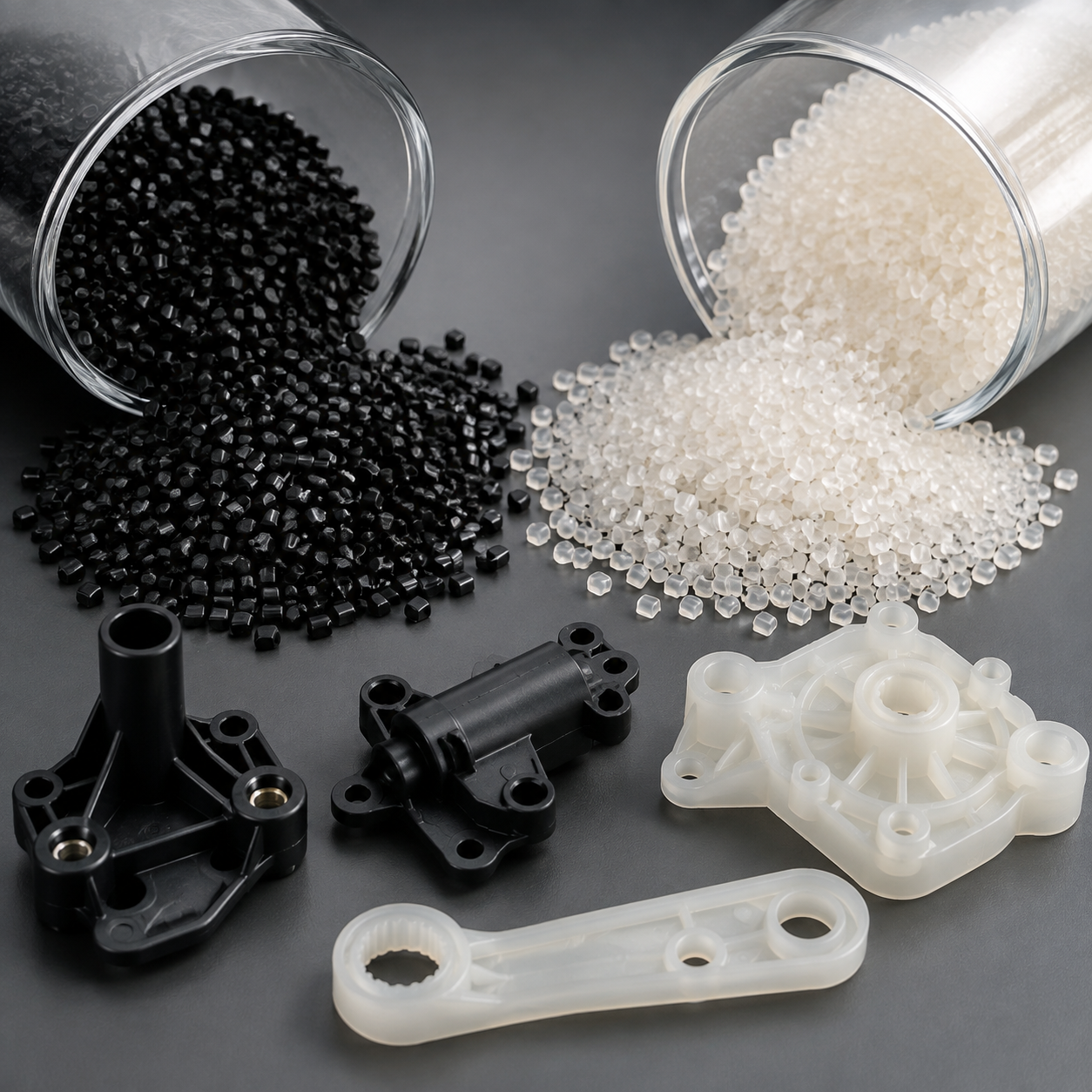
Glass Fiber Reinforced Nylon Pellets: Grades and Selection Guide
Glass fiber reinforced nylon pellets are used when a molded part needs more stiffness, strength, and dimensional control than an unfilled nylon grade can provide. Common search terms include nylon GF30, PA6 GF pellets, glass filled nylon, and reinforced polyamide.
The most suitable grade depends on fiber content, base polymer, wall thickness, moisture environment, surface expectations, and the balance between stiffness and impact performance.
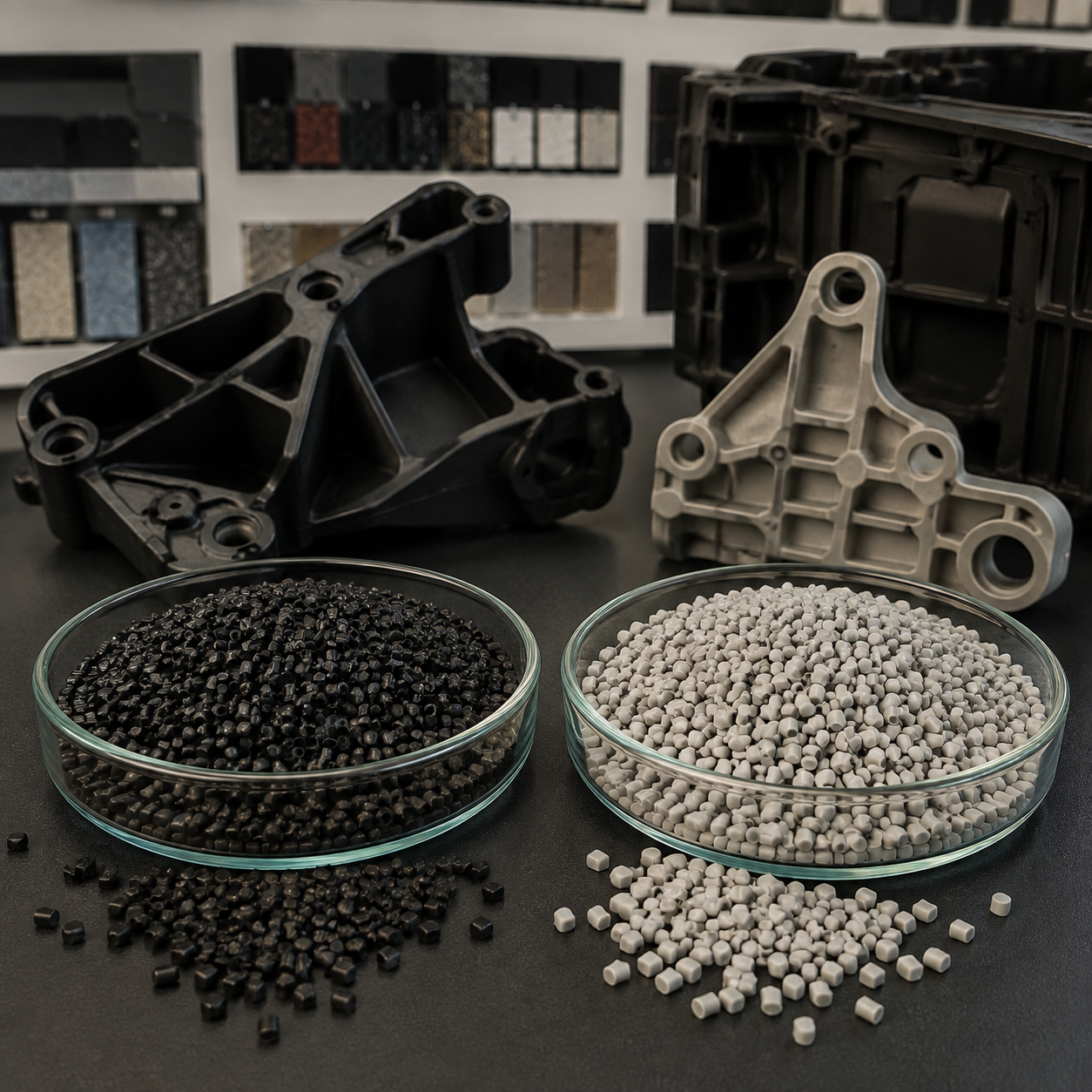
Common Glass-Filled Nylon Routes
| Grade Route | Typical Reason for Selection | Important Check |
|---|---|---|
| PA6 GF | Useful stiffness and strength for many structural parts | Moisture conditioning, shrinkage, and processing window |
| PA66 GF | Higher heat capability in selected automotive and electrical applications | Thermal aging, fiber orientation, and dimensional control |
| PA6 or PA66 GF30 | Common higher-stiffness route for housings, brackets, and supports | Warpage, surface appearance, and impact balance |
| Long glass fiber nylon | Considered for larger structural parts and load-bearing applications | Flow behavior, part design, and process stability |
Design and Processing Considerations
- Glass fibers can create directional shrinkage and anisotropy in the molded part.
- Nylon moisture conditioning can affect dimensions and mechanical results.
- Gate location, flow length, wall thickness, and cooling should be reviewed together.
- Fiber-filled surfaces may need a different cosmetic expectation from unfilled resin.
For product-level comparison, review WanHan's PA6 GF10, PA6 GF30 anti-UV, PA66 GF35, and PA66 GF25 pages. For a broader overview, see the glass-filled nylon guide.
Why Choose WanHan for Engineering Plastic Projects?
Since 2005, WanHan has developed and manufactured functional engineering plastic compounds for automotive, electronics, home appliance, and industrial applications. Our independent R&D, production, and sales capabilities support practical material selection from initial specification through repeat production.
Our ISO 9001, ISO 14001, ISO 45001, and IATF 16949 management systems support controlled production and consistent testing. With in-house testing equipment, export experience across more than 30 countries, and application-focused technical support, WanHan helps teams reduce material-selection risk.
- Custom compounding for glass fiber, carbon fiber, mineral-filled, flame-retardant, impact-modified, anti-UV, and color-customized grades.
- Material matching support for OEM, injection molding, and product development programs.
- Technical data, samples, processing guidance, and quality documentation for validation.
- Export-ready packaging and responsive support for long-term B2B supply projects.
Share the application, part drawing, annual volume, target properties, or existing grade through WanHan's inquiry page. Our team can recommend a suitable compound and arrange sample evaluation.
WanHan can help compare PA6 GF, PA66 GF, and higher-reinforcement routes according to the actual load, temperature, geometry, and production process.
Frequently Asked Questions
Q: What are glass fiber reinforced nylon pellets?
A: Glass fiber reinforced nylon pellets are polyamide compounds containing glass fibers to improve stiffness, strength, and dimensional control in molded parts.
Q: What does nylon GF30 mean?
A: Nylon GF30 usually refers to a nylon compound containing approximately 30 percent glass fiber by weight, subject to the supplier's grade specification.
Q: Is PA6 GF30 stronger than unfilled PA6?
A: PA6 GF30 generally offers higher stiffness and strength than unfilled PA6, but it may also show more anisotropy, warpage, and surface texture.
Q: What is the difference between PA6 GF and PA66 GF?
A: PA6 GF and PA66 GF differ in base polymer structure, moisture response, thermal behavior, processing, and the final balance of performance.
Q: Can WanHan provide glass filled nylon samples?
A: Yes. WanHan can provide sample options and technical discussion for PA6 GF, PA66 GF, and other reinforced nylon grades.
Custom Engineering Plastic Compounds: Formulation and Validation Guide
Automotive Engineering Plastic Pellets: Material Selection Guide
Related Article



