PA66 GF25 Properties, Applications and Processing Guide
PA66 GF25 is a nylon 66 compound reinforced with approximately 25% glass fiber by weight. It is commonly selected when an injection-molded part needs more stiffness, strength, heat resistance, and dimensional control than unfilled PA66, while retaining a more balanced processing profile than higher glass-fiber grades.
The grade name alone is not enough for a production decision. Heat stabilization, impact modification, hydrolysis resistance, color, electrical requirements, and the fiber-additive package can make two PA66 GF25 materials behave differently in the same mold. Buyers should compare the complete grade specification and validate molded parts under the actual service conditions.
PA66 GF25 Property Profile
| Selection area | What PA66 GF25 contributes | What must be verified |
|---|---|---|
| Mechanical performance | Higher stiffness and load capacity than unfilled PA66 | Conditioned strength, impact requirement, creep, and fiber orientation |
| Thermal performance | Improved structural retention at elevated temperature | Continuous temperature, short heat peaks, and heat-aging duration |
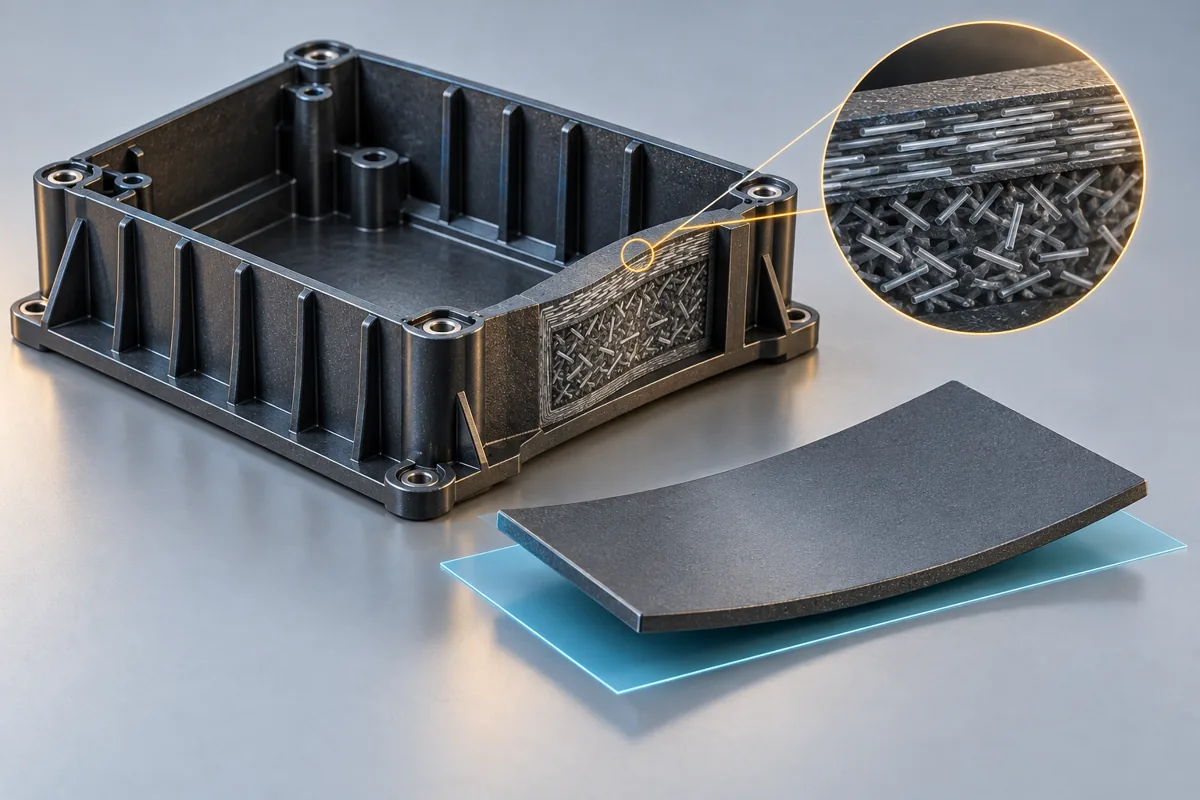
| Dimensional control | Lower shrinkage and improved stability compared with unfilled nylon | Flow-direction shrinkage, cross-flow shrinkage, warpage, and moisture conditioning |
| Processing | Suitable for conventional injection molding with reinforced-material tooling | Drying, melt residence time, gate design, venting, and tool wear |
Published PA66 WHG25A Typical Data
WanHan's PA66 GF25 download identifies the exact grade as PA66 WHG25A. The values below are typical published data, not universal specifications for every PA66 GF25 formulation. Confirm the current controlled TDS and validate molded parts before final approval.
| Property | Unit | Published typical value |
|---|---|---|
| Tensile strength | MPa | 155 |
| Tensile strain at break | % | 10 |
| Flexural strength | MPa | 236 |
| Flexural modulus | MPa | 5,820 |
| Izod notched impact strength | kJ/m² | 17 |
| Heat deflection temperature | °C | 210 |
| Melt index | g/10 min | 20 |
| Density | g/cm³ | 1.33 |
| Molding shrinkage | % | 0.5 |
Open WanHan PA66 datasheet downloads. Test conditions and the current document revision should be confirmed before design or procurement approval.
Where PA66 GF25 Is Commonly Used
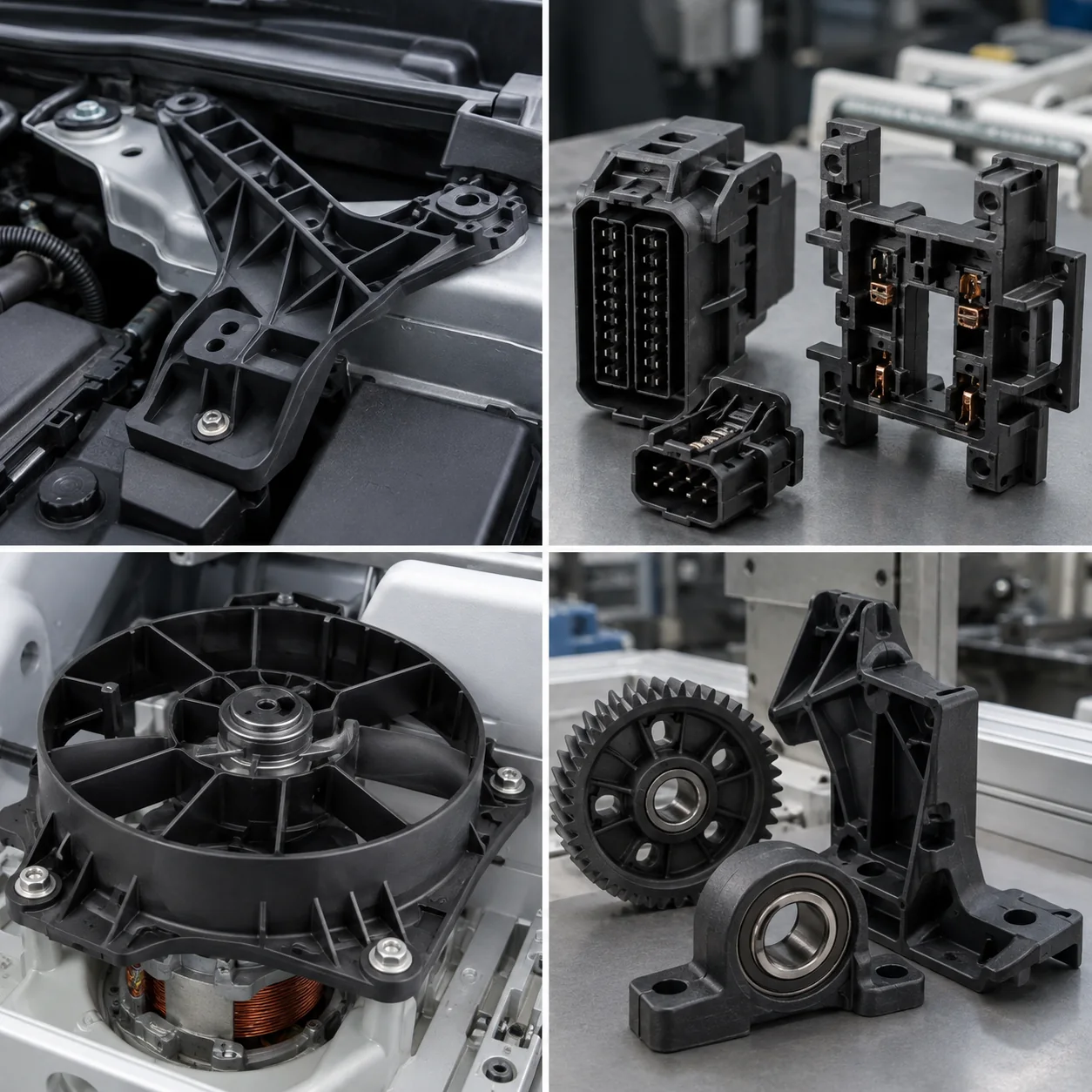
PA66 GF25 is often evaluated for automotive brackets, fan and cooling-system components, electrical frames, connector bodies, appliance structures, industrial supports, and other molded parts that carry assembly or service loads. It is especially useful when the design needs reinforcement but does not automatically require the highest available glass-fiber content.
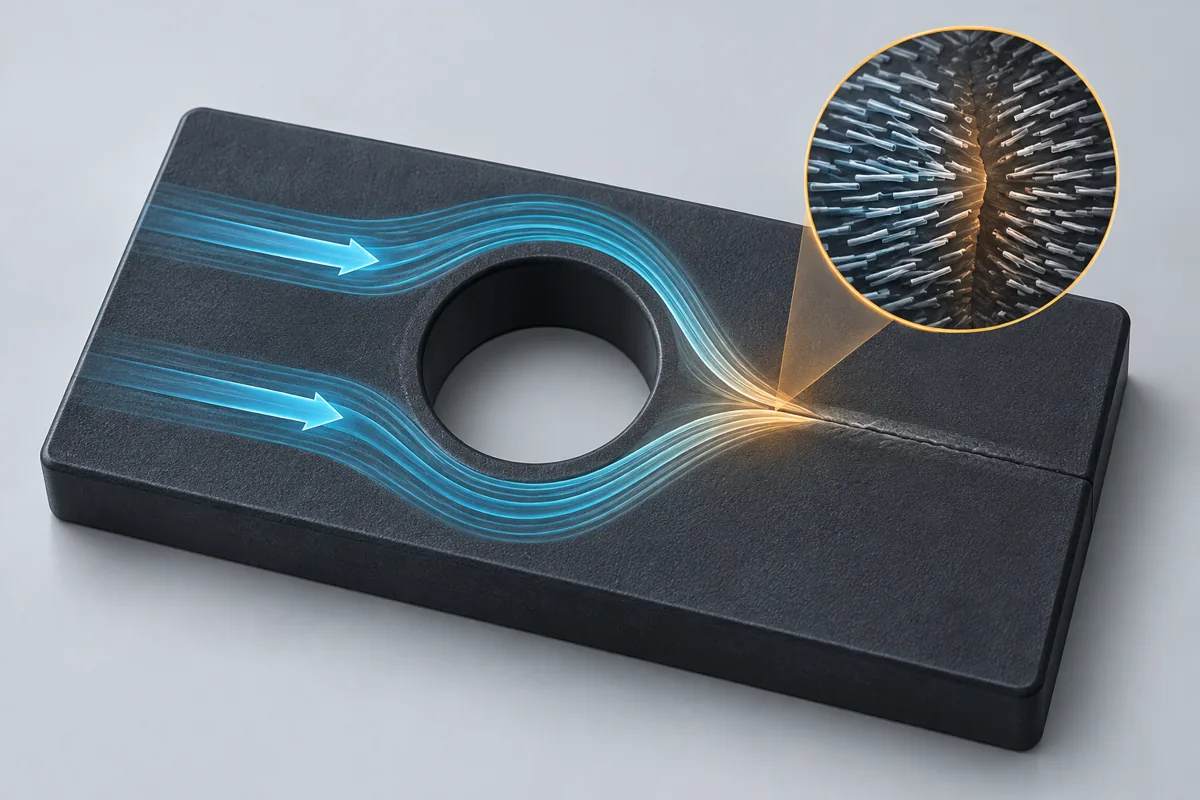
For automotive cooling parts, the material must be selected against coolant exposure, hydrolysis, pressure cycling, heat aging, and weld-line strength. For electrical parts, the project may also require a specific flammability classification, comparative tracking index, dielectric performance, or approved color. These requirements should be stated before a sample grade is chosen.
PA66 GF25 Compared with PA66 GF30 and GF35
Increasing glass-fiber content normally raises stiffness and reduces deformation, but it can also increase anisotropic shrinkage, surface fiber visibility, tool wear, and sensitivity to gate location. PA66 GF25 is often a practical starting point for medium-load structural parts. PA66 GF30 or GF35 may be considered when deflection and high-temperature stiffness are more critical.
The correct comparison should use molded test pieces and, where possible, the actual component. A higher tensile-modulus value does not guarantee better field performance if the part has weak weld lines, excessive warpage, a sharp stress concentration, or moisture-sensitive tolerances.
Molding and Part-Validation Points
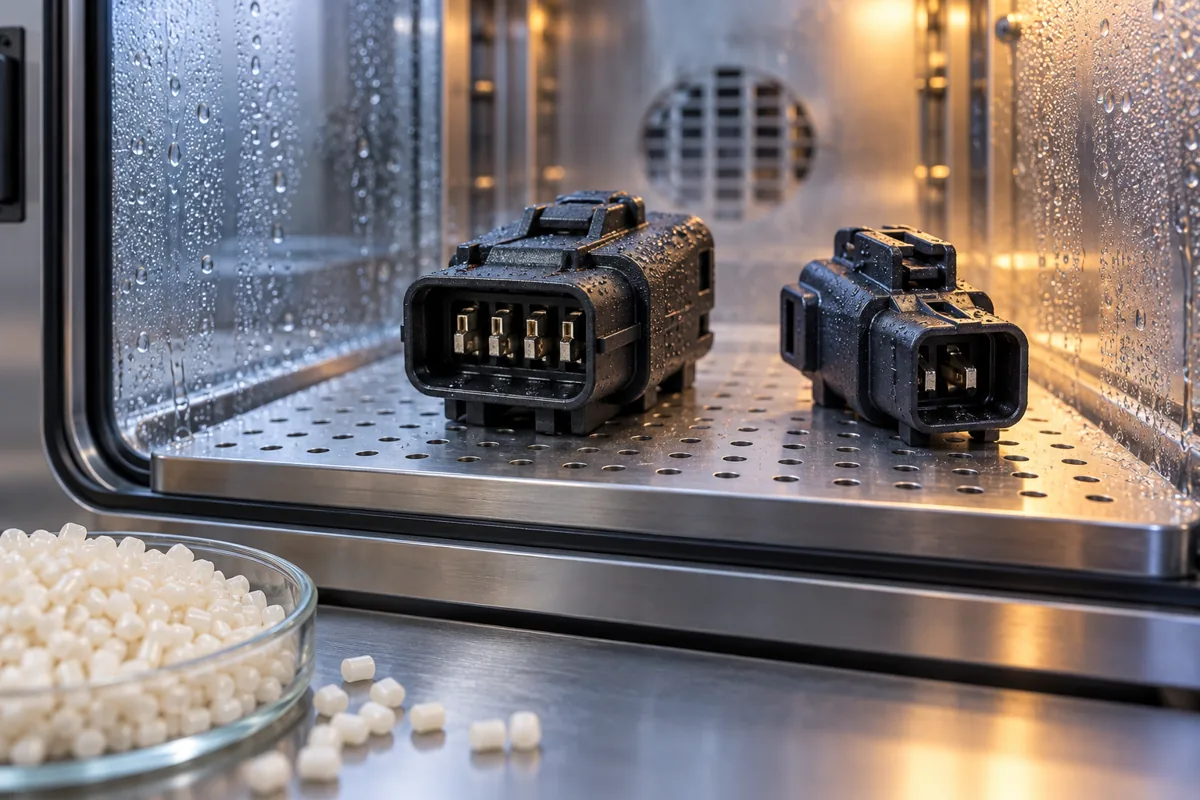
PA66 absorbs moisture, so controlled drying is essential before molding. The dryer condition and maximum allowable moisture should follow the selected grade data sheet. Excess moisture can cause splay, molecular degradation, unstable strength, and poor surface quality. Excessive melt temperature or long residence time can also damage the polymer and additive package.
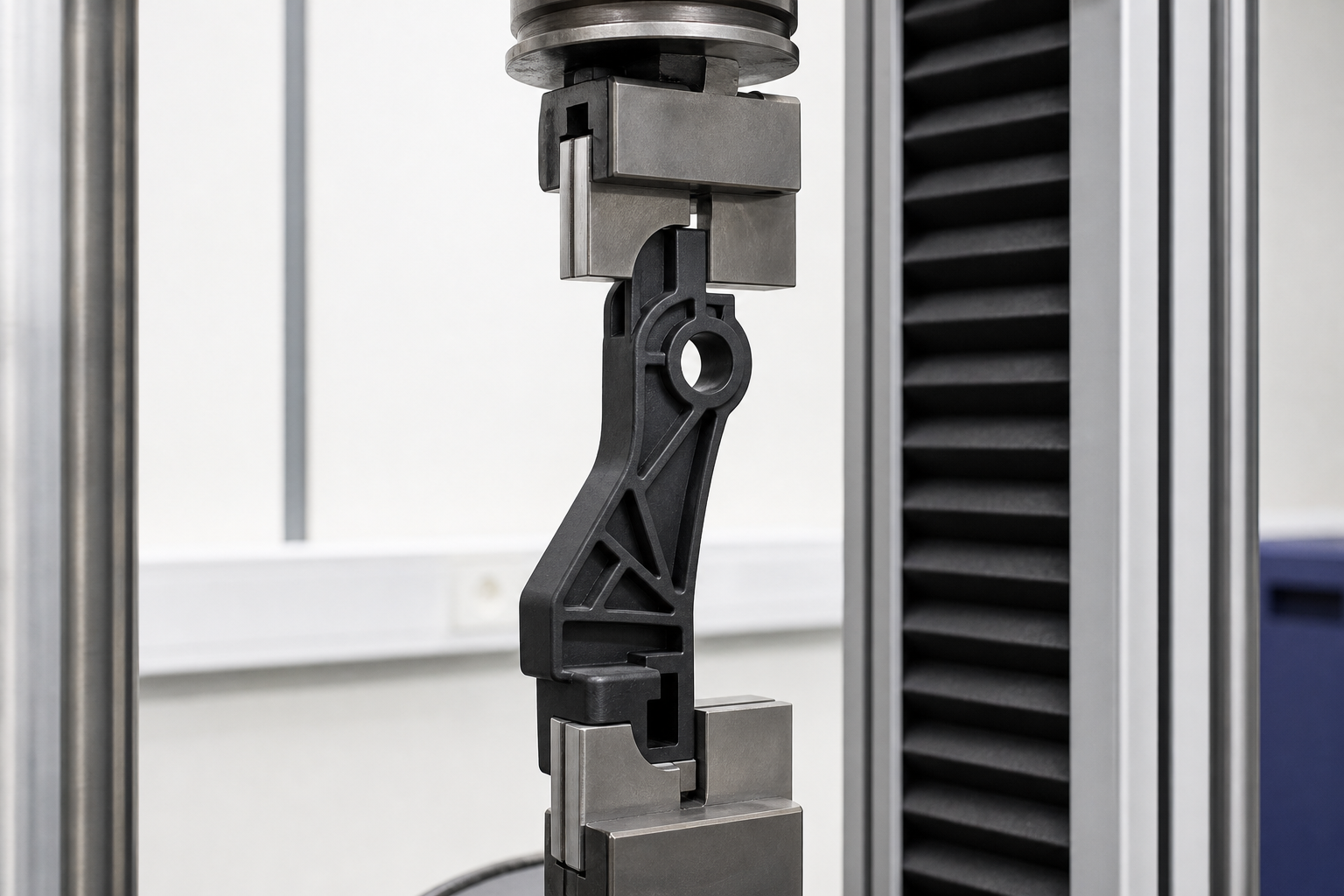
Gate position should support balanced filling and place weld lines away from highly loaded areas. Because glass fibers align with melt flow, mechanical behavior and shrinkage differ by direction. Mold-flow review, dimensional inspection after conditioning, and testing at the expected operating temperature provide more useful evidence than room-temperature resin data alone.
Information Needed for a Grade Recommendation
For a relevant PA66 GF25 proposal, send the part application, operating temperature, load direction, fluid or chemical exposure, wall thickness, color, annual demand, and any flame-retardant or compliance requirement. If a current material is failing, include the failure mode such as warpage, cracking, low weld-line strength, surface fiber, or unstable dimensions.
WanHan can compare standard, heat-stabilized, impact-modified, flame-retardant, and application-specific reinforced PA66 systems. Related routes include the PA66 GF30 radiator tank material guide, the PA66 FR V-0 terminal block guide, and WanHan's engineering plastic product range.
Why Choose WanHan for PA66 GF25?
WanHan has developed and manufactured modified engineering plastics since 2005. Support can cover material screening, grade data review, sample preparation, colour matching and molded-part validation.
Management System Certifications
Share the part drawing, service temperature, load direction, chemical exposure, approval needs, colour and annual demand.
Request Technical Review →WhatsApp / WeChatFrequently Asked Questions
Q: What does PA66 GF25 mean?
A: It means a polyamide 66 compound containing approximately 25% glass fiber by weight. The remaining formulation can include stabilizers, modifiers, pigments, and other additives.
Q: Is PA66 GF25 suitable for automotive cooling parts?
A: It can be suitable when the grade is designed and validated for heat, coolant, hydrolysis, pressure cycling, and the required service life. A general-purpose GF25 grade should not be assumed to meet every cooling-system requirement.
Q: Should PA66 GF25 be dried before molding?
A: Yes. PA66 is moisture sensitive during processing. Drying conditions and the allowable moisture level should follow the specific supplier data sheet.
Q: When should PA66 GF30 be chosen instead of GF25?
A: GF30 may be preferred when the component needs additional stiffness or lower deflection, provided warpage, toughness, surface quality, and processing remain acceptable.
Q: What should be included in a PA66 GF25 inquiry?
A: Include the component, operating temperature, mechanical load, chemical exposure, wall thickness, color, compliance needs, annual volume, and any current molding or field failure.
PBT GF20 Resin: Properties, Applications, Processing, and Selection
Nylon 6 Melting Point, Density, and Temperature Range Guide
Related Article