
Nylon 6,6 Structure and Properties: Engineering Polymer Guide
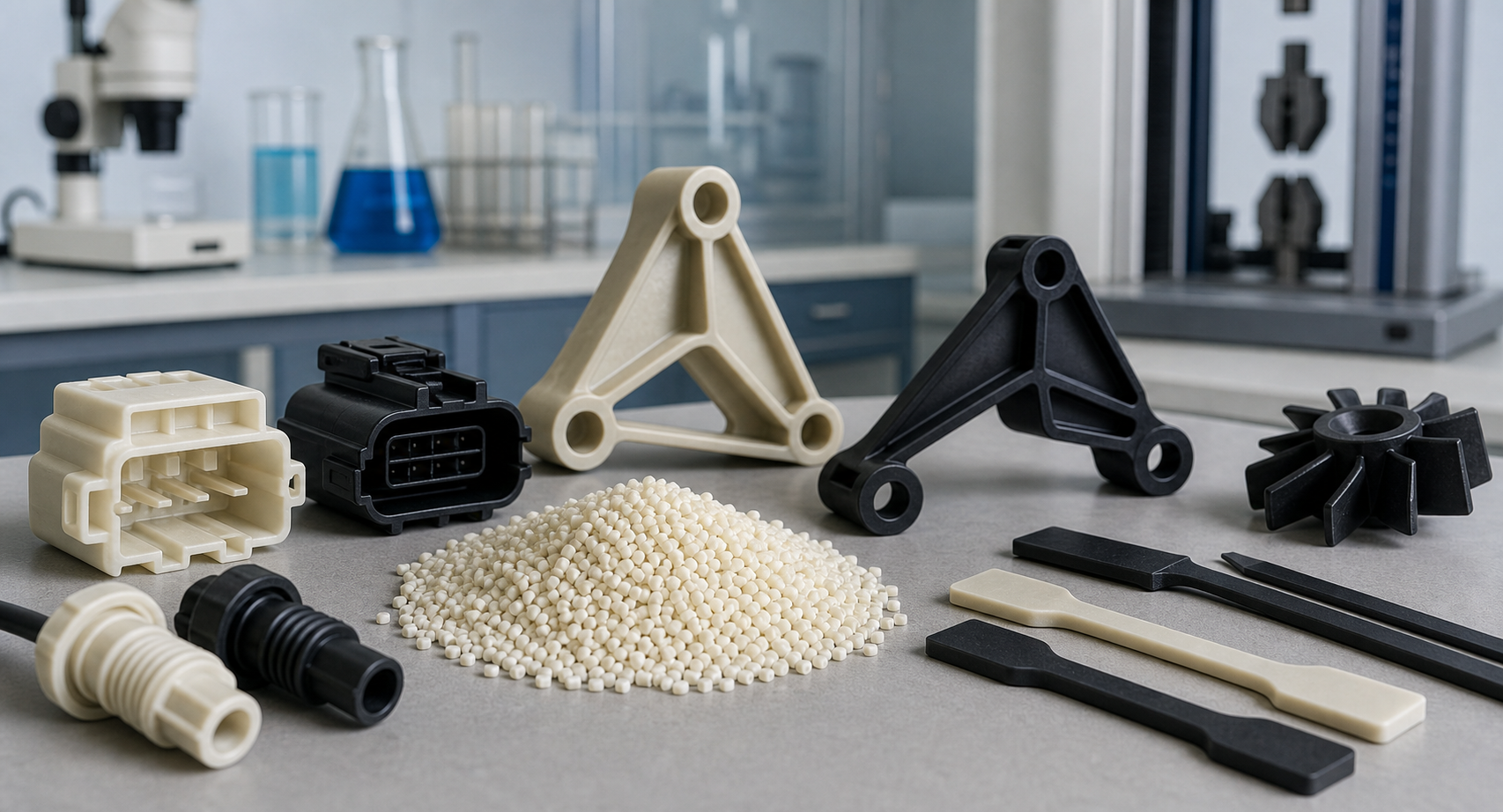
Nylon 6,6 structure and properties matter to buyers because the polymer backbone explains why PA66 is often selected for higher heat, higher stiffness, and stronger mechanical service than many general-purpose plastics.
In engineering sourcing, the structure question is not only academic chemistry. It affects melting behavior, hydrogen bonding, moisture response, heat resistance, strength retention, and the way a grade performs after reinforcement, flame-retardant modification, or long-term service exposure.
WanHan supports PA66 selection for electrical parts, appliance structures, automotive molded components, and industrial technical parts. Related routes include the published PA66 material guide, PA66 GF30 guide, and Nylon 66 density and temperature guide.
What Nylon 6,6 Structure Means
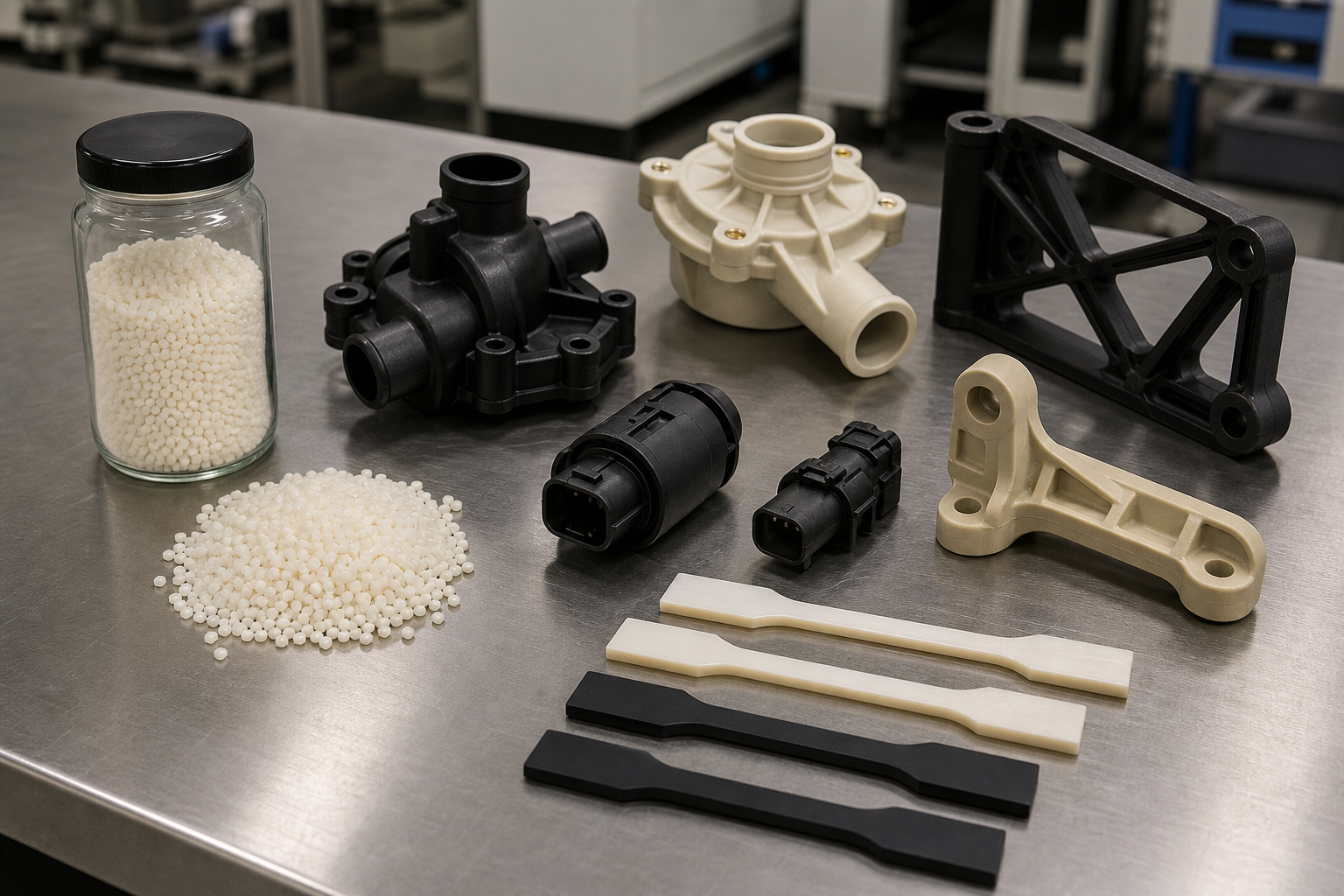
Nylon 6,6 is a polyamide formed from hexamethylene diamine and adipic acid. Its repeating amide linkages create a polymer chain that supports strong intermolecular attraction through hydrogen bonding.
That structural feature is one reason PA66 is known for higher thermal performance, strength, stiffness, and wear-related durability compared with many lower-demand plastics. It also explains why moisture, conditioning, and part design still need to be reviewed carefully in actual use.
- Amide groups support hydrogen bonding and stronger chain interaction
- The structure contributes to good heat resistance and mechanical strength
- Crystallinity affects shrinkage, stiffness, and molded-part performance
- Moisture still influences dimensional behavior and final properties
Nylon 6,6 Properties Buyers Should Connect to Structure
| Property area | Why the structure matters | What the buyer should verify |
|---|---|---|
| Heat resistance | Stronger chain interaction helps PA66 handle higher thermal demand | Continuous use temperature and heat-aging target |
| Strength and stiffness | The polymer structure supports strong engineering performance, especially after reinforcement | Load path, creep, and whether GF or FR modification is needed |
| Moisture response | Polyamide structure still absorbs moisture and this changes properties over time | Tolerance after conditioning and end-use humidity |
| Processing behavior | Crystallinity and moisture sensitivity affect molding discipline | Drying, mold temperature, shrinkage, and part warpage risk |
How Structure Connects to Applications
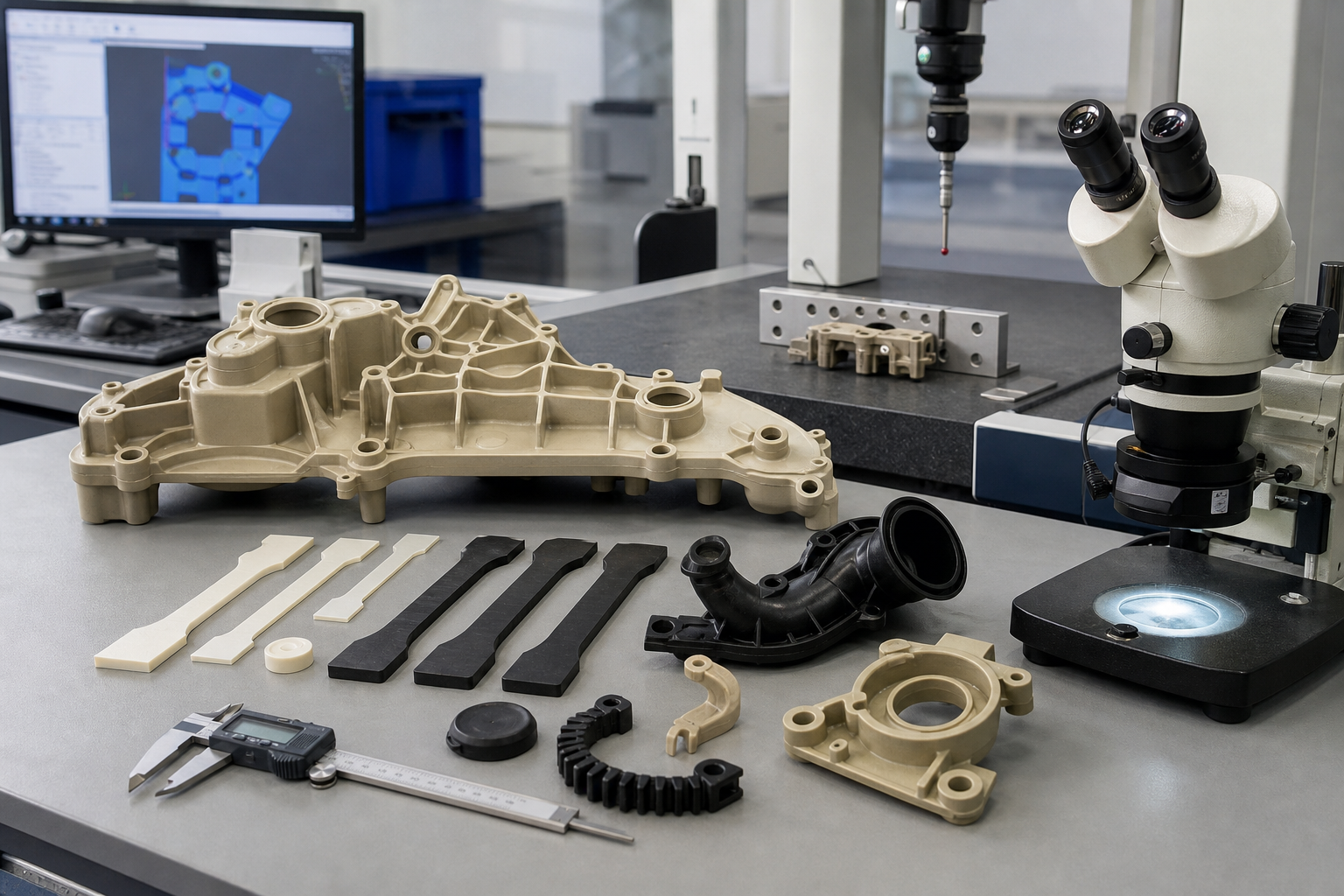
Because of its structure, PA66 is widely used in technical applications where the buyer expects more from a molded plastic than surface appearance alone. Common examples include electrical components, automotive under-hood and near-engine molded parts, appliance structures, and industrial brackets or carriers.
Once reinforcement or flame-retardant modification enters the discussion, the role of the base polymer structure becomes even more important, because it supports how the final compound responds to heat, load, and long-term service.
- Electrical connectors, terminal supports, and technical insulators
- Automotive structural molded parts and heat-exposed components
- Appliance internal structures and motor-adjacent supports
- Glass-filled and flame-retardant PA66 compounds for higher-demand parts
Why Buyers Still Need Sample Validation
Even when the polymer structure is understood, the finished part decision should not stop at theory. Grade choice, reinforcement, moisture conditioning, part geometry, and molding quality all influence the real outcome.
That is why buyers should validate the actual application with molded samples, dimensional checks, and service-condition review rather than relying only on a chemistry summary.
- Check actual grade data, not only generic PA66 descriptions
- Review moisture-conditioned dimensions for assembly parts
- Compare unfilled, GF, FR, and heat-stabilized PA66 when needed
- Align the resin choice with processing discipline and validation method
Why Choose WanHan
Since 2005, WanHan has created engineering plastics for sustainable industrial applications, with independent R&D, production, and sales of functional polymer materials.
WanHan is certified with ISO 9001, ISO 14001, ISO 45001, and IATF 16949. Full sets of testing equipment support grade development, verification, and quality control for PA66 compounds used in automotive, electronics, home appliance, and industrial applications.
- PA66, GF PA66, FR PA66, heat-stabilized PA66, and custom modified compound support
- Application review based on structure-performance fit, not only generic polymer naming
- Sampling and technical discussion for engineering molded parts with validation needs
Request Material Support
Send the part application, service temperature, reinforcement need, flame target if required, wall thickness, and the main mechanical or dimensional issue under review. WanHan can help connect PA66 structure and grade choice to a usable compound route.
Contact WanHan for PA66 material support
Frequently Asked Questions
Q: What is the structure of nylon 6,6?
A: Nylon 6,6 is a polyamide formed from hexamethylene diamine and adipic acid, with repeating amide linkages along the polymer chain.
Q: Why does nylon 6,6 have good heat and mechanical performance?
A: Its polymer structure supports strong intermolecular attraction through hydrogen bonding, which helps PA66 deliver useful engineering strength and heat resistance.
Q: Does nylon 6,6 absorb moisture?
A: Yes. Like other polyamides, PA66 absorbs moisture, and that can affect dimensions and mechanical behavior in service.
Q: Where is nylon 6,6 commonly used?
A: It is widely used in electrical components, automotive molded parts, appliance structures, and industrial technical parts that need stronger engineering performance.
Q: Can WanHan supply reinforced or flame-retardant PA66 grades?
A: Yes. WanHan supports glass-filled, flame-retardant, heat-stabilized, and custom modified PA66 compounds according to the application need.
Glass Filled Nylon: Properties, GF Grades, and Structural Applications
PA6 GF50 Properties, Applications, Processing, and Grade Selection
Related Article



