PA6 GF15 Properties, Processing, and Application Guide
PA6 GF15 is polyamide 6 reinforced with approximately 15% glass fiber. It offers a moderate increase in stiffness, strength, heat resistance, and dimensional control while retaining better flow, toughness, and surface quality than heavily reinforced nylon grades.
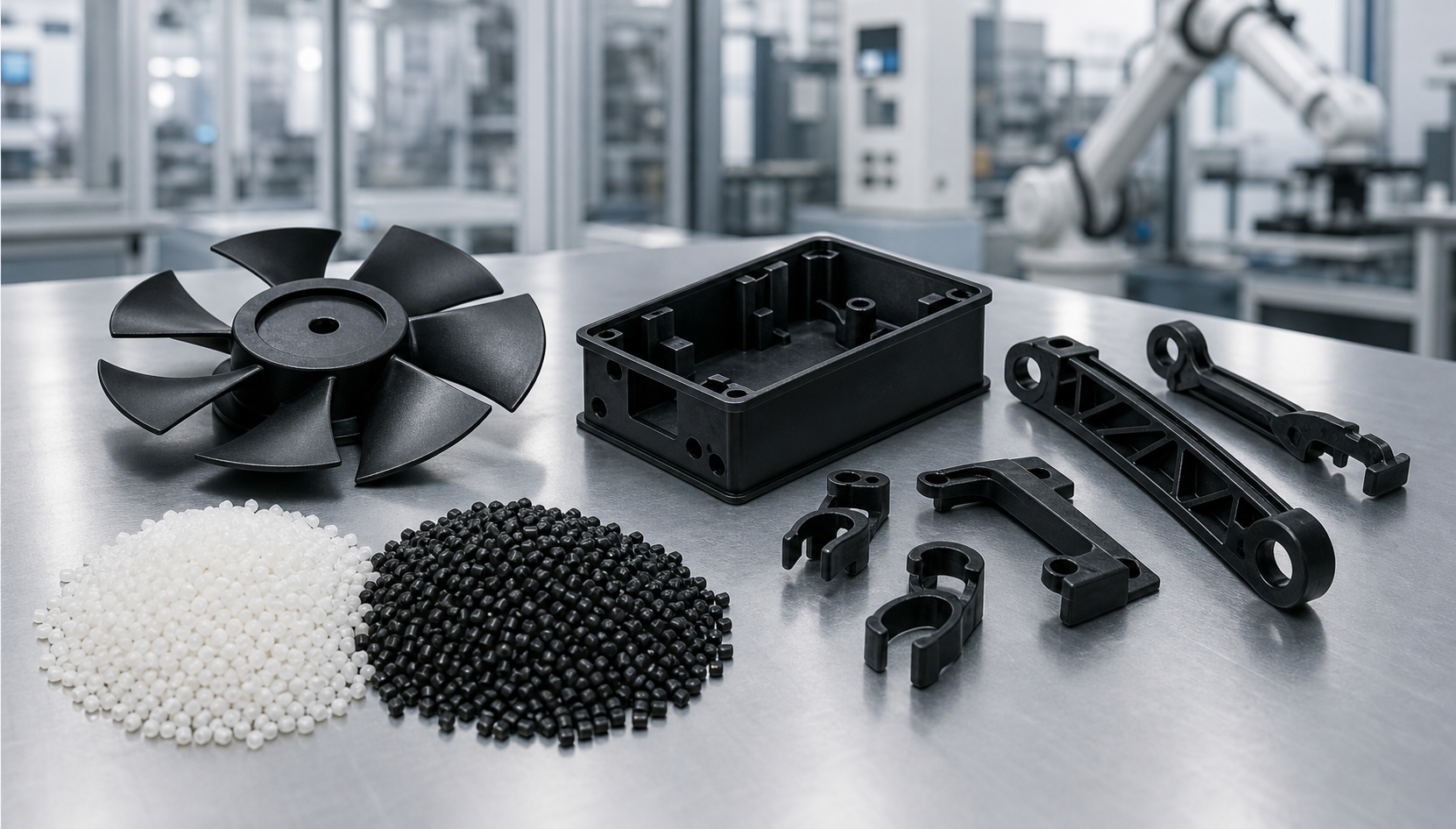
This balance makes PA6 GF15 plastic granules useful for electrical housings, appliance structures, automotive clips and covers, power-tool components, and general industrial parts. WanHan can compare PA6 GF15 with other glass-filled PA6 grades when a project must balance rigidity, impact, appearance, and molding cost.
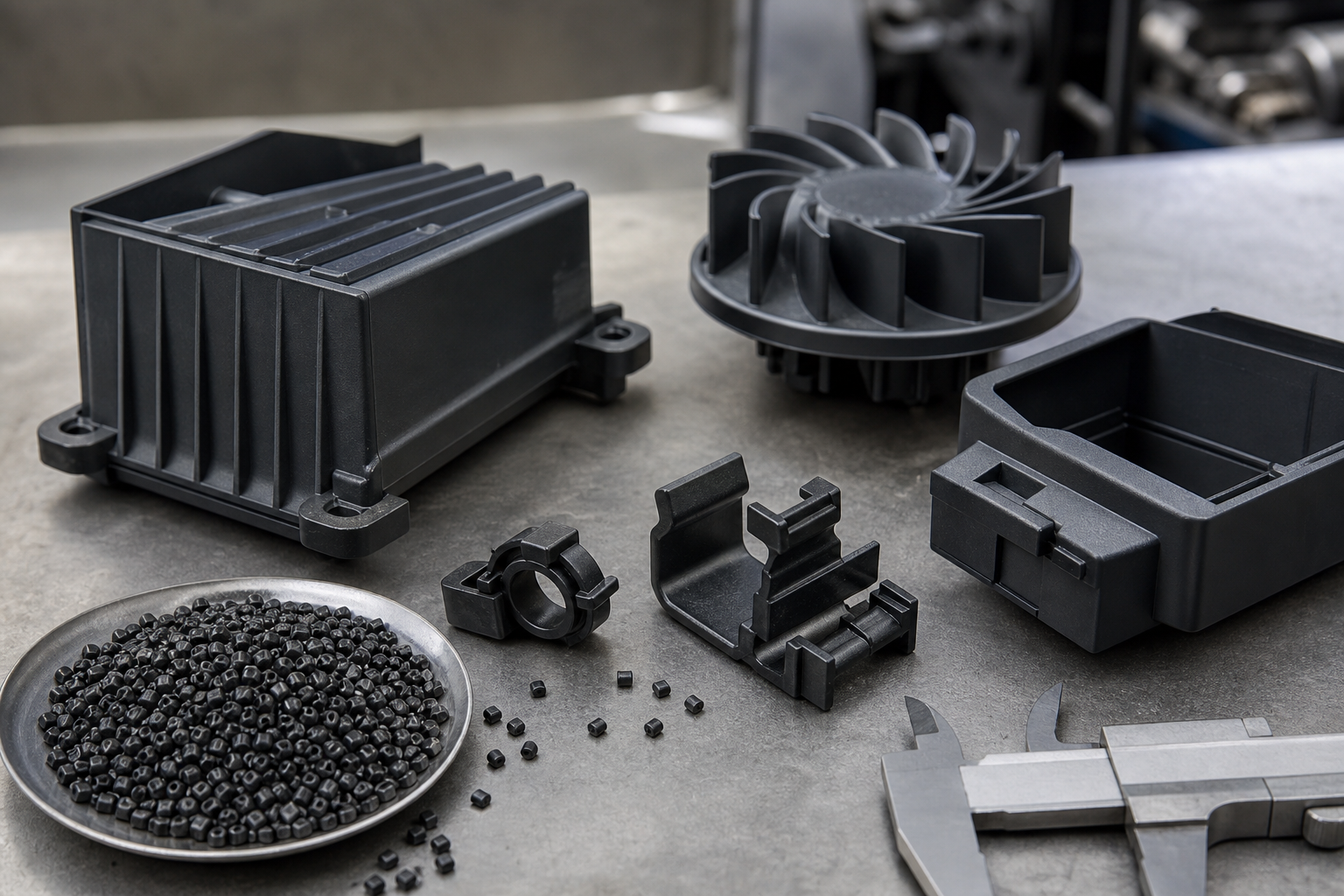
Typical PA6 GF15 Properties
The following ranges help with initial material screening. The approved supplier datasheet and molded-part test results must govern the final design.
| Property | Representative range | Engineering relevance |
|---|---|---|
| Density | About 1.20-1.25 g/cm3 | Part weight and shot-size calculation |
| Tensile strength, dry | About 85-120 MPa | Structural support and fastener loads |
| Flexural modulus, dry | About 4-6 GPa | Deflection and housing rigidity |
| Melting range | About 215-225 C | Melt control and residence-time planning |
| Mold shrinkage | Often about 0.4-1.1% | Tolerance and warpage evaluation |
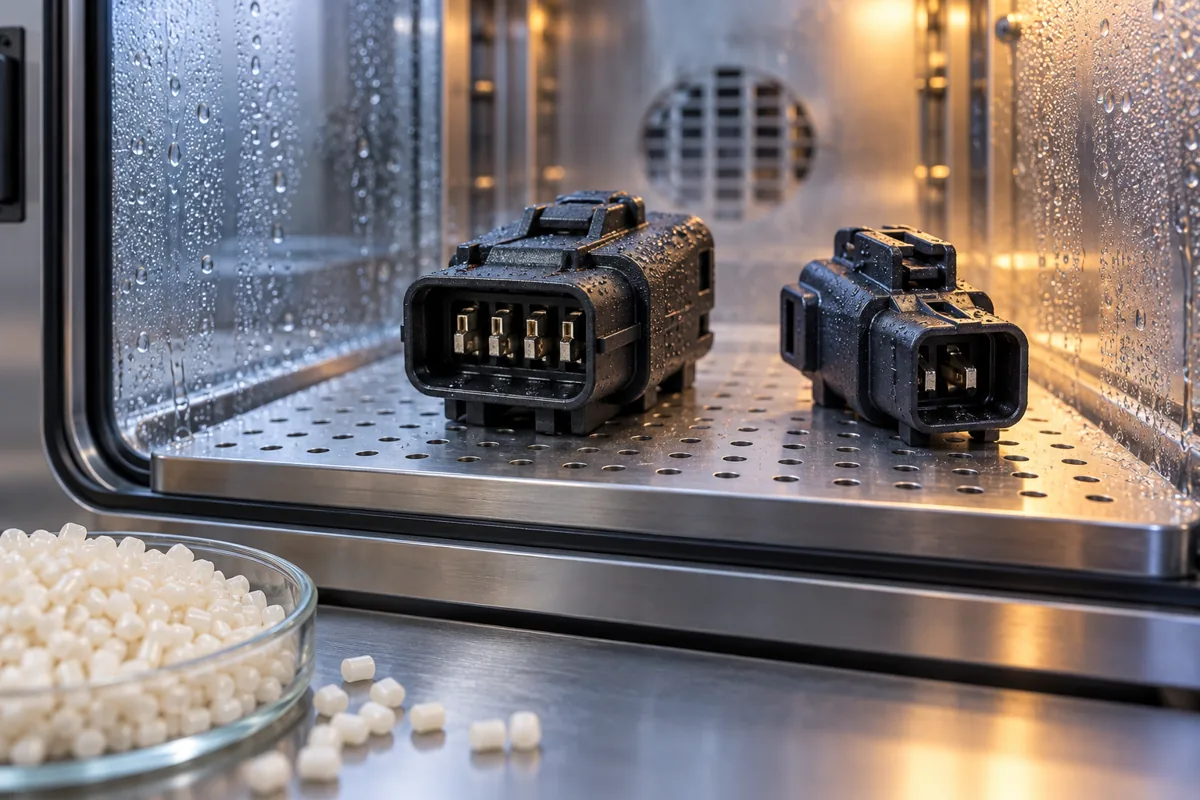
PA6 absorbs moisture, which changes dimensions and mechanical behavior. Parts should be conditioned and tested in the moisture state expected during service.
PA6 GF15 Compared With Higher Glass Content
| Selection factor | PA6 GF15 | PA6 GF30 or higher |
|---|---|---|
| Stiffness | Moderate reinforcement | Higher rigidity and lower deflection |
| Impact and snap features | Often more forgiving | More design-sensitive |
| Surface appearance | Generally easier to manage | Fiber read-through can be stronger |
| Flow and thin walls | Practical balance | Depends more strongly on grade and geometry |
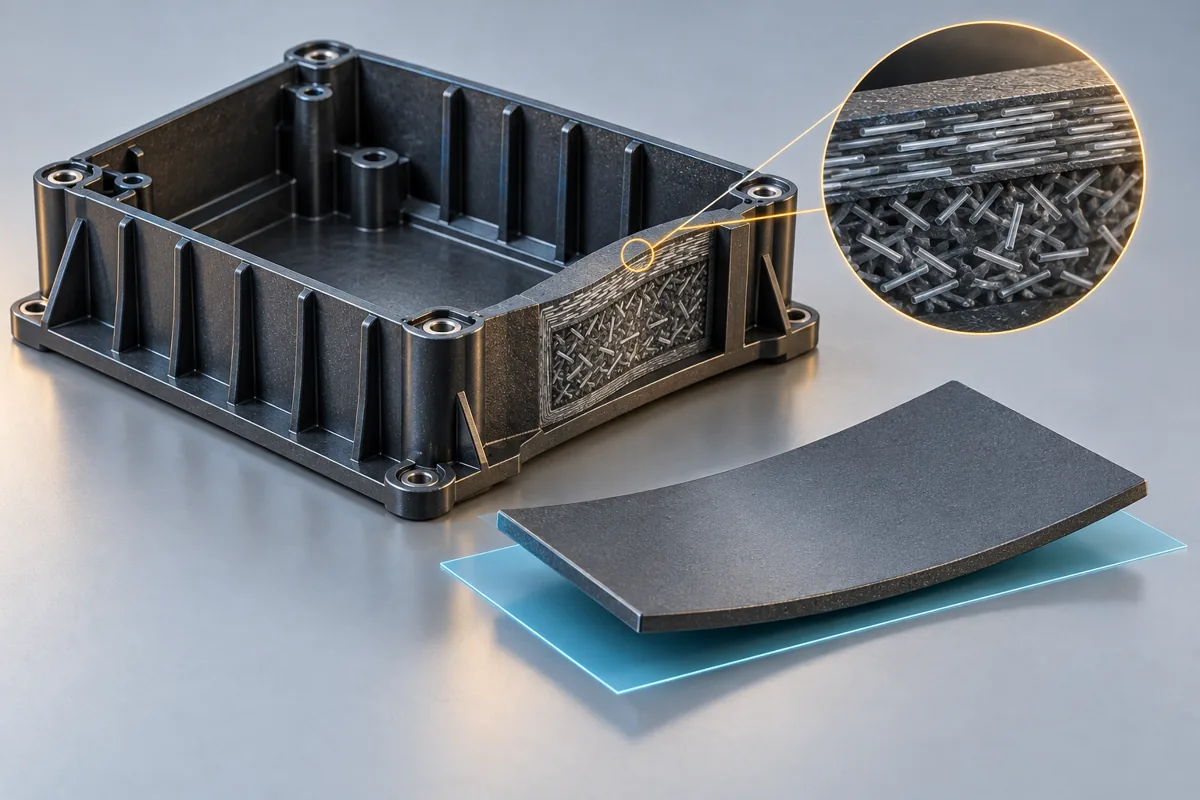
| Warpage | Lower anisotropy than heavy reinforcement | More fiber-orientation control required |
PA6 GF15 is often the better starting point when unfilled PA6 is too flexible but PA6 GF30 creates excessive warpage, brittleness, or visible fiber. The decision should be based on molded samples rather than glass percentage alone.
Processing and Validation
- Dry the resin to the grade supplier's specified moisture level and protect it during transfer
- Use balanced gating and packing to control shrinkage around bosses, clips, and mounting points
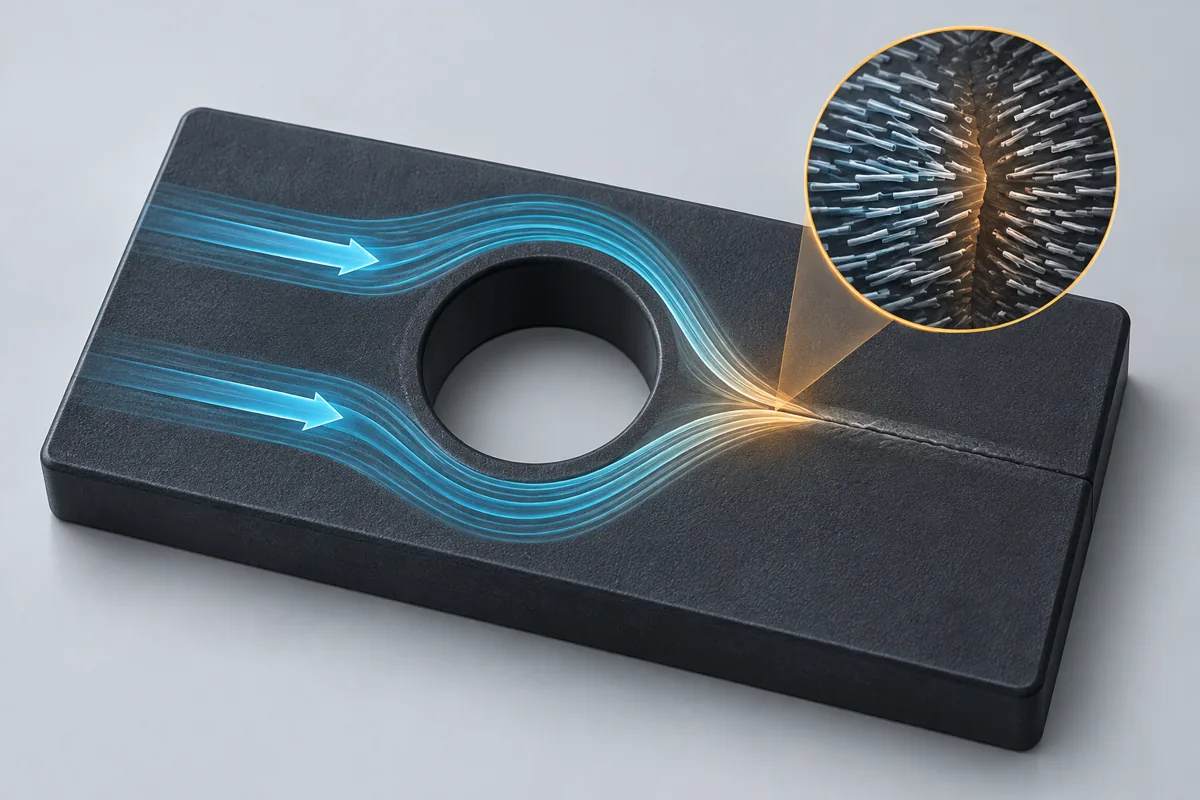
- Place weld lines away from snap fits, screw bosses, and highly loaded features
- Check dimensions after conditioning, thermal cycling, and humidity exposure
- Validate color, surface texture, assembly force, impact, and long-term load on real parts
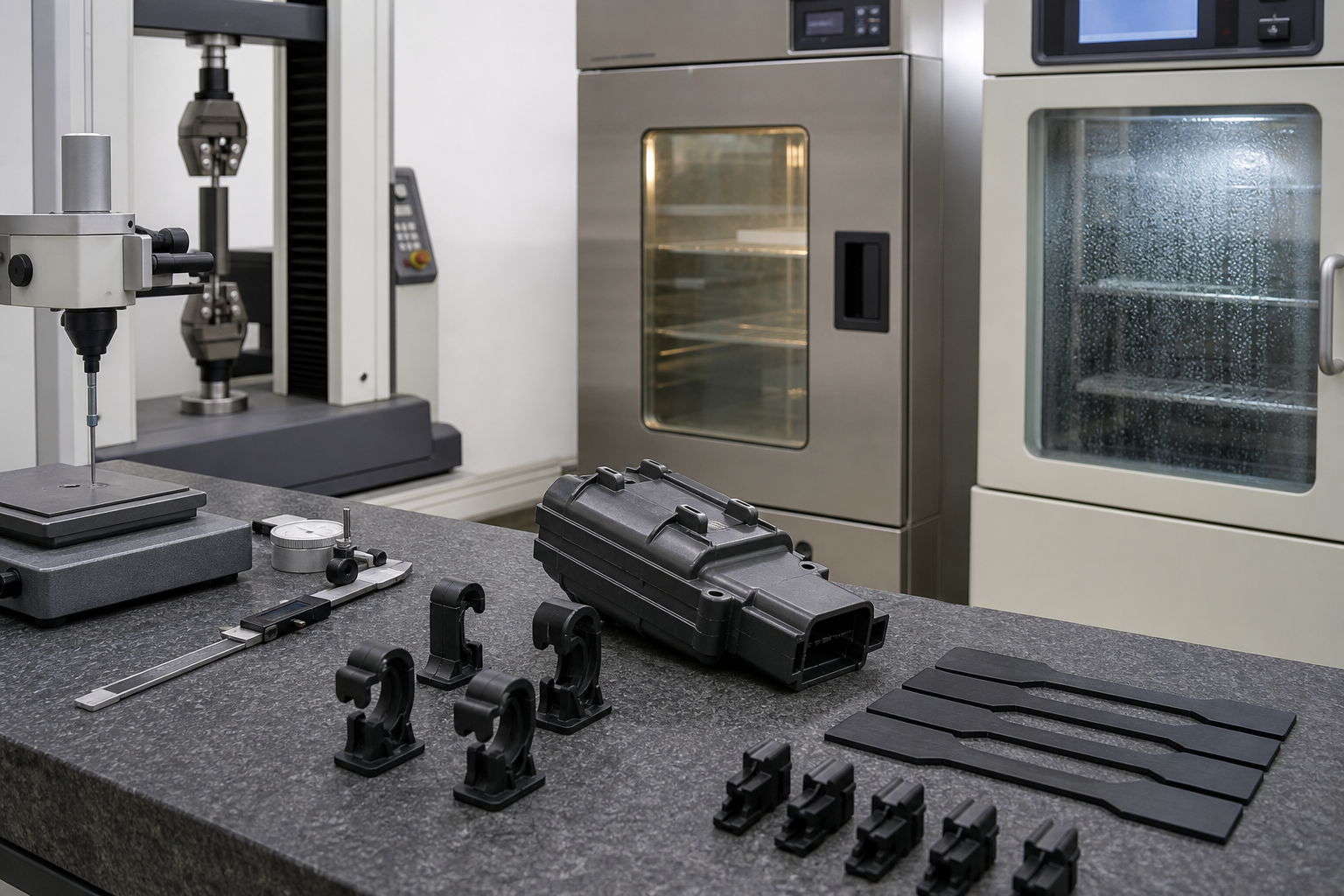
Applications and Grade Options
- Electrical covers, terminal supports, coil parts, and small equipment housings
- Home-appliance frames, fan parts, brackets, handles, and internal structures
- Automotive clips, covers, air-management parts, and lightly loaded brackets
- Power-tool internal supports, guards, and structural housings
- Industrial gears, guides, fixtures, and machine components with moderate stiffness needs
Projects may require heat stabilization, UV resistance, flame retardancy, impact modification, custom color, or low-warpage behavior. Share the drawing, target properties, service environment, approval standard, and annual quantity with WanHan for grade screening and sample preparation.
Why Choose WanHan for Engineering Plastic Compounds?
Since 2005, WanHan has focused on the independent R&D, production, and sales of functional polymer materials for sustainable industrial applications. Our engineering plastic compounds are used in automotive, electronics, home appliances, and industrial components where consistent performance matters.
- ISO 9001, ISO 14001, ISO 45001, and IATF 16949 certified management systems
- Full sets of testing equipment for incoming material, process, and finished-compound quality control
- Support for glass-fiber reinforcement, flame retardancy, heat stabilization, color, and application-specific modification
- Sample, technical data, processing guidance, and production follow-up for B2B projects
- Export experience serving customers in more than 30 countries
Request a Material Recommendation
Send the part application, drawing, service environment, target properties, reinforcement or flame requirement, color, compliance needs, estimated annual demand, and the main issue with the current material. Contact WanHan for grade screening, samples, technical data, and production support, or review the engineering plastic product range.
Frequently Asked Questions
Q: What does PA6 GF15 mean?
A: PA6 GF15 is polyamide 6 reinforced with approximately 15% glass fiber for a balanced improvement in stiffness, strength, heat resistance, and dimensional stability.
Q: What is the typical density of PA6 GF15?
A: Many PA6 GF15 compounds are around 1.20-1.25 g/cm3, although the exact density depends on glass content, additives, and formulation.
Q: When should PA6 GF15 be chosen instead of PA6 GF30?
A: PA6 GF15 is useful when a part needs more rigidity than unfilled PA6 but also needs better toughness, flow, appearance, or lower warpage than a heavily reinforced grade.
Q: Does moisture affect PA6 GF15?
A: Yes. Moisture can change dimensions, stiffness, strength, and impact behavior, so conditioned-part testing is important.
Q: Can WanHan customize PA6 GF15 compounds?
A: WanHan can discuss heat stabilization, flame retardancy, UV resistance, impact modification, color, low-warpage requirements, documentation, and samples.
PA66 GF50 Material: High-Stiffness Properties and Applications
PA66 GF30 – 30% Glass Fiber Reinforced Nylon 66
Related Article