
What Is PA66 GF15? Properties, Uses, and Material Selection Guide
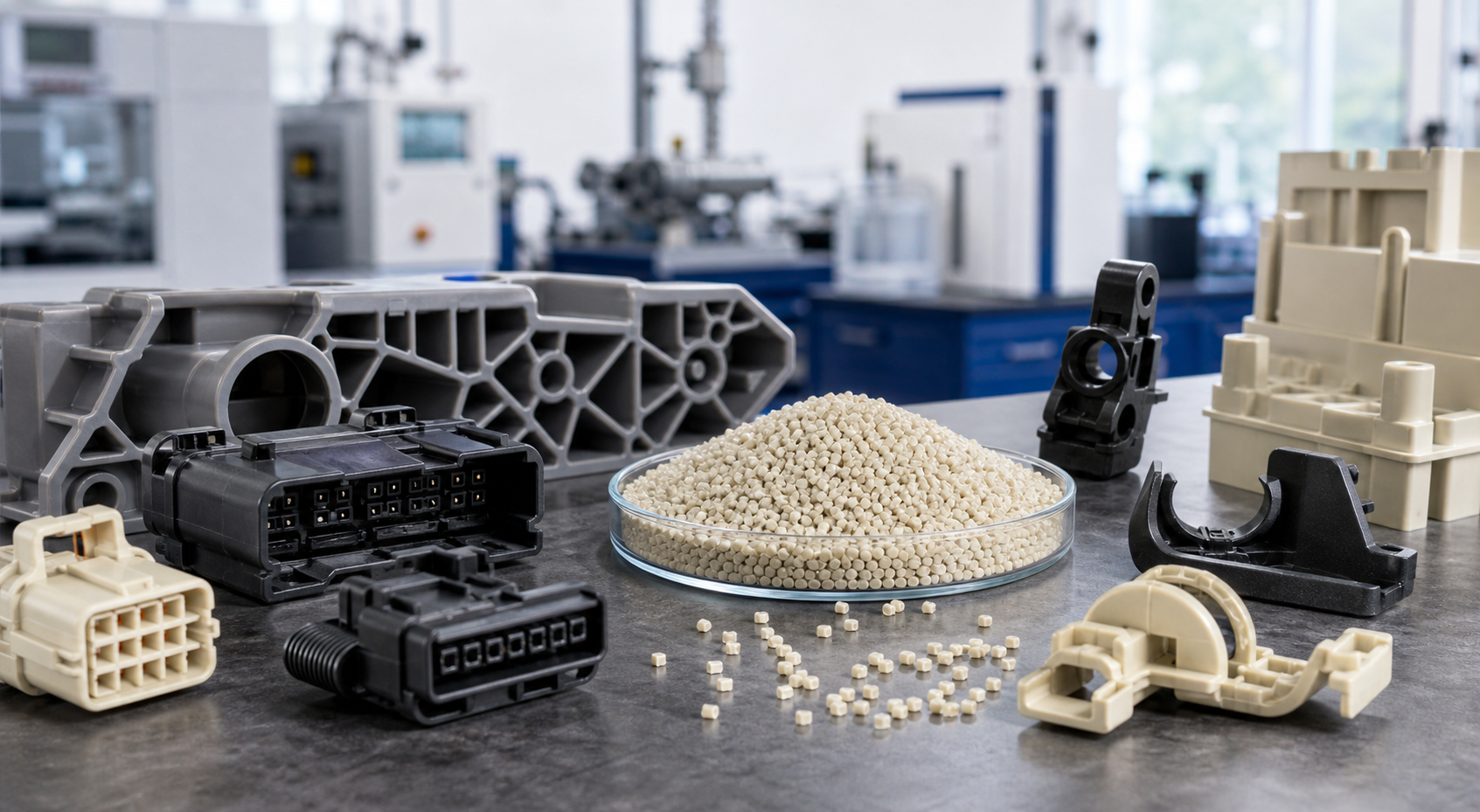
PA66 GF15 is a nylon 66 grade reinforced with about 15% glass fiber. Buyers usually look at it when unfilled PA66 is not rigid enough, but higher-glass grades may create unnecessary warpage, surface roughness, or molding difficulty.
It is often reviewed together with PA66, PA66 GF25, PA66 GF30, and broader glass filled nylon options.
In practical molding projects, PA66 GF15 is often considered for connectors, clips, electrical supports, appliance parts, and small structural housings that need a controlled balance of stiffness, toughness, and dimensional stability.
When PA66 GF15 Is a Better Fit
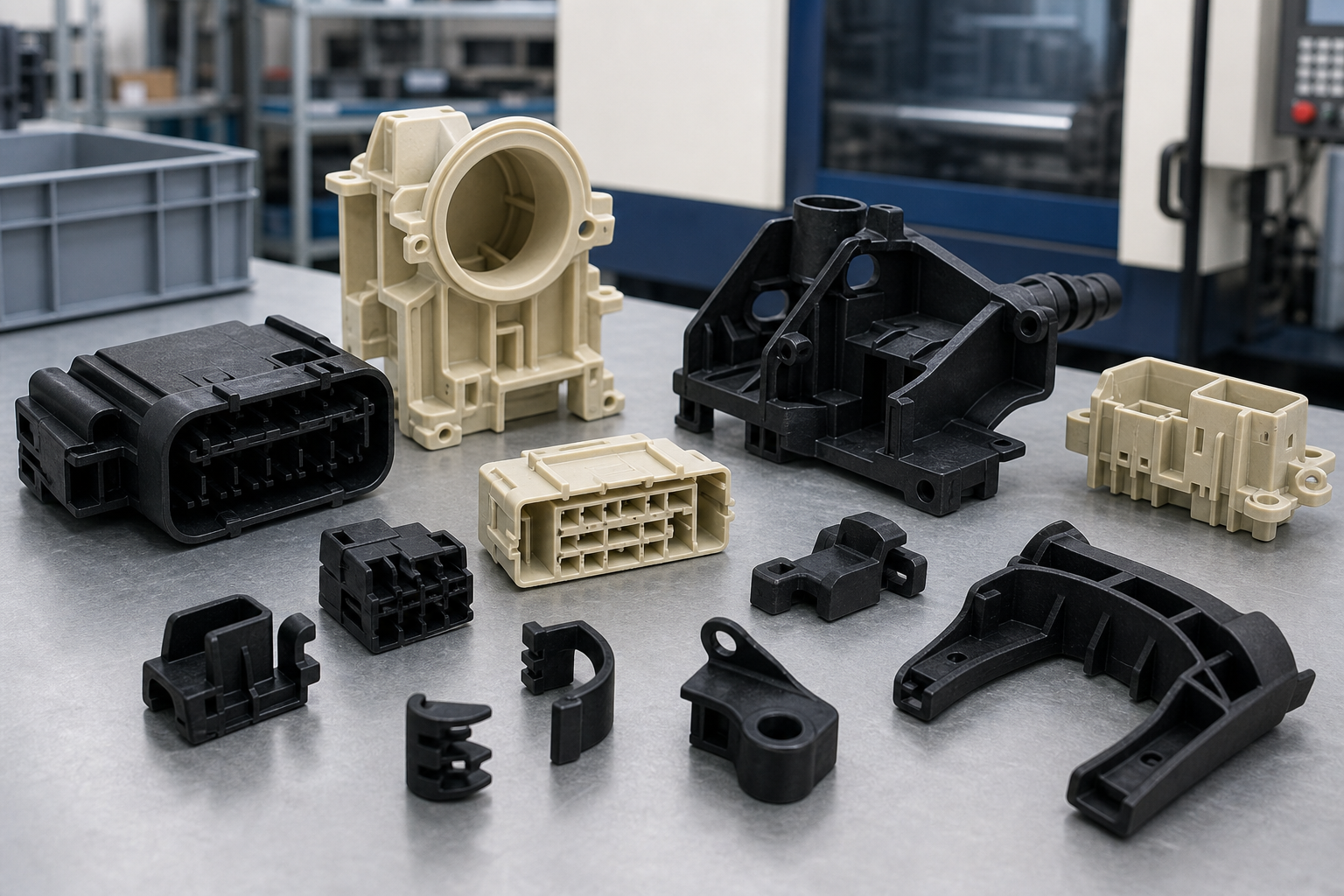
PA66 GF15 is usually screened when the part needs reinforcement, but the buyer still wants cleaner surfaces and more processing margin than a heavier glass-filled PA66 route.
This can matter on smaller molded parts, snap-fit features, electrical components, and housings where assembly tolerance matters but the part is not carrying the highest structural load in the product.
- Confirm operating temperature and heat-aging requirement
- Check stiffness target against snap-fit, impact, and assembly needs
- Review moisture-conditioning effect on final dimensions
- Compare standard, heat-stabilized, color, and flame-retardant variants if required
Material Selection Guide
| Selection point | PA66 GF15 fit | What the buyer should confirm |
|---|---|---|
| Moderate reinforcement | Higher rigidity than unfilled PA66 without moving too quickly into heavy-glass territory | Actual stiffness target and part load path |
| Surface and appearance | Can be easier to manage than higher-GF grades on visible or compact parts | Surface class, gate position, and visible-fiber tolerance |
| Dimensional control | Useful for molded parts that need more stability than base PA66 | Tolerance after drying and after conditioning |
| Processing balance | Often more forgiving than PA66 GF25 or GF30 on smaller tools | Drying, mold venting, wall thickness, and cycle stability |
Application Notes
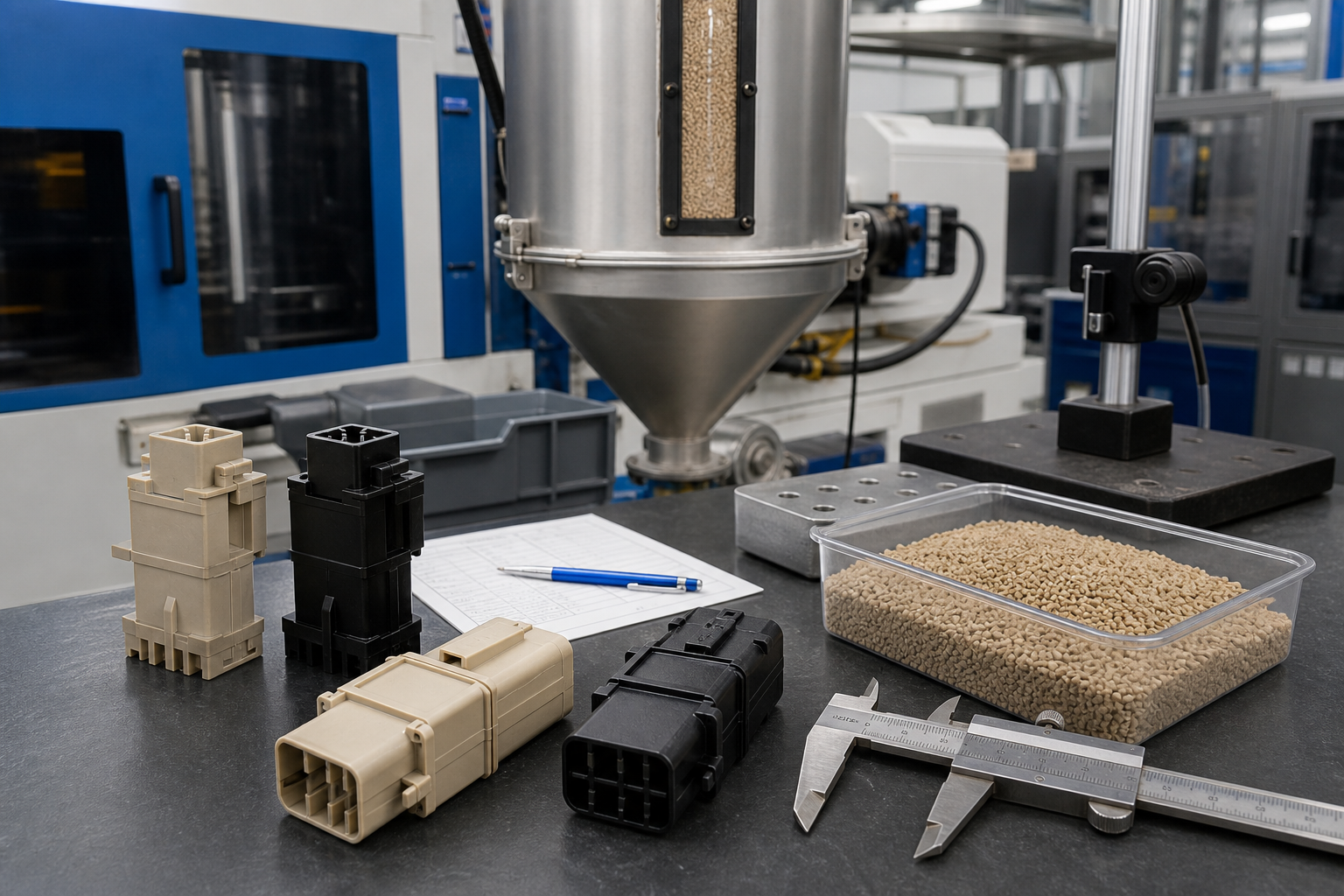
PA66 GF15 is commonly considered for electrical housings, terminal supports, clips, brackets, fan-related parts, and appliance structures that need a reinforced nylon 66 base without pushing glass content too high.
If the part will run hotter, hold higher load, or face tighter creep requirements, it is still worth comparing PA66 GF25 or GF30 before freezing the specification.
- Connector bodies, electrical supports, and technical clips
- Appliance internal structures and motor-adjacent molded parts
- Light structural automotive and industrial housings
- Custom grades with heat stabilization, color, or flame-retardant modification
Why Choose WanHan
Since 2005, WanHan has created engineering plastics for sustainable industrial applications, with independent R&D, production, and sales of functional polymer materials.
WanHan is certified with ISO 9001, ISO 14001, ISO 45001, and IATF 16949, and uses full sets of testing equipment to support strict quality control throughout production.
- Modified PA, PBT, PC/ABS, GF, FR, heat-stabilized, color, and custom compound support
- Material discussion based on part application, molding process, compliance route, and validation target
- Exported to 30+ countries for automotive, electronics, home appliance, and industrial applications
Request Material Support
Send the part application, service temperature, wall thickness, assembly tolerance, color target, compliance requirement, and the main performance issue to be solved first. WanHan can compare PA66 GF15 with unfilled PA66, PA66 GF25, or PA66 GF30.
Contact WanHan for material recommendation
Frequently Asked Questions
Q: What is PA66 GF15?
A: PA66 GF15 is nylon 66 reinforced with about 15% glass fiber for improved stiffness, heat resistance, and dimensional stability compared with unfilled PA66.
Q: Where is PA66 GF15 used?
A: It is often considered for connectors, clips, appliance structures, electrical supports, and molded housings that need moderate reinforcement.
Q: How does PA66 GF15 compare with PA66 GF30?
A: PA66 GF15 usually offers a more balanced molding and toughness profile, while PA66 GF30 is more suitable when the part needs higher stiffness and stronger structural support.
Q: Does PA66 GF15 need drying before molding?
A: Yes. Proper drying is important for stable processing, good surface quality, and consistent mechanical performance.
Q: Can WanHan customize PA66 GF15 grades?
A: Yes. WanHan can discuss heat-stabilized, flame-retardant, color, and application-specific PA66 GF15 compounds.
What Is PA66 GF13? Properties, Uses, and Buyer Selection Guide
What Is PA6 GF50? Properties, Uses, and High-Stiffness Part Guide
Related Article



