
PC/ABS vs PC: Material Differences for Housings and Structural Parts
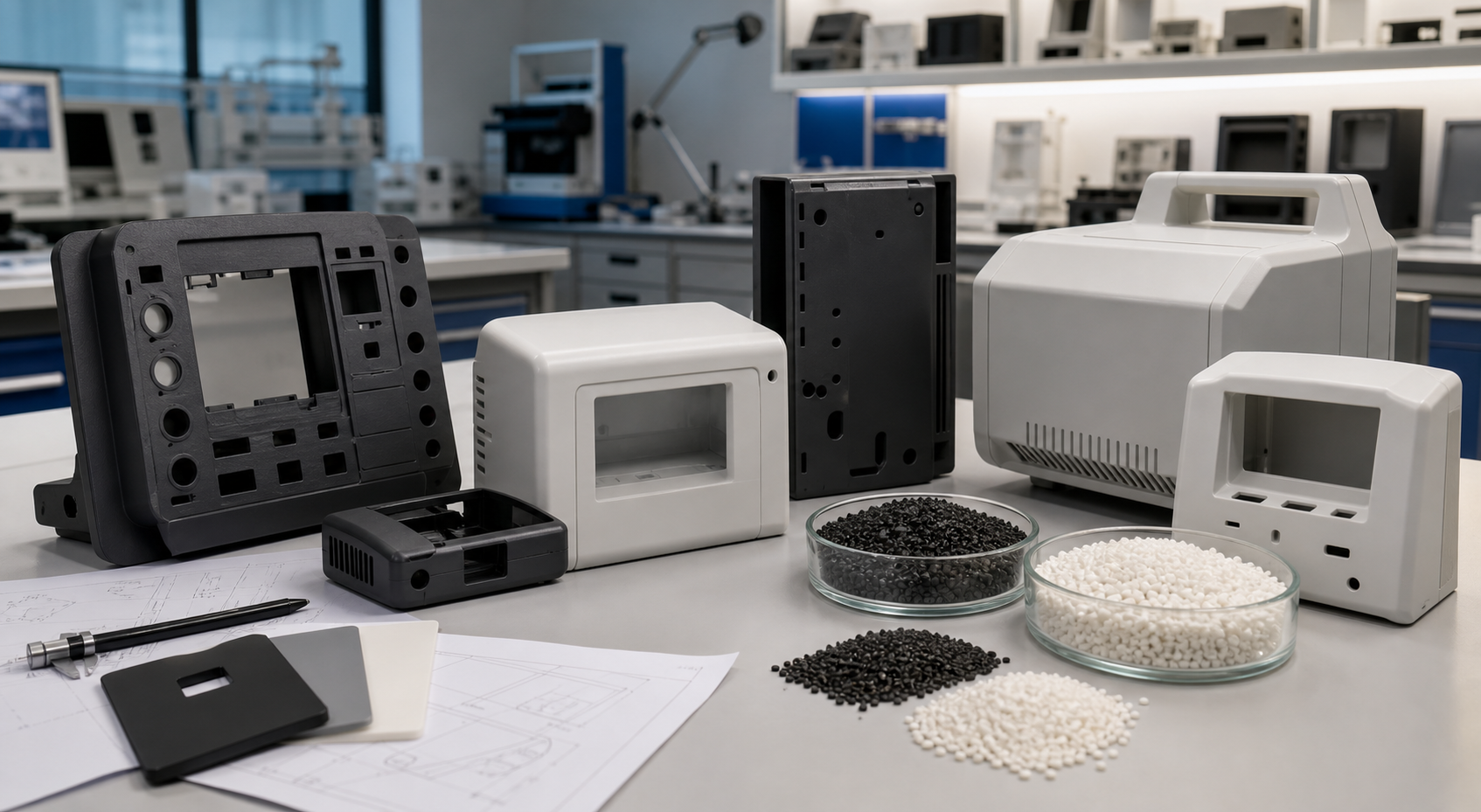
PC/ABS vs PC is a common material comparison for housings, covers, enclosures, and molded structural parts that need more than entry-level ABS, but may not require pure polycarbonate in every dimension.
In B2B sourcing, the real question is not which material sounds stronger on paper. The practical decision is whether the part is limited first by heat, impact, appearance, dimensional fit, wall thickness, or molding stability. That is where PC/ABS and PC begin to separate.
WanHan supports grade review for housings, appliance parts, automotive interior and functional covers, electrical enclosures, and industrial molded parts. Related routes include the published PC/ABS material guide, PC/ABS FR housing guide, and ABS material guide.
What Changes When a Buyer Compares PC/ABS with PC
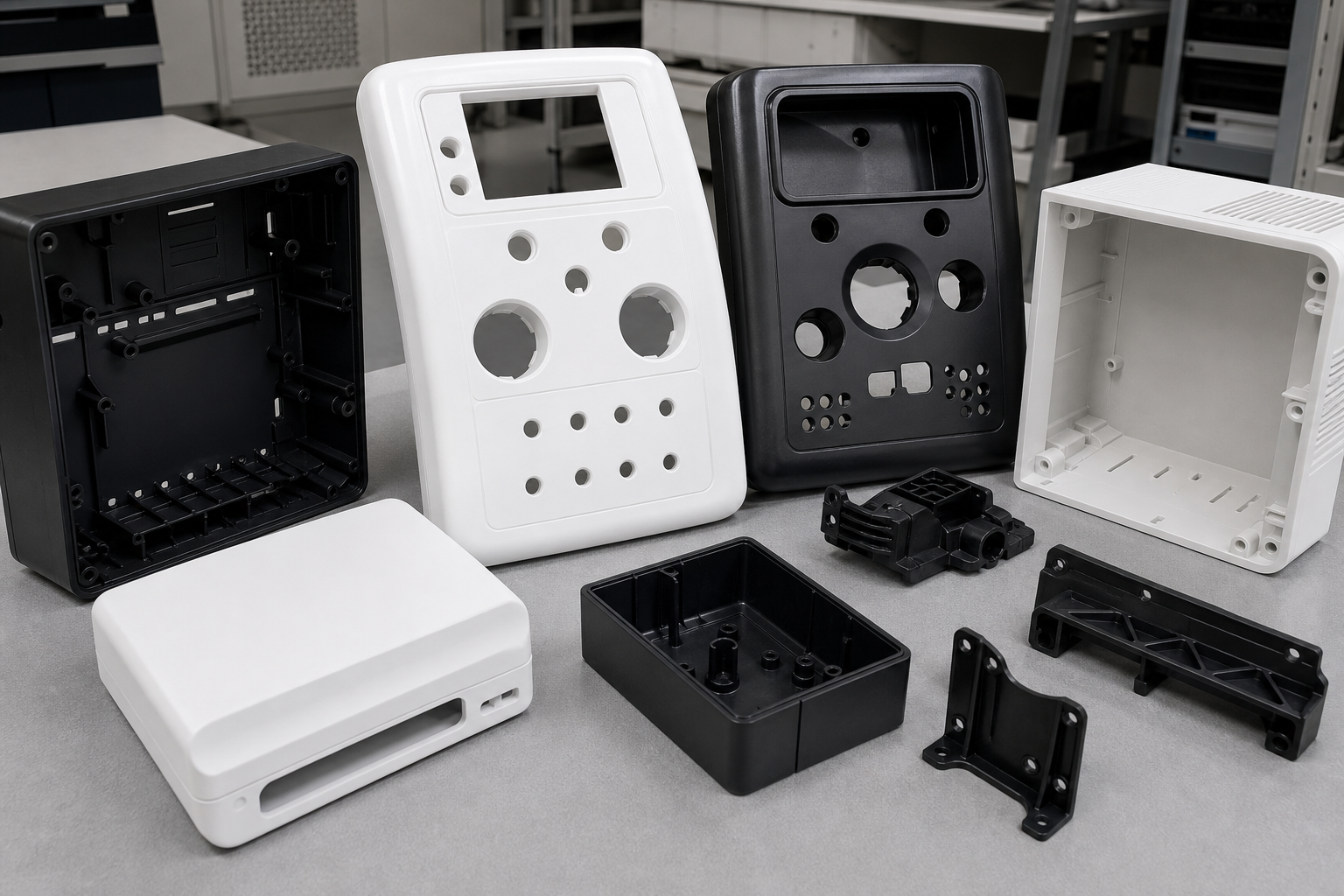
PC/ABS is a blend built to balance the toughness and heat contribution of polycarbonate with the easier processing and practical surface behavior of ABS. Pure PC is usually selected when the project pushes further on heat resistance, high toughness, or transparency-related use, although not every housing project needs that extra margin.
That is why PC/ABS often becomes the more commercial choice for visible housings and complex molded parts, while PC is kept for higher-demand impact or thermal conditions.
- PC/ABS often gives a better balance of toughness and moldability for housings
- PC usually holds a stronger position in higher heat and tougher service conditions
- Part geometry and finish target can shift the choice as much as raw resin data
- Wall thickness, rib design, and assembly stress should be reviewed before the grade is frozen
PC/ABS vs PC Selection Guide
| Selection point | PC/ABS | PC |
|---|---|---|
| Housing and enclosure balance | Often preferred for visible housings needing good toughness, finish, and practical molding | Used when the housing also needs stronger heat or impact margin |
| Heat demand | Useful for many appliance, electronics, and automotive interior conditions | Usually the stronger candidate when service temperature pushes higher |
| Processing behavior | Often easier to balance for complex molded housings | May need tighter process control depending on part and surface expectation |
| Surface and finish route | Commonly used when appearance and texture consistency matter | Can still perform well, but project finish goals must be checked in molded samples |
| Cost-performance tradeoff | Often chosen when the project needs a broader performance balance | Chosen when the part justifies stronger single-property performance |
Where PC/ABS Usually Wins
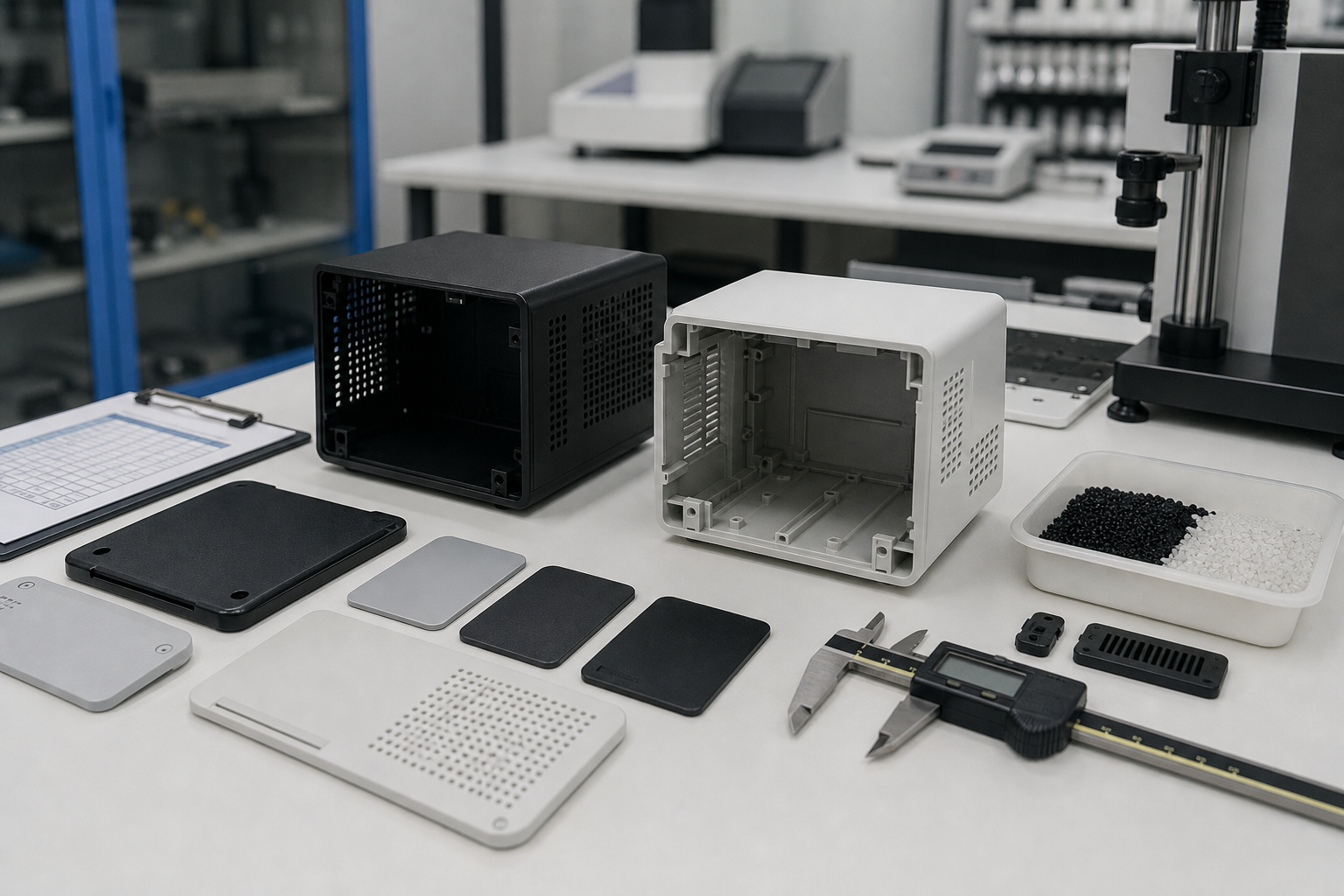
PC/ABS often makes more sense on appliance housings, control panels, consumer electronics shells, and automotive interior parts where the buyer wants a workable blend of toughness, heat resistance, appearance, and processability.
It can also be the better choice when the part geometry is more complicated and the molding team wants a more forgiving route than pure PC.
- Control panels, appliance housings, and visible electronics covers
- Automotive interior molded parts and functional bezels
- Industrial enclosures and equipment housings
- Flame-retardant PC/ABS routes for electrical enclosure projects
Where Pure PC Should Still Be Considered
PC should remain in the comparison when the part sees stronger heat, stronger impact requirement, or service conditions that push beyond what a balanced PC/ABS route comfortably handles.
The right choice usually becomes clear only after the part application, wall thickness, mounting method, and sample validation plan are reviewed together.
- Higher heat service conditions
- Impact-sensitive protective parts and stronger structural covers
- Projects where the material safety margin is more important than easier molding
- Applications requiring a narrower engineering tradeoff around performance extremes
Why Choose WanHan
Since 2005, WanHan has created engineering plastics for sustainable industrial applications, with independent R&D, production, and sales of functional polymer materials.
WanHan is certified with ISO 9001, ISO 14001, ISO 45001, and IATF 16949. Full sets of testing equipment support strict quality control for automotive, electronics, home appliance, and industrial applications that require stable modified plastic performance.
- PC/ABS, FR PC/ABS, ABS, PBT, PA, and other modified engineering plastic support
- Grade comparison based on application, finish target, heat level, and molding route
- Sampling and validation support for housings, enclosures, and visible technical parts
Request Material Support
Send the part application, service temperature, impact requirement, flame target if needed, visible-surface requirement, wall thickness, and current material options under review. WanHan can help compare PC/ABS with PC or other adjacent routes before tooling and production are locked.
Contact WanHan for PC/ABS vs PC material advice
Frequently Asked Questions
Q: What is the main difference between PC/ABS and PC?
A: PC/ABS is a balanced blend used for housings and molded parts that need practical toughness, finish quality, and moldability, while PC is more often chosen when the project needs stronger heat and impact margin.
Q: Is PC/ABS easier to mold than PC?
A: In many housing projects, yes. PC/ABS often provides a more manageable processing balance for complex molded enclosures and visible parts.
Q: When should a buyer choose PC instead of PC/ABS?
A: PC should stay in the comparison when service temperature, impact requirement, or material safety margin is higher than a balanced PC/ABS route is meant to carry.
Q: Is PC/ABS suitable for appliance and electronics housings?
A: Yes. It is commonly used for appliance housings, control panels, electronics covers, and similar molded enclosure parts.
Q: Can WanHan help compare FR PC/ABS and pure PC grades?
A: Yes. WanHan can compare them according to flame target, heat level, surface expectation, molding difficulty, and end-use requirements.
What Is PA66 GF30? Properties, Uses, and Selection Guide
Glass Filled Nylon: Properties, GF Grades, and Structural Applications
Related Article



