
Plastic Compound Color Matching: Pellets, Formulation, and Approval
Plastic Compound Color Matching: Pellets, Formulation, and Approval
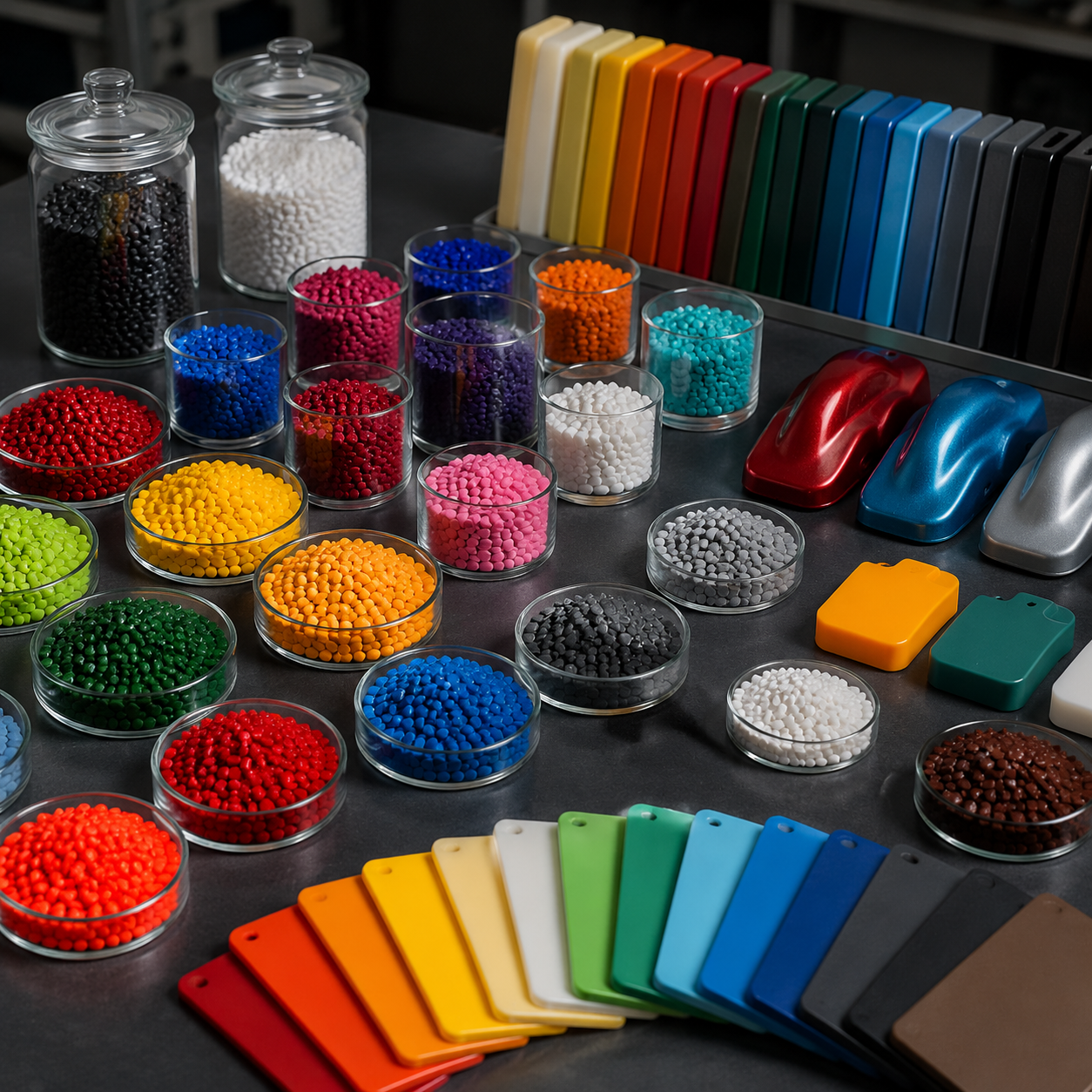
Plastic compound color matching is a material-development task that connects the resin formulation, additive package, molding process, and finished-part appearance. A color that looks correct in a pellet sample may shift after molding because of wall thickness, surface texture, processing temperature, gloss, or the base polymer.
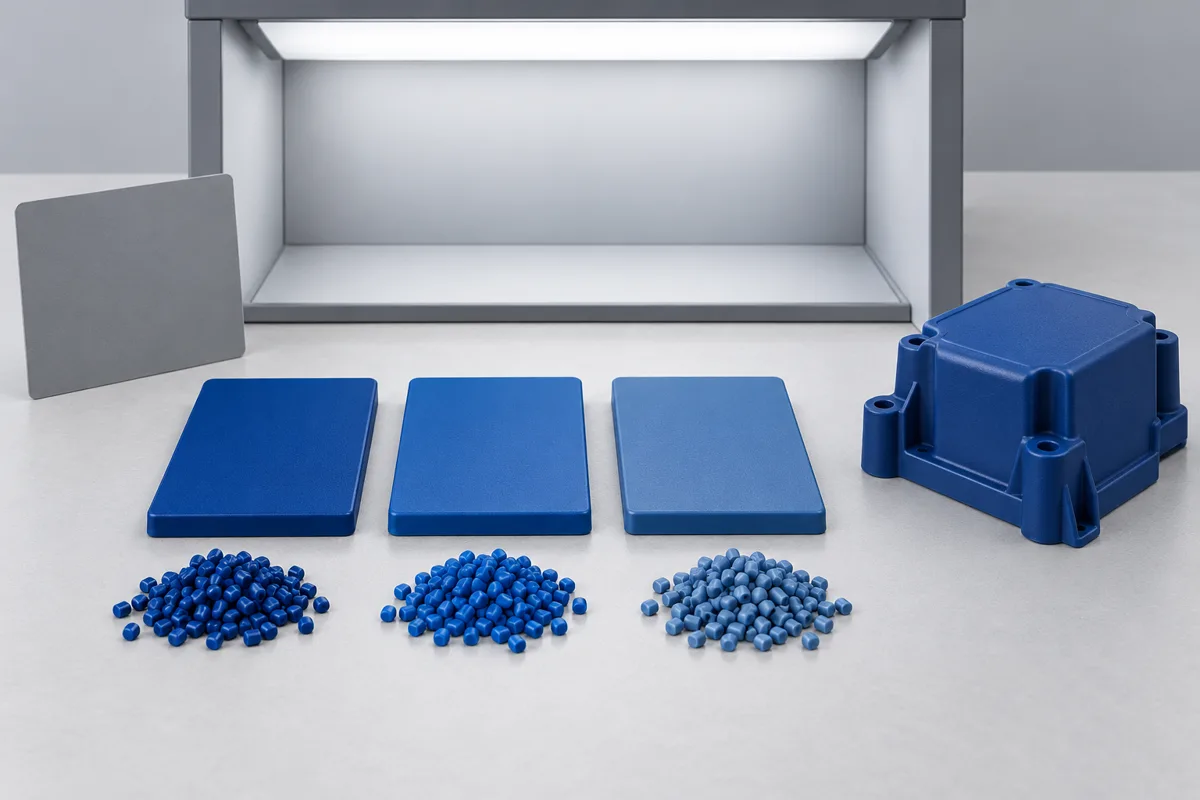
For custom plastic color programs, approval should cover the actual molded part rather than relying only on a small color chip or a visual description.

What Affects Color Matching
| Variable | Why It Matters |
|---|---|
| Base polymer | PA, PBT, PC/ABS, PPS, and other resins influence opacity, gloss, and color development |
| Additives and fillers | Glass fiber, mineral filler, flame retardants, and UV packages can change shade and surface |
| Part geometry | Wall thickness, weld lines, texture, and gate location can create visual variation |
| Processing conditions | Drying, melt temperature, residence time, and mold temperature affect final appearance |
Build a Color Approval Specification
Use a physical target whenever practical and agree on how it will be evaluated. A screen photograph or color code can communicate direction, but should not be the sole acceptance reference for a production order.
| Item to confirm | Information to record |
|---|---|
| Material system | Base grade, reinforcement, flame-retardant package and required product properties; color changes must remain compatible with the full specification. |
| Appearance reference | Approved physical sample or reference code, reference revision, opacity, thickness, texture and gloss. |
| Evaluation conditions | Agreed lighting, viewing procedure and, where used, measurement method and instrument settings. Check under the relevant light sources rather than assuming one light represents every use environment. |
| Acceptance criteria | Agreed visual and/or measured limits for the actual application. The parties must define these limits; there is no universal tolerance stated here. |
| Trial and approval | Sample grade, color, lot, molding conditions, evaluation results and written approval linked to the reference sample. |
Keep Color Approval Linked to the Production Order
After a plaque is accepted, check a representative part using the intended material and process. Confirm the appearance and the required functional properties together. For example, a requested color must not be treated as evidence that a flame rating or other requirement has been validated for that exact grade and color.
For repeat supply, retain an identified reference and agree on sample storage, revision control and change notification. If a mismatch appears, provide the grade, color and lot identification, reference sample, photographs taken under comparable conditions, and the drying and molding record. Confirm MOQ, sampling charges, packing and lead time with WanHan for the specific project.
See the custom compound development guide for project checkpoints and the batch quality-control guide for inspection and traceability records.
A Practical Approval Sequence
- Define the reference color, surface finish, lighting condition, and acceptable tolerance.
- Confirm the polymer, reinforcement, flame performance, and additive package before color development.
- Produce a molded plaque or representative part using the intended process.
- Approve the color against the finished-part requirement and retain a controlled reference sample.
- Record the formulation, lot information, packaging, and process conditions for repeat production.
For formulation options, review the custom engineering plastic compounds guide, PA6 GF10 product, and PA66 FR V0 product. WanHan also provides top-sale material options for comparison before a custom color is approved.
Why Choose WanHan for Engineering Plastic Projects?
Since 2005, WanHan has developed and manufactured functional engineering plastic compounds for automotive, electronics, home appliance, and industrial applications. Our independent R&D, production, and sales capabilities support practical material selection from initial specification through repeat production.
Our ISO 9001, ISO 14001, ISO 45001, and IATF 16949 management systems support controlled production and consistent testing. With in-house testing equipment, export experience across more than 30 countries, and application-focused technical support, WanHan helps teams reduce material-selection risk.
- Custom compounding for glass fiber, carbon fiber, mineral-filled, flame-retardant, impact-modified, anti-UV, and color-customized grades.
- Material matching support for OEM, injection molding, and product development programs.
- Technical data, samples, processing guidance, and quality documentation for validation.
- Export-ready packaging and responsive support for long-term supply projects.
Share the application, part drawing, annual volume, target properties, or existing grade through WanHan's inquiry page. Our team can recommend a suitable compound and arrange sample evaluation.
WanHan can coordinate color, base polymer, reinforcement, flame performance, packaging, and sample approval so the visual target remains linked to the actual compound specification.
Frequently Asked Questions
Q: What should I send for a custom plastic color inquiry?
A: Send the base polymer or reference grade, reinforcement and flame requirements, a physical color reference where available, part drawing or sample, wall thickness, texture and gloss target. Include the intended processing method, service environment, estimated quantity and required documents.
Q: Can a color code alone guarantee the molded-part color?
A: No. A color code is a starting reference. The polymer, additives, opacity, thickness, surface finish and processing can affect the appearance. Agree on a physical molded reference and the viewing or measurement conditions before approval.
Q: How should color tolerances be agreed?
A: Agree on the reference sample, evaluation light sources, surface and thickness, measurement method and instrument settings where used. Define the acceptance limit with the buyer and supplier for that application; do not apply an unspecified universal color-difference limit.
Q: Why should color be checked on the finished part?
A: Pellets and flat plaques may not reproduce a part’s wall thickness, texture, gloss or flow marks. A representative molded part helps confirm whether the approved formulation and process meet the intended appearance requirement.
Q: What should be recorded for repeat orders of a custom color?
A: Record the approved grade, color reference and revision, sample or lot identity, evaluation conditions, acceptance criteria and relevant molding settings. Confirm sample arrangements, MOQ and lead time for the specific formulation, and agree when a material or process change requires new approval.
Engineering Plastic Pellets Quality Control and Batch Consistency
PA12 vs PA11: Material Differences and Application Guide
Related Article



