
Engineering Plastic Pellets Quality Control and Batch Consistency
Engineering Plastic Pellets Quality Control and Batch Consistency
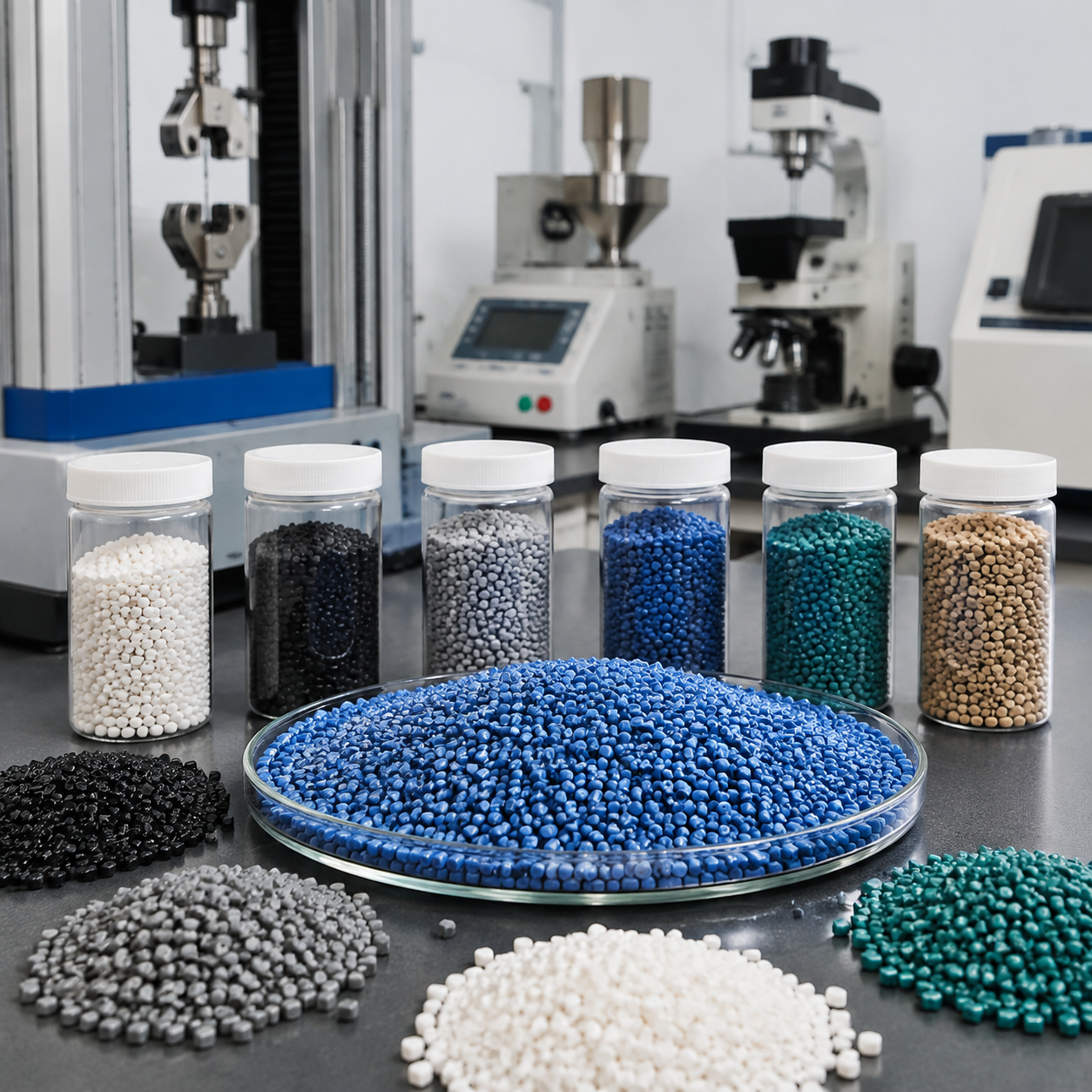
Engineering plastic pellets quality control affects molding stability, finished-part performance, and repeat-order reliability. For reinforced, flame-retardant, or color-customized compounds, quality is not represented by one data-sheet number. It depends on material identity, filler dispersion, moisture, process control, testing, packaging, and lot traceability.
A clear control system helps the material specification remain consistent from the first sample through production replenishment.
Key Quality-Control Stages
| Stage | Typical Control Focus |
|---|---|
| Incoming materials | Polymer identity, additive specification, supplier documentation, and storage condition |
| Compounding | Feed ratio, temperature profile, screw conditions, dispersion, and pellet appearance |
| Testing | Selected mechanical, thermal, electrical, flame, moisture, and appearance checks |
| Packaging and release | Dryness, bag integrity, lot marking, records, and shipment traceability |
Agree on the Release Specification Before Ordering
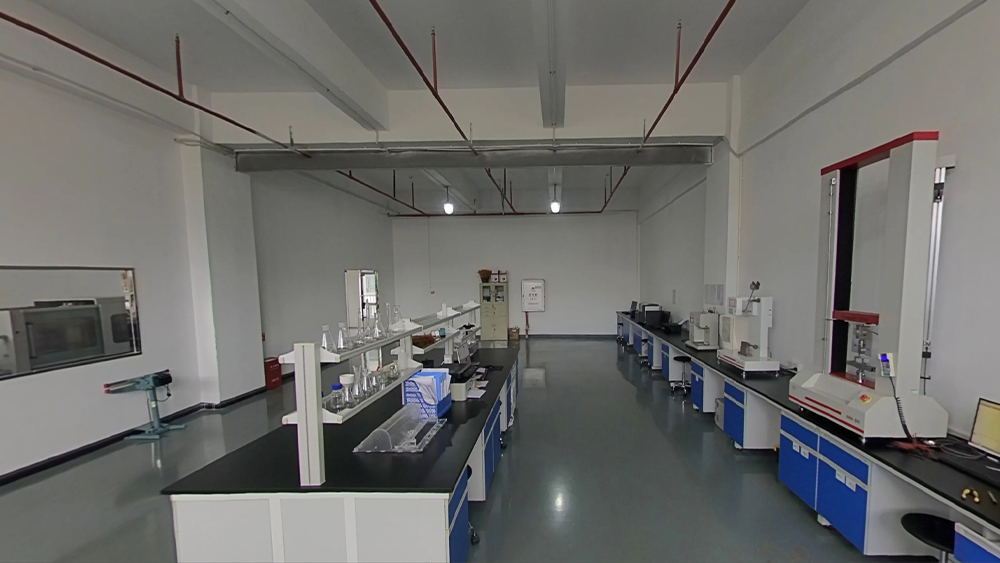
A useful quality agreement separates typical material data from the acceptance limits for the ordered grade. Confirm the exact grade and color, test method, specimen preparation, conditioning, sampling frequency and reporting requirements with the supplier. The inspection plan depends on the application; a laboratory photograph does not establish that every test is performed on every lot.
| Document or record | Buyer’s check |
|---|---|
| Technical data sheet (TDS) | Check grade identity, revision and test conditions. Confirm which values are typical reference data and which, if any, are agreed release limits. |
| Batch certificate or inspection report | Ask which results are measured for the supplied lot, which methods are used and how the lot is identified. |
| Package label | Match the grade, color and lot number to the purchase order and delivery records; confirm any agreed storage instructions. |
| Approved sample and trial record | Record sample identity and molding conditions so later production can be compared on the same basis. |
| Change notification | Agree when formulation, raw-material, process or manufacturing-site changes require notification or revalidation. |
Receiving a New Lot and Reporting a Variation
- Check package integrity and compare the label and accompanying records with the order.
- Use the agreed storage and drying instructions for the specific grade before the molding trial.
- Compare results using consistent processing, specimen preparation and conditioning; record any differences.
- If an issue appears, provide the grade, color, lot number, label photographs, process settings, drying history, defect photographs and measured results. Retain the relevant material and parts according to the agreed investigation procedure.
For the manufacturing stages, see WanHan’s production workflow. For wider sourcing approval, use the supplier qualification checklist.
Why Batch Consistency Matters
- Small changes in moisture can alter nylon processing, dimensions, and test results.
- Filler dispersion affects stiffness, surface appearance, shrinkage, and part reliability.
- Flame-retardant and color packages need controlled dosing to keep the approved balance.
- Traceable lots make it easier to investigate molding variation or a field issue.
For supplier comparison, review the engineering resin supplier guide, engineering plastic pellets guide, and engineering plastic manufacturer page. For application-specific examples, see PA66 FR V0 and PBT GF20.
Why Choose WanHan for Engineering Plastic Projects?
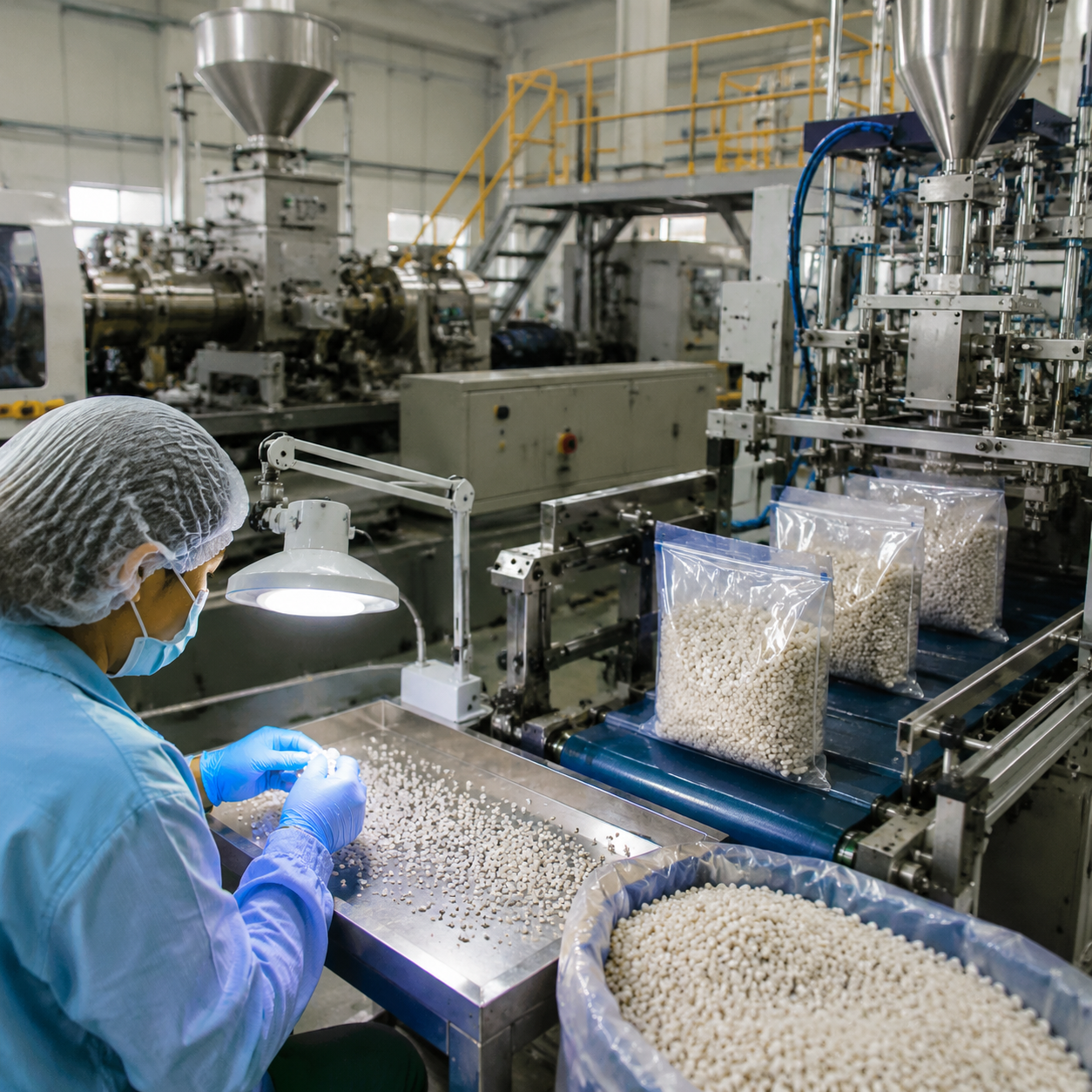
Since 2005, WanHan has developed and manufactured functional engineering plastic compounds for automotive, electronics, home appliance, and industrial applications. Our independent R&D, production, and sales capabilities support practical material selection from initial specification through repeat production.
Our ISO 9001, ISO 14001, ISO 45001, and IATF 16949 management systems support controlled production and consistent testing. With in-house testing equipment, export experience across more than 30 countries, and application-focused technical support, WanHan helps teams reduce material-selection risk.
- Custom compounding for glass fiber, carbon fiber, mineral-filled, flame-retardant, impact-modified, anti-UV, and color-customized grades.
- Material matching support for OEM, injection molding, and product development programs.
- Technical data, samples, processing guidance, and quality documentation for validation.
- Export-ready packaging and responsive support for long-term supply projects.
Share the application, part drawing, annual volume, target properties, or existing grade through WanHan's inquiry page. Our team can recommend a suitable compound and arrange sample evaluation.
WanHan uses certified management systems, in-house testing equipment, controlled production, and lot-focused documentation to support more consistent engineering plastic supply.
Frequently Asked Questions
Q: What should a plastic pellet quality agreement specify?
A: Specify the exact grade and color, acceptance limits, test methods, specimen preparation and conditioning, sampling frequency, required records and lot identification. Confirm the inspection plan for the actual application before ordering.
Q: Is a TDS the same as a batch certificate of analysis?
A: No. A technical data sheet generally describes a grade using stated test conditions and often typical values. A batch certificate or inspection report relates to an identified lot and its agreed reporting scope. Ask which results are measured for that lot and which values are reference information.
Q: How should a buyer compare two lots fairly?
A: Keep the processing conditions, drying procedure, specimen preparation, conditioning and test method consistent. Record the grade, color, lot number and results so a material difference can be investigated alongside possible process or measurement differences.
Q: What information helps investigate a pellet quality complaint?
A: Provide the purchase and delivery references, grade, color, lot number, package-label photographs, drying history, molding settings, defect photographs and measured results. Keep relevant material and molded parts available for the agreed investigation.
Q: Can WanHan discuss batch quality documents before an order?
A: Yes. Send the proposed grade or application and the documents you need. Confirm the available TDS, sample information, batch reporting scope and any grade-specific compliance documents with WanHan before sample approval or ordering.
Plastic Compound Supplier Qualification: A Practical Technical Checklist
Plastic Compound Color Matching: Pellets, Formulation, and Approval
Related Article



