The Complete Engineer's Guide to PA66 (Nylon 66): Properties, Comparison & Material Selection
1. What is PA66 (Nylon 66) and Why Does Its History Matter?
PA66 is a semi-crystalline thermoplastic polymer synthesized via the polycondensation of hexamethylenediamine and adipic acid. This structure grants it an exceptional balance of properties: high mechanical strength, excellent rigidity, good chemical resistance, and a high melting point.
Its historical significance cannot be overstated. The Remington Nylon 66, introduced in 1959, was the first major consumer product to feature a PA66-based stock (DuPont's Zytel). This application was a bold proof of concept, demonstrating that engineered plastics could withstand significant mechanical stress, impact, and environmental exposure. It paved the way for PA66's entry into thousands of demanding engineering applications, moving it from the realm of novelty to a trusted material for critical components.
2. PA66 vs. Nylon PA6: What are the Key Differences?
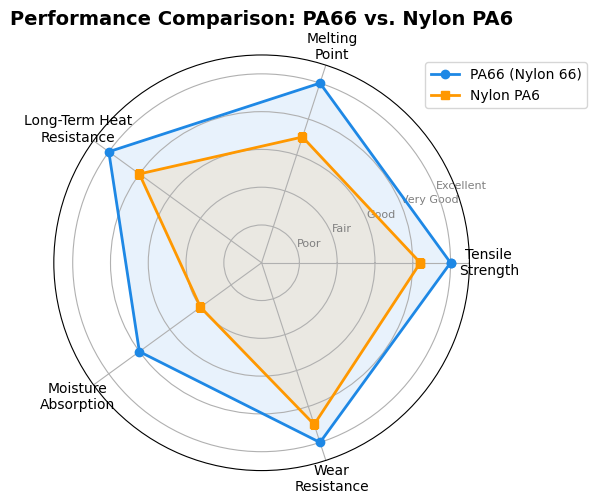
While both are polyamides (nylons), PA66 and PA6 have distinct chemical structures, leading to different performance profiles crucial for material selection.
-
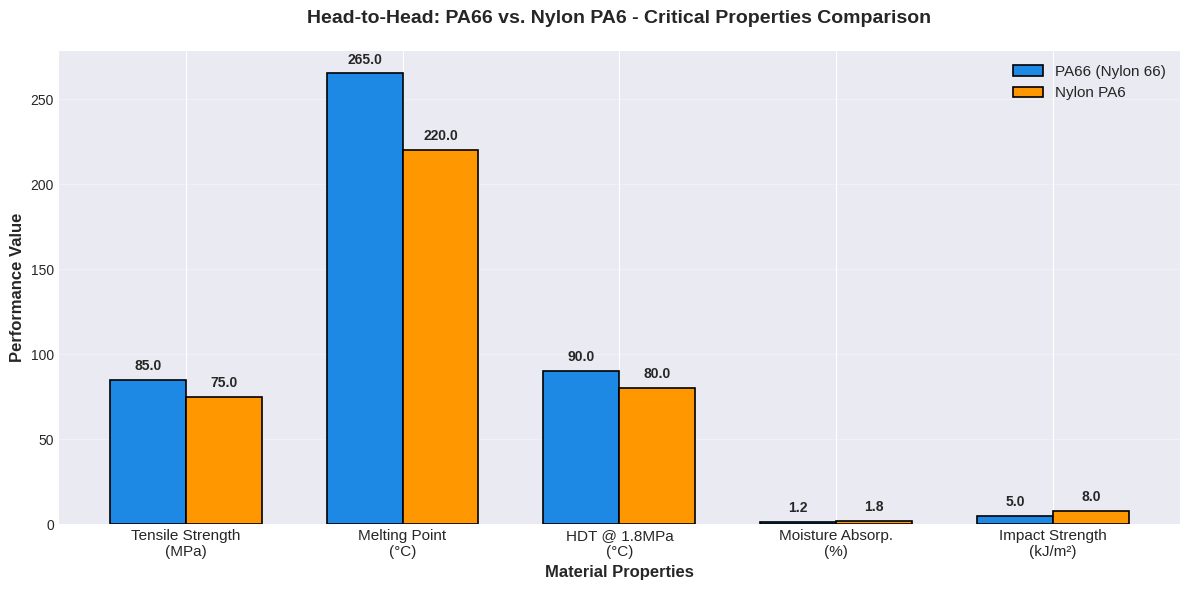
Heat Resistance: PA66 has a higher melting point (~265°C) compared to PA6 (~220°C). This makes PA66 the default choice for applications exposed to higher continuous operating temperatures.
-
Mechanical Properties: In its unreinforced state, PA66 generally offers higher strength and stiffness, especially at elevated temperatures.
-
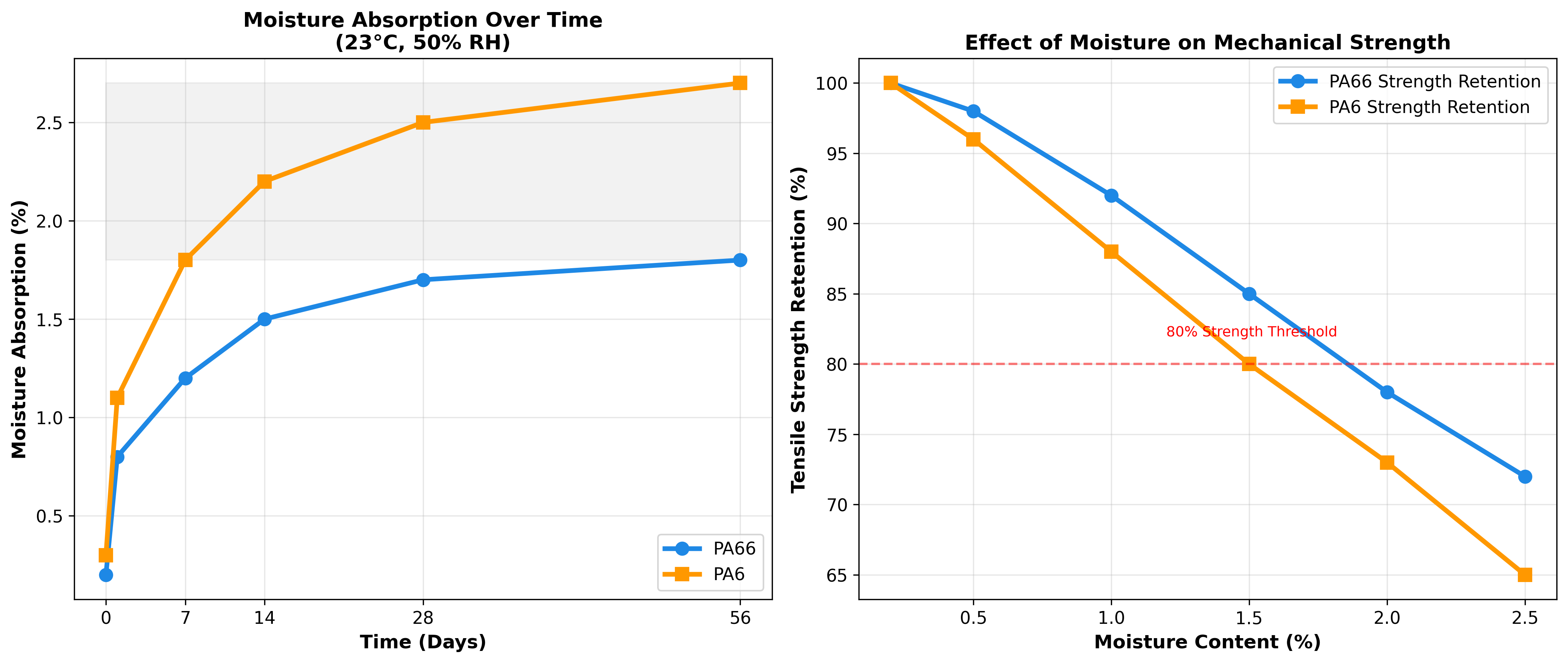
Moisture Absorption: PA6 absorbs moisture more readily and quickly than PA66. While moisture can improve the toughness of both, it reduces strength and dimensional stability. PA66's lower absorption rate provides better dimensional stability in humid environments.
-
Processability & Cost: PA6 often has a slightly wider processing window and can be more cost-effective in certain formulations.
3. What are the Primary Advantages and Applications of PA66?
PA66's popularity stems from its well-rounded property portfolio:
-
High Strength & Stiffness: Excellent for structural components under load.
-
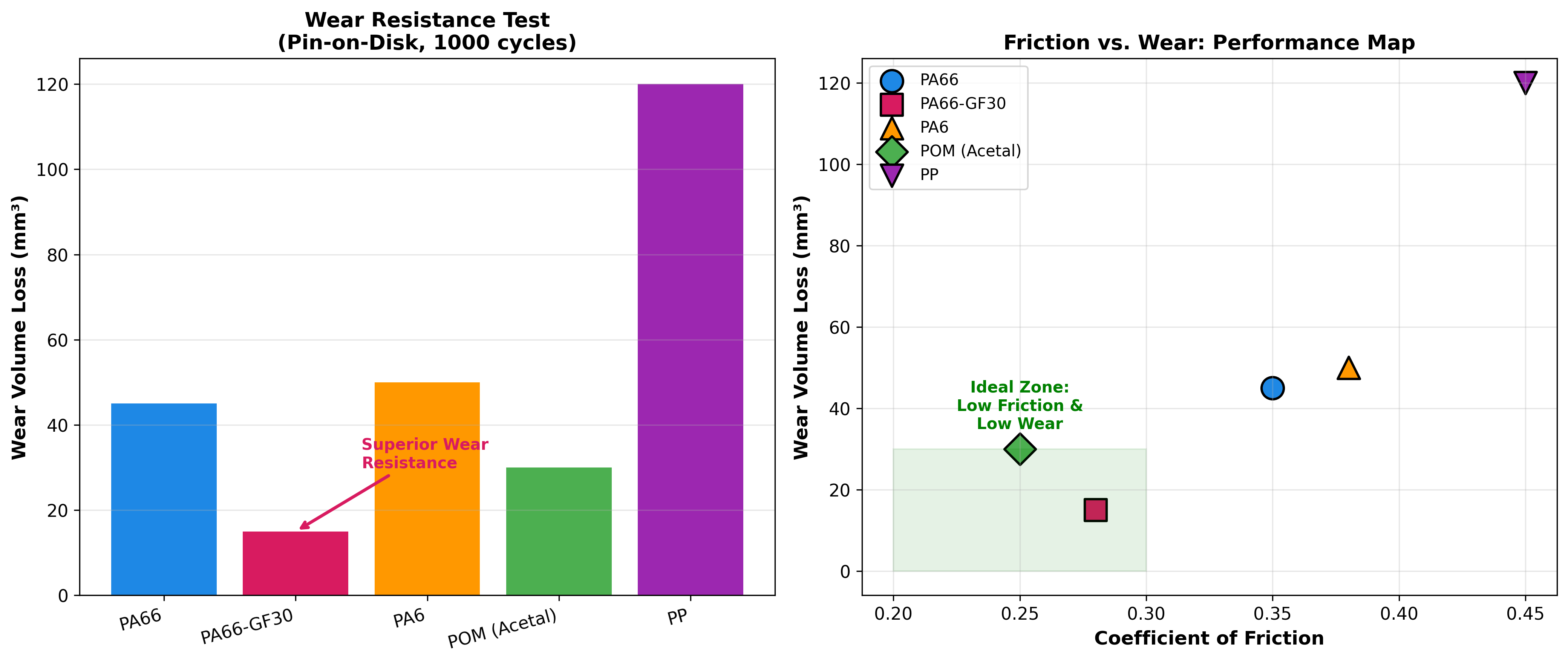
Good Fatigue Resistance: Withstands dynamic loading over long periods, ideal for gears and moving parts.
-
Resistance to Oils and Fuels: A key reason for its dominance in automotive under-hood applications.
-
Excellent Wear & Abrasion Resistance: Performs well in bearings, guides, and friction surfaces.
Typical Applications: Automotive radiator end tanks, engine covers, electrical connectors, industrial gears, conveyor belt scrapers, and sportswear fibers.
4. How Does Reinforcement Like GF30 Transform PA66?
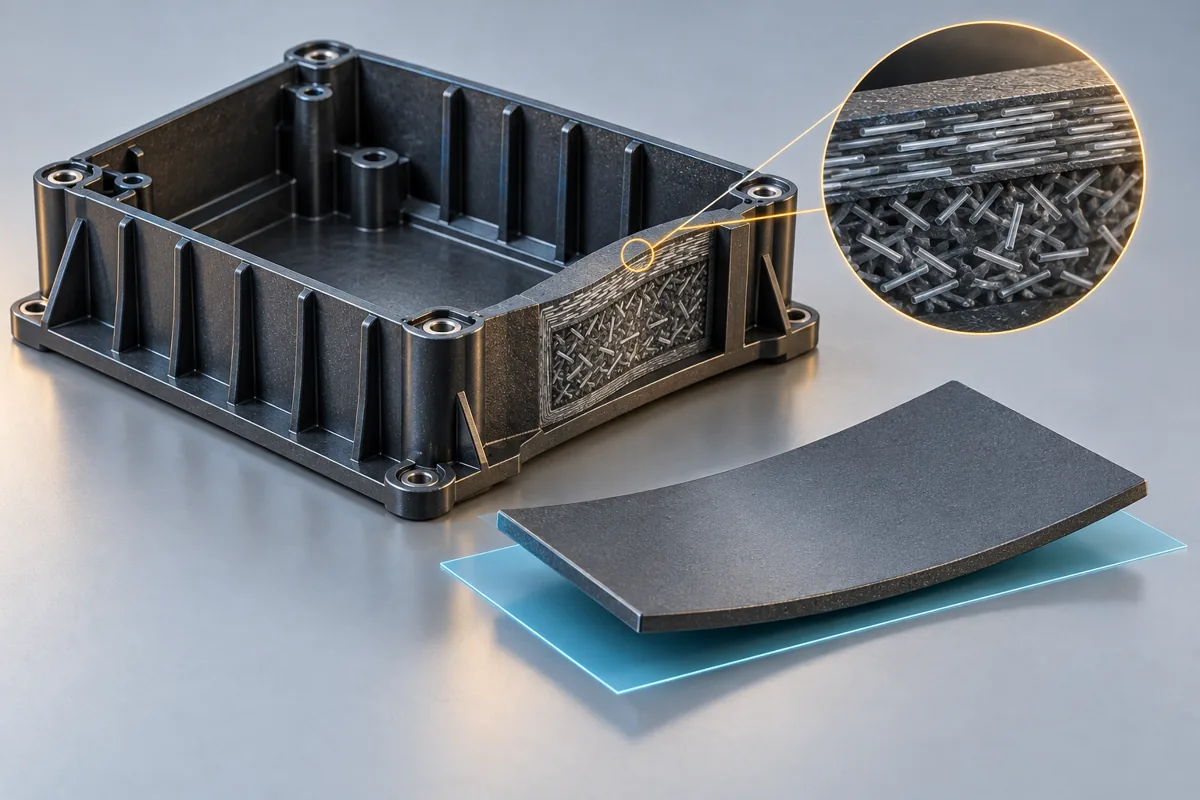
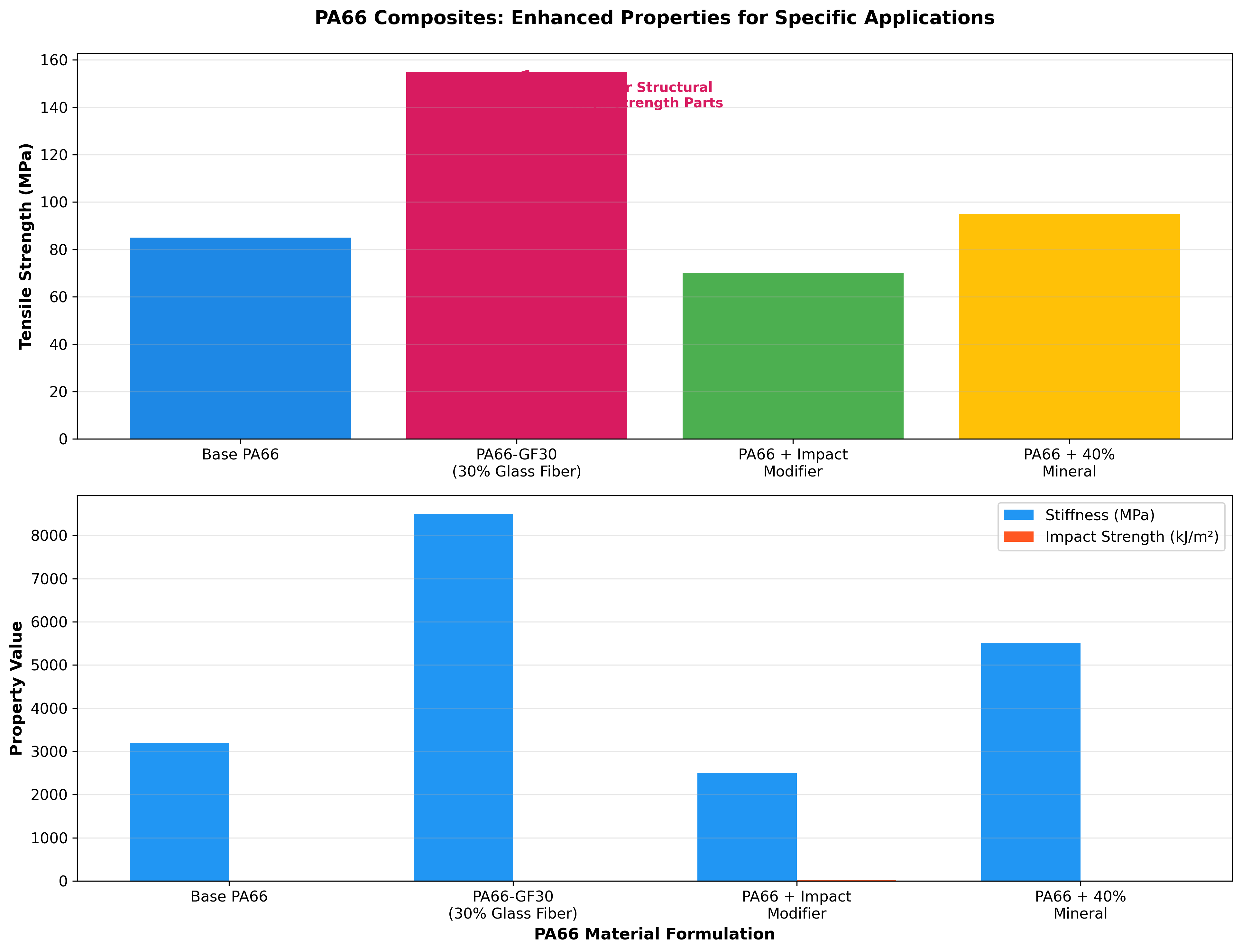
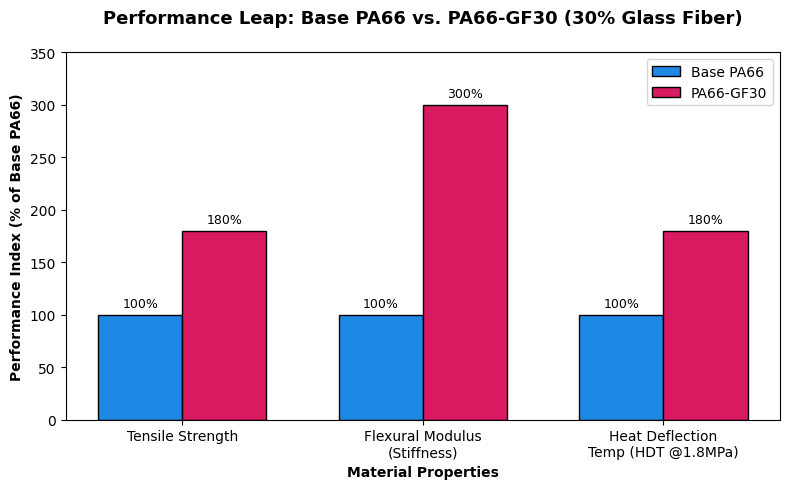
Base polymers have limits. Reinforcing PA66 with additives creates specialized materials for extreme demands. PA66-GF30, with 30% glass fiber, is the most common and transformative composite.
-
Dramatically Enhanced Stiffness & Strength: Glass fibers carry the load, increasing tensile strength and rigidity significantly.
-
Improved Thermal Stability: The Heat Deflection Temperature (HDT) increases substantially, allowing use at much higher temperatures under load.
-
Reduced Moisture Sensitivity & Creep: Enhanced dimensional stability under long-term stress.
-
Downside: Increased anisotropy (properties differ with flow direction) and reduced surface finish compared to unreinforced grades.
5. What are the Temperature and Chemical Limits of PA66?
Understanding a material's operational window is critical for design safety.
-
Continuous Service Temperature: PA66 can typically operate continuously in the 85°C to 120°C range, with short-term peaks higher. PA66-GF30 extends this range further.
-
Melting Point: Approximately 260-265°C.
-
Chemical Resistance: PA66 exhibits good resistance to hydrocarbons, oils, and fuels. It is attacked by strong acids, bases, and oxidizing agents. Its resistance is generally superior to PA6 in many chemical environments.
6. Is PA66 Sustainable and Recyclable?
Sustainability is a key modern concern. PA66 is a thermoplastic, meaning it can be remelted and reprocessed. Technically, it is recyclable. The challenge lies in establishing efficient collection, sorting, and cleaning streams for post-consumer engineering plastic parts. Many manufacturers use in-house regrind from production scrap. Bio-based routes for producing the precursors of PA66 are also an active area of development, aiming to reduce reliance on fossil fuels.
7. How to Choose: PA66, PA6, or PA66-GF30? A Practical Selection Guide.
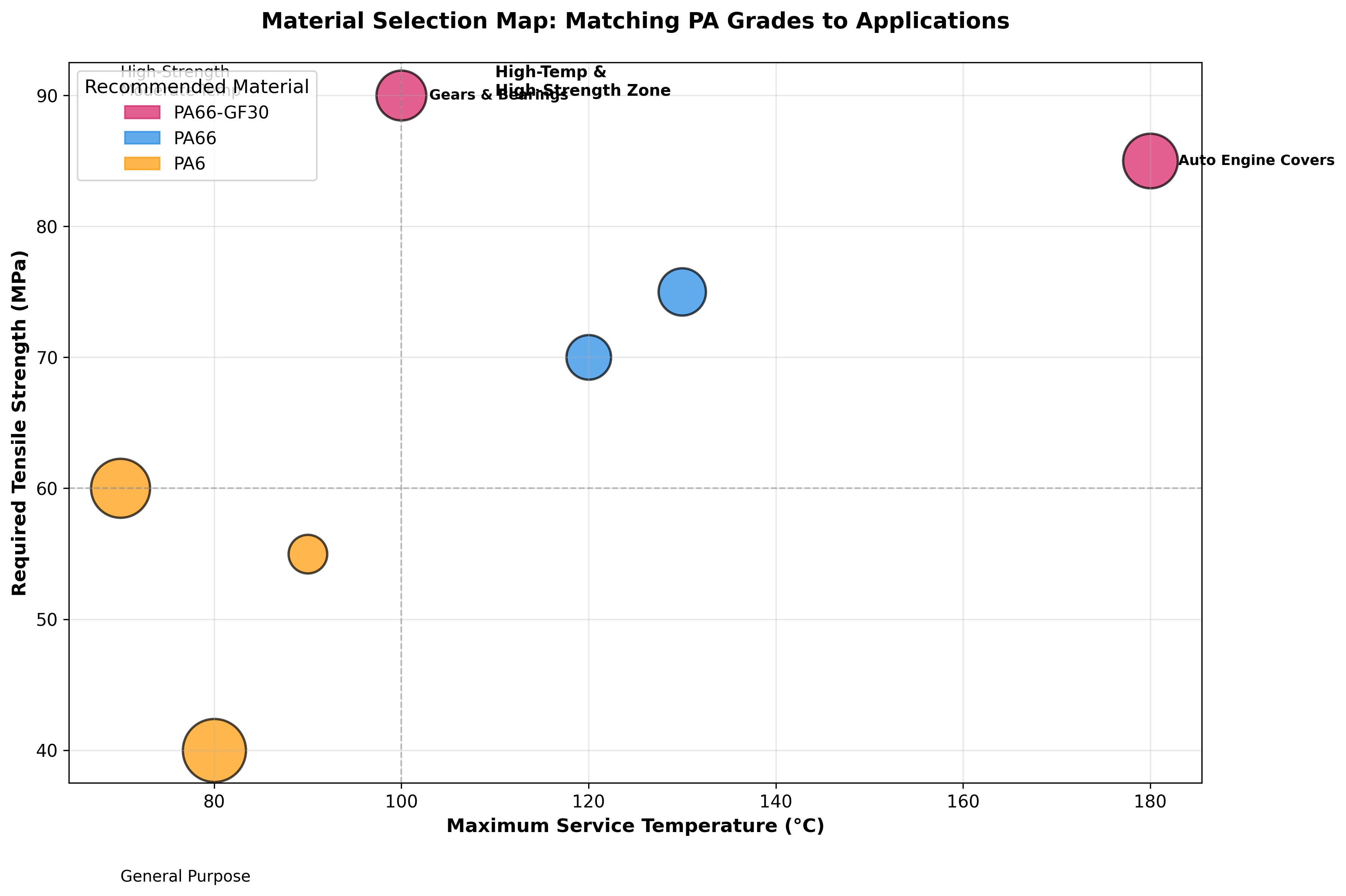
The choice depends on your priority hierarchy:
-
Choose Standard PA66 when: You need an optimal balance of heat resistance, strength, and chemical resistance for cost-sensitive technical parts (e.g., connectors, housings).
-
Choose PA66-GF30 when: Your design demands maximum stiffness, highest heat resistance under load, or metal replacement for structural components (e.g., engine covers, drone arms, load-bearing gears).
-
Choose Nylon PA6 when: Priority is on excellent toughness, impact resistance, faster cycle times, and cost-efficiency in less thermally demanding environments (e.g., consumer appliance parts, snap-fit clips).
Conclusion
From its historic validation in the Remington Nylon 66 to its indispensable role in today's electric vehicles and smart devices, PA66 has proven its mettle. By understanding its core properties, how it differs from Nylon PA6, and the transformative effect of reinforcements like PA66-GF30, engineers and designers can make informed, optimized material choices.
Leveraging modern tools like AI-generated infographics can further clarify these technical distinctions, making communication with teams and clients more effective. Whether you're replacing metal to reduce weight or selecting a polymer for a harsh environment, the PA66 family offers a robust, reliable, and high-performance solution.
PA66 GF50 Fiber Orientation and Warpage: A Part Design Guide
What is virgin PA66?
Related Article