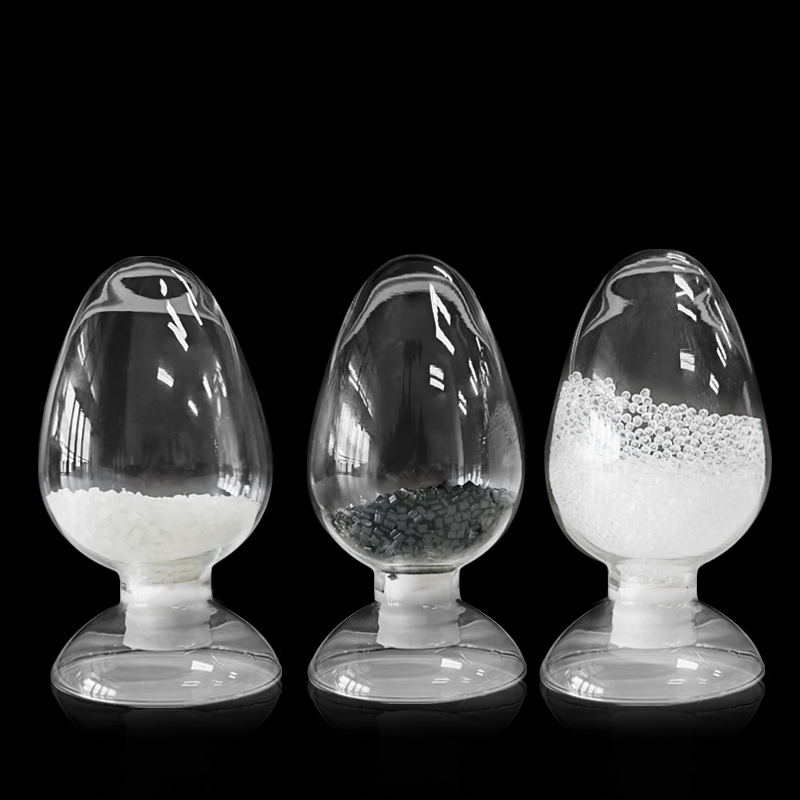
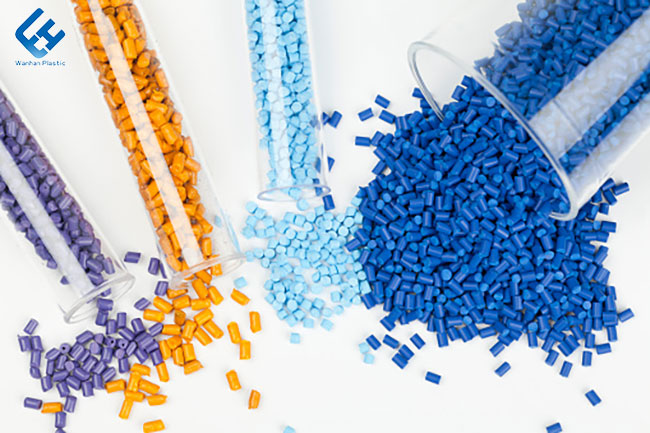
PA66 GF33 Properties, Applications and Processing Guide
PA66 GF33 is a nylon 66 compound reinforced with approximately 33% glass fiber. The reinforcement level is commonly selected when a molded part needs a practical balance of stiffness, strength, heat resistance and dimensional control. Actual performance depends on the resin system, additives, moisture condition, molding parameters and fiber orientation, so final approval should always use the current data sheet for the exact grade and tests on molded parts.
PA66 GF33 Property Profile
The table below explains the main selection areas without treating one formulation as representative of every PA66 GF33 grade.
| Selection area | Typical contribution | What to validate |
|---|---|---|
| Mechanical performance | Higher stiffness and load-bearing capability than unfilled PA66 | Load direction, weld lines, impact demand and conditioning state |
| Thermal performance | Improved retention of shape and rigidity at elevated temperature | Continuous and peak temperature, load and exposure time |
| Dimensional control | Lower shrinkage and better rigidity than unfilled nylon | Fiber orientation, wall thickness, gate location, warpage and tolerance |
| Processing | Suitable for injection-molded structural components when correctly dried and processed | Drying, melt residence, tool wear, venting and surface requirements |
Published PA66-WHG33A Material Data
The values below are published on WanHan's PA66-WHG33A product page for this exact 33% glass-fiber-reinforced model. They are not universal PA66 GF33 specifications. Confirm the current controlled TDS, test conditions and molded-part performance before final approval.
| Property | Test method | Unit | Published value |
|---|---|---|---|
| Tensile strength | ISO 527 | MPa | 180 |
| Elongation at break | ISO 527 | % | 9 |
| Flexural strength | ISO 178 | MPa | 290 |
| Flexural modulus | ISO 178 | MPa | 12,000 |
| Izod notched impact strength | ISO 180 | kJ/m² | 18 |
| Heat deflection temperature | ISO 75 | °C | 220 |
| Melt flow index | ISO 1133 | g/10 min | 20 |
| Density | ISO 895 (as published) | g/cm³ | 1.52 |
| Molding shrinkage | ISO 2577 | % | 0.5 |
| Flammability at 1.6 mm | UL 94 | Class | HB |
View the PA66-WHG33A product page and request the current TDS. Test conditions and the current document revision should be confirmed before design or procurement approval.
Typical PA66 GF33 Applications
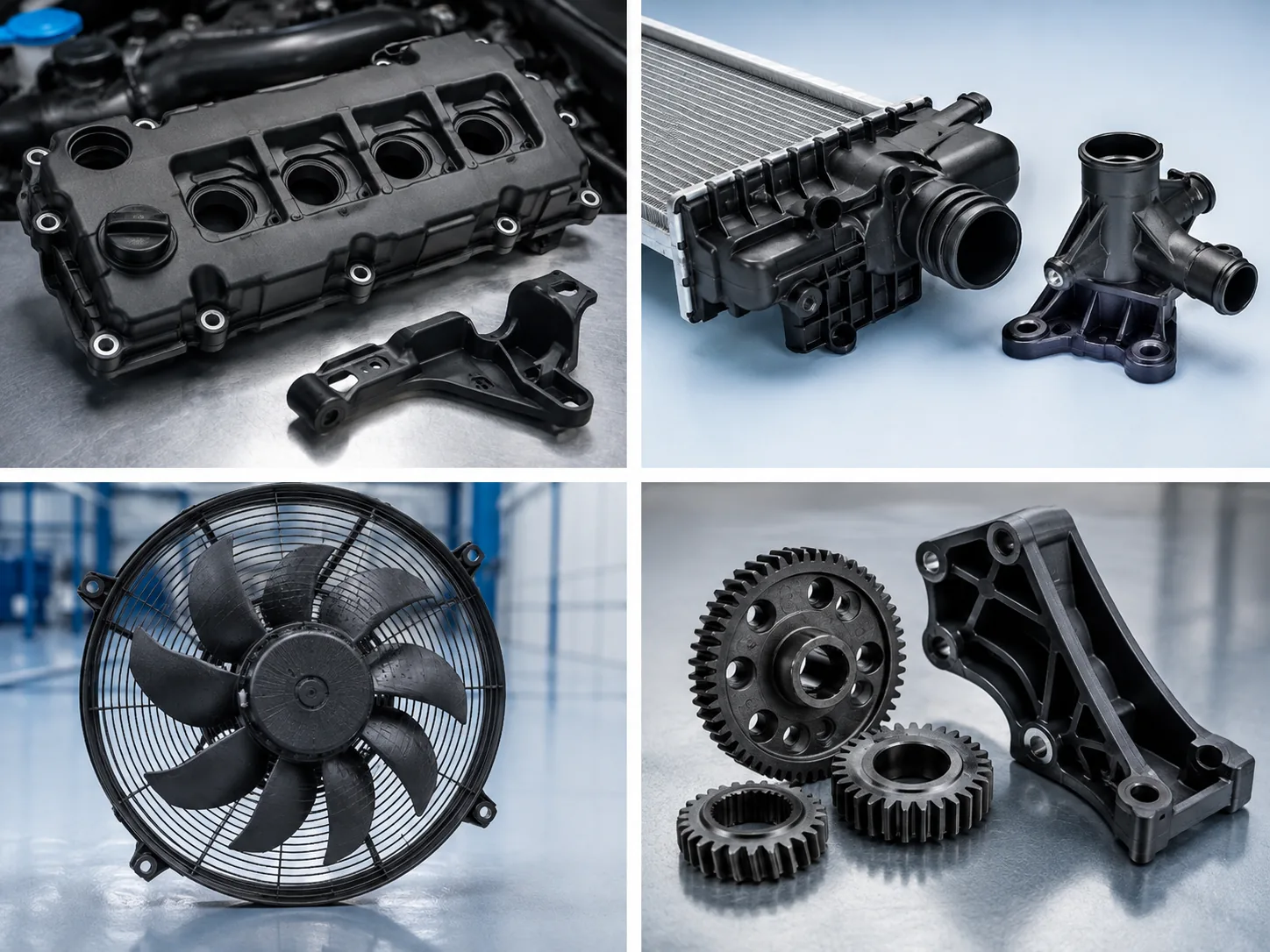
Brackets, fan shrouds, cooling-system supports and under-hood components that require rigidity and heat resistance.
Connector housings, terminal supports and frames where dimensional control and mechanical stability are important.
Motor supports, fan housings and structural parts exposed to repeated loading and moderate heat.
Gears, bearing supports, guards and load-bearing housings subject to application-specific validation.
PA66 GF30, GF33 and GF35: How to Compare
A higher nominal glass-fiber percentage does not automatically make a material better for every component. PA66 GF30 may offer adequate stiffness with slightly easier flow for some designs, while PA66 GF35 may be considered where additional reinforcement is needed. PA66 GF33 is often evaluated as a middle option. Compare the exact grades rather than selecting only by reinforcement percentage.
- Part geometry: wall thickness, ribs, bosses, flow length and gate position influence fill behavior and fiber orientation.
- Service environment: temperature, moisture, chemicals, electrical requirements and load duration must be defined.
- Surface and tolerance: glass-fiber content, tool design and processing can affect finish, warpage and dimensional repeatability.
- Compliance: flame, electrical, automotive or other requirements should be confirmed against the exact grade documentation.
Processing and Part Validation
PA66 is moisture-sensitive before molding. Dry the material according to the current data sheet and use suitable closed handling after drying. Excess moisture, long melt residence or unsuitable temperatures can reduce part quality. Because glass fibers align with melt flow, gate position and flow direction can change shrinkage, warpage and strength across the part.
Recommended validation includes appearance, dimensions, assembly fit, weld-line strength, impact behavior, heat aging, moisture conditioning and exposure to relevant fluids. Production settings should be developed with the exact grade, mold and machine rather than copied from a different formulation.
Information Needed for Grade Selection
For a more useful recommendation, provide the component application, service temperature, mechanical load, chemical exposure, wall thickness, target color, annual demand, required standards and any current failure mode. Drawings, samples and test requirements help the technical team screen suitable grades and plan trials.
Explore the PA66 GF33 product page, compare a PA66 GF30 material, or review the PA66 material range.
Why Choose WanHan
Experience Since 2005
Long-term focus on modified engineering plastics and application-oriented material support.
Grade and Data Review
Selection is matched to the application and checked against the current exact-grade documentation.
Application Validation
Support for samples, molded-part checks and application-specific performance evaluation.
Sample and Color Support
Discuss sample evaluation, color matching and project requirements before production approval.
Management System Certifications
Send the part requirements for grade screening, data review and sample planning.
Request Material Support WhatsApp / WeChat[email protected] | +86 13537012277
Frequently Asked Questions
What does PA66 GF33 mean?
It describes a PA66 compound with a nominal glass-fiber content of about 33%. Exact properties depend on the selected formulation and test conditions.
What is PA66 GF33 commonly used for?
Typical candidates include automotive brackets and cooling supports, electrical housings, appliance structures, gears and industrial housings.
Is PA66 GF33 better than PA66 GF30?
Not automatically. The best choice depends on stiffness, flow, surface, warpage, impact, temperature and exact-grade data for the component.
Does PA66 GF33 need drying before molding?
Yes. PA66 is moisture-sensitive before processing. Follow the drying conditions in the current data sheet for the exact grade.
What information is needed for a material recommendation?
Provide the application, operating temperature, load, chemicals, wall thickness, target color, annual demand, required standards and any existing part problem.
PA6 GF30 Injection Molding and Processing Guide
Polyamide 6 PA6 GF50-WanHan Technology
Related Article