Extrusion Cutting: Tube Length and Cut Quality
To cut extruded plastic tubing or profiles to length, stabilize the section through cooling and pulling, synchronize the cut with actual material travel, and measure the finished part after a defined cooling or conditioning interval. Compare length, end squareness and cut quality at the intended line speed before approving the setup.
Match the cutter and support to the section
Choose the cut method with the equipment supplier using section size, wall thickness, stiffness at the cut, line speed and acceptable edge finish. A fly knife is common for smaller, softer tubing. Larger or more rigid sections may need a traveling saw or a planetary cutter, depending on the geometry and finish required. Guide the section into the cutter and support the exit so it stays aligned during the cut. See Conair's fly cutting guidance for the interaction between blades, guides and material.
Check travel before changing the length setting
Compare the line's indicated travel with measured material movement. If the system uses an encoder, check its calibration and where it measures movement. Watch for slip at the puller, changes in belt grip or a cut cycle that cannot keep up with line speed. Record consecutive cut lengths at steady speed and during approved speed changes. A steady offset and an intermittent spread call for different checks.
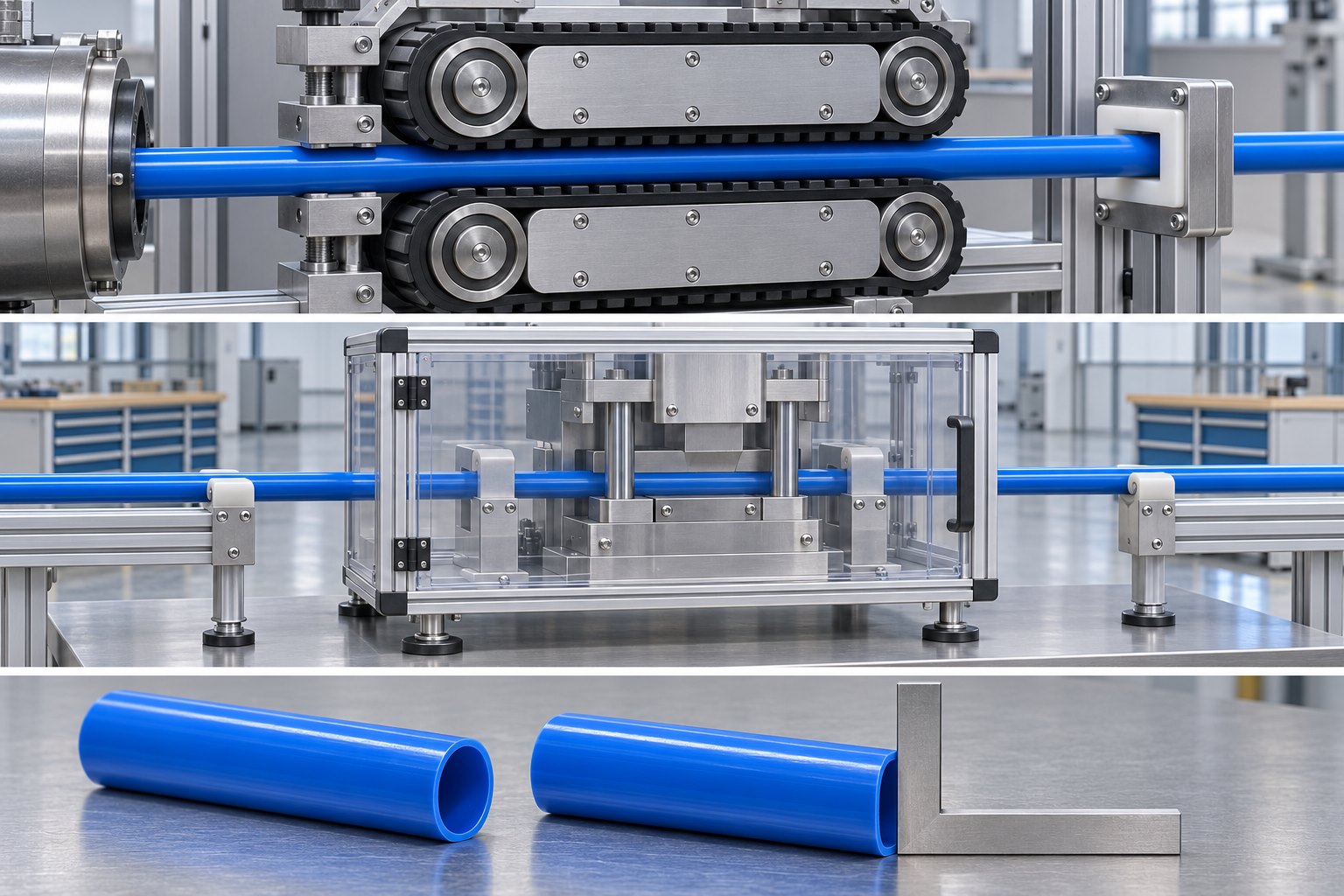
Identify the defect by the cut face
- Burrs or tearing: Check blade condition, support clearance and the temperature of the section at the cut. Compare the cut face before and after the last tooling change.
- Angled ends: Check tube alignment and support at the cutter. On a traveling system, confirm that cutter travel is synchronized with the line as the cut takes place.
- Flattened or oval ends: Compare the section before and after cutting. Inspect puller grip, guide support and the condition of the section leaving the cooling and sizing stage.
Measure and document the finished part
Use the drawing's datum and an agreed measurement method for length and end squareness. Record when the measurement is taken, and compare readings taken just after cutting with those taken after the agreed interval. Keep samples and record the grade, section geometry, line speed, cooling conditions, cutting equipment and defect location when comparing results.
What to send WanHan for a material trial
Send the current grade, section drawing, cut-length tolerance and photos of the ends. Include the cooling setup, puller speed and cutter type so the team can review candidate extrusion compounds and plan comparable samples. Discuss your section and material trial with WanHan.
Frequently asked questions
Why do extruded parts vary in cut length?
Compare actual material travel with the indicated travel, then check puller slip, cutter timing and whether dimensions continue to change after cutting.
When is a fly knife suitable for extruded tubing?
It is commonly used for smaller and softer tubing. Confirm the usable diameter, wall thickness and speed with the equipment supplier, then inspect the cut face on trials.
Why are cut ends angled or oval?
Check support and alignment at the cutting point, then compare the dimensions before and after the cut. This helps identify whether distortion begins at the cutter, puller or cooling section.
When should I measure the final cut length?
Use the interval specified in the inspection plan. During trials, take a reading immediately after cutting and another after the agreed interval to see how much the length changes.
What should I record when comparing extrusion compounds?
Keep the geometry, equipment and measurement method comparable. Record the grade, preparation, output, cooling settings, cutter setup and measured results for each trial.
Stretching or drawing process of extrusion molding process
Plastic Extrusion Cooling: Sizing and Defect Control
Related Article