Plastic Pellets for Extrusion: Drying and Feeding
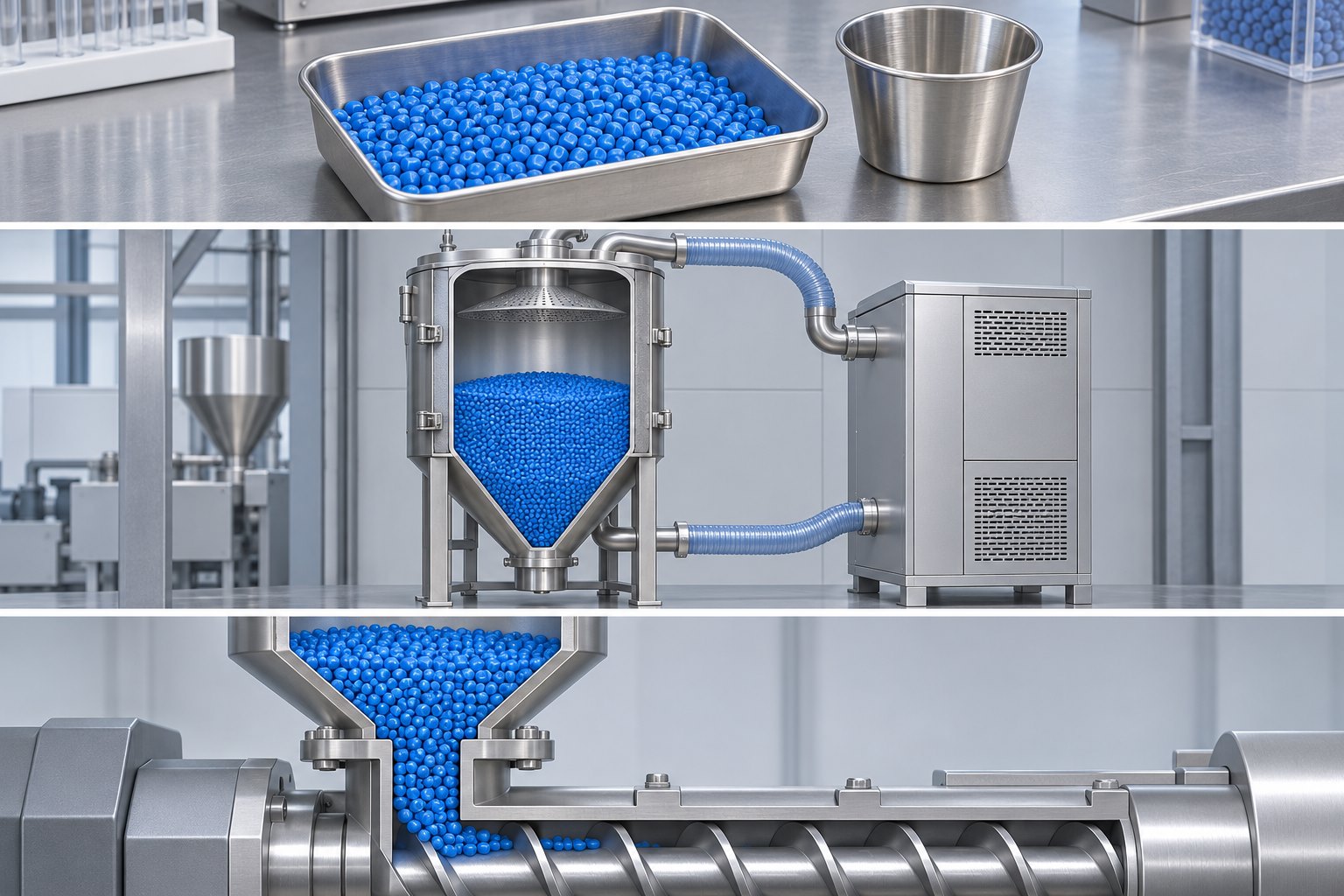
Prepare plastic pellets for extrusion by confirming the exact grade, meeting its moisture specification, and feeding the extruder at a steady rate. Establish these conditions before changing barrel temperatures or screw speed. If defects start after a material change, check what reached the feed throat and when it reached it.
Confirm the grade and lot before opening the bag
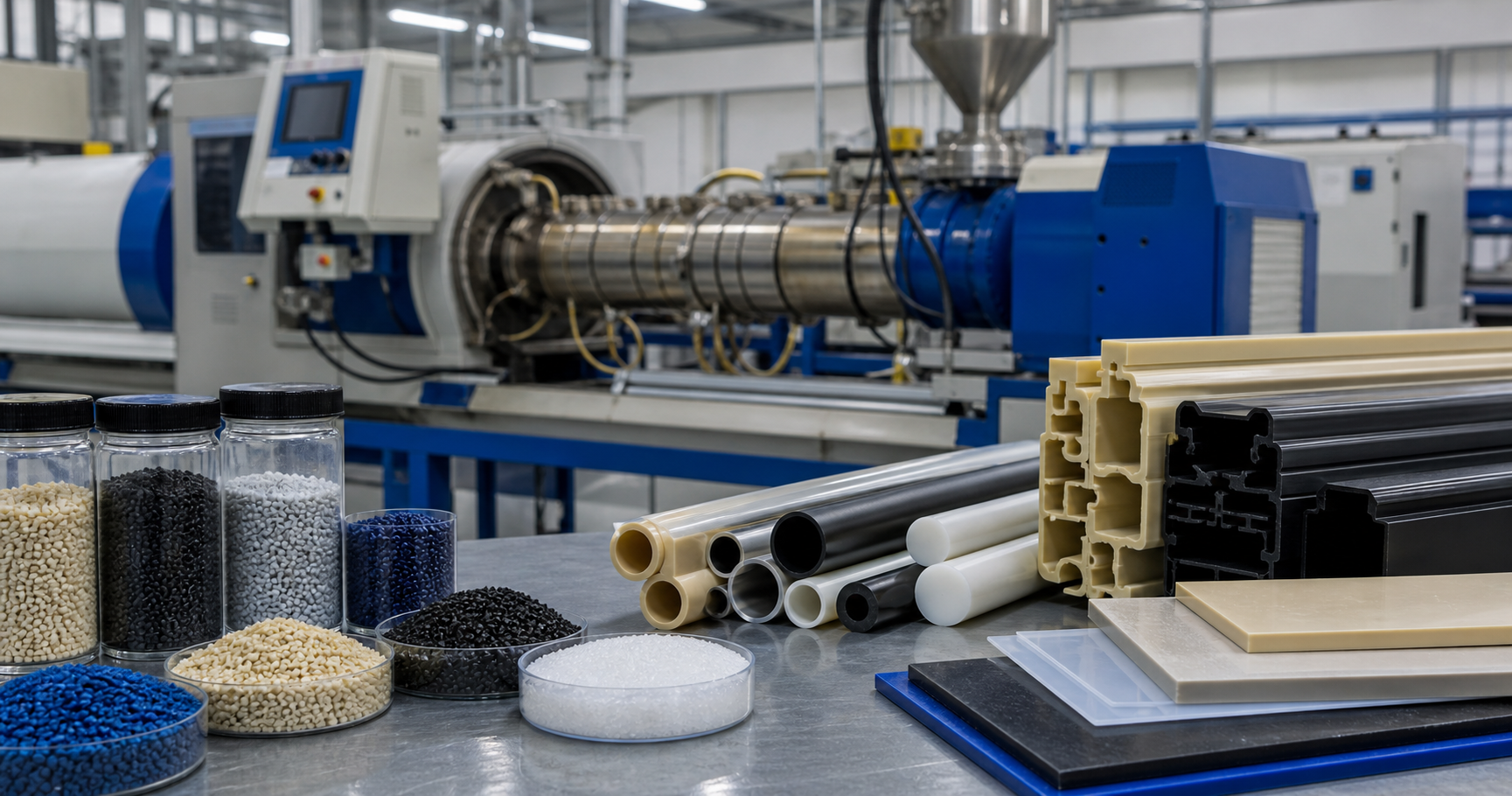
Match the grade, lot, color and reinforcement to the trial sheet. Confirm extrusion suitability for the intended product, whether it is tubing, profile, sheet or another continuous section. A grade intended for injection molding may behave differently in continuous extrusion. Record the supplier's current processing guidance, the target output and any approved blend components.
Check pellet moisture at the point of use
Use the grade supplier's drying temperature, minimum residence time and pellet moisture limit. Confirm that the dryer can maintain the required conditions at the planned throughput. Drying air temperature, dew point and flow describe the dryer conditions. Measure a representative pellet sample using the method specified for the grade to check the result. Compare samples from the dryer outlet and the feed point if you suspect moisture pickup during transfer. See Conair's guide to resin drying for the equipment principles.
Keep dried pellets clean and the feed steady
Keep bags closed until use and limit the exposure of dried pellets to ambient air. Clear residual material from hoppers, conveying lines and feeders at changeover. If the formulation uses a color concentrate or an approved regrind fraction, use a measured blend and record each component. Check the feeder's calibrated delivery rate against the desired throughput, particularly after a refill or recipe change. Check for bridging, fines and incomplete refills if delivery is uneven.
Track what changed when a defect first appeared
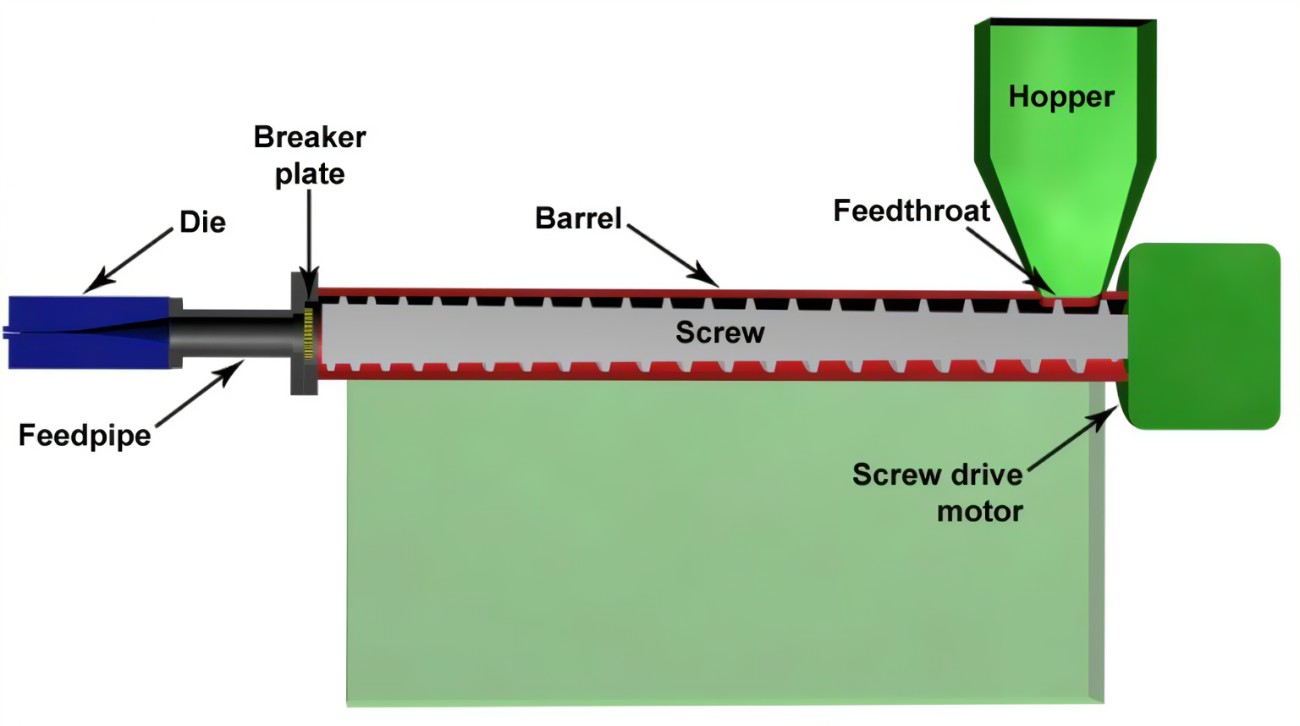
For bubbles or surface streaks, compare pellet moisture, blend identity and contamination checks with a known good run. For output surges, compare the time of each surge with feeder refills, hopper level and process records. Keep the other trial conditions as steady as practical so the effect of each change can be evaluated. Follow the extrusion process guide for checks after the material enters the barrel.
What to send WanHan for a grade review
Share the current grade, section drawing, throughput, drying method, measured moisture and defect photos. WanHan can use those details to discuss candidate compounds, grade documentation and samples for a controlled trial. Send your extrusion material requirements.
Frequently asked questions
Do all extrusion pellets need drying?
Drying depends on the exact grade, its storage history and the supplier's moisture limit. Follow the grade guidance and check the material at the point of use.
Does dryer dew point tell me how wet my pellets are?
Dew point measures moisture in the drying air. Measure representative pellets to determine whether the resin meets its moisture limit.
Can dried pellets pick up moisture before feeding?
Yes. Exposure during transfer or holding can raise the moisture of hygroscopic grades. Compare samples at the dryer outlet and feed throat to see where pickup occurs.
What should I check when output drops after a refill?
Check the hopper level, feed continuity, blend condition and calibrated feeder rate. Compare the refill time with the output trend before adjusting extrusion settings.
Can I add regrind or color concentrate to an extrusion trial?
Confirm the allowed materials and ratios for the grade and application. Record each component and hold the blend constant when comparing runs.
Heating and melting preparation process for extrusion molding process
What are the extrusion molding processes for plastic pellets?
Related Article