
Electrical Housing Plastic: How to Choose the Right Material
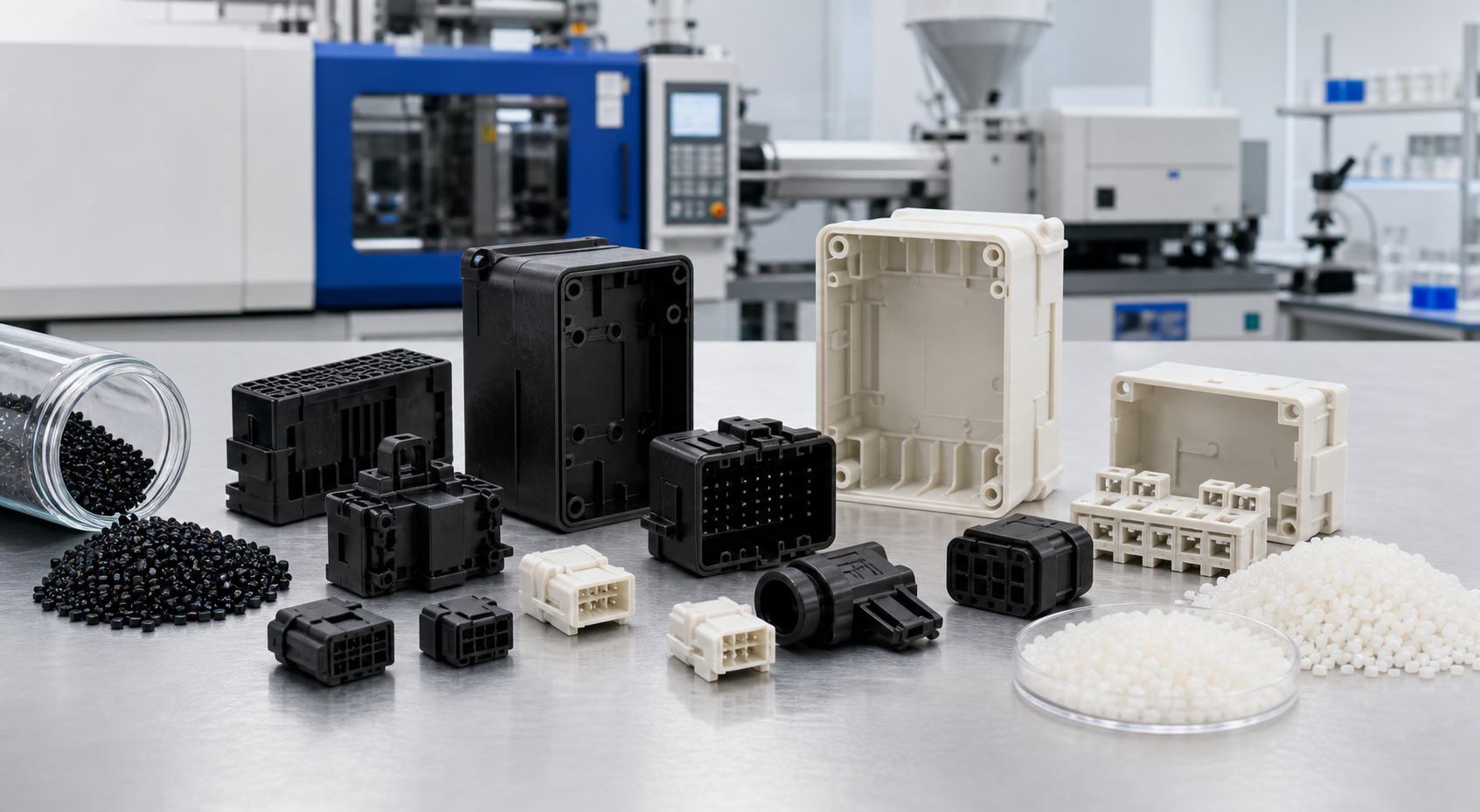
Which Flame-Retardant Plastic Should an Electrical Housing Use?
Shortlist FR PA6 or PA66 for reinforced connector bodies and structural electrical parts, FR PBT for precision electrical components, and FR PC/ABS for enclosure designs that prioritize impact and appearance. Consider a documented PPA grade when assembly or service heat exceeds the validated range of the first candidates. There is no universal winner: the exact compound must satisfy the housing's flame, insulation, thermal and mechanical requirements at its actual wall thickness and color.
WanHan Grades for Connector Bodies and Electrical Structures
Start with the housing's flame requirement, then choose the grade. For a reinforced housing that needs flame-retardant screening, WanHan's documented candidates include PA66-WHRG30A and PA6-WHRG30A, both designated GF30 FR. For a mechanical support without that same flame requirement, a conventional GF30 grade may remain a candidate. These are different formulations and should have separate approval files.
| Grade and application route | Evidence and design decision |
|---|---|
| PA66-WHRG30A / PA66 GF30 FR Reinforced electrical/electronic housings and structural parts |
The grade record states a TDS-listed UL 94 V-0 classification. Request tested specimen thickness, color scope and the current grade-specific report before approving a thin wall, latch or certified assembly. |
| PA6-WHRG30A / PA6 GF30 FR Electrical housings and reinforced injection-molded structures |
The record also lists V-0 without specimen thickness. Compare the exact PA6 formulation's conditioning, impact, flow and electrical evidence with the PA66 candidate rather than selecting only by the resin name. |
| PA66-WHG30A / PA66 GF30 Connector bodies, coil-frame structures and rigid supports |
WanHan's application record covers these structural uses, but its cited grade data specify no UL 94 rating. It must not inherit V-0 from WHRG30A. |
| PA6-WHG30B / PA6 GF30 Switch structures, housings and mechanical supports |
The published product page lists HB at 1.6 mm. This is not a V-0 substitute. Review the actual flame specification before using this conventional GF30 route. |
Review the exact PA66-WHG30A product and PA6-WHG30B product for their documented scope. Request the current WHRG30A documentation through our material inquiry page; do not substitute a differently named FR grade.
Validate the Connector Geometry, Not Only the Test Bar
WanHan's electrical application record calls for drying, injection molding, conditioning, dimensional inspection and application-specific electrical or flame testing. For your connector, turn this into measurable checks: pin retention after conditioning, latch insertion and retention force, screw-boss integrity, weld-line position and fit after the specified temperature/humidity cycle. Agree the method and acceptance limit before the trial.
Our team can review the drawing, minimum wall thickness, color, flame target and process constraints, then prepare candidate material and a sample-validation plan. For automotive connectors, add the customer's vibration, thermal-cycle and fluid-exposure requirements; see the automotive application and grade guide. The final material recommendation should connect the approved formulation, the molded part and the required documentation.
Keep Five Different Electrical Requirements Separate
| Evidence | What it answers | What to request |
|---|---|---|
| UL 94 classification | How a tested material specimen behaves in the specified flammability test. | Exact grade, classification, recognized thickness and color scope; current report or recognition record where required. |
| CTI / tracking behavior | Resistance to tracking under the defined test conditions. | The specified method and result for the compound. Do not infer it from V-0. |
| Glow-wire tests | Ignition or flammability response under the applicable test. | Identify GWFI, GWIT or the finished-part test, its thickness and the end-product requirement. |
| Long-term thermal evidence | Whether required properties are retained during prolonged heat exposure. | Relevant RTI or application-specific aging data. An HDT value alone does not answer this. |
| Molded-part validation | Whether the actual housing survives assembly and service. | Conditioned dimensions, screw-boss and latch tests, impact, electrical clearances and the applicable end-product tests. |
A V-0 result does not automatically establish CTI, glow-wire performance, weather resistance or approval of an assembled device. UL's Plastics Recognition guidance treats thickness and color as part of flammability recognition. Check those conditions before converting a material description into a purchasing specification.
Halogen-Free Versus Halogenated: Compare the Whole Formulation
Halogen-free and halogenated systems can both be candidate routes when the application permits them. Specify the customer's definition, restricted substances and required test method first. Then compare matched flame classification, wall thickness, color, impact, flow, electrical properties and aging data. Halogen-free does not by itself mean lower smoke, lower toxicity, higher impact strength or compliance with every market requirement.
For a reinforced PA housing, an FR package, reinforcement and impact modifier must work together. Ask whether impact values are dry or conditioned and at which temperature; then test the latch or screw boss, where a weld line or fiber orientation may govern failure. A higher filler percentage is not a substitute for this validation.
Match the Material Review to the Electrical Part
- Connector body or terminal support: compare conditioned fit, pin retention, required insulation and flame evidence. For automotive parts, add temperature cycling, vibration and fluid exposure from the customer's specification.
- Relay, switch or coil-frame component: review local hot spots, insert stresses, creep and assembly conditions together with the applicable electrical tests.
- Control enclosure: compare impact, screw retention, surface finish and the flame requirement on the proposed FR PC/ABS or alternative grade.
- High-temperature connector: consider PPA only against documented service and assembly conditions. A polymer family name does not prove a reflow profile or long-term operating limit.
WanHan can review the part drawing and specification, recommend a formulation route and support sample evaluation. Send wall thickness, color, continuous and peak temperatures, electrical and flame requirements, process constraints and expected volume through our material inquiry page. For a development brief, use the custom compound formulation guide. Sample terms and documentation availability are confirmed for the selected grade.
WanHan offers several material routes for electrical housing projects, including the PA66 FR category, flame retardant PBT range, the published flame retardant nylon guide, and the PC/ABS material guide.
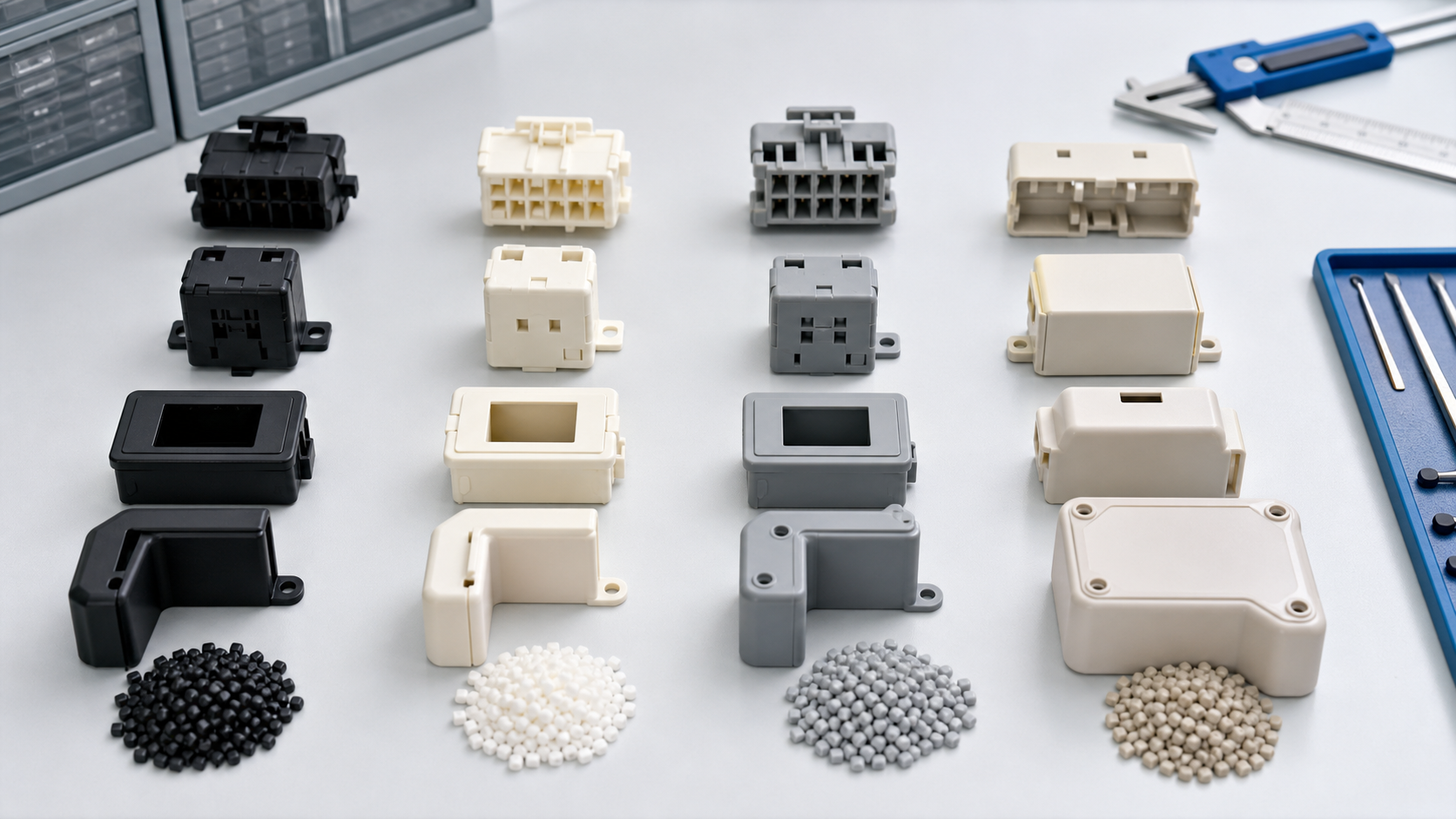
What an Electrical Housing Plastic Must Deliver
Electrical-use plastics are usually evaluated around a group of linked requirements rather than a single property. The right material discussion should connect all of these factors together:
- Flame target such as UL94 V0 or similar project-level screening rules
- Electrical insulation and, where relevant, tracking behavior
- Dimensional control after molding, conditioning, and assembly
- Thermal exposure in service or around the electrical system
- Appearance, color control, and warpage tolerance
Material Family Comparison for Housing Projects
| Material family | Common starting direction | Main validation point |
|---|---|---|
| Flame-retardant PA66 | Connector housings and higher-heat electrical parts | Thin-wall flame stability, molding window, and assembly fit |
| Flame-retardant PA6 | General molded electrical housings and FR parts | Flow balance, toughness, and end-use heat demand |
| PBT | Switches, bobbins, and selected electrical components | Dimensional stability, electrical balance, and thermal performance |
| PC/ABS | Some housings with impact or surface-quality needs | Flame requirement, heat margin, and design suitability |
Common Material Routes
Electrical housing projects often move from a general material search into more specific resin paths such as flame-retardant nylon, PBT, or PC/ABS depending on the application and test requirement.
For example, a buyer reading this page may need to move next into the PA66 FR category or a PBT flame-retardant route, depending on whether the part is a connector body, switch shell, relay part, or larger enclosure.
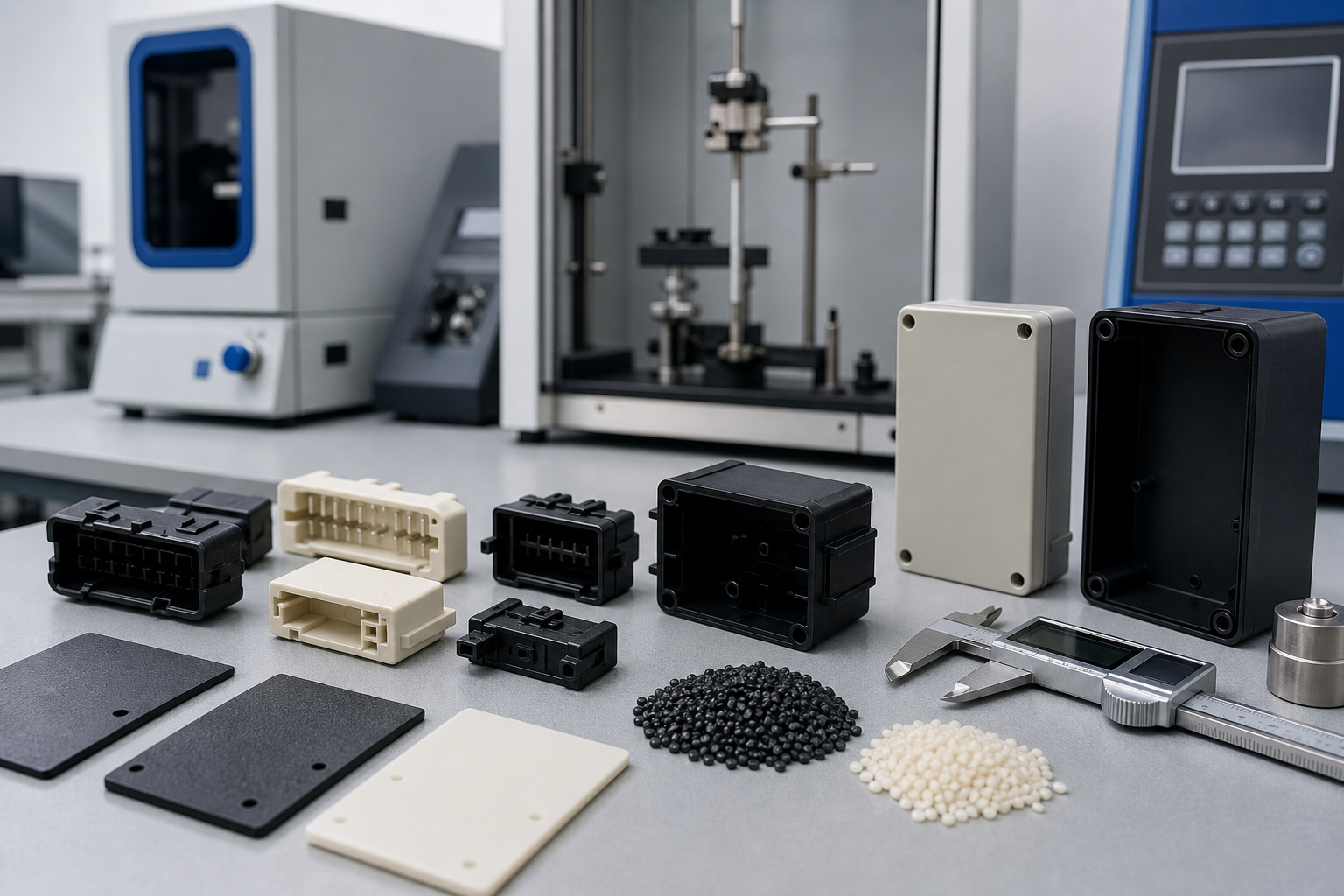
Why Choose WanHan
Electrical housing materials usually need to balance flame performance, processing, dimensional stability, and real application standards. Since 2005, WanHan has focused on independent R&D, production, and sales of functional polymer materials for automotive, electronics, home appliance, and industrial applications.
- Flame-retardant nylon, PBT, and selected PC/ABS options for electrical-use parts
- Sample support for grade screening and molded-part validation
- Technical follow-up on wall thickness, flame target, and application fit
- ISO 9001, ISO 14001, ISO 45001, and IATF 16949 certified management systems
- Full sets of testing equipment for strict quality control throughout production
- Exported to 30+ countries for repeat industrial and export projects
Frequently Asked Questions
Q: What is the best electrical housing plastic?
A: There is no single best answer. Flame-retardant nylon and PBT are common starting points, but the final grade depends on heat, flame, geometry, and electrical requirements.
Q: Is flame retardant nylon used for electrical housings?
A: Yes. Flame-retardant PA6 and PA66 are widely screened for electrical housings, connector bodies, and related molded parts.
Q: Why is PBT common in electrical parts?
A: PBT is often selected because it provides a useful balance of molding behavior, electrical performance, and dimensional stability.
Q: Can PC/ABS be used for electrical housings?
A: In some designs, yes, but flame and heat requirements should be confirmed carefully because not every housing application fits PC/ABS equally well.
Q: What should I send when asking for an electrical housing material recommendation?
A: Share the part type, flame target, operating temperature, wall thickness, and any assembly or dimensional constraints that are likely to affect grade choice.
Q: What certifications are useful when sourcing electrical housing materials?
A: ISO 9001, ISO 14001, ISO 45001, and IATF 16949 certification, traceability support, testing capability, and documentation support are useful for electrical and industrial applications.
Q: Can I request trial samples for housing and connector projects?
A: Yes. A practical supplier should support sample grades and an alternative recommendation so molding, fit, and performance can be compared before approving a production material.
Conclusion
Electrical housing plastic selection becomes easier when real flame, thermal, and molding needs are compared instead of only resin names. WanHan can help narrow the right FR nylon, PBT, or PC/ABS route through sample review, testing support, and production follow-up.
Carbon Fiber Nylon Pellets: Properties, Grades, and Applications
Carbon Fiber Reinforced Nylon Pellets: Buyer Guide
Related Article



