
How to Dry Plastic Pellets Before Injection Molding
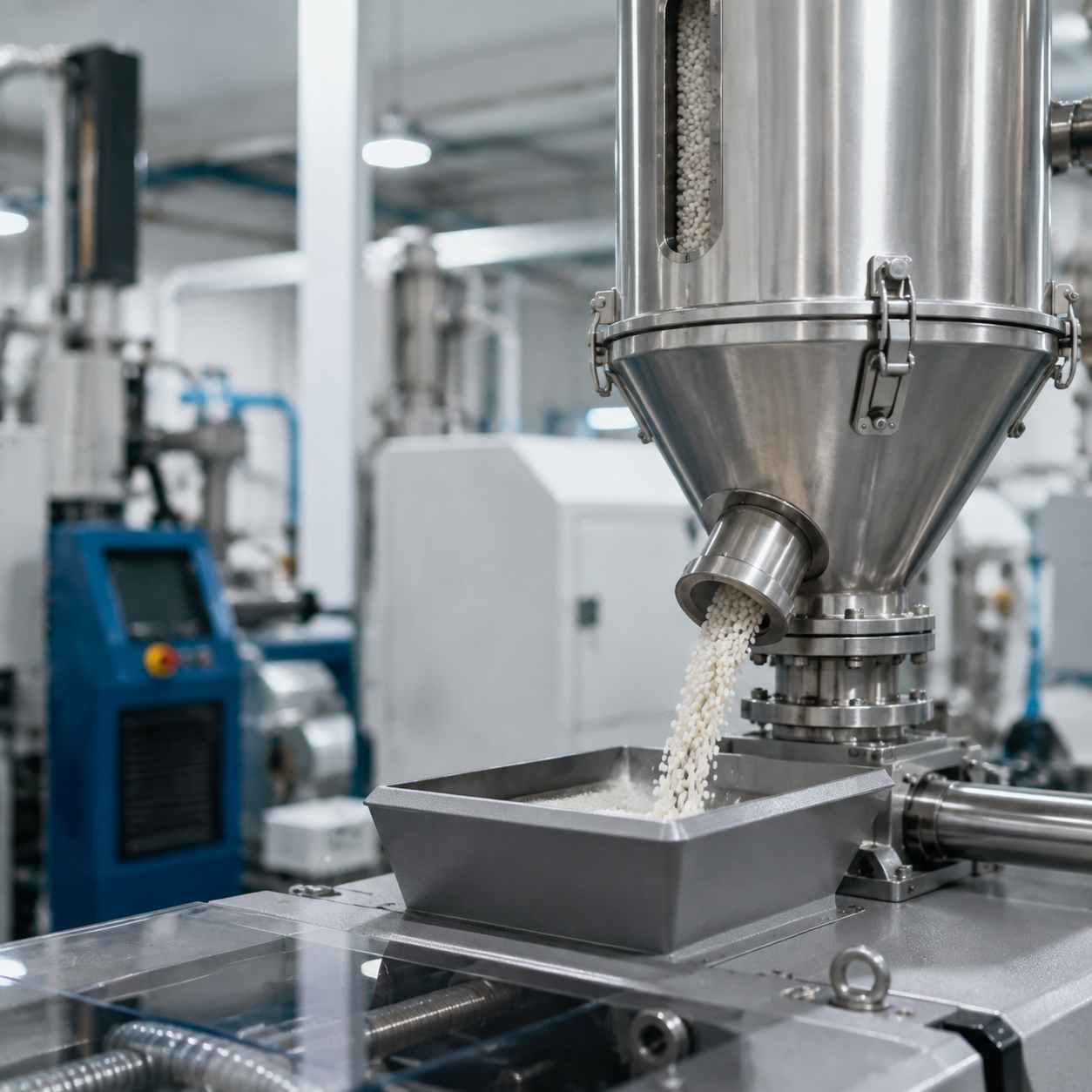
How to Dry Plastic Pellets Before Injection Molding
How to dry plastic pellets before injection molding depends on the resin family, grade, packaging condition, and the moisture limit required by the molded part. Drying is not a single temperature-and-time recipe: an incorrect setting can leave moisture in the pellets, damage the polymer, or create unnecessary production delay.
Moisture-sensitive materials such as PA6, PA66, PBT, PET, PC, and many PC-ABS grades need controlled handling from the opened bag through the hopper. The correct workflow combines sealed storage, a suitable dryer, verified dew point, grade-specific temperature and residence time, and a check of the finished part.
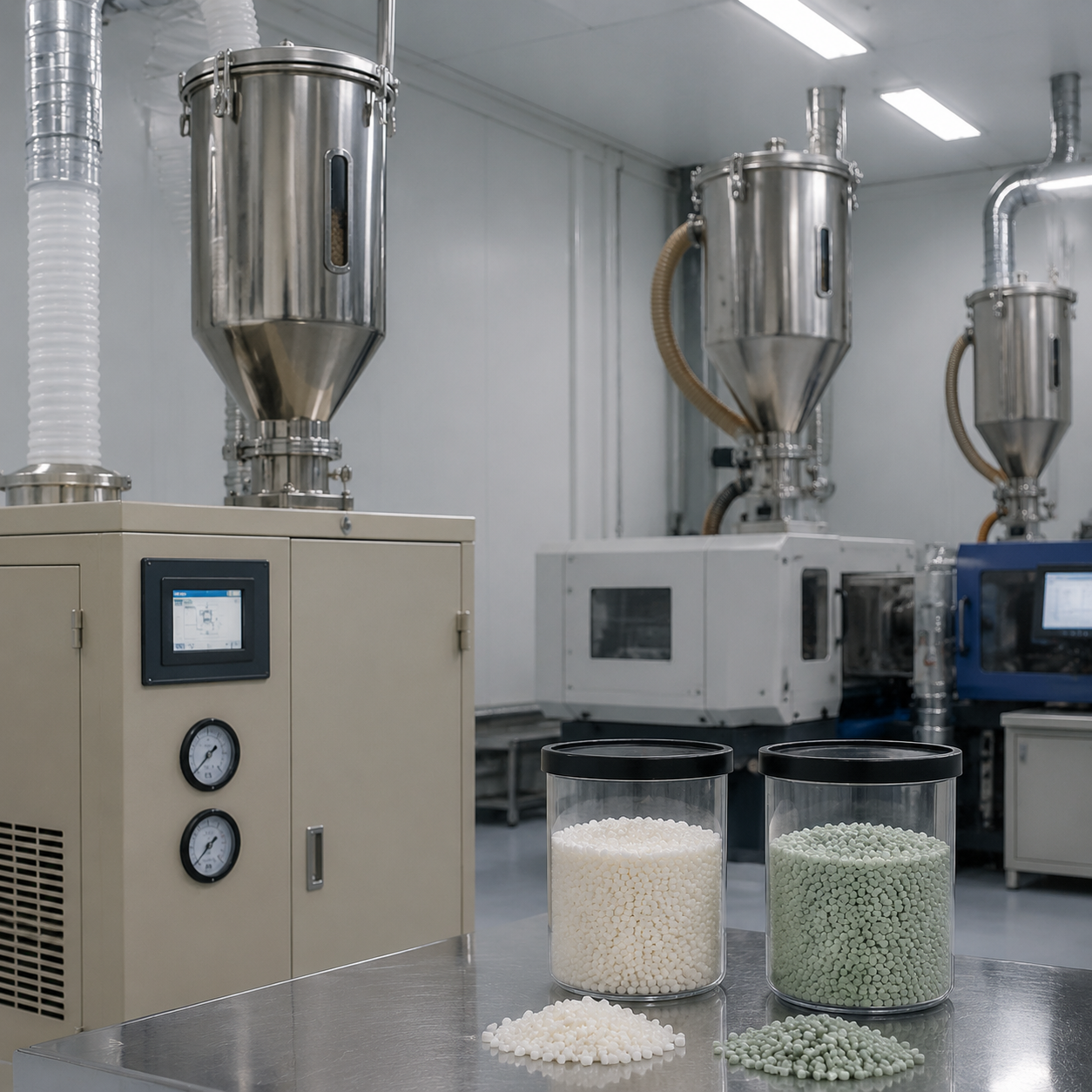
Illustration of pellet drying and transfer; confirm the equipment configuration for the actual process.
Which Plastic Pellets Need Drying?
| Material family | Why drying matters | What to confirm before molding |
|---|---|---|
| PA6 and PA66 | Moisture can affect viscosity, surface quality, strength, and dimensional behavior | Grade datasheet, moisture limit, dryer type, residence time, and hopper exposure |
| PBT and PET | Hydrolysis risk can reduce molecular weight and part performance during processing | Drying temperature, dew point, time, and protection from re-absorption |
| PC and PC-ABS | Residual moisture may cause splay, bubbles, brittleness, or cosmetic defects | Resin-specific drying window and moisture measurement method |
| ABS and PP | Requirements vary by grade, storage, additives, and appearance target | Supplier guidance and a trial based on the actual packaging and part standard |
A Practical Plastic Pellet Drying Workflow
1. Protect the Resin Before Drying
Keep bags sealed until the material is needed. Record the opening time, lot number, and any exposure to ambient humidity. Do not mix a newly opened lot with pellets that have already been exposed unless the process owner has defined the handling rule.
2. Use the Grade Datasheet as the Starting Point
Drying temperature and residence time vary with the polymer, reinforcement, flame-retardant package, recycled content, and pellet size. Use the compound supplier's processing data rather than copying a setting from another nylon or polyester grade.
3. Control Dew Point, Temperature, and Residence Time
A desiccant dryer can remove moisture effectively only when the air path, filters, regeneration cycle, and hopper loading are working correctly. Excessive heat or long residence time can also degrade a resin, change color, or increase the risk of thermal history.
4. Prevent Moisture from Returning
Use a closed hopper or sealed transfer system when possible. If dried pellets remain in an open container, they may re-absorb moisture before molding. Hopper residence time should match the production plan rather than an arbitrary batch size.
5. Check Moisture and Molded-Part Evidence
Use the supplier's recommended moisture test method and compare the result with the grade limit. Also inspect splay, bubbles, silver streaks, brittleness, weight, dimensions, and mechanical performance during the trial. A dry reading alone does not prove that the final part is acceptable.
WanHan's PA6 material guide, PA66 material guide, and PBT material guide provide useful base-resin context. For project-specific grades, review the PC-ABS catalog and request the processing data for the exact compound.
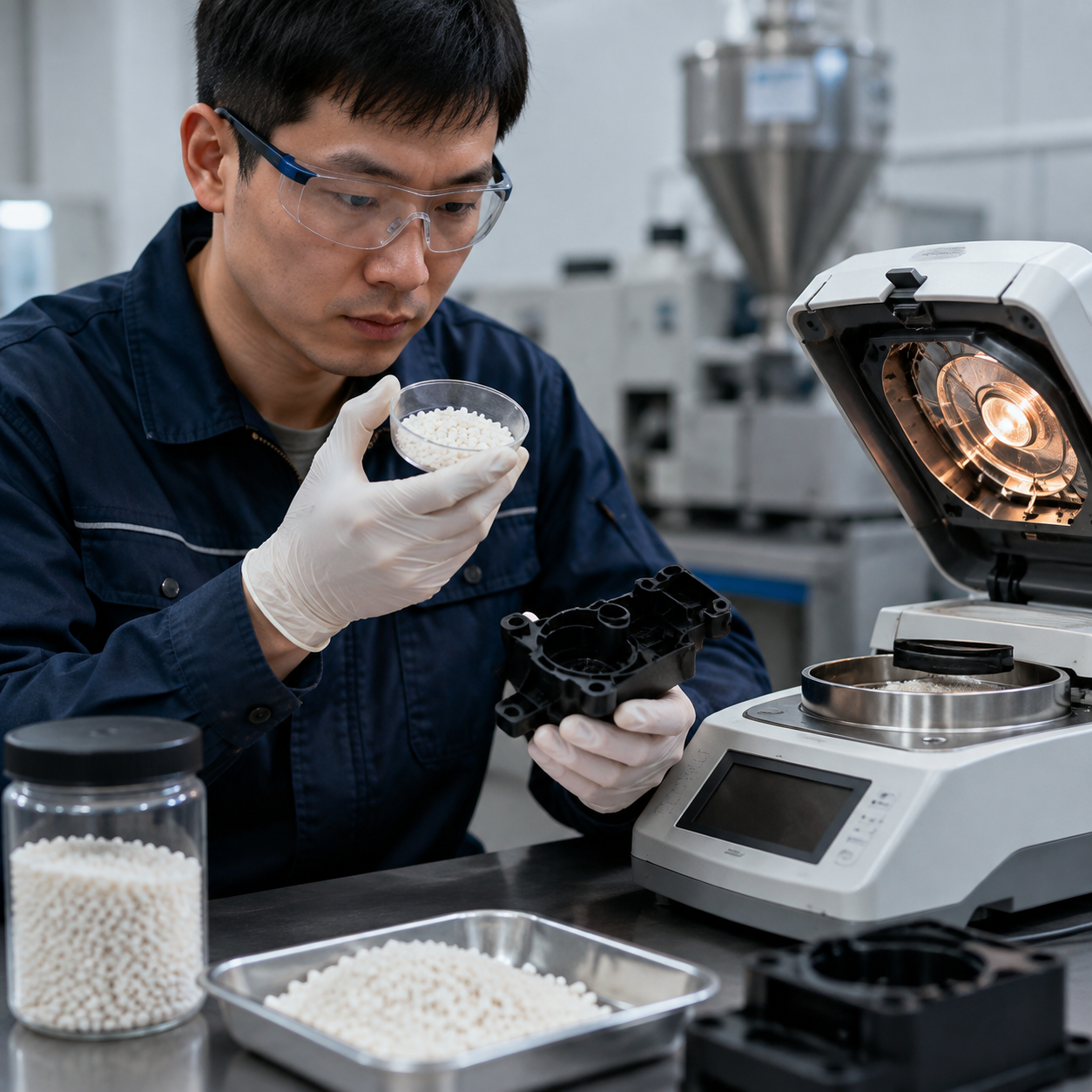
Record the Drying Conditions for Each Trial
Confirm the exact grade and supplier processing revision before the trial. Record the lot, bag-opening time, dryer identity, specified and actual temperatures, drying-air condition, loading time, throughput and any interruption. Where moisture is measured, record the method, sampling point and result against the agreed grade limit. A dryer display or a timer alone does not establish pellet moisture.
Check Re-Exposure and Dryer Performance Before Changing the Recipe
If a defect appears after a stoppage or material transfer, check how long the pellets were exposed and whether the hopper and transfer path remained protected. Review airflow, filters, regeneration and temperature control according to the equipment instructions. Confirm whether the material needs further treatment with the compound supplier; do not extend drying indefinitely or assume a hotter setting will solve the problem.
Keep moisture-related symptoms separate from a confirmed diagnosis. Similar marks may have other material, tooling or processing causes. Retain the lot identity and trial record, and compare parts under consistent conditions before changing several variables together. See the batch quality-control guide for the records to provide during an investigation.
Why Drying Control Matters to Consistent Production
Consistent drying reduces avoidable variation between lots, shifts, and molding machines. It also makes sample approval more meaningful because the tested part reflects the same moisture-control method planned for production.
WanHan supports resin selection with samples, processing guidance, technical documentation, and application-focused communication. Share the material family, machine, part wall thickness, cycle target, moisture equipment, and observed defect through the inquiry page so the drying window can be reviewed with the compound.
Frequently Asked Questions
Q: Where should I find the drying temperature and time for a compound?
A: Use the processing guidance for the exact grade and confirm its revision with the supplier. Do not copy settings from a different resin family, reinforcement level or additive package.
Q: Does a dryer timer prove that pellets meet the moisture limit?
A: No. Check actual dryer performance and, where required, measure pellet moisture using the agreed method and sampling procedure. Compare the result with the limit for the exact grade.
Q: What should I record during a drying trial?
A: Record the grade, lot, bag-opening time, dryer identity, temperatures, air condition, loading time, throughput, interruptions and moisture test method and result where used. Link these records to the molding trial.
Q: What should I do if dried pellets are exposed to room air?
A: Record the exposure and confirm the handling or re-drying procedure with the supplier for that grade. Protect the material during transfer and avoid unlimited additional heating without guidance.
Q: Do silver streaks always prove that pellets are wet?
A: No. Similar appearance defects can have other material, tooling or processing causes. Check moisture and the process records, then investigate systematically rather than assuming one cause.
Injection Molding Shrinkage and Warpage: Engineering Plastic Guide
Glass Fiber vs Carbon Fiber Reinforced Plastic: Selection Guide
Related Article



