Polycarbonate Resin: Properties, Grades, and Applications
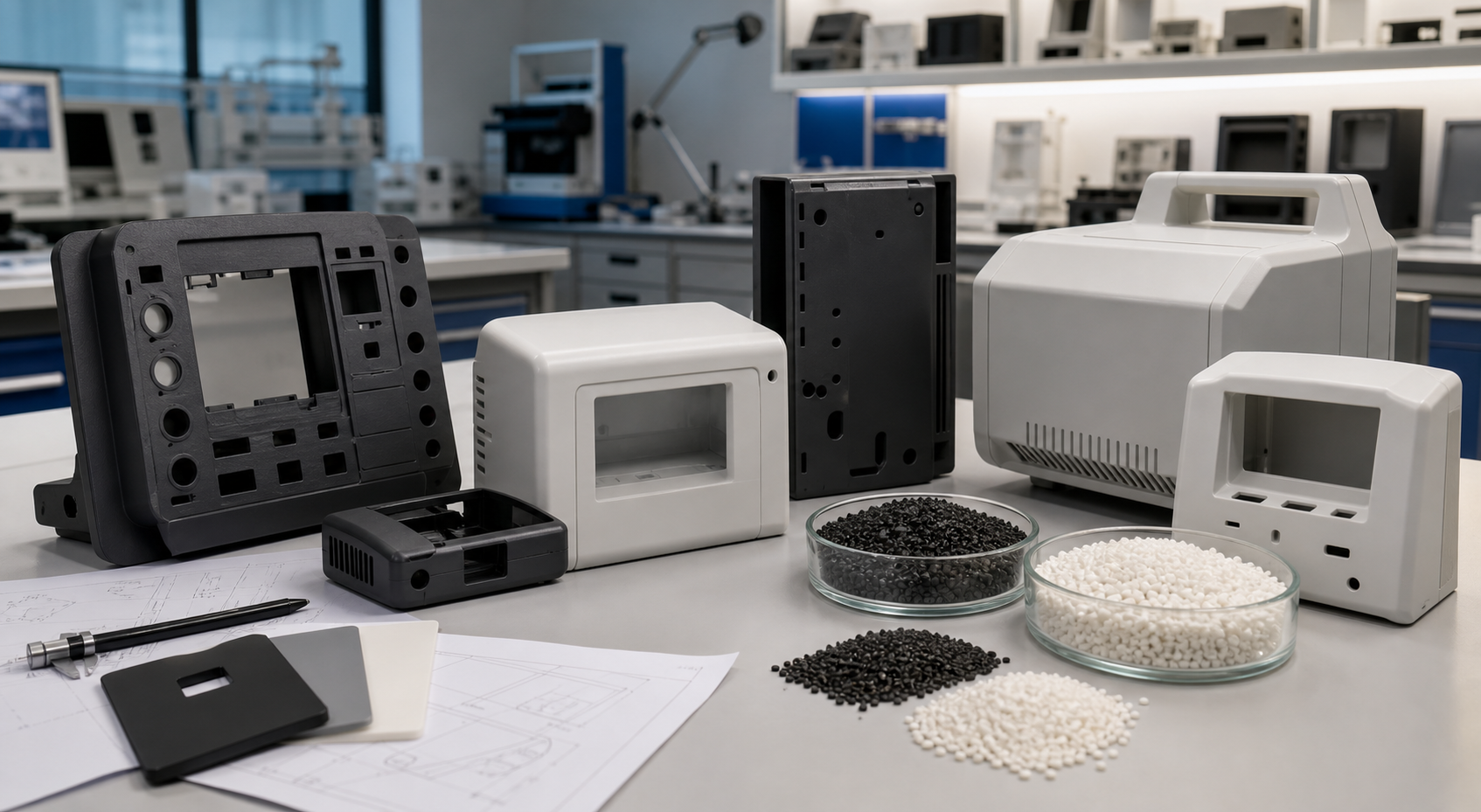
Polycarbonate resin, often abbreviated as PC, is an amorphous engineering thermoplastic valued for impact strength, heat resistance, dimensional accuracy, electrical insulation, and the ability to produce transparent or colored parts. It is used in protective housings, lighting components, electrical equipment, automotive parts, appliance components, and industrial assemblies.
The correct PC grade depends on more than impact strength. Optical requirements, wall thickness, flame rating, outdoor exposure, chemical contact, molding flow, residual stress, and joining method must be considered together. Standard PC, flame-retardant PC, UV-stabilized PC, reinforced PC, and PC blends serve different design conditions.
Polycarbonate Resin Properties for Material Screening
| Property | Typical PC behavior | Design implication |
|---|---|---|
| Structure | Amorphous thermoplastic | No sharp crystalline melting point; processing and service behavior are strongly influenced by glass-transition temperature |
| Density | Common unfilled grades are approximately 1.18-1.22 g/cm3 | Useful for weight estimates; additives, glass fiber, and flame-retardant systems change density |
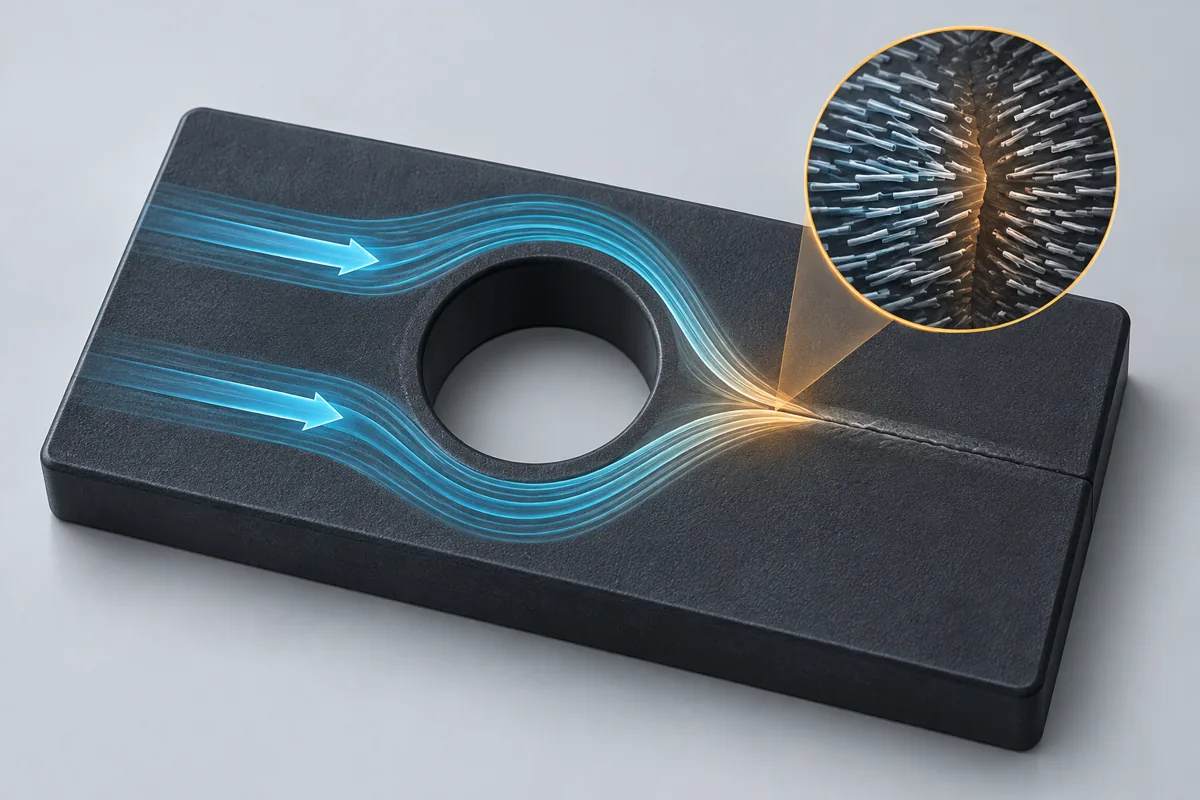
| Impact performance | High impact strength across a broad temperature range | Notches, weld lines, molded-in stress, chemicals, and aging can reduce finished-part performance |
| Heat resistance | Higher heat capability than general-purpose ABS | Confirm HDT, Vicat, continuous exposure, peak temperature, and load at temperature for the selected grade |
| Transparency | High light transmission is available with optical grades | Surface finish, contamination, drying, flow marks, scratches, coating, and part thickness affect appearance |
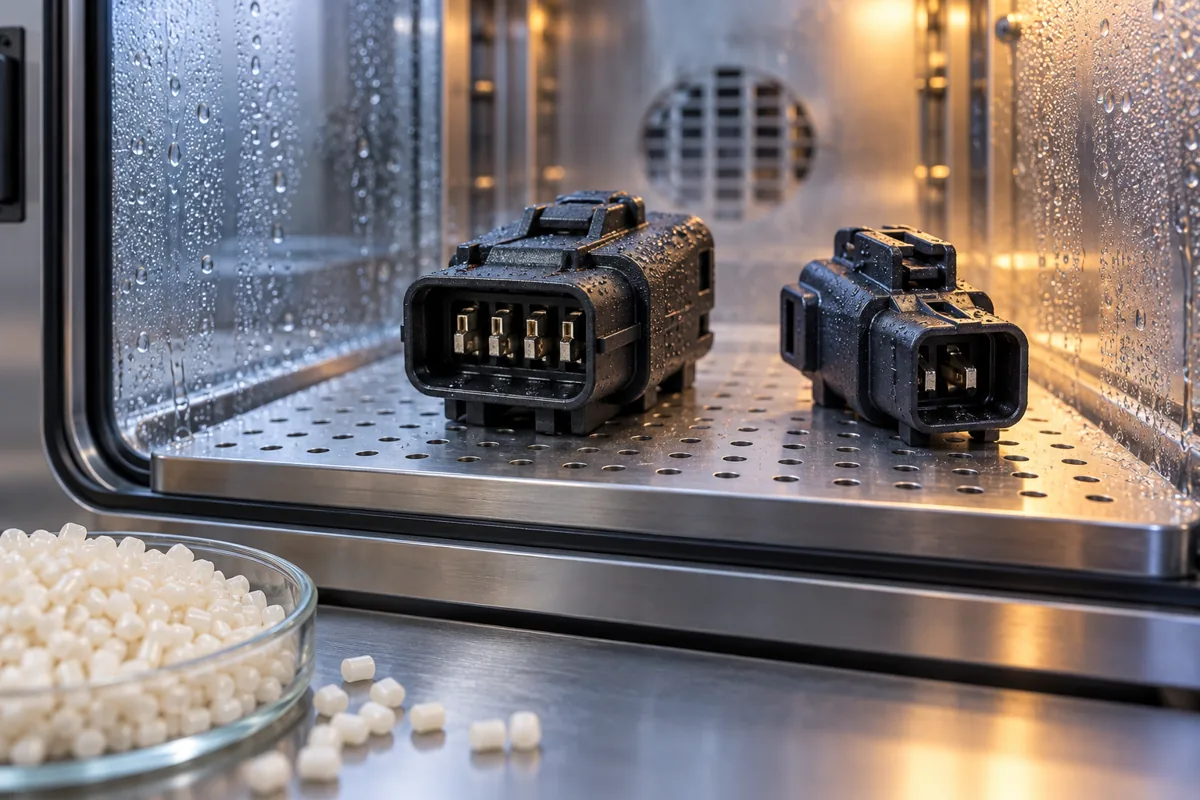
| Moisture during processing | PC can hydrolyze when processed wet | Drying, closed material handling, residence time, and actual moisture control are essential |
| Chemical resistance | Good against some fluids but vulnerable to stress cracking from certain chemicals | Test cleaners, oils, adhesives, paints, sunscreen, fuels, and assembly stress on the real part |
The values above are screening guidance, not a substitute for a grade datasheet. Flame retardants, UV packages, glass fiber, release agents, pigments, and recycled content can materially change the result.
Common Polycarbonate Grade Families
| Grade direction | Typical use | Important checks |
|---|---|---|
| General-purpose injection PC | Impact-resistant housings and structural components | Flow length, residual stress, impact, heat, and chemical contact |
| Optical or transparent PC | Lenses, guards, light covers, and inspection windows | Haze, transmission, surface quality, UV exposure, and coating compatibility |
| Flame-retardant PC | Electrical housings, power components, chargers, and control equipment | UL 94 rating at thickness, color recognition, electrical properties, heat, and documentation |
| UV-stabilized PC | Outdoor covers, lighting, meters, and exposed enclosures | Weathering duration, yellowing, gloss, impact retention, and local climate |
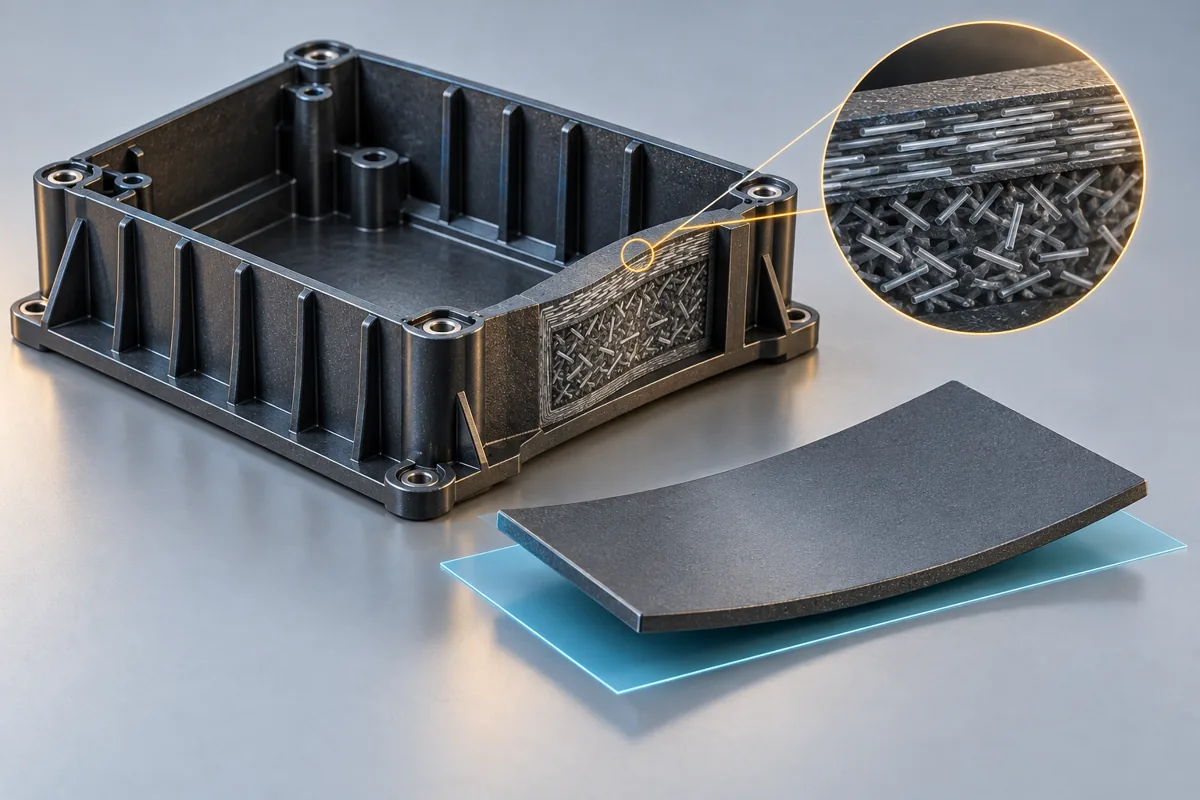
| Glass-reinforced PC | Rigid frames, brackets, and dimensionally controlled parts | Warpage, fiber orientation, surface, weld lines, and tool wear |
| PC/ABS blend | Large housings and parts needing impact, flow, appearance, and practical processing | Heat target, chemical resistance, flame requirement, paint or plating, and drop performance |
Polycarbonate Applications
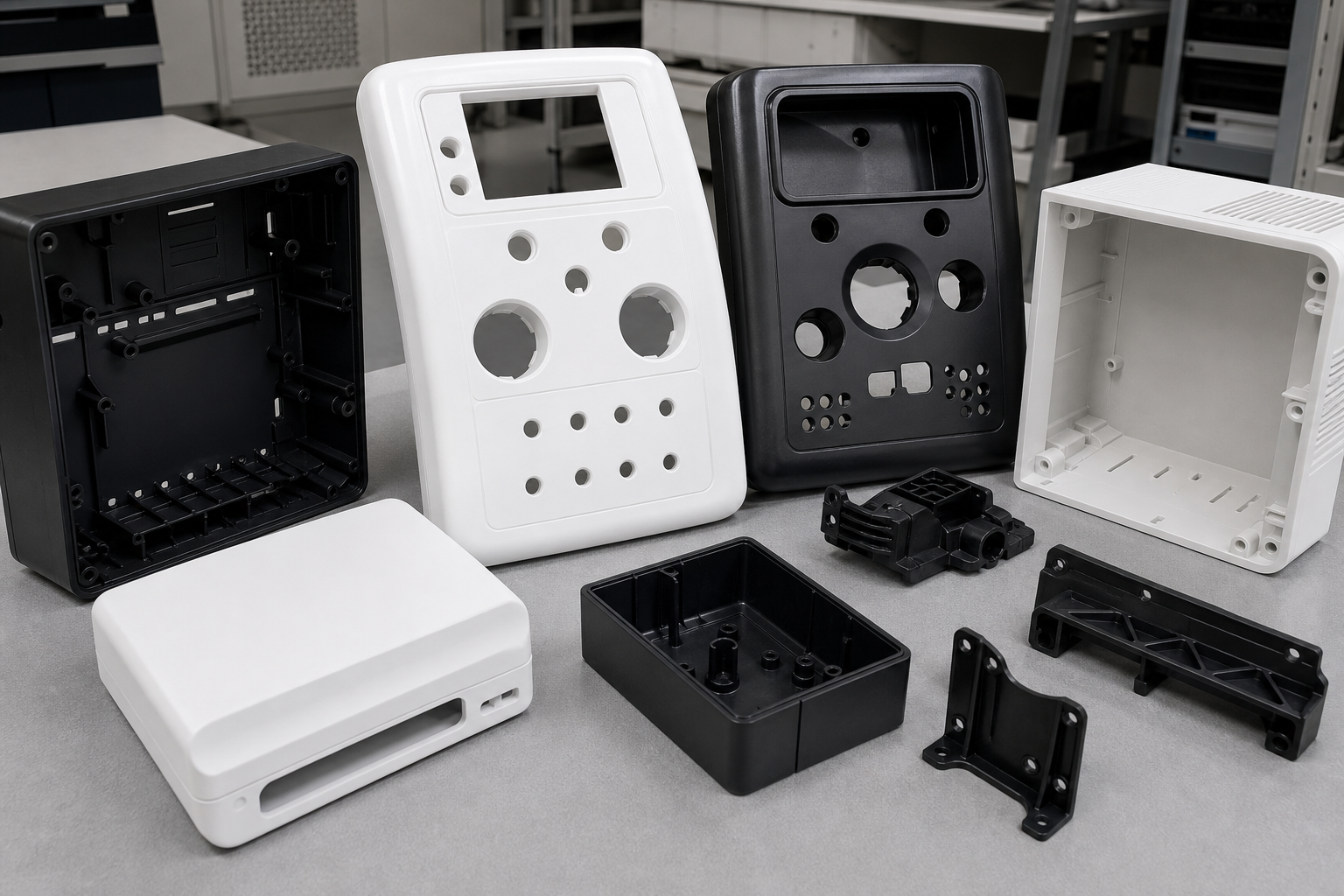
- Electrical enclosures, power-tool housings, switch components, chargers, and control panels
- Automotive lighting parts, interior components, instrument structures, and protective covers
- Transparent machine guards, safety shields, visors, lenses, and inspection windows
- Consumer-electronics housings, battery-related components, and durable equipment covers
- Home-appliance panels, structural housings, and heat-resistant functional parts
- Industrial meters, communication devices, outdoor enclosures, and precision molded supports
PC, ABS, PC/ABS, PMMA, or PBT?
| Material | Main strength | Common reason to choose another material |
|---|---|---|
| PC | Impact, heat, transparency, and dimensional performance | Chemical stress cracking, processing temperature, cost, or surface requirement |
| ABS | Processability, appearance, toughness, and cost balance | Insufficient heat or impact margin for the application |
| PC/ABS | Balanced impact, flow, heat, and housing performance | Optical transparency is required or the environment favors a crystalline resin |
| PMMA | Optical clarity, surface hardness, and weathering | Higher ductile impact performance is needed |
| PBT | Chemical resistance, electrical performance, fast molding, and low moisture uptake | Transparent appearance or very high unnotched impact is needed |
The PC/ABS material guide provides a closer review of the blend route. For flame-rated electrical components, compare the documentation and wall-thickness requirements of ABS UL94 V-0, PC FR, PC/ABS FR, and PBT FR.
Processing and Part-Design Controls
Drying is the first process control for polycarbonate. Resin can absorb moisture from the air, and moisture at melt temperature can break polymer chains. A part may look acceptable while losing impact performance, so dryer dew point, material temperature, residence time, and measured moisture should be managed together.
- Use smooth wall transitions and radii to reduce stress concentration
- Design gates and vents to fill the part without excessive shear or trapped gas
- Avoid excessive packing and ejection force that leave high molded-in stress
- Keep metal inserts, sharp corners, and screw bosses within proven strain limits
- Condition parts before chemical, impact, coating, adhesive, and assembly tests
- Control regrind and residence time because repeated heat history affects appearance and properties
Validation for Production Parts
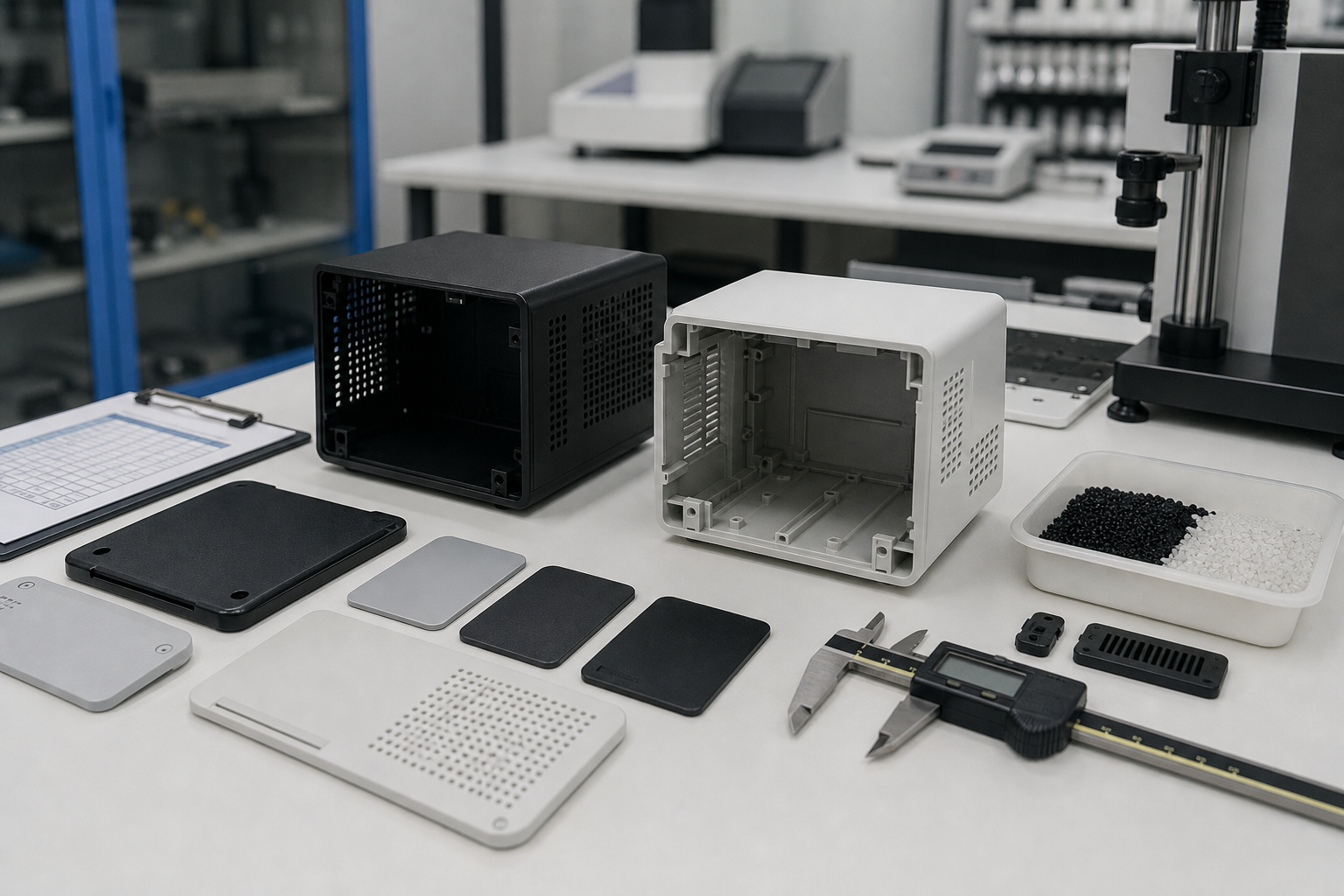
Approval should use molded parts from representative tooling. Relevant tests may include drop impact, notched impact, heat aging, thermal cycling, dimensional capability, chemical stress-crack testing, UV weathering, flammability, dielectric testing, screw-boss durability, snap-fit cycling, and coating or adhesive compatibility.
Why Work With WanHan?
WanHan has developed engineering plastic compounds for industrial applications since 2005. The company integrates independent R&D, production, testing, and technical support, allowing material recommendations to be followed through from initial sample to production supply.
- ISO 9001, ISO 14001, ISO 45001, and IATF 16949 certified management systems
- Testing equipment for incoming materials, compound properties, color, moisture, mechanical performance, and production quality control
- Experience with reinforced, flame-retardant, heat-stabilized, UV-resistant, hydrolysis-resistant, and color compounds
- Engineering plastics supplied to customers in more than 30 countries
- Application support for automotive, electrical, electronics, home-appliance, and industrial components
Request a Polycarbonate Resin Recommendation
Send the part drawing, transparency or color target, wall thickness, impact and temperature requirements, UV and chemical exposure, flame or compliance standard, surface and joining requirements, annual demand, and the current failure mode. Contact WanHan for grade comparison, samples, technical data, and molding support.
Frequently Asked Questions
Q: What is polycarbonate resin used for?
A: Polycarbonate resin is used for impact-resistant housings, transparent covers, lighting parts, electrical components, protective equipment, automotive parts, and precision molded components.
Q: Is polycarbonate stronger than ABS?
A: Polycarbonate generally provides higher impact strength and heat resistance, while ABS can offer easier processing, lower cost, and a different surface balance. PC/ABS is often selected when a combination is needed.
Q: Does polycarbonate resin need drying before molding?
A: Yes. Polycarbonate is moisture-sensitive at processing temperature. Inadequate drying can cause hydrolytic degradation, splay, reduced impact performance, and unstable properties.
Q: Can polycarbonate be flame-retardant and UV-resistant?
A: Yes. Flame-retardant, UV-stabilized, glass-reinforced, colored, and other modified PC grades are available, but each additive package changes processing and performance tradeoffs.
Q: What information is needed for a polycarbonate resin quotation?
A: Provide the part drawing, transparency or color, impact and heat targets, wall thickness, flame and compliance requirements, UV and chemical exposure, molding process, annual demand, and current material issue.
PA6 GF35 Properties: Density, Modulus and Uses
Flame-Retardant ABS: Ratings, Applications, and Grade Selection
Related Article