PBT GF30 Sensor Housings: Selection, Molding, and Validation
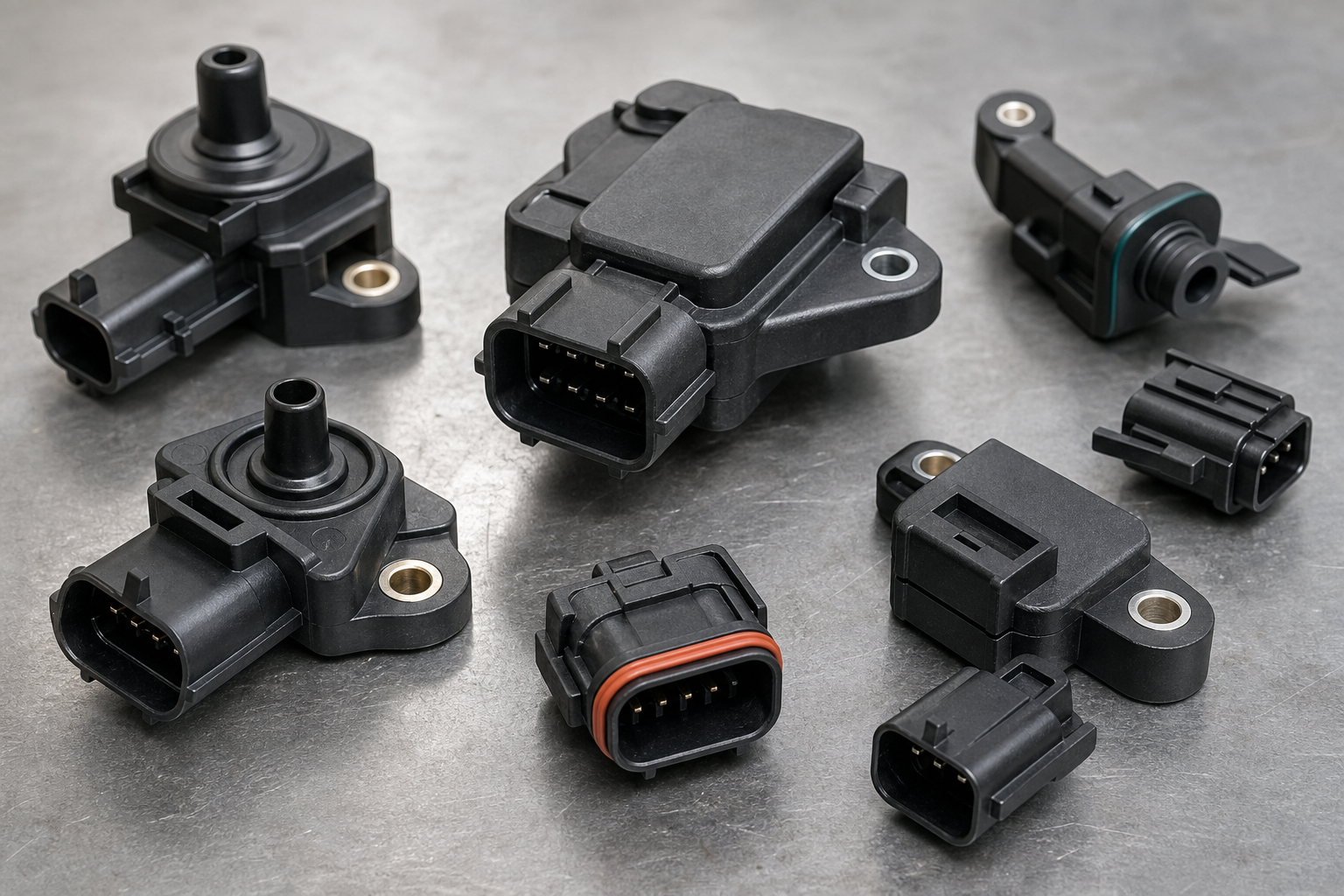
PBT GF30 sensor housings are used where a molded component must locate terminals, protect electronics, maintain a seal, and remain dimensionally stable around heat, humidity, fuels, oils, or cleaning fluids. The 30% glass-fiber content raises stiffness and reduces molding shrinkage, but it also makes gate position, fiber orientation, and weld-line placement central to the part design.
A resin designation alone is not enough for approval. Sensor type, operating temperature, water exposure, electrical requirements, joining method, and dimensional tolerances determine whether standard PBT GF30, hydrolysis-stabilized PBT, flame-retardant PBT, or another engineering plastic is the appropriate starting point.
PBT GF30 Properties Relevant to Sensor Components
| Engineering factor | Typical behavior | What to confirm on the project |
|---|---|---|
| Stiffness and strength | 30% glass fiber produces a rigid housing and supports terminal retention | Dry and aged performance, weld-line strength, screw loads, and vibration fatigue |
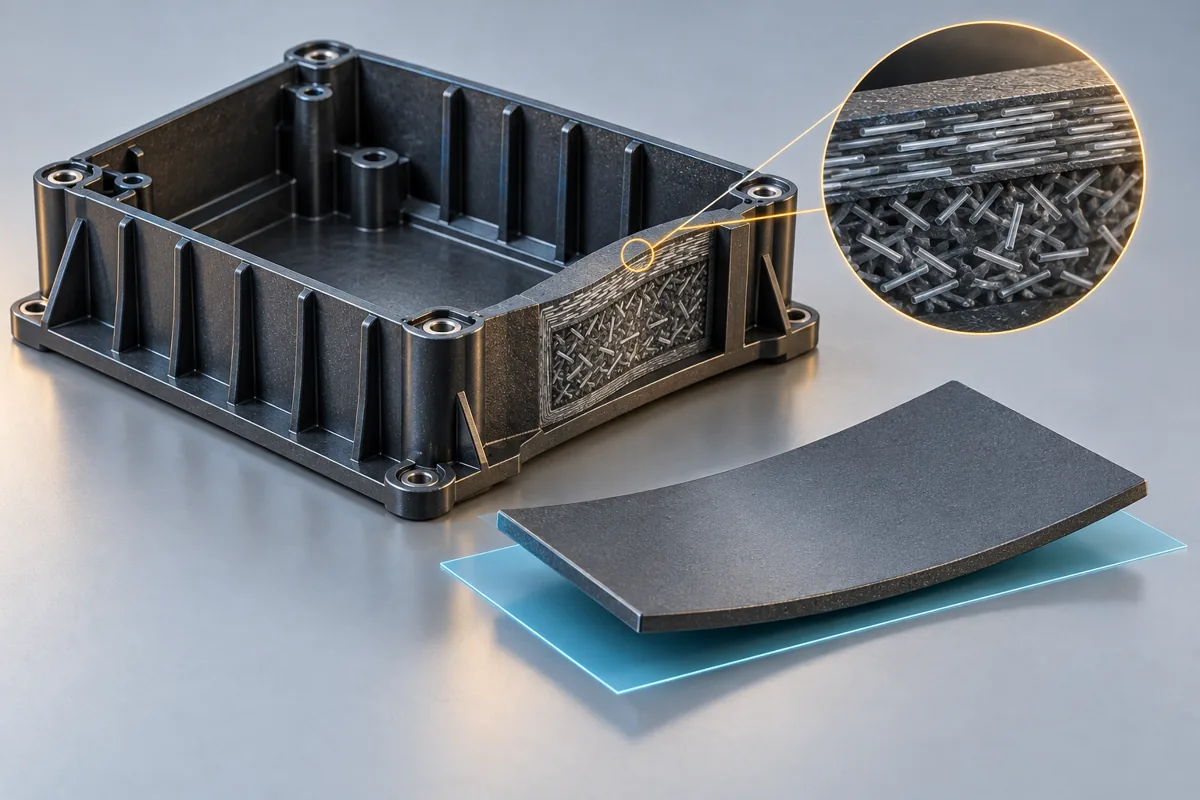
| Dimensional stability | Lower shrinkage than unfilled PBT, with directionality caused by fiber flow | Flatness, pin-field position, seal compression, cavity balance, and thermal cycling |
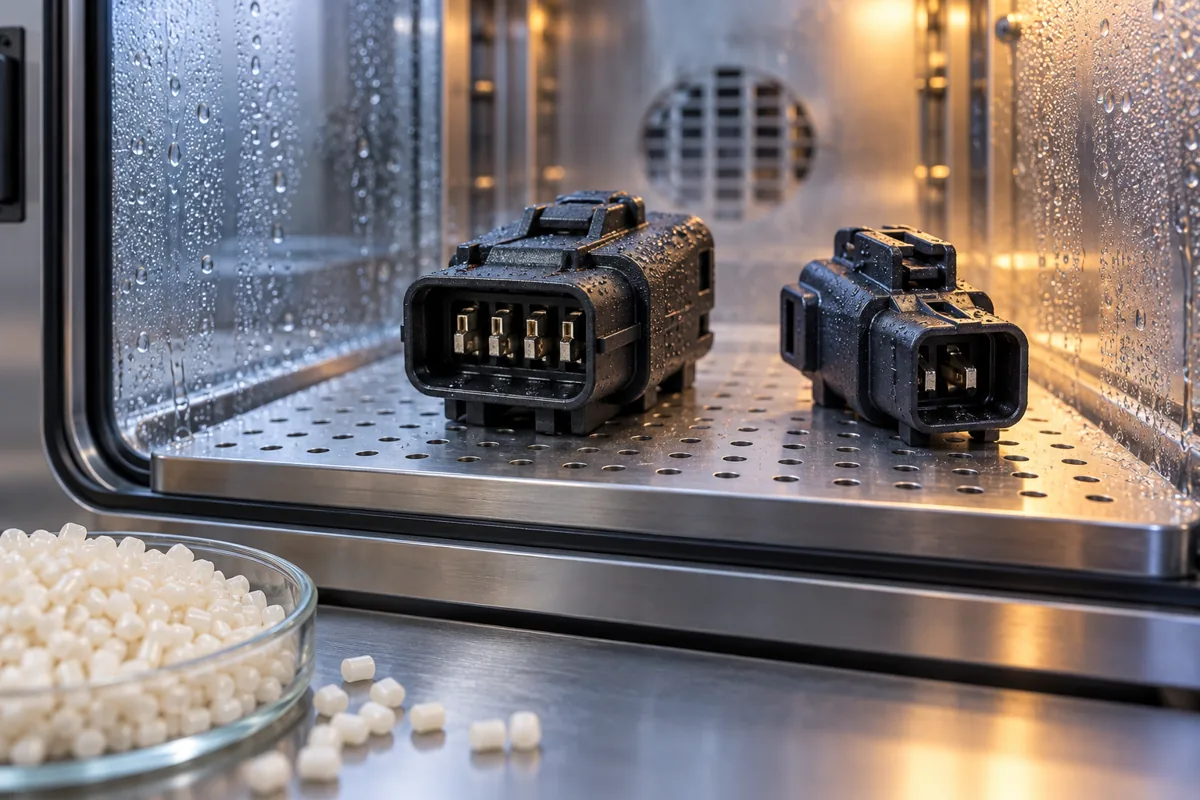
| Moisture behavior | Lower moisture absorption than PA6 or PA66 | Hydrolysis resistance after hot-water, humidity, or coolant aging |
| Electrical performance | Useful insulation and tracking performance are available | CTI, dielectric strength, creepage, clearance, voltage, and contamination level |
| Chemical resistance | Often suitable around oils, fuels, and many automotive fluids | Actual fluid, concentration, stress level, temperature, and exposure duration |
| Heat resistance | Reinforcement improves dimensional retention at elevated temperature | Continuous and peak temperature, heat aging, and load under temperature |
Typical datasheet values can help screen grades, but they should not be treated as finished-part limits. Wall thickness, fiber orientation, moisture, regrind, weld lines, pigments, and the test method can all change the observed result.
Where PBT GF30 Sensor Housings Are Used
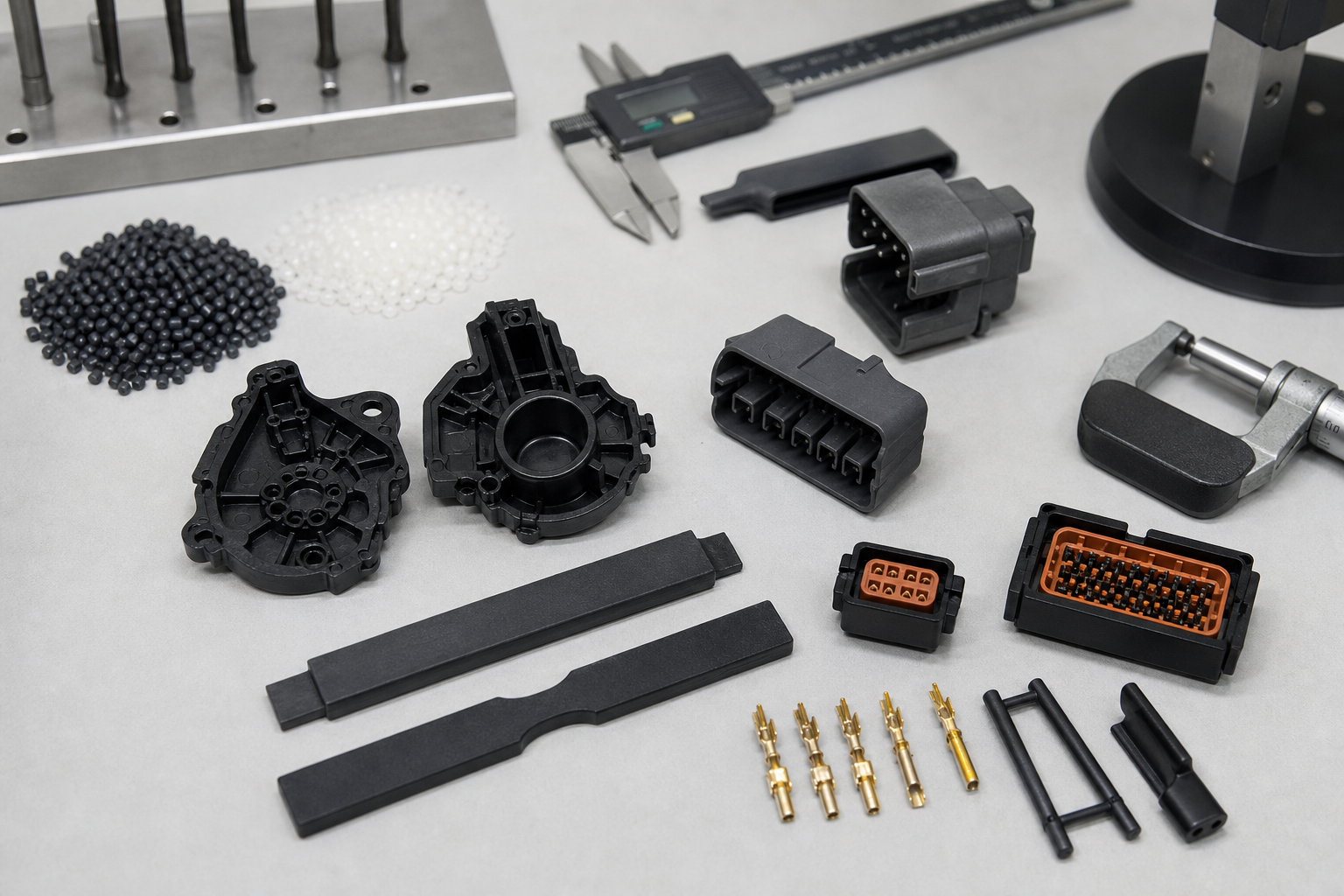
- Automotive temperature, pressure, position, speed, fluid-level, and wheel-speed sensor housings
- ECU connector shells, terminal carriers, coil formers, and relay or switch components
- Industrial proximity sensors, encoders, limit switches, and automation connectors
- Appliance temperature sensors, motor feedback components, and control-system connectors
- Outdoor monitoring devices where low moisture uptake and stable alignment are required
For an automotive-focused component review, see the related PBT GF30 automotive sensor housing guide. General resin behavior and processing considerations are covered in the PBT material guide.
Grade Selection: Standard, Hydrolysis-Stabilized, or Flame-Retardant
| Service condition | Starting grade direction | Key approval work |
|---|---|---|
| Dry interior sensor or connector | Standard PBT GF30 | Dimensions, terminal retention, vibration, and heat aging |
| Coolant, hot water, condensation, or outdoor humidity | Hydrolysis-stabilized PBT GF30 | Retained strength after fluid and temperature-humidity aging |
| Specified flammability or elevated electrical risk | PBT GF30 FR | UL 94 class at wall thickness, CTI, dielectric spacing, and heat aging |
| Laser-welded sealed housing | Laser-transmitting and laser-absorbing matched grades | Weld window, leak rate, contamination, and long-term seal integrity |
| Laser-marked traceability | Laser-markable color formulation | Mark contrast, code readability, mechanical properties, and approval of pigment package |
Molding Controls That Protect Sensor Accuracy
PBT must be dried and protected from moisture before molding. Excess moisture at melt temperature can reduce molecular weight and leave the finished housing brittle even when the surface looks acceptable. Dryer dew point, resin temperature, residence time, and actual moisture should therefore be controlled rather than relying only on a fixed drying time.
- Place gates so fiber flow supports critical datums instead of pulling the housing into twist
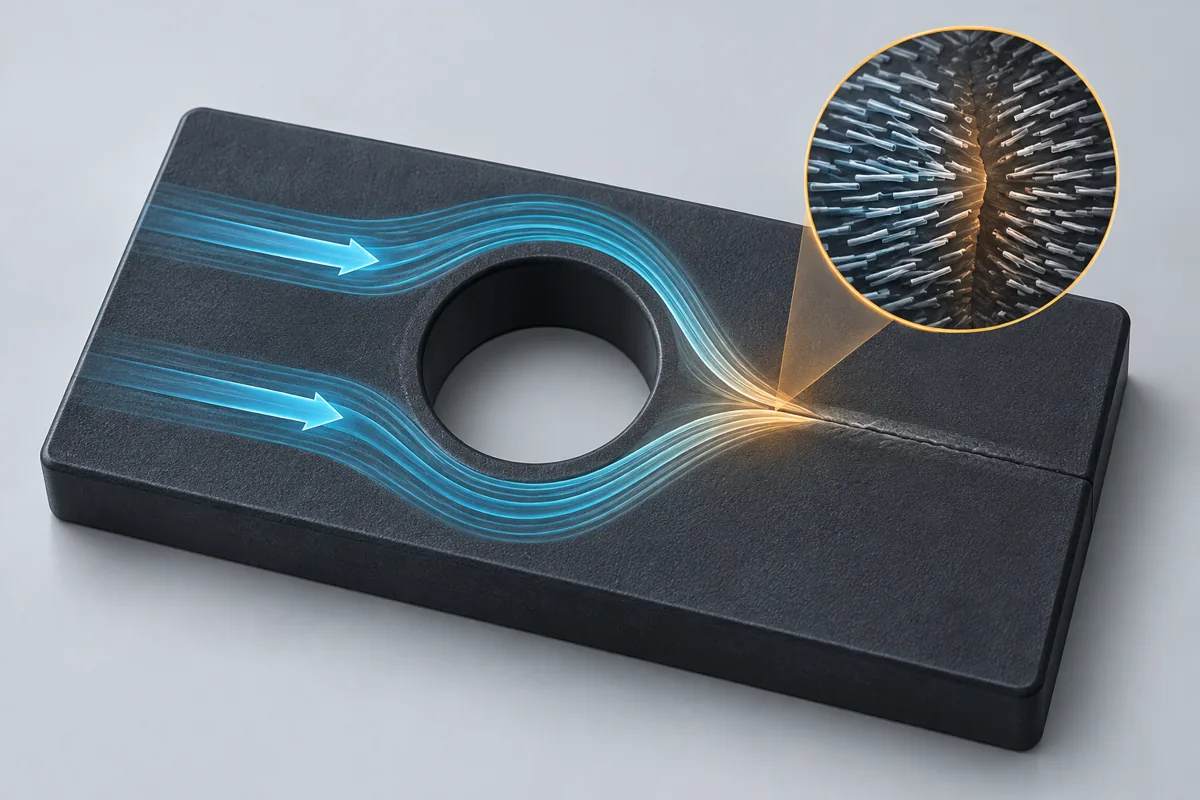
- Keep weld lines away from terminal retention features, pressure ports, screw bosses, and highly loaded clips
- Balance wall thickness and cooling around sealing grooves and connector pin fields
- Use suitable tool steel and maintenance intervals for abrasive glass-filled compounds
- Validate dimensional capability across cavities, material lots, startups, and normal process variation
- Measure parts after representative conditioning and assembly, not only immediately after molding
Validation Before Production Release
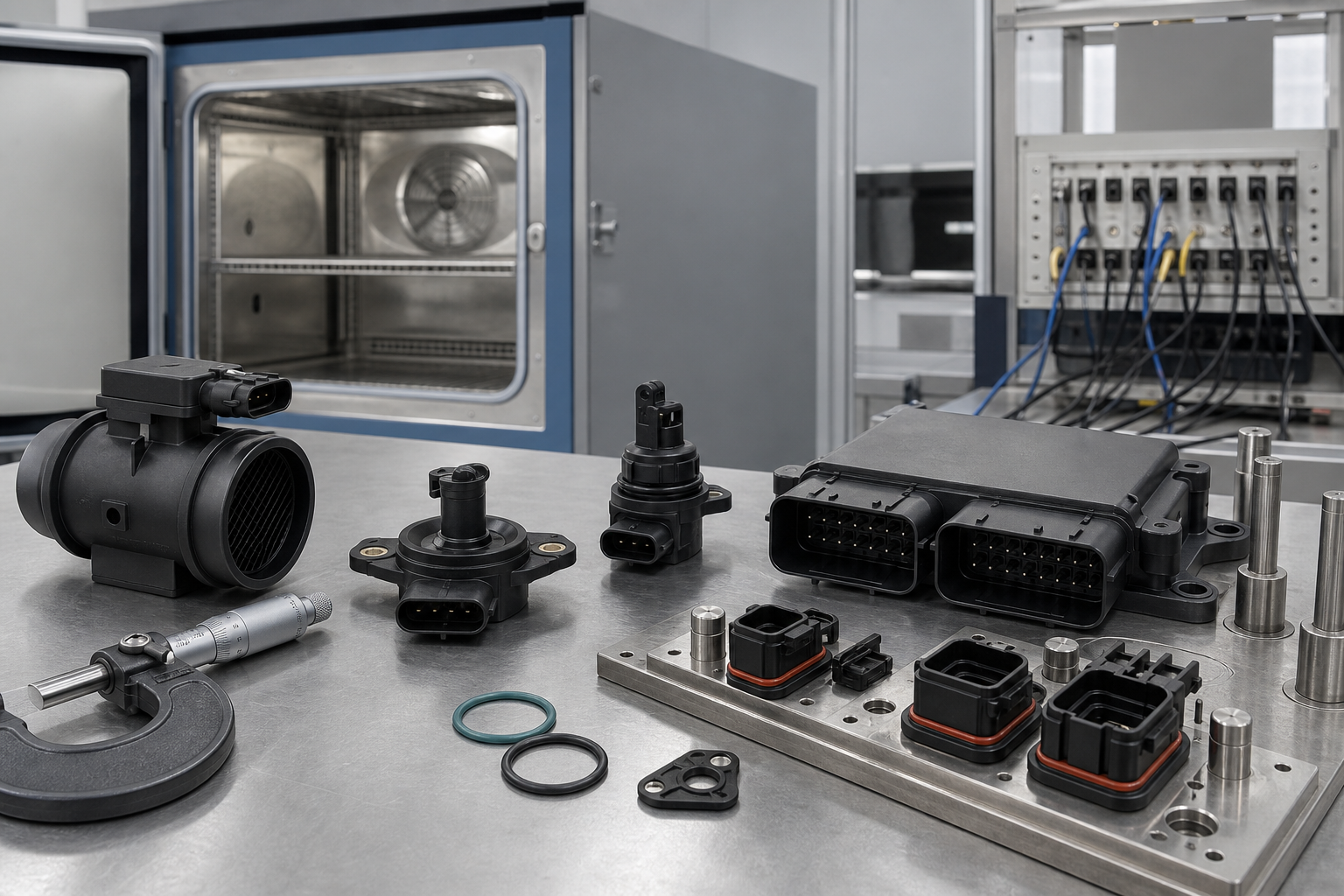
A robust approval plan combines material testing with molded-part and assembly testing. Depending on the sensor, this can include terminal pull-out, leak testing, pressure cycling, vibration, thermal shock, temperature-humidity aging, fluid immersion, dielectric testing, connector mating cycles, and dimensional studies.
Failure analysis should distinguish material degradation from molding and design effects. Cracks near inserts may come from residual stress or excessive interference; leakage can result from flange warpage; terminal movement may trace to weld lines or insufficient packing rather than the nominal resin family.
Why Work With WanHan?
WanHan has developed engineering plastic compounds for industrial applications since 2005. The company integrates independent R&D, production, testing, and technical support, allowing material recommendations to be followed through from initial sample to production supply.
- ISO 9001, ISO 14001, ISO 45001, and IATF 16949 certified management systems
- Testing equipment for incoming materials, compound properties, color, moisture, mechanical performance, and production quality control
- Experience with reinforced, flame-retardant, heat-stabilized, UV-resistant, hydrolysis-resistant, and color compounds
- Engineering plastics supplied to customers in more than 30 countries
- Application support for automotive, electrical, electronics, home-appliance, and industrial components
Request a PBT GF30 Grade Recommendation
Send the part drawing, sensor function, temperature range, fluid and humidity exposure, electrical and flame requirements, critical dimensions, terminal or insert details, joining method, color, annual volume, and the main problem with the current material. Contact WanHan for grade screening, samples, technical data, and processing support, or review the engineering plastic product range.
Frequently Asked Questions
Q: Why is PBT GF30 commonly used for sensor housings?
A: PBT GF30 combines stiffness, dimensional stability, electrical insulation, chemical resistance, and efficient injection molding. These properties are useful for housings that must hold terminals, seals, and mounting datums in position.
Q: Does every PBT GF30 grade resist hot water and humidity?
A: No. Standard PBT can lose properties after prolonged hot and humid exposure. Hydrolysis-stabilized grades should be evaluated when the housing sees coolant, condensation, outdoor weather, or repeated temperature and humidity cycling.
Q: Can PBT GF30 be molded around metal terminals?
A: Yes, but terminal cleanliness, preheating, insert location, injection pressure, weld lines, insulation distance, and pull-out force must be validated on the actual part and tooling.
Q: How does glass-fiber orientation affect a sensor housing?
A: Fiber orientation creates directional shrinkage and stiffness. Poor gate location can move pin fields, sealing grooves, flanges, and mounting holes or create warpage after thermal cycling.
Q: What details are needed to select a PBT GF30 sensor grade?
A: Provide the drawing, sensor type, temperature range, fluids, humidity, flame and electrical requirements, terminal or overmolding details, color, welding method, annual volume, and current failure mode.
Flame-Retardant ABS: Ratings, Applications, and Grade Selection
Drone Parts Material Selection: PA12, Nylon, PC/ABS, and PBT
Related Article