
PC/PBT plastic materaial PC+PBT
author: WanHan Technology
2023-10-26
In today's ever-evolving field of plastics engineering, the search for alloys with high-performance properties has become even more important. PC/PBT alloy and its various reinforced materials are playing a key role in this field. This article will discuss in detail the properties, advantages and applications of PC/PBT and its versions reinforced with different glass fiber contents - PC/PBT GF10, PC/PBT GF20 and PC/PBT GF30, and we will provide convenient jump links , helping you gain in-depth understanding and easy access to these advanced materials.Contact us for quotations and samples of PC/PBT materials>>
PC/PBT Basics
PC/PBT is a high-performance thermoplastic alloy synthesized from polycarbonate (PC) and polybutylene terephthalate (PBT). This unique combination ensures that the material exhibits excellent chemical stability, high toughness, good thermal stability and excellent ultraviolet (UV) resistance. In addition, PC/PBT is favored in various industries due to its high impact strength and easy processing.
PC/PBT GF10: Introducing glass fiber reinforcement
When PC/PBT is reinforced by adding 10% glass fiber (GF10), its mechanical properties are significantly improved. This combination increases the material's tensile strength, stiffness and dimensional stability while still maintaining good impact resistance. PC/PBT GF10 is particularly suitable for the automotive and electronics industries that require lightweight solutions.
PC/PBT GF20: further enhanced strength
PC/PBT GF20 takes stiffness and strength to new levels by increasing the glass fiber content to 20%. This material is more suitable for high-load applications and complex molding because it exhibits a higher heat deflection temperature and improved creep resistance. Therefore, PC/PBT GF20 has become an ideal choice for manufacturing industries, especially areas that require higher durability and stability.
PC/PBT GF30: ultimate mechanical properties
For the most demanding applications, PC/PBT GF30 (containing 30% glass fiber) provides the optimal solution. It provides excellent mechanical strength, ultra-high stiffness and the highest level of thermal stability. This makes PC/PBT GF30 particularly suitable for high-performance parts such as automotive hoods, precision mechanical components and demanding electrical equipment enclosures.
PC/PBT and its various glass fiber reinforced grades provide a comprehensive solution to meet the needs from basic engineering to the most high-end applications. Choosing the right material grade depends on specific application requirements such as strength, stiffness or thermal stability. The jump links provided in this article allow you to easily access detailed information about each material and make an informed choice based on your specific needs.
ABS material Acrylonitrile Butadiene Styrene
PA612 GF33 Plastic material
Related Article
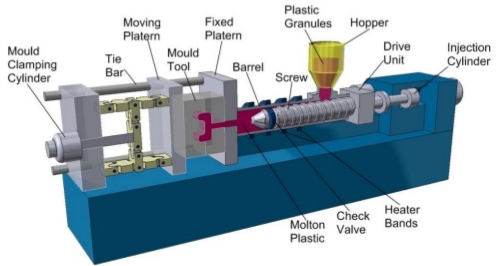
The mold sealing process is a key step in the injection molding process. It refers to the process of closing the mold to form a sealed mold cavity, ready to accept molten plastic for injection molding.
Mold sealing process in injection molding process
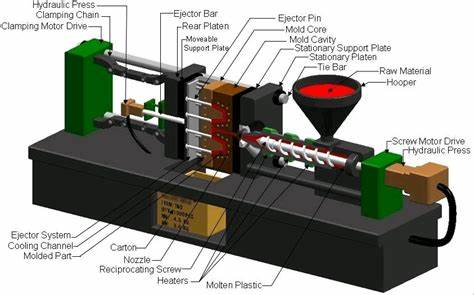
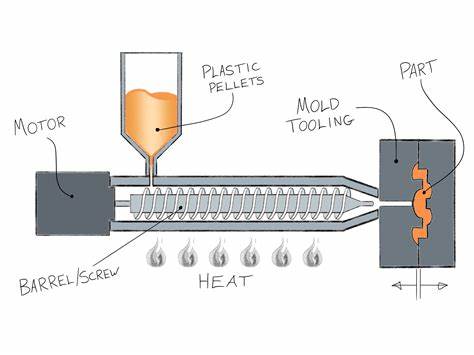
Injection is a key step in the injection molding process. It refers to the process of injecting molten plastic from the heating barrel of the injection molding machine into the mold. The following are the general steps of the injection process:
Injection process in injection molding process
SEND MESSAGE