PBT GF30 – 30% Glass Fiber Reinforced PBT
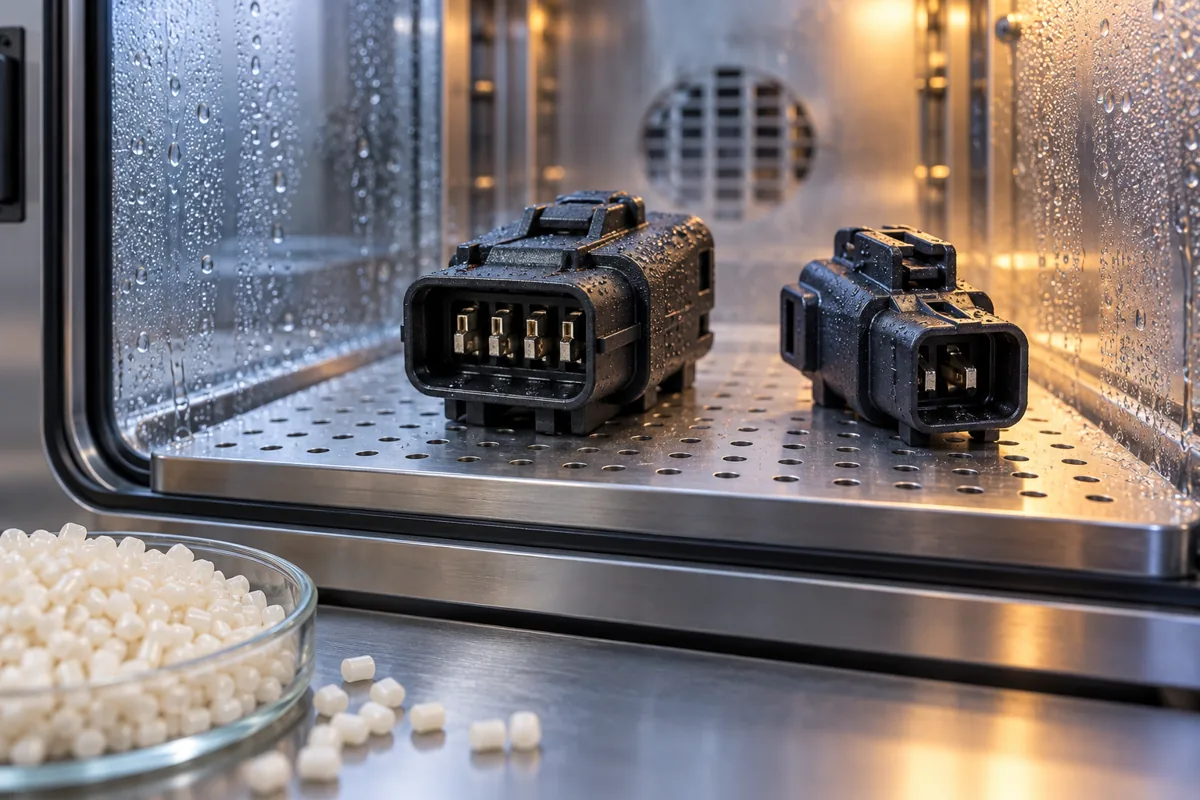
PBT GF30 is polybutylene terephthalate reinforced with approximately 30% glass fiber. Compared with unfilled PBT, this glass-filled PBT compound offers higher stiffness, strength, heat performance, creep resistance, and dimensional stability for molded engineering parts.
The right grade still depends on the actual part. Designers should confirm electrical requirements, flame rating, hydrolysis exposure, operating temperature, color, surface appearance, tolerances, and injection-molding conditions before approval. For a production-grade starting point, review WanHan PBT-WHG30 pellets and request the current TDS and a molded sample.
PBT GF30 Engineering Snapshot
| Item | Selection summary |
|---|---|
| Base resin | PBT (polybutylene terephthalate) |
| Reinforcement | Approximately 30% glass fiber |
| Primary process | Injection molding |
| Key benefits | High stiffness, strength, heat resistance, creep resistance, and dimensional stability |
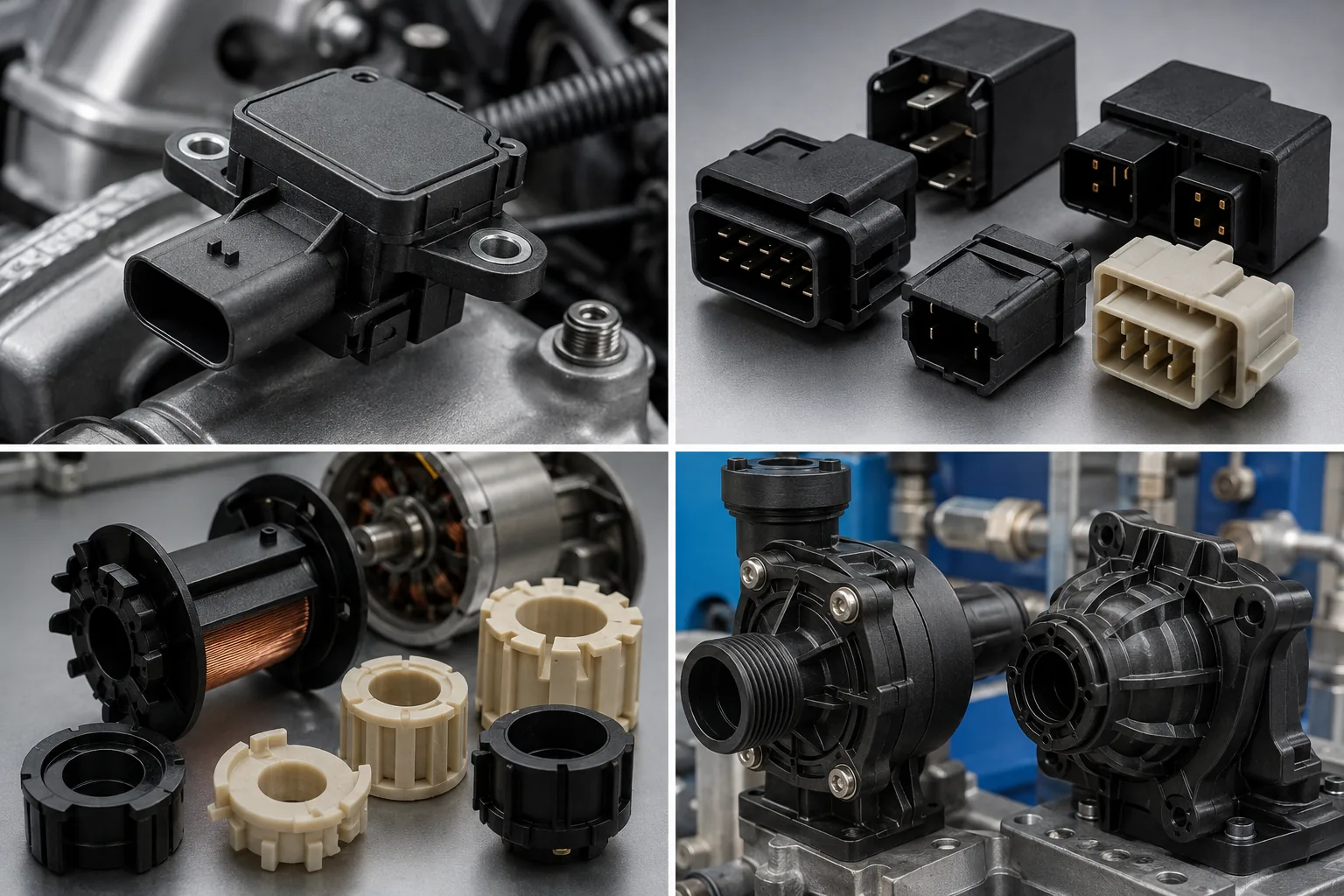
| Typical uses | Connectors, sensor housings, coil formers, motor parts, automotive structures, and industrial components |
| Modification options | Flame retardant, hydrolysis resistant, heat stabilized, low warpage, laser markable, and custom color |
| Project validation | Current TDS, sample molding, dimensional checks, and end-use testing |
What Properties Matter When Selecting PBT GF30?
A PBT GF30 datasheet is useful for screening, but the values are not universal. Fiber orientation, test method, specimen thickness, color, additive package, moisture exposure, and molding conditions can change the result. Focus on the properties that control the real part:
- Stiffness and load capacity: glass fiber improves flexural modulus and helps structural parts resist deflection.
- Heat performance: reinforced PBT retains useful stiffness at elevated temperatures and can suit electrical and automotive components when the correct grade is selected.
- Dimensional stability: low moisture absorption supports tighter tolerances, while directional fiber shrinkage must still be managed.
- Electrical performance: PBT is widely considered for connectors, coil formers, relays, switches, and sensor housings; required CTI, dielectric, glow-wire, and flame data must be checked on the chosen grade.
- Chemical and hydrolysis resistance: exposure to hot water, coolant, fuels, oils, or cleaning agents requires grade-specific aging tests.
PBT-WHG30 Exact-Grade Data Example
The values below are the published data for WanHan grade PBT-WHG30. They are provided as an exact-grade example, not as a universal specification for every PBT GF30 formulation. Confirm the current TDS before design release.
| Property | Published value |
|---|---|
| Tensile strength | 130 MPa |
| Elongation at break | 5% |
| Flexural strength | 210 MPa |
| Flexural modulus | 8,200 MPa |
| Izod notched impact strength | 10 kJ/m² |
| Heat deflection temperature | 185°C |
| Melt flow index | 24 g/10 min |
| Density | 1.54 g/cm³ |
| Mold shrinkage | 0.5% |
| Flammability at 1.6 mm | UL 94 HB |
For a flame-retardant requirement, do not assume that the HB grade will meet the project. Review the separate PBT GF30 FR grade and verify the required UL 94 thickness and electrical test package.
PBT GF30 Injection Molding and Warpage Control
PBT is moisture sensitive during melt processing. Dry the selected grade to the supplier's specified moisture limit and use the current processing sheet for dryer, melt, mold, pressure, and residence-time settings. Inadequate drying can reduce molecular weight; excessive temperature or residence time can cause degradation.
- Place gates to control fiber orientation around critical datums, holes, weld lines, and load paths.
- Use balanced filling and uniform wall sections; add radii at ribs, bosses, and abrupt thickness transitions.
- Measure shrinkage in both flow and transverse directions before final tool correction.
- Keep vents clear and validate weld-line strength on production-tool parts.
- Check connector insertion force, sealing, torque, vibration, thermal cycling, and chemical exposure under real service conditions.
Where Is PBT GF30 Used?
PBT GF30 is a strong candidate for parts that combine dimensional control, electrical insulation, heat resistance, and structural stiffness:
- Automotive: sensor housings, wiper components, brackets, lamp structures, motor parts, and battery-system components.
- Electrical and electronics: connectors, relay housings, switches, coil formers, terminal blocks, and bobbins.
- Industrial equipment: pump and valve parts, gears, actuator housings, precision frames, and machine components.
- Appliances: motor supports, structural housings, heat-exposed internal parts, and control components.
For application-specific guidance, see the PBT GF30 sensor housing material guide and the automotive sensor housing page.
How to Choose the Right PBT GF30 Grade
| Project need | Grade direction | Validation focus |
|---|---|---|
| Electrical safety or self-extinguishing | PBT GF30 flame-retardant grade | UL 94 thickness, CTI, glow wire, deposits, and electrical aging |
| Hot water, coolant, or humid heat | Hydrolysis-resistant PBT GF30 | Retained strength, sealing, dimensions, and fluid aging |
| Precision housing | Low-warpage formulation | Fiber orientation, cavity balance, flatness, and critical dimensions |
| Long-term elevated temperature | Heat-stabilized grade | Thermal aging, color, strength retention, and creep |
| Identification or appearance | Laser-markable or custom-color grade | Contrast, surface finish, color tolerance, and process window |
For broader background, review the PBT material guide, the PBT GF30 properties and applications reference, and WanHan's PBT resin product range.
Why Choose WanHan for PBT GF30 Compounds?
Guangdong WanHan New Material Technology Co., Ltd. has developed and manufactured modified engineering plastics since 2005. We support automotive, electrical, appliance, and industrial programs from material screening through sample validation and stable production supply.
Send your drawing, service environment, target properties, approvals, color, annual demand, and current material problem.
Request TDS, Sample & Quote →Frequently Asked Questions
Q: What does PBT GF30 mean?
A: PBT GF30 is polybutylene terephthalate compounded with approximately 30% glass fiber to improve stiffness, strength, heat performance, creep resistance, and dimensional stability.
Q: Is every PBT GF30 datasheet the same?
A: No. Resin design, glass-fiber type, additives, color, test method, specimen thickness, and conditioning can change the data. Always use the current TDS for the exact grade being approved.
Q: What applications use PBT GF30?
A: Common applications include electrical connectors, coil formers, relay and switch housings, automotive sensor housings, motor parts, appliance structures, and precision industrial components.
Q: How can PBT GF30 warpage be reduced?
A: Manage gate position, fiber orientation, wall-thickness transitions, mold balance, packing, mold temperature, and flow-versus-transverse shrinkage. Validate dimensions on production-tool parts.
Q: Can WanHan supply flame-retardant or hydrolysis-resistant PBT GF30?
A: Yes. WanHan can discuss flame retardancy, hydrolysis resistance, heat stabilization, low warpage, laser marking, and custom color according to the application and required validation.
Q: What information should I send for material selection?
A: Share the part drawing, service temperature, load, chemicals or moisture exposure, required approvals, color, annual demand, and the main issue with the current material. WanHan can then recommend a starting grade and sample plan.
PBT GF30: Engineering Excellence Unveiled
Flame retardant PBT: high-performance fire-resistant plastic
Related Article