
ABS vs Polypropylene: Material Differences, Uses, and Selection
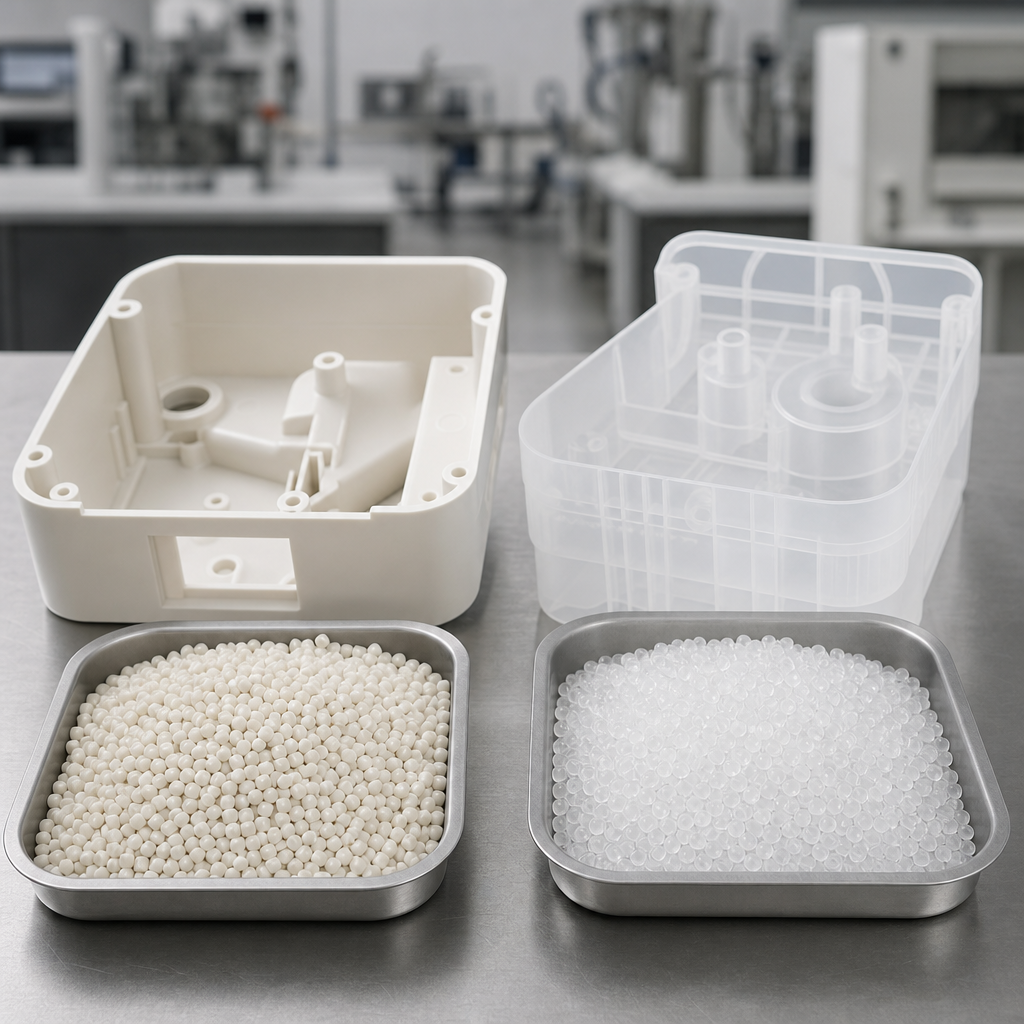
ABS vs Polypropylene: Material Differences, Uses, and Selection
ABS vs polypropylene is a practical comparison for housings, appliance parts, automotive components, consumer products, and industrial molded parts. Both materials are widely used, but they solve different design problems. ABS is usually chosen for better rigidity, impact balance, and surface appearance. Polypropylene, also called PP, is often selected for low density, chemical resistance, hinge performance, and cost efficiency.
The best choice depends on the part's mechanical load, operating temperature, chemical exposure, appearance requirement, and budget. For a stronger cosmetic housing, ABS may be the better starting point. For a lightweight chemical-resistant part, polypropylene may be more suitable.
Quick Answer: Is ABS or Polypropylene Better?
Neither resin is universally better. ABS material is often better for rigid housings, painted parts, and components that need a stable surface finish. Polypropylene is often better for chemical containers, living hinges, lightweight parts, and applications where lower density matters.
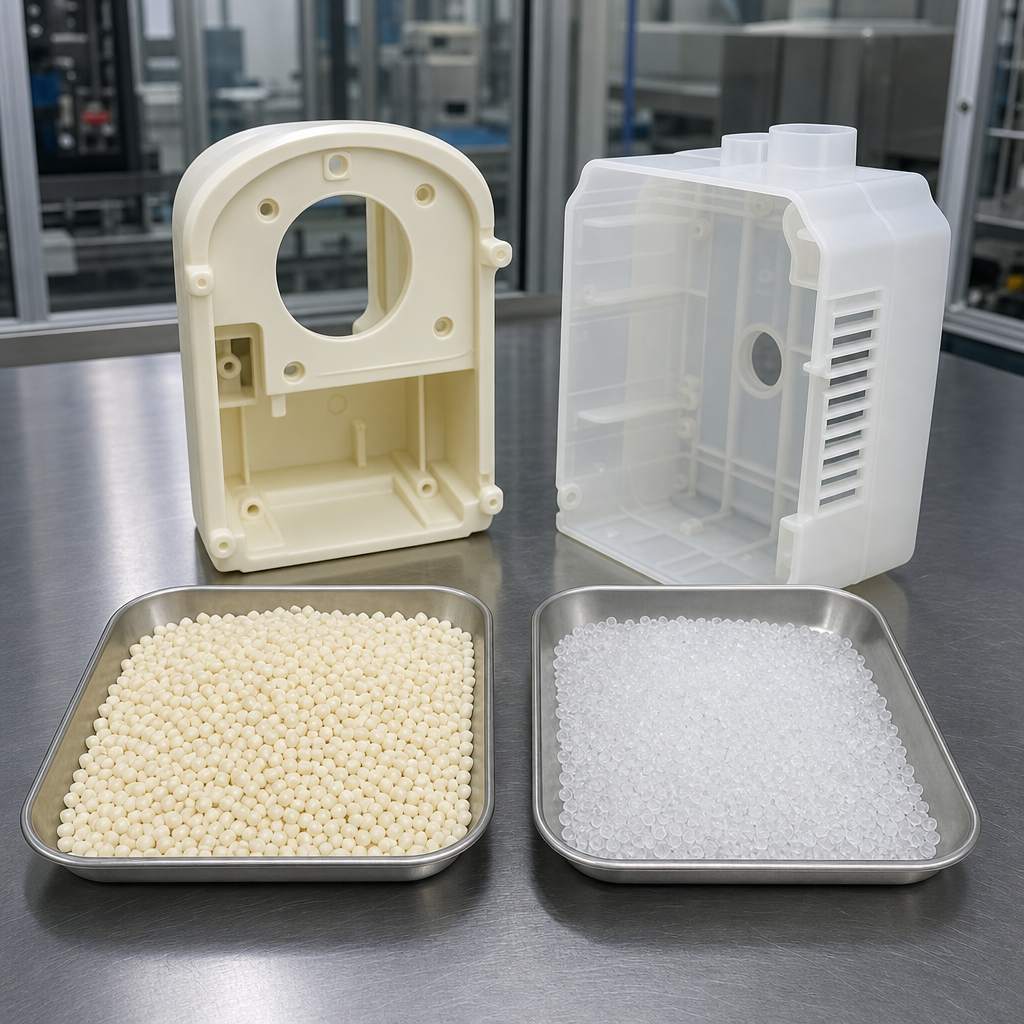
ABS vs PP Property Comparison
| Property | ABS | Polypropylene (PP) |
|---|---|---|
| Density | Higher than PP | Lower, useful for lightweight parts |
| Rigidity | Good stiffness and dimensional feel | More flexible in many grades |
| Impact performance | Good balanced toughness | Grade-dependent, often good at lower cost |
| Chemical resistance | Moderate | Generally stronger chemical resistance |
| Surface appearance | Good cosmetic finish and painting | Functional surface, harder to paint without treatment |
| Typical uses | Housings, covers, automotive trim, appliance parts | Containers, hinges, caps, automotive interior parts, chemical-use parts |
When to Choose ABS
Choose ABS when the part needs a strong balance of toughness, dimensional feel, and appearance. ABS is commonly used for electronic housings, appliance covers, automotive interior trim, tool housings, and consumer product shells. It can also be modified for flame retardancy, improved heat resistance, or higher impact performance.
For related material comparison, you can review WanHan's ABS material guide and compare specialty options such as flame-retardant ABS for electrical and appliance applications.
When to Choose Polypropylene
Polypropylene is a strong candidate when weight, cost, chemical resistance, and flexible fatigue behavior matter. PP is often used in caps, containers, pump parts, living hinges, automotive interior components, and packaging-related parts. It is also suitable for some applications that require good resistance to many acids, bases, and cleaning agents.
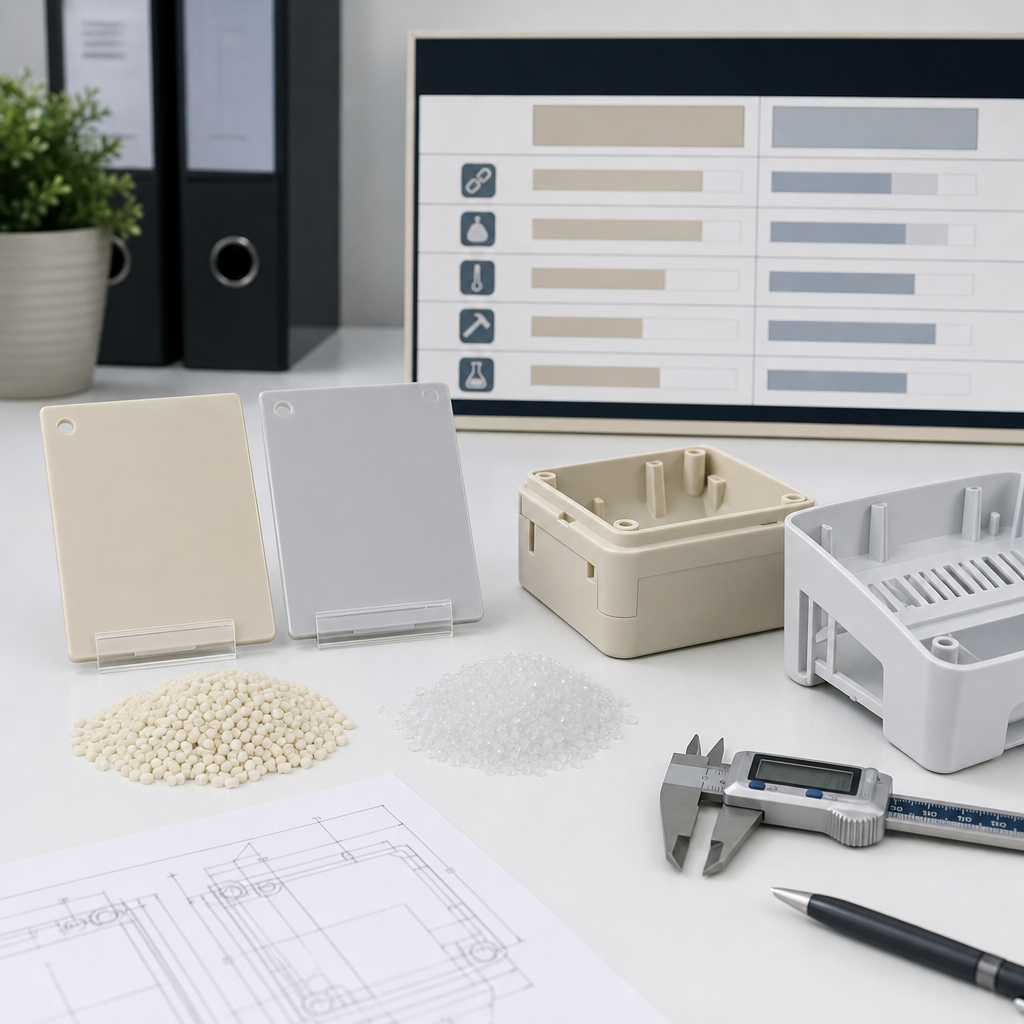
Selection Considerations
Before selecting ABS or polypropylene, confirm service temperature, chemical contact, stiffness target, appearance standard, paint or plating needs, impact requirement, and molding tolerance. If the part needs higher heat resistance or higher stiffness, it may also be useful to compare PC vs ABS, PA6 material, or PBT material.
Why Choose WanHan for Engineering Plastic Projects?
Since 2005, WanHan has focused on independent R&D, production, and global sales of functional engineering plastics for more sustainable industrial applications. Certified to ISO 9001, ISO 14001, ISO 45001, and IATF 16949, we operate with complete in-house testing equipment and strict quality control throughout development and production. Our materials are exported to more than 30 countries and are widely used in automotive, electronics, home appliances, and industrial applications that require higher-performance polymer solutions.
- Application-based material selection support for OEM, injection molding, and product development teams.
- Custom compounding capability for glass fiber, flame-retardant, carbon fiber, mineral-filled, impact-modified, anti-UV, and color-customized grades.
- Full quality control with in-house testing equipment and certified systems for more stable repeat orders and production consistency.
- Free sample support, technical data sheets, and processing guidance to shorten validation time before mass production.
- Fast quotation response, export-ready packaging, and practical support for long-term production supply programs.
If you are selecting a resin for a new project or replacing an existing grade, WanHan can help with grade matching, sample preparation, and custom compound evaluation. You can send your target application, part drawing, annual quantity, or required properties through WanHan's inquiry page to get a faster quotation and material recommendation. You can also review top-sale engineering plastic grades for faster project matching.
For related material comparison, you can review WanHan's ABS material guide, flame-retardant ABS options, and other engineering plastic materials based on appearance, heat, and application requirements.
Frequently Asked Questions
Q: What is the main difference between ABS and polypropylene?
A: ABS is usually more rigid with better cosmetic appearance, while polypropylene is lighter and often has better chemical resistance.
Q: Is ABS stronger than polypropylene?
A: ABS usually feels stiffer and stronger for housings, but polypropylene can perform well in flexible and chemical-resistant applications.
Q: Which material is better for chemical resistance?
A: Polypropylene generally offers better chemical resistance than ABS for many acids, bases, and cleaning environments.
Q: Can ABS replace polypropylene?
A: ABS can replace polypropylene when appearance and rigidity matter more, but it is not ideal for every lightweight or chemical-resistant part.
Q: Can WanHan help select ABS or polypropylene?
A: Yes, WanHan can help review part requirements and recommend suitable resin options for molding, appearance, heat, and application performance.
Engineering Plastic Pellets: Materials, Grades, and Selection Guide
Drone Parts Material Selection: PA12, Nylon, PC/ABS, and PBT
Related Article



