
PA66 vs PA6: Material Differences and Selection
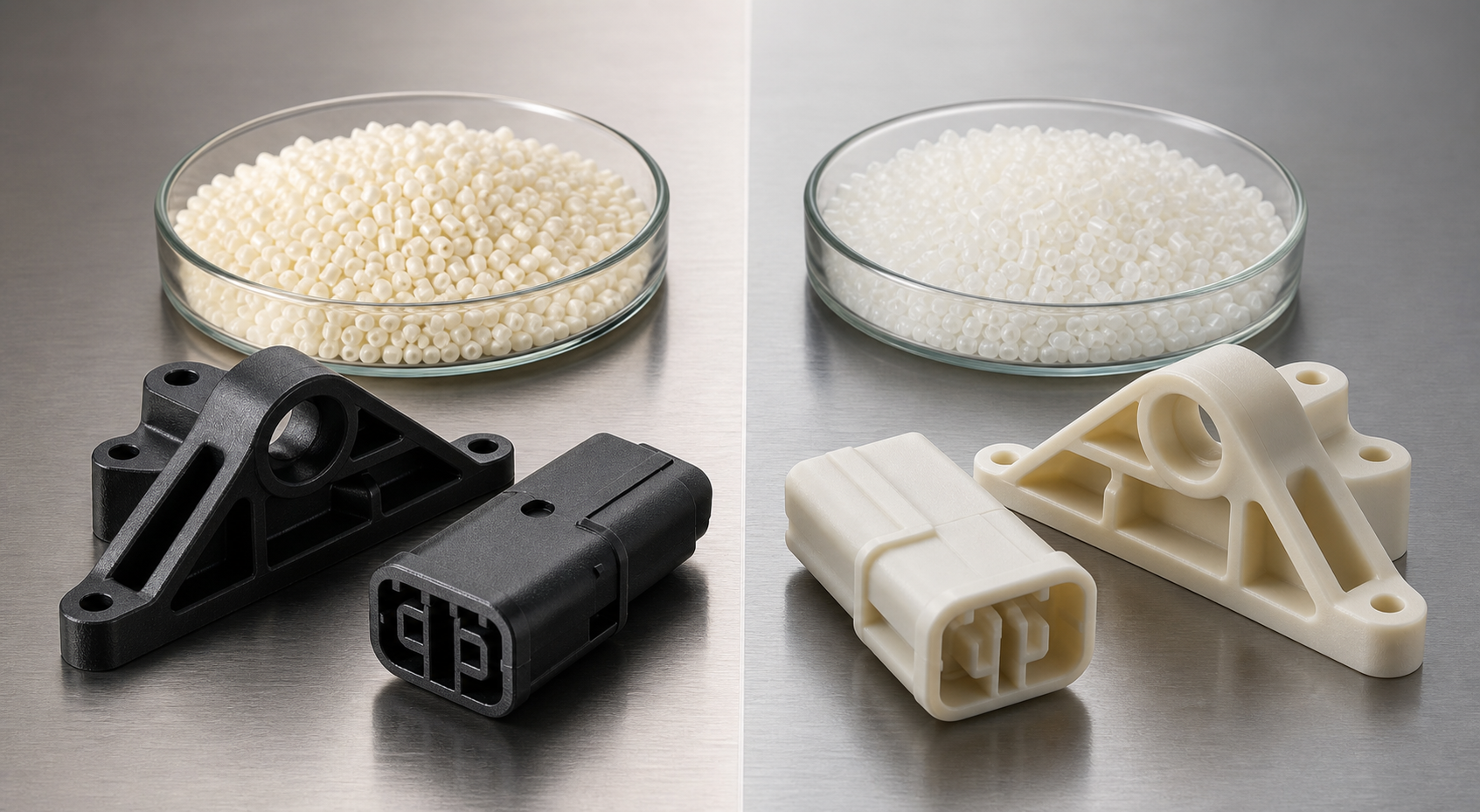
When Should You Choose PA6 Instead of PA66?
Keep PA6 on the shortlist when its conditioned mechanical performance and heat-aging evidence meet the part specification and molding trials show an acceptable process window. Move toward PA66 when matched-grade data and finished-part tests show that additional thermal or stiffness performance is needed. Neither resin family is automatically the lower-cost finished part: drying, cycle stability, scrap, conditioning and qualification all affect the decision.
Compare Like-for-Like Grades, Not Just Nylon Names
| Selection question | Evidence needed from both candidates |
|---|---|
| Will the part hold its load in humidity? | Strength, modulus and dimensions at the specified moisture condition and temperature; creep data for sustained loading. |
| Will a GF30 bracket remain flat? | Same nominal reinforcement, flow-direction and transverse shrinkage, weld-line behavior and production-tool dimensional results. |
| Can it survive under-hood service? | Continuous and peak temperature profile, duration, fluid exposure, thermal cycling and retained properties after aging. |
| Can it be used for an electrical connector? | Exact FR grade, rating at the required thickness and color, applicable electrical evidence and conditioned assembly fit. |
| Will it mold on the existing line? | Exact-grade drying and processing guidance, flow length, gate restrictions, tool-temperature capability and a controlled trial. |
| Which option costs less in production? | Quoted resin cost plus drying, cycle, reject rate, tool corrections, validation and expected service-life requirements. |
Compare Actual WanHan GF30 Grades for Your Part
Two starting candidates are PA6-WHG30B (PA6 GF30) and PA66-WHG30A (PA66 GF30). Both are injection-molding compounds with nominal 30% glass fiber. WanHan lists PA6-WHG30B for automotive structures, tool housings and mechanical components; PA66-WHG30A includes cooling fans, shrouds, under-hood brackets, covers and structural housings.
| Published grade data | How to use it |
|---|---|
| PA6-WHG30B Tensile strength: 175 MPa (ISO 527) Flexural modulus: 8,500 MPa (ISO 178) HDT: 175°C (ISO 75, as published) |
Request the current TDS, moisture condition, temperature and HDT test load. Its listed applications make it a candidate for a molding trial, not an automatic approval for every automotive part. |
| PA66-WHG30A Tensile strength: 175 MPa (ISO 527-2) Flexural modulus: 7,000 MPa (ISO 178) HDT: 220°C (ISO 75-2/B) |
Check the actual component's sustained load, heat aging and fluid exposure. HDT method B must not be treated as a continuous-use limit or directly substituted for a different HDT test condition. |
These are published screening values from the linked product pages, not a matched laboratory comparison or guaranteed specification limits. The modulus figures also show why the PA66 name alone does not prove that a specific compound is stiffer than every PA6 compound. Compare the current grades under the same conditioning and test conditions, then measure the molded part.
Use the Application to Decide What to Test Next
- Cooling fan or shroud: compare conditioned fit, dimensional change, weld lines and, where applicable, balance and vibration on production-tool parts.
- Bracket, gear support or tool frame: measure deflection and retention under the real load duration; include inserts, fasteners and weld-line locations.
- Electrical housing: do not convert these conventional GF30 grades into FR grades by name. PA6-WHG30B lists HB at 1.6 mm; PA66-WHG30A specifies no UL 94 rating. Screen PA6-WHRG30A or PA66-WHRG30A separately when a documented FR route is required, and confirm the current thickness and color scope.
For sample selection, send both the part drawing and the reason for changing material: warpage, breakage, heat exposure, molding instability or cost. WanHan can review the candidate formulation and arrange a trial plan around your acceptance criteria. See the automotive application guide and electrical housing selection guide for the relevant checks.
Why Dry and Conditioned Nylon Data Cannot Be Mixed
PA6 and PA66 absorb moisture, which can change stiffness, toughness and dimensions. A dry-as-molded PA6 value compared with a conditioned PA66 value can produce the wrong shortlist. Specify the test standard, specimen geometry, moisture state and temperature before comparing TDS values. BASF's polyamide technical brochure explains this moisture-dependent behavior; its grade values are not WanHan grade specifications.
Which Glass-Fiber Nylon Is Suitable for a Structural Part?
PA6 GF and PA66 GF are candidate families for brackets, supports and precision structural components, but the drawing determines the useful reinforcement level. More glass fiber can improve stiffness while changing flow, anisotropic shrinkage, surface quality and impact response. Compare the exact grade in the intended mold, paying attention to loads across weld lines, insert retention and long-term deformation.
For a stiffness-critical bracket, test load and deflection after the specified conditioning. For an automotive housing, add heat aging, vibration and the specified fluids. For a snap-fit, test insertion and retention at the lowest and highest service temperatures. These checks turn an initial nylon comparison into an application-specific approval.
How WanHan Supports a PA6 or PA66 Trial
WanHan develops modified engineering plastic compounds in Huizhou, Guangdong, with a specialization in modified plastics since 2005. Share the drawing, current grade, failure mode, reinforcement target, service conditions and processing limits. Our team can review PA6 and PA66 candidates, including glass-fiber reinforcement, impact modification, heat stabilization, flame retardancy and color matching, then agree on a sample and validation plan. Use our custom PA compound requirements checklist to prepare the brief. Each claimed property and compliance document must apply to the selected grade.
For background, WanHan already has a PA6 material guide, a PA66 material guide, the PA6 glass-fiber category, and the PA66 glass-filled nylon category.
Core Differences Between PA6 and PA66
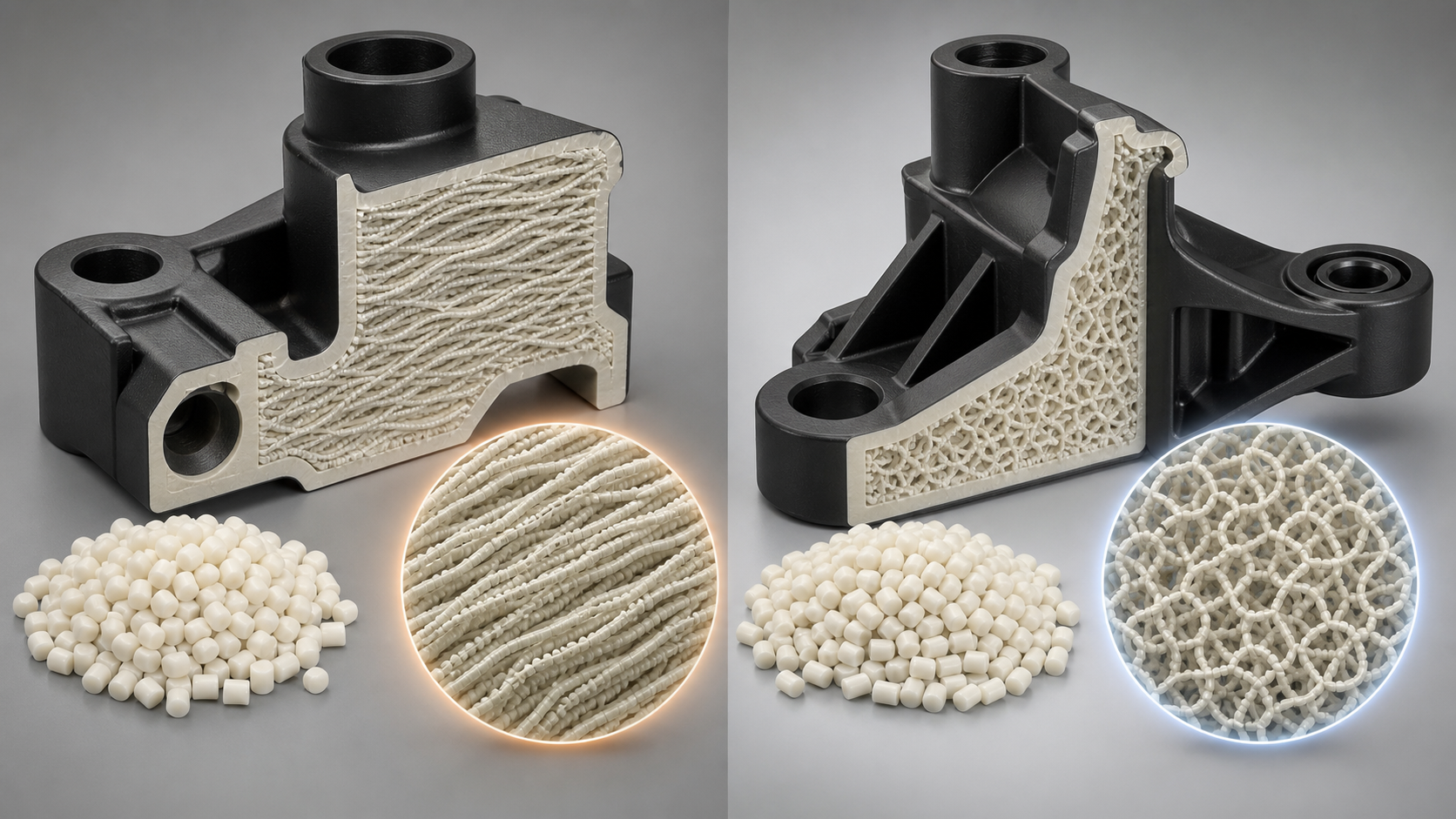
Both materials are polyamides, but they differ in structure, moisture behavior, crystallization, and the way they balance toughness, stiffness, and temperature capability.
That difference becomes more obvious when the part is structural, thin walled, or exposed to changing heat and humidity.
| Factor | PA6 | PA66 |
|---|---|---|
| Typical evaluation focus | Balanced flow and processing | Higher heat and rigidity |
| Moisture and conditioning | Needs validation in humid service | Needs validation in humid service |
| Common sourcing decision | Good all-round industrial choice | Preferred when thermal margin matters more |
| Reinforced grades | Broad GF and FR options | Broad GF and FR options with stronger heat positioning |
How the Choice Changes in Reinforced Grades
In a glass filled nylon comparison, the difference between PA6 and PA66 does not disappear. Reinforcement raises stiffness and heat performance, but the base resin still affects flow, processing, and application fit.
For many buyers, the final choice is between PA6 GF30 and a PA66 GF grade rather than between neat resins.
- PA6 reinforced grades often win on practical molding balance
- PA66 reinforced grades often win when heat resistance is tighter
- Connector and electrical parts often favor PA66-based systems
- Larger general industrial parts may screen both families in trials
A Practical Selection Workflow
The cleanest way to compare nylon 66 vs nylon 6 is to start with the part and service environment. Many ranking pages only list properties, but buyers need a decision path.
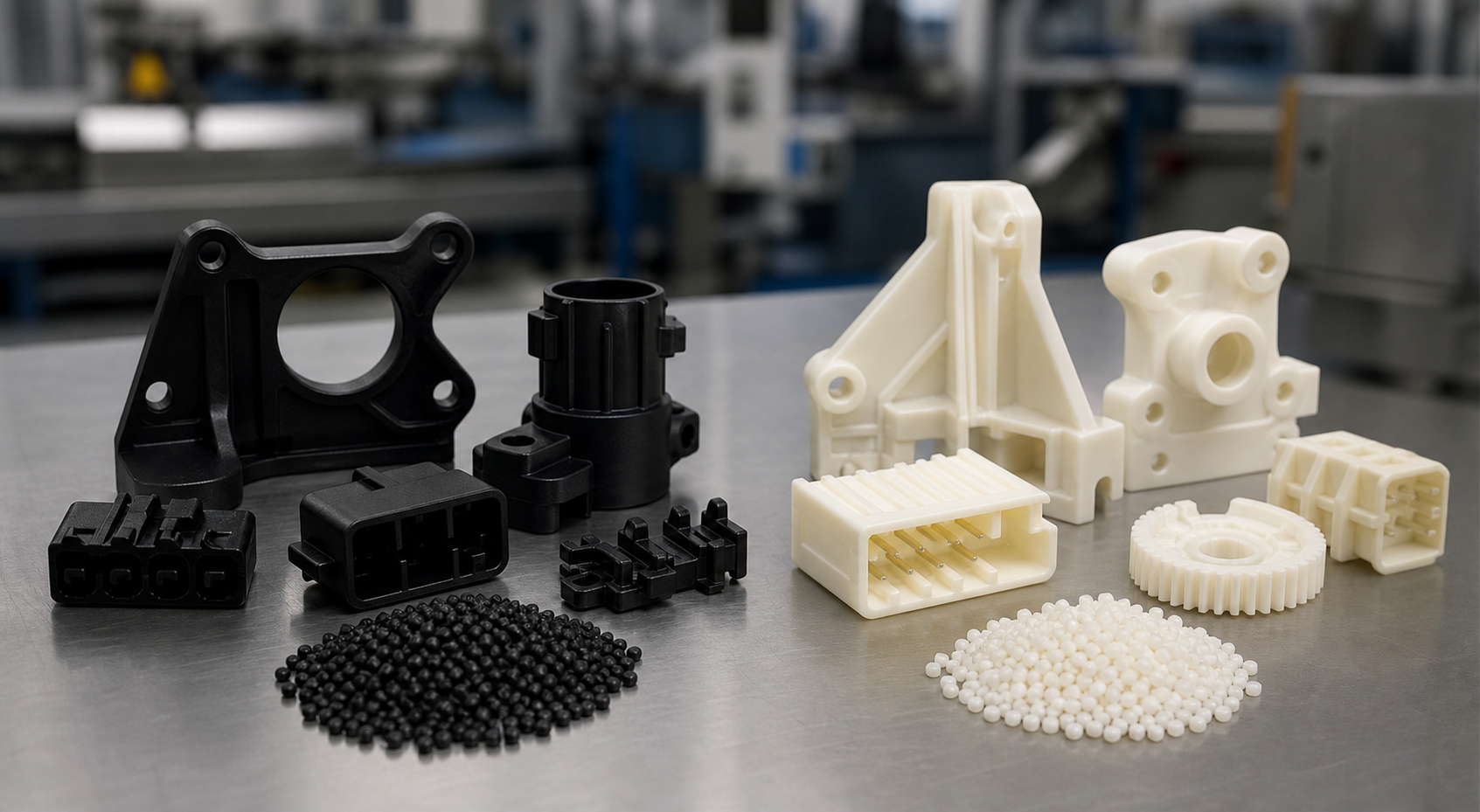
- Define the service temperature, load, moisture exposure, and tolerance risk.
- Decide whether the part needs unfilled, glass-filled, or flame-retardant nylon.
- Shortlist one PA6 option and one PA66 option with similar reinforcement.
- Run molding trials and approve based on finished-part data, not only resin tables.
Frequently Asked Questions
Q: What is the main difference in PA66 vs PA6?
A: PA66 is often selected for higher heat resistance and rigidity, while PA6 is often considered for balanced molding, flow, and all-round industrial use.
Q: Is PA66 always better than PA6?
A: No. The better material depends on the part, processing method, reinforcement, and service environment.
Q: How should buyers compare glass-filled grades?
A: Compare similar reinforcement levels, such as PA6 GF30 and PA66 GF30, then validate heat, warpage, and part performance in trials.
Q: When is PA66 usually favored?
A: PA66 is usually favored when thermal margin, connector use, or higher-rigidity positioning is more important than the easiest processing balance.
Q: When can PA6 stay attractive?
A: PA6 can stay attractive when the project values balanced molding, broad industrial familiarity, and practical grade coverage across reinforced or flame-retardant options.
Q: Can a supplier help shortlist one PA6 and one PA66 grade?
A: Yes. That turns a family comparison into a real part-level screening exercise.
Q: Can I request samples before locking in PA66 or PA6?
A: Yes. Trial grades should be compared in the actual mold so heat, warpage, conditioning, and end-use performance can be judged on finished parts.
Conclusion
PA66 vs PA6 is not a branding question but a part-performance decision. WanHan can help screen both families, especially when the choice involves glass-filled or flame-retardant grades rather than neat nylon alone.
PCR Material in Engineering Plastics: Uses and Limits
PA12 vs PA6: Material Differences and Use Cases
Related Article



